
Opinion
Opinion: Nigerian Leaders Sowed the Wind


By Owei Lakemfa
In my first year at the University of Ife (Now OAU) a ‘National Sailing’ by a secret confraternity was scheduled for the campus. On the eve, the local branch held a procession at midnight. The procession stopped an ambulance conveying a student to the hospital asking it to switch off its lights. Tragically, the student later died. A mourning student populace was enraged when news filtered that the confraternity had stopped the ambulance, even though it was for a few seconds.
The Students Union immediately banned not only the national convention of the fraternity, but all such groups on campus. In those days, the Union’s decision, was law amongst students. To further placate the student populace, the university authorities instituted a probe and meted out disciplinary actions on identified members of the confraternity.
Such were the powers of the union, that the Shagari administration, though elected, thought it was better to subvert independent student unionism in the country. It bribed student renegades; some with brand new cars. It also tried to stop the 1980 emergence of a unified national student body; the National Association of Nigerian Students (NANS) which covered students in all tertiary institutions. Partly to achieve this, the administration sponsored the establishment of a sectarian body; the Nigerian Universities Students’ Association (NUSA) But it was a still birth.
When NANS was eventually established, the government within three months, expelled its leadership under Tanimu Kurfi from the Bayero University, Kano, and tried to impose an illegal “Steering Committee” This failed.
That same period, the Shehu Shagari government expelled 13 student leaders at the University of Nigeria, Nsukka and student leaders at the Polytechnics in Akure and Bauchi, Kwara College of Technology and the Schools of Basic/Preliminary Studies in Keffi and Makurdi. It also suspended the student unions in Ibadan and Kaduna polytechnics and the College of Education, Ilesa.
But those were not the most dastardly acts of that government in its efforts to destroy independent student unionism. That 1981, at the Ahmadu Bello University (ABU) it expelled 30 student leaders and rusticated 165 others.
The government then turned to the University of Ife where it killed seven students during a protest on June 7, 1981. Its follow-up attempt to use the Justice Salihu Moddibo Alfa Belgore Tribunal Report to flush out student leaders, was firmly and successfully resisted by the student populace and lecturers led by Dr. Biodun Jeyifo, the then National President of the Academic Staff Union of Universities (ASUU) The Shagari administration also tried to repress freedom of speech by banning and occupying the premises of a number of newspapers.
However, the Shagari adminstration was a ‘saint’ compared to the subsequent military regimes under Generals Muhammadu Buhari, Ibrahim Babangida and Sani Abacha. The Buhari regime was a cyclone which smashed through national institutions including the judiciary and the media. In the case of the press, it enacted Decree 4 of 1984 which made reporting falsehood and the truth, punishable offences. It enacted Decree 2 of 1984 under which Nigerians were detained without trial. It turned to smashing the campuses; it introduced school fees, abolished the Cafeteria System which subsidized food for students on campuses, and accused lecturers of inciting students against its dictatorship. When students staged a national protest against its draconian policies, the Buhari regime not only went out to smash the protests, but also kidnapped the then NANS President, Lanre Arogundade at the post office in Ile-Ife. All these were concerted attempts to destroy independent student unionism and consciously or unconsciously make way for the emergence of cultists who would not be loyal to students, but take directives from the regime.
But it was the Babangida regime that consciously destroyed the Student Movement; expelling as many student leaders as it could lay hands on, and most infamously, promoting cultists to seize student unions across the country. In 1986, it killed “only” four students of ABU during a protest, and when the NANS called a national protest over this, it shut down many tertiary institutions and banned student unionism across the country. The Babangida regime also in June 1986, occupied the Nigeria Labour Congress (NLC) premises because labour decided to stage a solidarity protest for the students, and detained a number of Congress leaders. The detention of labour leaders was repeated in December 1987 before the regime banned the NLC in February, 1988.
In its attempts to finally smash independent student unionism, the regime established two Tribunals of Inquiry, one led by retired Major General Emmanuel Abisoye and the second by Justice Mustapha Akanbi.
Perhaps the most devious move by that regime, was the establishment by its security services, of Student Peace Councils or Peace Committees to impose ‘peace’ on campuses. This included the sponsorship of cultists and sleeper agents to infiltrate the student unions, take them over or sabotage them. The arrow head of these councils was based in the University of Ibadan, and it was there an epic battle ensued in which the student populace took him on, flushed him from the campus and burnt his room.
However, it was in the University of Benin, the most vicious battles between students and the Babangida regime were fought. They were so bloody that the regime issued a directive to the police and security forces to “shoot students at sight” Lecturers like then ASUU President, Dr. Festus Iyayi and Professor Itse Sagay were not even given quite quit notices; thugs simply invaded their homes, broke the doors, threw out their families and replaced the doors.
By 1999 when civil administration was restored in the country, cultists, thugs and security agents had taken over some student unions.
Things degenerated so much that when a NANS Convention was held in Abuja, matters were settled with guns, and genuine student leaders loyal to the Student Movement, were overcome. Cultists, security agents, traders and street toughies have taken over some student unions to the extent that a few years ago, when I was invited to speak with a cross section of student leaders, I discovered that the NANS President was not a student! Many of the student leaders knew and whispered it but none was bold enough to table it.
Now, this later generation of student leaders have graduated into political leadership in the country holding executive and legislative positions. Increasingly, elections are being settled not by votes, but bullets; in election after election, the country is drowned in rivers of blood, especially in Rivers State. Youths are said to be ‘the leaders of tomorrow’ The youths produced by our leaders yesterday, are taking over today . Prophet Hosea might have had Nigerian leaders in mind when he proclaimed in Hosea 8:7 “For they sow the wind, and they shall reap the whirlwind”


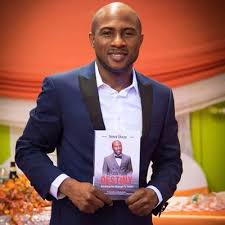
By Henry Ukazu
Dear Destiny Friends,
Ever wondered how one sleeps and wakes up? Ever wondered where the spirit goes while we sleep? The answer is hidden in mysteries because life, and by extension, existence, is full of mysteries.
On a personal note, I do believe that whenever we sleep, we are basically practicing how to die because no one knows the whereabouts of the spirit and souls. All we know is that we wake at the break of dawn, or when there’s a stirring, either naturally or artificial. That is a mystery!
Have you also ever imagined how a man will have sexual intercourse with a lady and a child is born? Have you also ever wondered about the mystery surrounding death? Have you also imagined how human beings fall in love with the opposite sex despite various variables. Again, each time I fly in the air, I begin to wonder about the invention surrounding the aeroplane. So many questions begging for answers. The mysteries surrounding life is inexhaustible.
For the benefit of hindsight, life is indeed a mystery. Sometimes, we think we understand it, and other times, it humbles us with its complexities. Life can be likened to a woman; the more you try to understand them, the more confused you become.
I had to give this introductory analysis to buttress the significance surrounding the mysteries of life. Why do I say this? Nothing is permanent in life, and as such anyone can be great and successful tomorrow. In my native Igbo (Nigerian) language, we have a saying that “nobody knows the stomach that will birth a king tomorrow”, and “tomorrow is pregnant”. These are evidence of the mysterious nature of life.
In my journey through life, I have met angels and devils in human form, who have played different roles in shaping my thoughts and outlook towards life. While I thought certain people will bring smiles to my life, they turned around to make me question their intentions and mindset. But the people I had some reservations with turned out to be some of the best things that have happened to me. For instance, I have a dear friend turned brother, whom I hold in high esteem. His name is Sodeeq Sulyman. He is the Chief Operating Officer of my company.
As a matter of fact, today is his birthday. He met me on X and reached out to me to be his mentor. I was literally humbled because that was the first time someone was making a firm request of me. I gladly accepted the request, and today our friendship, brotherhood and relationship has truly blossomed. This young man is literally one of the best things that has happened to my life. If I was told he will change the outlook of my life, business and life generally, I wouldn’t have believed it.
But as my late mother would always say, when you meet people just take the good part and leave the bad part. In all sincerity, I strongly believe our meeting was predestined, and mysterious if the circumstance of our meeting is x-rayed.
Here is the message, never look down on anyone except you are helping them to do something or pick something. Another message is don’t give up on anyone because you don’t know what tomorrow will unfold. Even the Bible book of life states in Proverbs 118:22, “the stone which the people rejected has become the cornerstone”. So, it’s instructive for one to be kind, courteous and humble in relationship with human beings because nobody knows what life will unfold tomorrow.
Imagine, if I had not treated this young man very well or even accepted him, I would probably have met other minds, who would have given me an experience of a lifetime I wouldn’t forget in a hurry.
The mystery of life can be seen in wealth creation. A man of means today can become a beggar tomorrow if the wealth is not properly managed, and the child of a certified pauper can become a man of means tomorrow. There have been stories of wealthy men whose children mismanaged their parents’ and became hungry, while slaves of wealthy men became stupendously wealthy. What does that tell you? Nothing is guaranteed in life. I often wonder how people take life very seriously thinking everything is about them. They don’t even know they can sleep and not wake up the next morning, nor are they aware of the fact that pride and ego are the two greatest enemies that can fast track the downfall of a man, while humility can jump-start their elevation.
As human beings sometimes, we wonder where our next meal will come from. Where would our next business, money, spouse, opportunity come from are some of the questions that bug our minds? One might have a business that has little or no hope of succeeding, but with determination and favour from God, the business will turn around for good.
On a personal note, I have been in a scenario where I lost hope of succeeding or moving to the next round, but I was surprised when the universe came through in ways and manners I couldn’t comprehend. I believe we all have one story or another to share as it relates to the mysteries of life. I can vividly recall when my late dad was very sick in the hospital. As a matter of fact, he was adjudged to be the sickest patient in the hospital. The doctor who was treating him said, he lost his mother to the exact sickness my late dad was facing. But with prayer, my late dad was able to survive to the amazement of everyone. He was later adjudged to be a miracle patient because he was given a slim opportunity to survive.
I don’t know what your storyline might be nor do I know what you are experiencing in your academic, business, health, career, or family life. One message I have for you is that nothing lasts forever. If you give it time, one day you’ll laugh and thank God for the experience and lessons life has offered you because life is a mystery one may not understand. It unfolds as it chooses.
Henry Ukazu writes from New York. He works with the New York City Department of Correction as the Legal Coordinator. He’s the founder of Gloemi. He’s a Transformative Human Capacity and Mindset coach. He is also a public speaker, youth advocate, creative writer and author of Design Your Destiny Design and Unleash Your Destiny . He can be reached via info@gloemi.com

By Tolulope A. Adegoke PhD
“In an age of ceaseless disruption, the wisest pause is to acknowledge the Unchanging Hand—the divine grace that guides our progress, steadies our systems, and writes our story of possibilities with a wisdom no trend can outpace.” – Tolulope A. Adegoke, PhD
We are living through an age of acceleration. Technological advancements, from generative artificial intelligence to biotechnology, are not just evolving; they are fundamentally rewriting the rules of human enterprise on a near-daily basis. Concurrently, the global community faces layered, systemic challenges—climate volatility, geopolitical fragmentation, economic precarity, and a pervasive sense of institutional distrust. This relentless churn of innovation and crisis can foster a worldview dominated by pure mechanistic cause and effect, where outcomes are seen solely as the result of data-driven strategy, relentless hustle, or fortunate access to capital.
Yet, within the complex tapestry of human progress—across personal biographies, corporate histories, and the annals of nations—there persists a recurring, almost whispered, narrative. It speaks of moments that defy straightforward analysis: the serendipitous encounter that alters a career trajectory, the breakthrough insight that arrives after all logical solutions are exhausted, the organizational resilience that emerges from a crisis in ways no risk-management model predicted, or the diplomatic breakthrough that occurs against all odds when conflict seemed inevitable. For millennia, across diverse faiths and philosophies, this dimension of experience has been attributed to a higher guiding force—often termed the Hand of God. It represents the divine interaction where diligent human effort intersects with transcendent grace, producing outcomes that feel orchestrated, purposeful, and imbued with a meaning beyond mere happenstance.
In our contemporary context, recognizing this force is not an act of intellectual retreat. On the contrary, it is an exercise in profound clarity and emotional intelligence. It provides the essential counterbalance to the hubris of absolute human control and the anxiety bred by uncertainty. It compels us to a vital, transformative pause—a sacred interval for introspection on our core values, retrospection on the journey thus far, and a heartfelt posture of gratitude for the grace that navigates our collective voyage through these uncharted waters. This pause is not an empty space; it is the fertile ground from which wiser action, more sustainable leadership, and deeper hope can grow.
For the Individual: Cultivating Purpose in an Age of Digital Determinism
The modern professional landscape is increasingly mediated by algorithms that curate opportunities, assess productivity, and even suggest career paths. Personal worth is often unconsciously tied to metrics of digital engagement and visible output, leading to a quiet epidemic of burnout and existential doubt. In this environment, the most meaningful developments frequently occur outside these digital parameters.
Consider the pattern: a sudden redundancy, initially a devastating blow, becomes the forced catalyst for launching a purpose-driven venture that aligns with a long-held passion. A chance conversation during a delayed flight leads to a mentorship that shapes a leader’s ethical compass for decades. A period of enforced stillness, perhaps due to illness or family need, creates the mental space for a creative or spiritual insight that reorganizes one’s entire life priorities. These are not merely random events; to the perceptive heart, they bear the hallmark of intentional guidance.
The ancient wisdom of Proverbs 19:21 observes, “Many are the plans in a person’s heart, but it is the Lord’s purpose that prevails.” This is not a dismissal of ambition or strategic planning. Rather, it is an invitation to hold our plans with open hands. It suggests that our detailed life maps are subject to benevolent divine cartography that can see beyond our immediate horizon. The practice of pausing to acknowledge this reality does several things: it replaces anxiety with a sense of guided adventure, it converts envy of others’ paths into contentment with one’s own unique journey, and it fosters a humility that makes us lifelong learners. Gratitude, in this personal realm, is the conscious acknowledgment that our skills, opportunities, and even our recoveries from failure are gifts to be stewarded, not just assets we have self-manufactured.
For the Organization: Building Legacy in an Era of Stakeholder Capitalism
The 21st-century corporation operates under a blinding spotlight. Stakeholders—including employees, customers, investors, and communities—now demand authentic purpose, ethical transparency, and demonstrable social and environmental stewardship alongside financial performance. This shift from shareholder primacy to stakeholder capitalism represents a profound change in the rules of engagement.
In this new paradigm, principles often relegated to “corporate social responsibility” documents are now central to long-term viability. Organizations that operate with integrity—prioritizing fair wages, sustainable sourcing, and genuine community partnership—often experience a form of capital that cannot be listed on a balance sheet: the capital of trust. This trust manifests as customer loyalty during a misstep, employee advocacy in competitive talent markets, and investor patience during necessary transitions. While these outcomes can be analyzed through the lens of sociology or economics, many faith-informed leaders perceive the outworking of a timeless principle.
The Psalmist notes, “The Lord’s blessing brings wealth, without painful toil for it” (Proverbs 10:22). This is not a promise of effortless profit, but a profound observation that sustainable abundance is often tied to alignment with divine principles of justice, honesty, and generosity. When a company avoids a lucrative but unethical deal, it may be protected from future scandal. When it invests in employee well-being, it cultivates innovation and dedication that drives organic growth. The guiding hand here is seen in the provision of wisdom for complex decisions, the fostering of a cohesive culture amid diversity, and the unexpected market opportunities that align with a company’s core values. The necessary corporate pause involves leadership teams reflecting not only on key performance indicators but on their foundational ethos. Gratitude is expressed by acknowledging that success is a collaborative endeavor with a moral dimension and by reinvesting prosperity into the common good.
For the Nation and the Global Community: Steering the Ship of State with Moral Navigation
The arena of geopolitics and national governance is perhaps where the illusion of pure human control is most dangerous and most easily dispelled. Leaders wield immense power, yet they are constantly confronted by the limits of that power—facing natural disasters, global economic tides, and the unpredictable currents of human history. The rise and fall of empires, the sudden emergence of peace movements, and the avoidance of global catastrophes often contain elements that baffle historians and political scientists.
Instances where conflict is de-escalated through a last-minute change of heart, where scientific collaboration across rival nations yields a solution to a shared threat like a pandemic, or where a society makes a collective turn toward justice and reconciliation after generations of oppression—these moments carry a weight of significance that suggests more than shrewd political calculus. They hint at a moral fabric to history itself.
The prophet Jeremiah, addressing a nation in turmoil, conveyed this divine perspective: “For I know the plans I have for you… plans to give you hope and a future” (Jeremiah 29:11). This promise, made in a context of exile and despair, underscores a foundational belief: that the ultimate trajectory of a people is held within a providential narrative of hope and redemption. National pauses for thanksgiving, days of reflection, or calls for collective prayer are not merely ceremonial. They are acts of humility that can reorient a society’s focus from fear and division to shared destiny and mutual responsibility. Gratitude on this scale is a powerful antidote to nationalistic arrogance. It reminds a citizenry of its blessings, fosters a spirit of stewardship over its resources, and cultivates a posture of compassion toward other nations and future generations.
Synthesis: Gratitude as the Foundational Posture for a Future of Meaning
Ultimately, to perceive and acknowledge the guiding hand of God is to choose a narrative of profound hope and partnership. It liberates us from the exhausting burden of believing we are the sole authors of our fate. It protects our souls from the corrosive effects of pride in success and despair in failure. This awareness transforms gratitude from a fleeting emotion into a disciplined posture—a foundational lens through which we view our past, engage our present, and anticipate our future.
This posture of gratitude is eminently practical. It makes individuals more resilient and adaptable leaders. It fosters corporate cultures of ethical innovation and long-term thinking. It encourages nations to pursue policies of justice, peace, and environmental care. In a world intoxicated by speed and disruption, the deliberate, heartfelt pause to say “thank you” may be the most strategic and humanizing act available to us. It grounds our frenetic activity in meaning, connects our personal struggles to a larger story of grace, and equips us to build a future that is not only smarter or richer, but wiser and more deeply human. We pause, we recognize, we give thanks—and from that place of humble acknowledgment, we find the clarity and courage to move forward.
When the world moves faster than our understanding, true wisdom is found in the sacred pause: to recognize the Guiding Hand that has written our story of progress, to give thanks for the grace in our journey, and to find courage for the path ahead.
Dr. Tolulope Adeseye Adegoke is by God’s grace a distinguished scholar-practitioner specializing in the intersection of African security, governance, strategic leadership and effective management. His expertise is built on a robust academic foundation—with a PhD, MA, and BA in History and International Studies focused on West African conflicts, terrorism, and regional diplomacy—complemented by high-level professional credentials as a Distinguished Fellow Certified Management Consultant and a Fellow Certified Human Resource Management Professional. He can be reached via: tolulopeadegoke01@gmail.com
Metro
The Synergy Imperative: Integrating Transformative Leadership and Strategic Management for Africa’s Ascent
By Tolulope A. Adegoke, PhD
“The bridge from Africa’s potential to its preeminence is built with the twin pillars of visionary leadership, which dares to imagine the impossible, and disciplined management, which masters the possible” – Tolulope A. Adegoke, PhD
Africa’s journey from a continent brimming with untapped potential to a unified global powerhouse is arguably the defining narrative of our century. This transformation, however, hinges on a critical catalyst: a new paradigm of leadership. To dismantle the persistent architecture of poverty and transcend the historical cycle of mediocrity, African nations require more than administrators; they need visionary architects and master builders. This necessitates a powerful fusion of transformative leadership—which sets the daring direction—and strategic, execution-focused management—which paves the road to get there. The synergy between these two forces is non-negotiable for unlocking the innovative capacity needed to deliver tangible possibilities for Africa’s people, its dynamic corporations, and its sovereign nations.
I. The Essence of Transformative Leadership: Architecting a New Continental Consciousness
True transformative leadership moves beyond maintaining the status quo. It is an audacious practice of reimagining futures, challenging deeply embedded narratives, and mobilizing collective will toward a shared, audacious horizon.
1. Crafting a Unifying and Aspirational Narrative: The transformative leader’s first task is to be a master storyteller for the future. This involves articulating a vision that moves past diagnoses of poverty to paint a vivid, compelling picture of continental success—a Africa renowned for its innovation, quality, and strategic influence. This narrative must replace a mindset of scarcity with one of boundless opportunity, fostering a new identity where “Made in Africa” signifies excellence, reliability, and cutting-edge solutions. It is about making the idea of a continental giant not a distant dream, but an inevitable destination in the public imagination.
2. Demonstrating Unshakeable Ethical Fortitude: The battle against mediocrity is fundamentally a battle for integrity. Transformative leaders must embody and enforce an ironclad commitment to governance that is transparent, accountable, and institutionally robust. This requires the political courage to depersonalize state institutions, empowering independent judiciary, audit authorities, and anti-corruption commissions not just on paper but in practice. By becoming the chief guardian of institutional integrity, a leader builds the essential currency of trust—without which long-term investment and social cohesion are impossible.
3. Championing Radical Inclusivity: No single entity holds a monopoly on innovative ideas. Transformative leaders actively dismantle top-down governance silos to create participatory ecosystems. They facilitate sustained dialogues that bring together the pragmatic insights of the private sector, the grassroots realities understood by civil society, the foresight of academia, and the voices of marginalized communities. This inclusive approach does more than improve policy; it fosters a profound sense of collective ownership over the continent’s destiny, building a resilient coalition for sustained change.
II. The Discipline of Strategic Management: Building the Engine of Execution
A vision without a rigorous mechanism for implementation remains a mere hallucination. Transformative leadership must be operationalized through management systems characterized by precision, adaptability, and results.
1. Engineering a Performance-Obsessed Public Sector: The public administration must be fundamentally redesigned into a lean, data-driven delivery machine. This demands:
o Integrated Outcome Frameworks: Adopting systems like the Balanced Scorecard to cascade the national vision into clear departmental objectives, measurable Key Performance Indicators (KPIs), and individual accountability metrics for civil servants.
o Evidence-Based Policy Orchestration: Investing in robust data analytics units and real-time monitoring dashboards. Resource allocation and program adjustments must be driven by hard evidence of what works, moving policymaking from political intuition to strategic science.
o Relentless Process Innovation: Launching comprehensive digital governance initiatives to automate and streamline bureaucratic processes—from business licensing to customs clearance. This eliminates friction, reduces opportunities for graft, and dramatically improves the user experience for citizens and investors alike.
2. Cultivating Dynamic Innovation Ecosystems: Management’s role is to create the fertile ground where creativity and enterprise can flourish. This is a deliberate, managerial function:
o Establishing Agile Policy Laboratories: Creating regulatory sandboxes in key sectors like fintech, renewable energy, and logistics allows startups to test breakthrough ideas in a controlled environment with temporary regulatory relief, fostering innovation without compromising systemic stability.
o Orchestrating Strategic Alliances: Building structured platforms for public-private-research collaboration. Government can de-risk pioneering R&D in areas like vaccine manufacturing or artificial intelligence for agriculture, with clear pathways for commercialization led by the private sector and fueled by academic research.
o Safeguarding Intellectual Creation: Modernizing and rigorously enforcing intellectual property regimes managed by efficient, trustworthy institutions. This protects African innovators, attracts R&D investment, and ensures that breakthroughs conceived on the continent yield prosperity for its people.
3. Mastering Capital: Human and Financial:
o Strategic Human Capital Development: Aligning national education and vocational training curricula with the future skills demanded by the continental transformation agenda requires active management through a permanent skills council, ensuring a seamless pipeline of talent for the industries of tomorrow.
o Pioneering Financial Architecture: Beyond domestic revenue mobilization, management excellence is key to structuring and accessing innovative finance. This includes developing bankable project pipelines for green bonds, diaspora investment instruments, and blended finance models to fund the massive infrastructure required for integration, all while maintaining impeccable sovereign debt management.
III. The Tangible Dividend: Delivering Expanded Possibilities for All
The ultimate metric for this leadership-management model is the tangible impact on the ground.
· For Africa’s Citizens: The outcome is expanded human agency and dignity. This manifests as access to meaningful, future-oriented employment; quality, affordable healthcare and education delivered efficiently; and social protections that empower rather than create dependency. Citizens experience a state that is a capable partner in their aspirations.
· For Africa’s Enterprises: The outcome is a predictable, enabling, and competitive operating environment. Corporations and entrepreneurs benefit from reliable infrastructure, seamless administrative processes, access to capital, and a fair, transparent market. This enables them to scale, innovate, and compete confidently on regional and global stages.
· For Africa’s Nations and Continental Body: The outcome is sovereign capability and collective strategic influence. Individually, nations evolve into resilient, adaptive economies. Collectively, a strategically managed and integrated Africa transforms into a formidable negotiating bloc, capable of shaping global rules on trade, climate, and digital governance, and moving from being a subject of global dynamics to a definitive shaper of the world order.
Conclusion: The Imperative of Synergy
The path from poverty to preeminence is paved by the dual forces of transformative leadership and strategic management. Leaders must provide the spark of vision, the moral compass, and the political will to embark on an audacious journey. The management apparatus must provide the meticulous map, the engine, and the metrics to navigate it successfully. When these elements align in harmony—when the architect’s dream is matched by the engineer’s precision—Africa will ignite a self-sustaining cycle of innovation, inclusive growth, and shared prosperity. This is the pathway that turns the latent potential within its people, the ambition of its corporations, and the sovereignty of its nations into a manifested reality. It is how the continent will cease to be perpetually “rising” and will firmly stand, a realized giant, shaping the century ahead.
Dr. Tolulope Adeseye Adegoke is a distinguished scholar-practitioner specializing in the intersection of African security, governance, strategic leadership and effective management. His expertise is built on a robust academic foundation—with a PhD, MA, and BA in History and International Studies focused on West African conflicts, terrorism, and regional diplomacy—complemented by high-level professional credentials as a Distinguished Fellow Certified Management Consultant and a Fellow Certified Human Resource Management Professional.


