
News
Opinion: That Malaria Dream of Interim National Government

- /home/rhoncare/pointblank.ng/wp-content/plugins/mvp-social-buttons/mvp-social-buttons.php on line 27
https://pointblank.ng/wp-content/uploads/2023/04/Presidenyc-Buhari-1000x600.jpg&description=Opinion: That Malaria Dream of Interim National Government', 'pinterestShare', 'width=750,height=350'); return false;" title="Pin This Post">
- Share
- Tweet /home/rhoncare/pointblank.ng/wp-content/plugins/mvp-social-buttons/mvp-social-buttons.php on line 69
https://pointblank.ng/wp-content/uploads/2023/04/Presidenyc-Buhari-1000x600.jpg&description=Opinion: That Malaria Dream of Interim National Government', 'pinterestShare', 'width=750,height=350'); return false;" title="Pin This Post">
By Solomon Idachaba
The preposterous proposition for an Interim National Government currently championed by some individuals and groups is indicative of an underlying illness perhaps being suffered by those calling for it. There is definitely no doubt that such persons are nothing but desperate and pathetic miscreants trying to grasp at straws as a last bid to achieve the demented ambition of clinching power. Like drowning men, the illusions of installing a caretaker government is indeed their only hope of satisfying wicked, selfish and inglorious interests. Nothing justifies these senseless calls for Interim government in Nigeria considering that a seamless democratic form of Government has been practiced in the past two decades.
In fact, the country has just successfully conducted its seasonal elections from which a new government was duly elected and will be sworn in on 29th May, 2023. Not only that, the current security atmosphere has remained relatively peaceful and normalcy has returned with citizens going about their daily activities. Only naysayers are grandstanding.
So on what grounds are the despicable agitations for an interim national Government? On what basis should it be formed? Is Nigeria in a crisis situation? Are we in any emergency or chaotic circumstances? Is the Nation bedevilled with violence or experiencing general sense of instability? The answer is NO! It is crystal clear that these psychotic agitators of a government that could threaten the country’s existence are acutely diseased by Malaria and its accompanying symptoms of a high fever thereby blindsiding their thought processes. Otherwise, those calling for it, would have understood its meaning. Nigeria has bid bye even to the circumstances that once warranted it. Its justification is clearly non-existent in our statutes.
Since Nigeria’s return to democracy in 1999, the tradition of transition from one government to another has been steady and ceremonial every May 29. Curiously, these unwarranted palpitations for interim government started prior to the 2023 general elections apparently by those who have calculated their chances of winning the elections and were certain of a resounding defeat.
When out of the blues, the likes of Aare Afe Babalola (SAN) in the last quarter of 2022, called for an Interim Government after the expiration of President Muhammadu Buhari’s government, what came to mind was that the 93-year-old “elder statesman” was daydreaming.
For Babalola and his other unstated cohorts, the sentiments upon which an ING is premised or perceived cannot even hold water. All the illogical reasons are old fashioned. To push their agenda forward, after the general election and following their abysmal failure to win, which of course, was in tune with their earlier predictions of failing at the polls, they collaborated with subversive groups and dubious interests, thus, the recent growing pressure to install an interim government. Once again, I ask, on what grounds?
One thing that is clear is that those beating the drums for Interim National Government are hell bent on truncating our cherished democracy and eroding the gains and growth achieved as a country in the last 24 years. These Malaria stricken persons calling for such, must understand that this ill-advised option is not a silver bullet solution to Nigeria’s problems. approach to address them. An interim government will not in any way solve our underlying problems. But alas, these enemies of Nigeria, its peace, stability and progress are ignorant.
The so called clamour for an interim government is definitely a ploy by political elites, failed politicians and agents of destabilisation to gain power. It is not an exaggeration that these persons are not interested in addressing the problems facing the country but rather in securing political and economic influence in addition to other personal gains. But these fruitless efforts are nothing but a lost cause. Nigerians have spoken through the ballots and elected their next President that will take over the mantle of leadership come 29th May. No amount of threats, mischief or propaganda will stop or prevent this peaceful transition.
Contrary to the lies and falsehood being circulated by fake news merchants, President Buhari has strongly assured that he would indeed hand over power to the newly elected President. Those peddling fake news and spreading baseless conspiracy theories around the inevitable transmission of power on democracy day are only beating a dead horse. Their ploy will never come to fruition; only disgraceful defeats await them. The Country’s electoral umpire has advised those aggrieved by the outcome of the 2023 general elections to seek legal redress. And they are doing so.
It beats rationality that they would want to be on the street and in the courts. Let them choose one. If they choose the streets and recalcitrance, let them be treated as dissidents and outlaws. But if they are in the courts, let them be served justice. During the waiting time, let us all be patient, law abiding and of good behaviour. Those Malaria afflicted peddlers of an inconceivable and futile interim government should take full dose of their drugs and be healed.
Idachaba writes from Makurdi, Benue State


News
ADC Unveils Presidential Campaign Council, Names Ibrahim-Imam As Chairman, Dele Momodu As Head, Media/Publicity
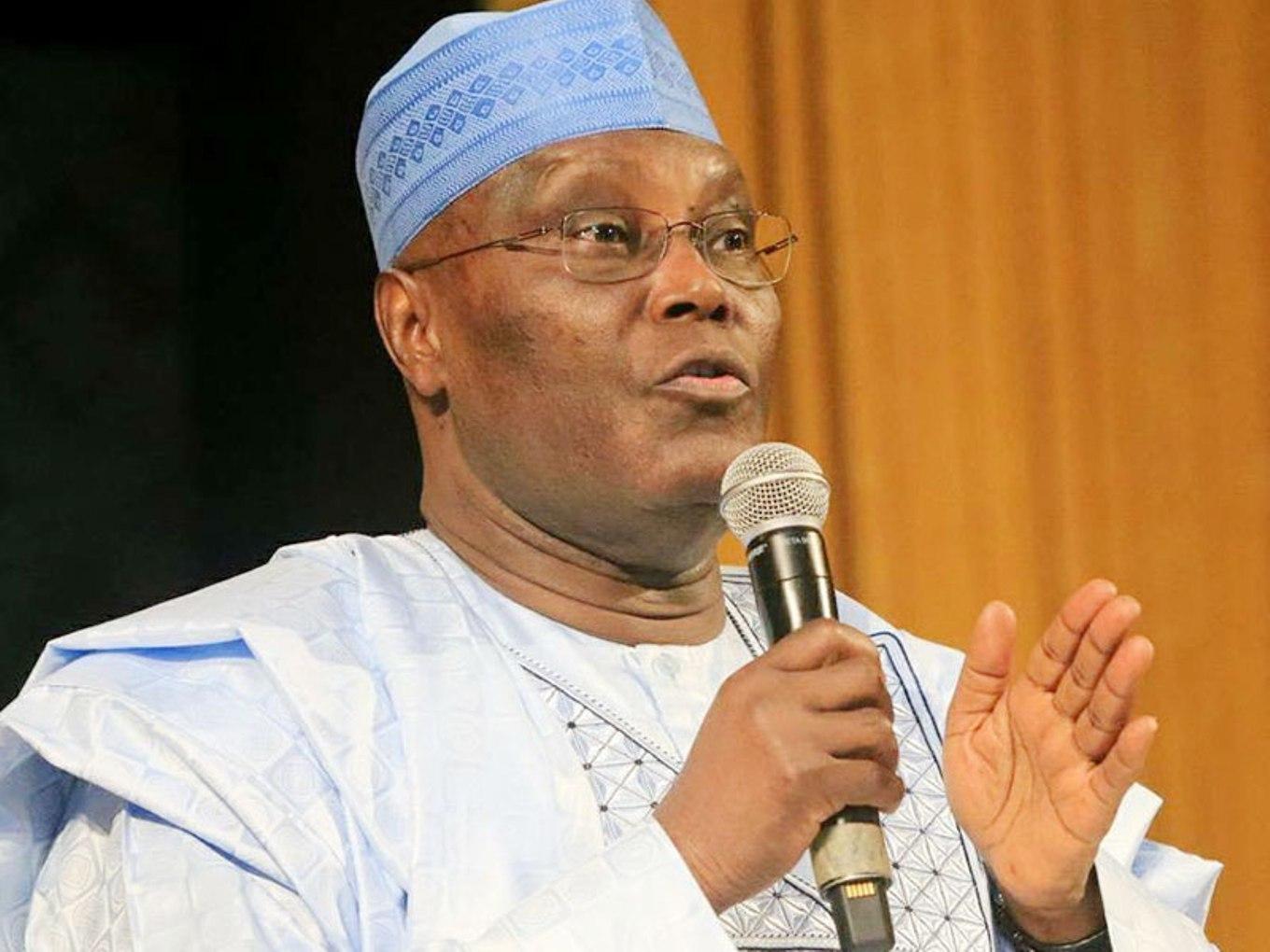
The African Democratic Congress (ADC), has unveiled its Presidential Campaign Council for the 2027 election, describing the structure as “lean” in response to the economic realities facing Nigerians.
The council, approved by the party’s presidential candidate, former Vice President Atiku Abubakar, will be chaired by Kashim Ibrahim-Imam, with former Kaduna State Governor, Nasir El-Rufai, serving as Deputy Chairman.
Senator Austin Akobundu will serve as Director-General and Campaign Manager, with responsibility for translating the campaign’s strategy into coordinated action.
The council will have six Deputy Directors-General overseeing various operational directorates, while 30 directors have been assigned specific responsibilities.
In a statement on Thursday, Phrank Shaibu, Director of Strategic Communication of the ADC Presidential Campaign Council and Senior Special Assistant on Public Communication to Atiku, said the structure was deliberately kept “lean” to reflect the economic circumstances confronting Nigerians.
“When families are struggling with food prices, transport costs and shrinking incomes, a campaign asking for their trust must show discipline in how it operates,” Shaibu said.
Dele Momodu will head the Media and Communications Directorate, while Dino Melaye will lead Contact and Mobilisation.
Mohammed Hayatudeen will chair the Policy Team, working with Professor Mohammed Sagagi and other members, including Professor Kingsley Moghalu, while Chief John Oyegun will chair the Campaign Advisory Board.
Shaibu said the campaign structure was designed to be focused on work, with clearly defined responsibilities for every directorate and assignment for every director.
“Our measure of success will be how clearly we address the cost of living, unemployment, insecurity and declining purchasing power—and how effectively we organise to make Nigeria affordable again,” he said.
The council is expected to coordinate the ADC’s presidential campaign activities ahead of the 2027 general election.
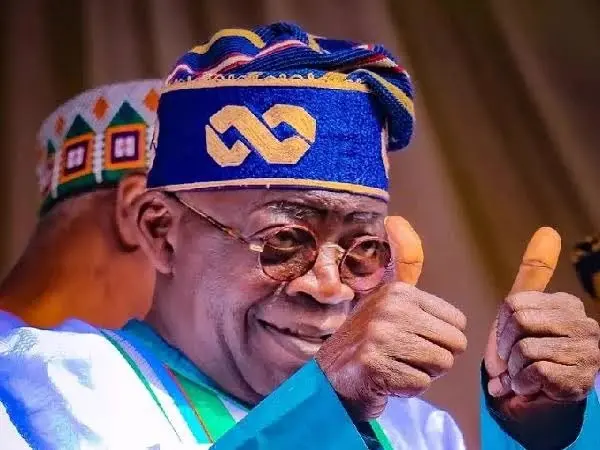
President Bola Tinubu has extended his “working vacation” in Europe by a few days and is expected to return to Nigeria at the weekend, the Presidency said on Monday.
The announcement came as Vice President Kashim Shettima represents the President at the 81st United Nations General Assembly in New York, where he is scheduled to deliver Nigeria’s national statement.
Tinubu departed Nigeria on August 30 to begin his working vacation in London. After spending one week in the United Kingdom, he proceeded to Paris, France, where he held meetings with French President Emmanuel Macron and businessman Vincent Bolloré.
Bolloré’s media interests include Canal+, MultiChoice and Universal Music Group.
A statement signed on Monday by Bayo Onanuga, Special Adviser to the President on Information and Strategy, said Tinubu has remains in touch with developments at home and continued to direct the affairs of government despite being away from Nigeria.
One of the major decisions taken by the President during the period was his directive for an independent investigation into the deaths of 37 suspected illegal miners in Minna following their detention by the Nigeria Security and Civil Defence Corps.
The deaths had raised concerns over the circumstances surrounding the detention and treatment of the miners, prompting the President to order an independent probe.
Tinubu’s decision to extend his stay abroad means he will not personally attend the opening of the high-level segment of the UN General Assembly in New York. Shettima, who departed Abuja on September 20, is representing the President at the global gathering and will present Nigeria’s national statement.
The Presidency said the Vice President’s representation was part of the arrangements for Tinubu’s absence from the country.
With Shettima now in New York, the Secretary to the Government of the Federation, Senator George Akume, will continue to represent the President at some official functions.
The Presidency said Tinubu had also delegated the Vice President to represent him at official functions while he was away, while Akume had similarly stepped in at other engagements.
The President’s extended stay in Europe also comes amid increased political activities at home ahead of the 2027 general elections.
According to the Presidency, the Director-General of the Presidential Campaign Council, Senator Abubakar Yari, has been leading notable leaders of the ruling party in consultations with prominent traditional rulers across the country.
The consultations form part of ongoing political engagements as the administration moves towards the next electoral cycle.
The Presidency also reacted strongly to criticism over Tinubu’s decision not to attend the UN General Assembly personally.
It described as irresponsible what it called a “baseless insinuation” by former Vice President Atiku Abubakar and a United States-based lobbying firm headed by an ex-convict regarding the President’s non-attendance at the global gathering.
The Presidency maintained that Nigeria would be adequately represented by Shettima, who will deliver the country’s national statement.
Tinubu’s latest trip began as an official working vacation, during which the President combined his leave with selected diplomatic, business and governmental engagements.
His meeting with Macron in Paris provided an opportunity for discussions on bilateral relations, while his engagement with Bolloré focused on business and investment interests involving Nigeria.
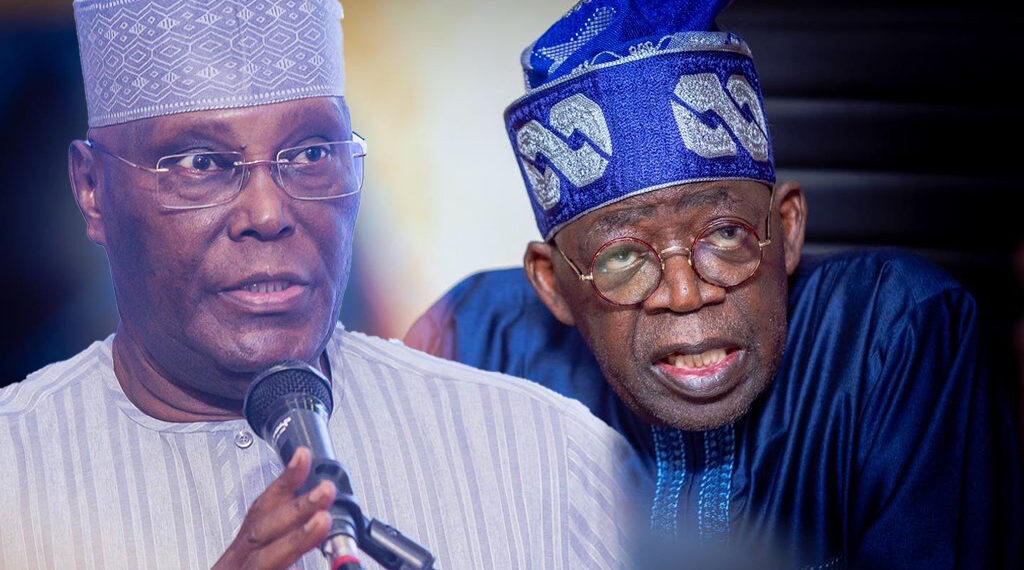
Former Vice President Atiku Abubakar has urged President Bola Tinubu to take immediate steps to reduce the cost of petrol, saying Nigerians are struggling with the combined impact of high energy, transportation and food prices.
Atiku made the call on Friday in Abuja during a press briefing on fuel prices, palliatives and the rising cost of living. His comments came amid renewed concerns over the effect of higher petrol prices on households and businesses.
The African Democratic Congress (ADC) presidential candidate said the removal of petrol subsidy in May 2023 placed additional pressure on families, workers, farmers and businesses.
He said the effect of higher petrol prices was not limited to motorists, as increased transportation and logistics costs had also pushed up the prices of food and other essential goods.
“When government makes energy expensive, it makes life expensive,” Atiku said.
The former vice president recalled that he had previously called for government intervention to reduce petrol prices, but said Tinubu had dismissed the proposal as showing “serious ignorance” of governance and the economy.
Atiku questioned whether the Nigeria Labour Congress (NLC), petroleum marketers, manufacturers and ordinary Nigerians who had raised concerns about rising costs could all be described as ignorant.
“When workers, producers, marketers and ordinary families are all raising the alarm, government must listen,” he said.
He said the government should be prepared to review its policies when their consequences become difficult for citizens to bear, adding that rising production costs were putting further pressure on manufacturers while families were finding it harder to afford basic goods.
Atiku also argued that government revenue and GDP figures did not necessarily reflect the economic reality facing ordinary Nigerians.
“If government receives more Naira while the citizen’s naira buys less food, less fuel, less electricity and less transportation, then bigger government revenues mean little to the family struggling to survive,” he said.
The ADC candidate urged Tinubu to use the remaining eight months of his first term to reduce the burden on Nigerians and consider any measure capable of lowering petrol prices, even if the proposal came from a political opponent.
“What matters to me is that Nigerians pay less,” Atiku said. “A sensible idea does not become a bad idea because it came from your opponent.”
He also offered to make his policy framework available to the Tinubu administration, saying Nigerians should not have to wait for a new government before benefiting from policies that could provide relief.
“If you need the framework, I will provide it. Implement it under your government. Give it whatever name you choose. Take the credit,” he said.
“I ask for only one thing: Let Nigerians breathe.”


