
Personality in Focus
Opinion: Why I Believe in Celebration of Christmas Despite What I Know About the Origin


- /home/rhoncare/pointblank.ng/wp-content/plugins/mvp-social-buttons/mvp-social-buttons.php on line 27
https://pointblank.ng/wp-content/uploads/2021/12/cute-christmas-wallpaper-with-realistic-christmas-elements_1361-3087.jpg&description=Opinion: Why I Believe in Celebration of Christmas Despite What I Know About the Origin', 'pinterestShare', 'width=750,height=350'); return false;" title="Pin This Post">
- Share
- Tweet /home/rhoncare/pointblank.ng/wp-content/plugins/mvp-social-buttons/mvp-social-buttons.php on line 69
https://pointblank.ng/wp-content/uploads/2021/12/cute-christmas-wallpaper-with-realistic-christmas-elements_1361-3087.jpg&description=Opinion: Why I Believe in Celebration of Christmas Despite What I Know About the Origin', 'pinterestShare', 'width=750,height=350'); return false;" title="Pin This Post">
By Rev Enitan Shogbade
So many people have reservations about the proprieties or otherwise of celebrating Christmas, especially on December 25. Some Christian denominations even see those celebrating Christmas as endorsing paganism in another form, but should Christians celebrate Christmas or not?
While there can never be a common agreement on the issue of celebrating Christmas as knowledge and understanding differ, I have decided to pen down for my friends and followers, where I stand about the issue of Christmas.
WHAT I KNOW ABOUT CHRISTMAS
1. I am aware that Jesus was not born on 25th of December.
2. That 25th of December was the day that was used to celebrate the Sun god in ancient Rome.
3. That Constantine was the Christian leader who chose the day for the celebration of the birth of Christ and that even Constantine’s conversion as a Christian was suspected to be false.
4. That the Bible did not command the celebration of Christmas and that the only thing our Lord commanded to be done in his remembrance is the observance of the Holy Communion.
5. That the Word “Christmas” did not even occur in the bible.
6. That the celebration of Christmas has been bastardized and commercialized and that it should not even been associated with a Holy and moral person like our Lord Jesus’ Christ.
7. That the Christmas season promotes sin and immortality all of which the person being celebrated opposed.
These are some of the arguments that the opponents of Christmas celebration based their opposition on and I share in their concerns BUT I STILL BELIEVE IN CELEBRATING CHRISTMAS. Why ?
WHY I BELIEVE IN CELEBRATING CHRISTMAS
1. Though Jesus was not born on 25th December, no one can say accurately when he was born. Those insinuating an October date are only being speculative. And I think it is a divine arrangement that the Godhead kept that day away from mankind because of what it may engender among those who may share the same date with him.(Imagine how those who were born on 25th of December feel compared to those of us who were not).
2. I know of friends whose parents couldn’t give the accurate date of their birth but chose a day close to when their mates were born to celebrate their birthday and still feel special on their chosen dates.
3. That 25th December was once a pagan day to celebrate a pagan god and now chosing to celebrate the King of Kings and Lord of Lords only proves the superiority of our God over idols and proves to us who believe that an idol is nothing according to scriptures 1 Cor 8: 4.
4. I celebrate on 25th because it’s been chosen by Church leaders thousands of years before our time and if it was not divine, it wouldn’t be standing and it would have fiddled out over the years.
5. There is actually no date or months that does not have pagan origin in the past. For example, history teaches that in ILE- IFE, the ancient town in old OYO KINGDOM and in current Osun State of Nigeria, every day of the year but one is used to celebrate the 365 gods of the people and this applies to so many other cultures of the world for the whole world was of paganism until God began to introduce himself to mankind through Abraham after the fall of Adam.
6. I believe in celebrating Christmas even though the bible did not command nor does it forbids such celebration because there are some things the bible leaves to our sound judgement to decide, as it’s not everything the bible dictates. For example, the bible did not ask you to brush your teeth nor did it ask you to take your bath daily but you still do.
7. I celebrate Christmas as commemoration of the birthday of the Lord Jesus Christ because i appreciate that he came into the world on a day to begin the plan of our redemption for if he was not born, he could not have died and if he did not die for us, then we will still remain sinners, condemned to hell fire.
8. I celebrate Christmas because it affords me an opportunity to Minister to the dying world about the reason for the season, as almost everyone everywhere in the world remembers the day because of its association with the person of Jesus Christ.
9. I celebrate Christmas because birthday is an occasion to celebrate the one we love and since I love Jesus and he is my Lord and my friend, I will use the day to celebrate my Lord and Friend and take the advantage of the Holidays to reflect on his mission on earth and my response to him so far.
10. On commercialization and immorality associated with the day, this is the reality of our days and a sign of the end time foretold in the bible and does not in any way invalidate the morality of the celebration but rather a condemnation of those who choose to use the day to commit sins as they celebrate the birth of one whose reason for coming is to destroy sin and be born in every heart.
11. I celebrate because i deduct from scriptures that Jesus doesn’t mind being celebrated as we see in Mark 14 : 3 – 9 & Mark 5 : 29.
12. I believe in Christmas festivity because i realized that Jesus our Lord is not against festivity or social gathering, as he himself honours such with his presence at various feast in his days. Matthew 26 : 17, Luke 5 : 29, John 4: 45, John 5: 1 & John 7 : 2- 14.
13. I believe in celebrating Christmas because it afford me an opportunity to take after Christ who took advantage of such festival to teach, preach and advance the course of the kingdom. So i also celebrate by pointing people to why he came.
14. I join other Christ minded Christians to celebrate the coming of Christ to our world because i realize that the early disciples including the Apostles do join in the celebration of the feast of their days. Acts 18 : 21.
15. I celebrate because rather than restraining me from celebrating, the bible actually encourage me to do so truthfully, rightly and responsibly – 1 Cor 5 :8 & Jude: 12.
I can continue on and on and this is even becoming a long thesis many may not be willing to read so let me stop here on my reasons for believing in the celebration of Christmas.
I have presented my reasons because the bible commanded me so to do 1 Peter 3: 15. That I give reasons for my hope and reasons for my faith in Christ and to put to rest the questions often asked by my friends from other denominations who i will now refer to this write-up henceforth.
However, lets remember the bible says, he that regards a day regards it unto the Lord and he that regards it not, does so also unto the Lord – Romans 14: 6.
It is therefore necessary that we remind ourself of the biblical injunction that we put no stumbling block on each other’s path Romans – 14: 13.
He that believes in celebration of Christmas please celebrate responsibly and he that does not believe should still be himself or herself for we are brothers and sisters in Christ irrespective of our disposition to 25th December.
For those who are like me for the above started reasons or more I say HAPPY CHRISTMAS TO YOU ALL. May Jesus be born in every heart that gets to read this in Jesus Name.
Again, Merry Christmas and Happy Jesus Festival.
I am your Friend in Christ and a Friend of Jesus Christ of Nazareth.
Reverend Shogbade is the General Overseer of FOJIA, and writes from Lagos


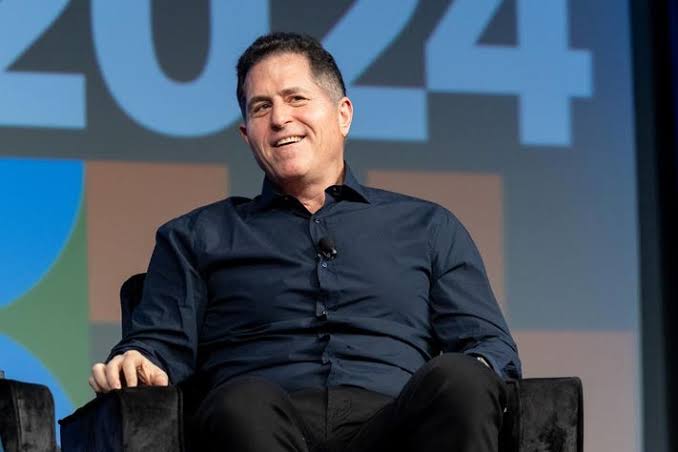
Michael Dell, on Tuesday, overtook Jeff Bezos in Forbes’ billionaire rankings, edging past the Amazon co-founder as shares of Dell Technologies reached an all-time high, extending a six-month rally.Dell’s estimated net worth rose $4.6 billion to reach $267.7 billion at market close Tuesday afternoon, making him the third-wealthiest person in the world for the first time ever.
Dell trails Alphabet co-founder Larry Page ($277.9 billion) and Tesla chief Elon Musk ($942 billion).
Shares of Dell Technologies rose 1.9% to close at an all-time high of $533.88 on Tuesday, and traded as high as $538.47 earlier in the day.
Bezos’ estimated net worth dropped $1.4 billion to $265.2 billion as Amazon shares fell 0.6%.
Dell’s net worth has more than doubled since last year as his company has benefited from booming demand for artificial intelligence hardware.
327%. That is how much Dell’s stock has rocketed since the start of the year, when shares were priced around the $128 mark. Michael Dell holds a roughly 40% stake in his company and has much of his fortune wrapped up in his private investment firm DFO Management, which invests in hotels and liquid corporate credit. Dell’s net worth has soared alongside his company’s earnings, allowing him to surpass Meta co-founder Mark Zuckerberg and Oracle co-founder Larry Ellison in recent months.
Dell Technologies is a week removed from its second-quarter earnings report in which it logged $47 billion in revenue, a 58% jump year-over-year, and adjusted earnings per share of $7.04, a threefold increase from the same period last year. The company’s AI server business logged a record $60.9 billion in orders and accounted for $16.4 billion in revenue. The growth, and what chief financial officer David Kennedy called “AI momentum,” resulted in Dell Technologies raising its full-year revenue guidance $25 billion to an anticipated $192 billion.

The Lagos State Police Command under the leadership of the Commissioner of Police, CP Fatai Tijani, on Thursday, honoured the President of the National Association of Online Security News Publishers (NAOSNP), Mayor Oki Olatunji Samson, as a Police-Youth Advocate for his contribution to youth engagement and advocacy, responsible security journalism and community safety.
The recognition came during the Command’s commemoration of International Youth Day 2026, themed “Different Contexts, Common Aspirations,” held at the Police Officers’ Wives Association (POWA) Secretariat, Oduduwa Street, Lagos.
The event also featured the launch of the National Campaign Against Political and Digital Thuggery and a Police-Youth Dialogue designed to build stronger partnerships between law enforcement and young Nigerians. The initiative, in line with the vision of Inspector-General of Police, IGP Olatunji Rilwan Disu, placed youth participation, responsible citizenship and peacebuilding at the centre of contemporary security discourse.
In his address at the event, the NAOSNP President, a respected security journalist, stressed that youth advocacy must move beyond rhetoric to deliberate investment in the values, opportunities and relationships that enable young people to become agents of stability. He argued that the youth should not be viewed simply as potential victims or perpetrators of insecurity, but as indispensable stakeholders in preventing it. According to him, the digital space has become an extension of society and therefore requires the same standards of responsibility expected in the physical world.
The NAOSNP President urged young Nigerians to recognise the power of their voices, particularly on social media, and deploy that influence constructively. “Your phone is powerful. Your social media account is powerful. Your voice is powerful. Please use that power to build, not destroy.” He further challenged young people to resist political manipulation, stressing that no temporary political reward could justify sacrificing one’s future.
“Do not allow anyone to use your future to settle their present disagreement.”
He advocated a culture in which political differences could be expressed without becoming personal hostility, urging youths to verify information before sharing it and to understand that digital actions can have real-world consequences.
The intervention resonated strongly with the message of the Commissioner of Police, Lagos State Command, CP Tijani Fatai, who warned young people against allowing politicians to exploit them for electoral violence as the country approaches another election cycle. Fatai said youths must look beyond immediate gratification and recognise the importance of preserving their future.
“Tomorrow is there for us. We should not think of today. We should always think of tomorrow. That tomorrow is more important than what we are today.”
The CP also delivered a particularly strong message against the recruitment of young Nigerians into political thuggery, noting that political actors rarely expose their own children to the dangers of electoral violence. “None of these politicians will use any of their children for electioneering, thuggery, violence or what have you.”
He urged youths to reject attempts to use them for ballot-box snatching, intimidation, destruction of property and other forms of electoral violence, while stressing that political participation remained a legitimate right when exercised responsibly.
The Commissioner equally identified the digital environment as an emerging frontier of security, urging young Nigerians to think carefully before posting, sharing or reacting to provocative content. His message was clear: political participation must never become political violence, whether offline or online.
In his goodwill message, Commander, 9 Brigade, Nigerian Army, Brigadier General Ayokunle Owolabi, described the campaign as timely and commended the Police for strengthening engagement with young Nigerians. Owolabi noted that the energy, creativity and resilience of young people remained indispensable to Nigeria’s peace, security and development. He emphasised that national security could no longer be regarded as the exclusive responsibility of security agencies, but required a whole-of-society approach in which young Nigerians become active partners. He particularly warned against the misuse of digital platforms and physical spaces for violence, intimidation, misinformation and destructive engagement, while calling for stronger trust and communication between young people and security institutions.
Also speaking, the Lagos State Coordinator of the Police Campaign Against Cultism and Other Vices (POCACOV), SP Olivia Amarachi Ugochukwu, urged young people to become the change they desire in their communities.
“Policing is everybody’s business. If you see something, say something.”
She also charged the media to ensure that only verified information was disseminated, noting that responsible information management was essential to preventing fear, confusion and conflict.
The well attended event attracted representatives of the Nigerian Army, Nigerian Air Force, Nigerian Navy, NDLEA, FRSC and NSCDC, alongside NYSC, POCACOV, PCRC, NYCN, NANS, NURTW, RTEAN, CRAN, NAOSNP, POWA and youths from Police Barracks across Lagos. The programme featured an extensive Police-Youth Dialogue on security, political participation, social media, cultism, thuggery and emerging threats.
The recognition of Mayor Oki Samson as Police-Youth Advocate therefore represented more than an individual honour. It underscored the growing importance of credible voices capable of connecting young people, the media and security institutions around a shared commitment to peace.
In a society where insecurity can be amplified by a rumour, a provocative post or a manipulated young mind, youth advocacy has become a frontline security intervention. The future of Nigeria cannot be secured merely by policing the streets; it must also be secured by winning the minds, trust and participation of its young people.
The challenge before advocates such as Mayor Oki Samson and institutions such as the Police is to ensure that the message does not end with an award or a commemorative event. It must travel into schools, communities, newsrooms, transport parks and digital spaces—until peace becomes not merely a campaign slogan, but a conscious choice made by a generation whose future is ultimately at stake.
Personality in Focus
Malian Singer Salif Keita Pulls Out of South African Festival over Xenophobic Attacks
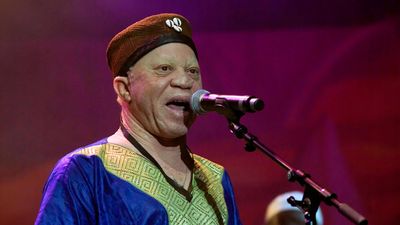
Malian music legend, Salif Keïta, has cancelled upcoming commercial performances in South Africa, including an appearance at the Mangaung African Cultural Festival (Macufe), citing what he described as “xenophobic violence” against African migrants.
The decision comes as anti-migrant protests intensify in one of Africa’s most industrialised economies, prompting thousands of foreign nationals to return home and increasingly straining cultural ties across the continent.
Explaining his decision, Keïta said he could not “ignore the reports of xenophobic violence against our African brothers and sisters.”
“When I see migrants attacked, I do not see ‘politics’. I see people looking for work, safety, and dignity.”
The 77-year-old musician stressed that his decision was not a rejection of South Africans.
“To be clear — I am not closing the door on South Africa. I am closing the door on violence,” he said.
Often described as the “Golden Voice of Africa”, Keïta has spent more than five decades in music and remains one of the continent’s most recognisable artists.
The award-winning Malian singer has earned four Grammy nominations and won France’s Victoire de la Musique for World Music Album of the Year in 2010 for La Différence.
His ties to South Africa also stretch back decades, including a performance at the Nelson Mandela 70th Birthday Tribute concert at Wembley Stadium in 1988, an event closely linked to the international anti-apartheid movement.
In response to his withdrawal, the Free State’s culture department said it regretted the decision and stressed that Macufe was intended to celebrate African unity.
Keïta’s withdrawal comes against the backdrop of worsening tensions over migration in South Africa, which has long attracted workers from across the continent.
More than 160,000 foreigners have left South Africa through repatriation programmes since May, according to an AFP tally. They include citizens of Malawi, Zimbabwe, Zambia, Ghana and Nigeria.
This week, 173 Tanzanian nationals also returned home from Durban, one of the centres of recent anti-migrant demonstrations.
Anti-migrant groups accuse undocumented foreigners of putting pressure on jobs and public services and contributing to crime.
However, South African authorities have maintained that immigration laws must be enforced through legal channels and have acted against people accused of vigilantism and violence.
Increasingly, the tensions are also spilling into Africa’s entertainment industry.
In July, a planned Lagos concert by Grammy-winning South African singer Tyla disappeared from her A*POP World Tour schedule after boycott calls from some Nigerians over reported xenophobic attacks against African migrants in South Africa.
Although Tyla and her management did not publicly confirm that the backlash caused the change, the episode showed how migration tensions were beginning to affect cross-border cultural exchanges.
Keïta’s decision now brings the issue into sharper focus from the opposite direction, with one of West Africa’s most prominent musicians refusing to perform in South Africa over the treatment of fellow Africans.
As a result, the controversy has added a cultural dimension to a migration crisis already affecting labour flows, diplomacy and relations between African countries.


