Metro
Pastor Accused of Raping Church Member Sentenced to Life Imprisonment


- /home/rhoncare/pointblank.ng/wp-content/plugins/mvp-social-buttons/mvp-social-buttons.php on line 27
https://pointblank.ng/wp-content/uploads/2024/01/feyi.jpg&description=Pastor Accused of Raping Church Member Sentenced to Life Imprisonment', 'pinterestShare', 'width=750,height=350'); return false;" title="Pin This Post">
- Share
- Tweet /home/rhoncare/pointblank.ng/wp-content/plugins/mvp-social-buttons/mvp-social-buttons.php on line 69
https://pointblank.ng/wp-content/uploads/2024/01/feyi.jpg&description=Pastor Accused of Raping Church Member Sentenced to Life Imprisonment', 'pinterestShare', 'width=750,height=350'); return false;" title="Pin This Post">
Feyi Daniels, the founder of I Reign Christian Ministry, has been sentenced to life imprisonment by an Ikeja sexual offences and domestic violence court for the rape of a female church member.
The trial, presided over by Justice Rahman Oshodi, concluded on Friday with the judge finding Daniels guilty of rape and sexual assault. The cleric was arraigned by the Lagos State government on charges of rape, attempted rape, and sexual assault involving his church members.
Daniels faced trial on an amended four-count charge related to rape, sexual assault, and attempted rape. The allegations against him stemmed from incidents involving three church members, which reportedly occurred at his residence in Lekki and on the premises of his church in Ikeja.
The pastor’s legal troubles began in May 2023 when he was remanded in court for allegedly raping a 25-year-old woman at his Lekki residence. The victim testified in court that Daniels sexually assaulted her during a prayer session, while he was speaking in tongues.
Okay.ng


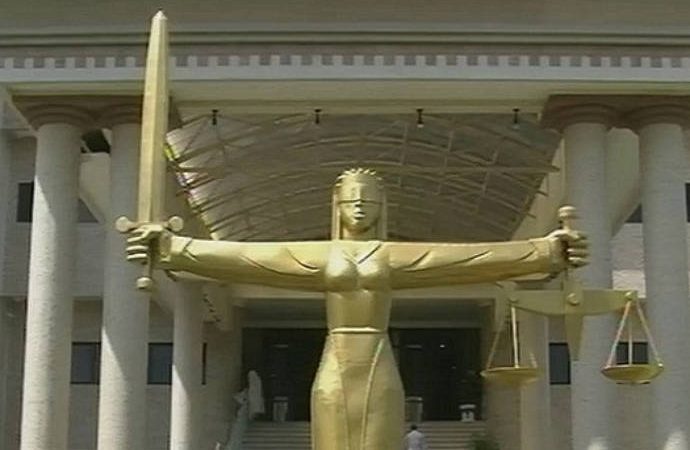
The Court of Appeal has inaugurated 375 judges for election petition tribunals across the country ahead of the 2027 general elections, setting in motion preparations for the adjudication of electoral disputes that may arise from the polls.
President of the Court of Appeal, Justice Monica Dongban-Mensem, inaugurated the judges on Monday at the Body of Benchers Complex in Abuja, coming 68 days before the 2027 general elections.
The tribunals will hear and determine petitions arising from elections into the National and State Houses of Assembly, as well as governorship elections, in line with the provisions of the 1999 Constitution, as amended.
Speaking at the inauguration, Dongban-Mensem said the exercise represents an important institutional step towards safeguarding constitutional democracy, upholding the rule of law and preserving the integrity of Nigeria’s electoral process.
She stressed that the responsibility of the judiciary extends beyond the formal determination of disputes, noting that the manner in which election petitions are handled has significant implications for public confidence in democratic governance.
“This gathering is more than a ceremonial event; it is an important institutional preparation for one of the most consequential responsibilities entrusted to the judiciary,” she said.
Dongban-Mensem maintained that the credibility of democratic institutions depends not only on the conduct of elections but also on the availability of impartial and effective judicial mechanisms for resolving disagreements over electoral outcomes.
“The credibility of democracy depends not only on the conduct of elections but also on the existence of impartial, effective, and timely mechanisms for resolving electoral disputes,” she added.
She further explained that the judiciary’s responsibility in electoral matters is central to ensure that the outcome of democratic contests is subjected to lawful scrutiny whenever challenged.
“Through the fair determination of such disputes, the Judiciary safeguards the people’s mandate, upholds constitutional supremacy and sustains public confidence in democratic governance,” Dongban-Mensem noted.
Providing a breakdown of the tribunal membership, Dongban-Mensem disclosed that the 375 judges were nominated from various courts and judicial institutions across the country.
She said 138 of the judges are returning members who had previously served on election petition tribunals, while 237 are newly nominated.
“Of this number, 138 are returning members with previous Tribunal experience, while 237 are newly nominated members,” she said.
The composition brings together judicial officers with previous experience in election petition proceedings and newly nominated members who will be participating in the tribunal process for the first time.
The Court of Appeal President urged the judges to approach their assignments with a strong sense of responsibility, reminding them that their conduct and decisions would attract considerable public scrutiny.
She cautioned them, in particular, to remain mindful of the significance of their judicial responsibilities in determining disputes capable of affecting the political fortunes of candidates and parties, as well as public confidence in the electoral process.
The tribunal judges are expected to discharge their duties in accordance with the Constitution and applicable electoral laws, ensuring that petitions brought before them receive fair and lawful consideration.
The inauguration is pursuant to the constitutional and statutory framework governing the establishment and operation of election petition tribunals in Nigeria.
Section 285(1) and (2) of the 1999 Constitution, as amended, vests in the President of the Court of Appeal the responsibility of constituting election petition tribunals to adjudicate disputes arising from National and State Houses of Assembly elections, as well as governorship elections.
Similarly, Section 134(3)(a) and (b) of the Electoral Act, 2026, prescribes timelines for constituting the tribunals and opening their registries.
These provisions establish the legal framework for the tribunals to commence operations and entertain petitions arising from the elections.
The inauguration of the 375 judges comes as the country prepares for the 2027 general elections, with the judiciary expected to play a critical role in resolving post-election disputes and determining challenges to electoral outcomes in accordance with the law.

The Nigeria Democratic Congress (NDC) governorship candidate in Lagos, Funso Doherty, has accused vested interests within the State’s informal transport sector of frustrating efforts to modernise public transportation.
Doherty made the remarks during the Lagos governorship debate on Friday organised by the Nigeria Debate Consortium comprising Channels Television, TVC News, The PUNCH, TheCable and Vanguard, where he criticised the continued reliance on ageing commercial buses and the influence of the agbero system in the State’s transport sector.
He questioned why successive administrations had failed to modernise public transportation despite the thousands of rickety buses operating across Lagos.
“Our public transportation system is not modernised. Thousands of rickety buses are moving around. We must ask ourselves: are these what our people deserve? Why has it taken so long to modernise public transportation?” he asked.
The NDC candidate argued that the failure to reform the system is not accidental, alleging that powerful interests benefit from the existing arrangement.
“In my opinion, the lack of modern transportation is not by accident. There are vested interests in operating the bus system the way it is. Many of us understand the agbero system; there is an ecosystem around it, and there is no political will to deal with that problem,” he said.
Doherty, who promised to overhaul the State’s public transportation system if elected, said his administration would not be beholden to informal transport networks.
“We would modernise public transportation because we would be elected by the people and not by the agbero network,” he added.

By Tolulope A. Adegoke
“Poverty becomes a weapon the moment a government discovers that hunger is more obedient than argument, and that a people preoccupied with survival have neither the time to question nor the strength to resist. The antidote is not charity but citizenship—the deliberate construction of institutions that make deprivation a failure of policy rather than a technique of power.” – Tolulope A. Adegoke, PhD
Abstract
Poverty in many third world countries is not merely a consequence of resource scarcity or economic mismanagement; it is, in a growing number of cases, a deliberate instrument of political control. This write-up examines the phenomenon of weaponized poverty—the strategic deprivation of populations to secure compliance, suppress dissent, and perpetuate elite dominance. Drawing on documented cases and institutional evidence, it analyzes the mechanisms through which poverty is weaponized, the consequences for governance and human development, and the comprehensive solutions available to dismantle this cycle. The argument advanced here is solution-oriented: weaponized poverty is a policy choice, and like all policy choices, it can be reversed through deliberate institutional reform, inclusive social protection, and accountable leadership.
Defining Weaponized Poverty
Weaponized poverty refers to the calculated use of economic deprivation—restricted access to food, employment, healthcare, education, and other socioeconomic rights—as a means of subjugating a population or a targeted segment of it. Unlike incidental poverty arising from structural constraints or natural misfortune, weaponized poverty is defined by its instrumentality: deprivation is imposed, sustained, or selectively alleviated to produce political outcomes.
The distinction matters. When poverty is weaponized, the objective is not the elimination of hardship but its calibration. The population must be kept sufficiently destitute to depend on the ruling authority, yet not so desperate as to revolt. This calibration is visible in the cyclical distribution of palliatives—temporary relief measures that pacify immediate discontent without addressing underlying structures of deprivation.
Scholarship on forced migration has illuminated this dynamic with particular clarity. Research demonstrates that states can and do engage in economic persecution to subdue political opponents, limiting access to food, employment, healthcare, education, and other socioeconomic rights in order to impose a state of destitution on targeted populations . In such contexts, poverty becomes an element of persecution rather than an incidental hardship—a distinction with profound implications for how the international community understands both displacement and governance failure.
Mechanisms of Weaponization
Weaponized poverty operates through several identifiable mechanisms, each of which degrades the social contract while consolidating power.
Selective deprivation and patronage. In this model, access to basic necessities is contingent on political loyalty or acquiescence. A state may withhold services from regions or communities perceived as oppositional while directing resources to loyal constituencies. The result is not uniform poverty but a stratified deprivation that rewards compliance and punishes dissent. Research on North Korea demonstrates how socioeconomic wellbeing and mobility can become functions of perceived loyalty to the state, with the result that poverty serves as an instrument of political discipline.
Palliative dependency. Where outright repression is costly or visible, governments may substitute systematic deprivation with periodic handouts. Palliatives—food distributions, small cash transfers, or subsidized essentials—are deployed not as rights but as favors, cultivating a psychology of dependency. Analysis of the Nigerian palliative system reveals how such measures, ostensibly designed as temporary relief, have evolved into instruments of governance: the population is kept in a state of manageable precarity, grateful for relief that never addresses the structures producing their poverty. The term “palliative” has acquired a cynical resonance, becoming emblematic of a carrot-and-stick approach to managing the masses.
Exclusion from productive participation. Weaponized poverty frequently involves the systematic exclusion of populations from economic opportunity—through discriminatory land policies, restricted access to credit, or the destruction of local livelihoods. When communities cannot participate in the formal economy, they become dependent on state or elite-controlled channels of survival. The World Bank has documented how networks, neighborhoods, and norms can function as “forces of preservation” that maintain existing power structures and limit social mobility, trapping generations in poverty regardless of individual effort.
Institutional capture. The weaponization of poverty is enabled by the capture of institutions—judicial, legislative, and administrative—that might otherwise provide recourse. When the legal system offers no protection against arbitrary deprivation, and when electoral processes are managed to produce predetermined outcomes, the poor have no institutional channel through which to contest their condition. The result is a closed system in which poverty is both the product and the perpetuator of powerlessness.
Consequences for Third World Development
The consequences of weaponized poverty extend far beyond the immediate suffering of affected populations. They undermine the foundations of sustainable development in ways that compound over generations.
Human capital erosion. When populations are denied adequate nutrition, healthcare, and education, the resulting deficits in human capital persist across generations. A child raised in conditions of weaponized poverty—where schools are inaccessible and health services unavailable—enters adulthood with diminished capacities that no subsequent policy can fully remedy. The World Bank’s 2024 report on poverty and prosperity notes that in the poorest economies, the focus must be on economic growth and investing in human, financial, and physical capital. When these investments are deliberately withheld, the damage is cumulative and often irreversible.
Political instability and displacement. Populations subjected to economic persecution eventually move—internally or across borders. Research demonstrates that people flee not merely poverty but poverty as a result of economic coercion. This creates cascading consequences: strain on receiving regions, vulnerability to exploitation during transit, and the permanent loss of productive citizens from countries that can least afford their departure.
Erosion of state legitimacy. When the state is experienced primarily as an instrument of deprivation rather than protection, citizens withdraw trust and participation. The social contract—the implicit agreement by which citizens accept governance in exchange for security and opportunity—dissolves. What remains is a hollowed-out state that maintains order through coercion and patronage rather than consent, vulnerable to sudden collapse when economic shocks or political crises disrupt its mechanisms of control.
Obstruction of economic growth. Weaponized poverty is, in narrowly economic terms, self-defeating. Economies cannot grow sustainably when large segments of the population are excluded from productive participation. The World Bank has emphasized that for lower-middle-income countries, the focus should shift to growth and shared prosperity—measures that increase incomes, improve resilience to shocks, and lower emissions. Countries that have achieved rapid poverty reduction have done so through inclusive growth strategies that recognized the poor as economic actors rather than objects of control.
Pathways to Solutions
The solution to weaponized poverty is not technical but political. It requires the construction of institutions, policies, and incentives that make weaponization costly and inclusion beneficial. The following pathways, drawn from documented successes across diverse contexts, offer a comprehensive framework for action.
1. Institutionalize universal social protection as a right, not a favor.
Social protection systems that provide universal or near-universal coverage—rather than targeted, discretionary benefits—remove the discretionary power that enables weaponization. When citizens are entitled to support by law rather than dependent on the goodwill of officials, the capacity to withhold support as punishment is eliminated.
The scale of the challenge is substantial. According to the International Labour Organization’s World Social Protection Report 2024–26, only 52.4 percent of the world’s population is covered by at least one social protection benefit, leaving 3.8 billion people unprotected. The design principle is critical: benefits must be adequate, predictable, and legally guaranteed. Benefits that are too low to meaningfully affect poverty leave recipients focused on survival with no capacity to plan or invest, perpetuating the very dependency that weaponization exploits. Adequacy, combined with legal entitlement, transforms social protection from a tool of pacification into an instrument of empowerment.
2. Build shock-responsive delivery systems.
Poverty weaponization thrives on crisis. When droughts, floods, or economic downturns strike, populations without reliable support become desperate and dependent. Shock-responsive social protection systems—those that can rapidly expand during crises—prevent this dynamic by ensuring that emergencies do not become opportunities for exploitation. The infrastructure required includes dynamic registries, digital payment systems, and case management capacities that can scale quickly. The World Bank has documented how countries that invested in such systems before the COVID-19 pandemic responded more effectively during it, demonstrating that proactive investment pays dividends.
3. Link social protection to economic inclusion.
Handouts alone, no matter how well designed, are insufficient. The goal must be graduation from poverty, not permanent maintenance at a subsistence level. Economic inclusion programs—which combine cash or asset transfers with training, market access, and mentorship—have demonstrated the capacity to increase household incomes and business revenues substantially. The World Bank’s State of Economic Inclusion Report 2024 found that in Zambia, an economic inclusion program for women led to a 19 percent increase in consumption and a 45 percent rise in business profits, with cost recovery within twelve months. Such programs transform the poor from objects of policy into agents of their own development, a shift with profound implications for both economic growth and political dignity.
4. Reform fiscal policy and combat corruption.
Weaponized poverty is sustained by fiscal systems that extract from the many to benefit the few. Regressive taxation, inefficient subsidies that disproportionately benefit the non-poor, and unchecked corruption all divert resources that could fund inclusive social protection. Redirecting resources toward the poorest segments of the population is not a radical measure but a common-sense reallocation that prioritizes human development over politically convenient but economically regressive expenditures.
Anti-corruption measures are equally essential. When public resources are siphoned into private accounts, the programs designed to protect the poor are hollowed out. Independent oversight, transparent procurement, and accountability mechanisms that impose real consequences for diversion of funds are not optional complements to social protection; they are preconditions for its effectiveness. The World Bank’s research on social mobility emphasizes that disciplining elites—through progressive tax policies and accountability—is essential for breaking cycles of inequality.
5. Strengthen legal empowerment and civic space.
The weaponization of poverty depends on the absence of recourse. When the poor cannot sue for denied services, cannot organize to demand accountability, and cannot vote out officials who preside over their deprivation, they have no mechanism to alter their condition. Legal empowerment—access to courts, legal aid, and enforceable rights to basic services—provides the poor with tools to contest weaponization.
Civic space is equally critical. A free press, independent civil society organizations, and protected rights of assembly and expression create the conditions under which weaponization becomes visible and contestable. The Kenyan experience is instructive: when citizens protested against regressive taxation and rising inequality, the government responded with arbitrary arrests, abductions, and restrictions on civic space rather than addressing the root causes of discontent. Amnesty International’s research documents how authorities used unlawful surveillance, restriction of civic space, and repression of media to suppress dissent rather than address the economic grievances that sparked protests. This pattern—repression in place of remedy—illustrates why civic space must be protected as a development priority, not merely a political preference.
6. Pursue equitable growth through diversified economic structures.
The structural conditions that enable weaponization include economies that offer narrow opportunities for productive participation. When a nation’s economy is concentrated in a few sectors controlled by elites, most citizens have limited avenues for economic advancement independent of elite patronage. Diversification—particularly into manufacturing and knowledge-intensive services—creates broader opportunities and reduces the leverage of those who control access to livelihoods. No country has achieved sustained poverty reduction without structural transformation that creates productive employment for large segments of the population.
The Leadership Imperative
Institutions and policies do not create themselves. They are the products of leadership—of choices made by those with authority to allocate resources, design programs, and enforce rules. The persistence of weaponized poverty is therefore, at its root, a leadership failure: a failure to recognize that the security and prosperity of the few cannot be sustained indefinitely on the deprivation of the many.
The choice is not between idealism and realism. It is between two forms of realism: the short-term realism of those who believe they can maintain power through deprivation, and the long-term realism of those who understand that durable prosperity requires broadening the base of economic participation. The first approach produces fragility, instability, and eventual collapse. The second produces resilience, growth, and legitimacy.
The World Bank’s 2024 analysis of social mobility offers a pertinent observation: when systems are perceived as rigged, people disengage from productive effort. Why invest in education or strive for success if advancement depends on connections rather than merit? The answer, for leaders who understand long-term national interest, is to reform the system so that effort is rewarded and talent is utilized regardless of origin. This is not merely a moral imperative but an economic one.
Conclusion
Weaponized poverty is not an immutable feature of third world existence. It is a choice—a series of choices—made by those who hold power and sustained by institutional arrangements that can be reformed. The solutions are known: universal social protection, economic inclusion, fiscal justice, legal empowerment, civic space, and equitable growth. What is required is the leadership to implement them and the civic pressure to hold leaders accountable.
The international community has a role to play—through development assistance that prioritizes institution-building over short-term relief, through trade and investment policies that support rather than undermine inclusive growth, and through diplomatic engagement that consistently elevates human dignity over geopolitical convenience. But ultimately, the decisive action must come from within the countries affected—from leaders who choose to govern for all rather than for themselves, and from citizens who demand nothing less.
Poverty can be a weapon. But weapons can be laid down. The question is whether the will exists to do so.
Dr. Tolulope A. Adegoke, AMBP-UN, is a globally recognized scholar-practitioner and thought leader at the nexus of security, governance, and strategic leadership. His mission is dedicated to advancing ethical governance, strategic human capital development, resilient nation-building, and global peace. He bridges the worlds of academic rigor and practical application, contributing to leadership discourse at the highest levels of policy and practice. He can be reached via: tolulopeadegoke01@gmail.com, globalstageimpacts@gmail.com