Metro
Police Affairs Ministry’s Perm Sec Retires, Tasks Directors on Mentorship


- /home/rhoncare/pointblank.ng/wp-content/plugins/mvp-social-buttons/mvp-social-buttons.php on line 27
https://pointblank.ng/wp-content/uploads/2024/11/IMG-20241126-WA0000-1000x600.jpg&description=Police Affairs Ministry’s Perm Sec Retires, Tasks Directors on Mentorship ', 'pinterestShare', 'width=750,height=350'); return false;" title="Pin This Post">
- Share
- Tweet /home/rhoncare/pointblank.ng/wp-content/plugins/mvp-social-buttons/mvp-social-buttons.php on line 69
https://pointblank.ng/wp-content/uploads/2024/11/IMG-20241126-WA0000-1000x600.jpg&description=Police Affairs Ministry’s Perm Sec Retires, Tasks Directors on Mentorship ', 'pinterestShare', 'width=750,height=350'); return false;" title="Pin This Post">
The Permanent Secretary, Ministry of Police Affairs, Mr. James Sule, has retired from service after 35 years of meritorious service to the nation, according to a statement signed by the Deputy Director, Information and Public Relations Unit, Mr. Bolaji Kazeem, and made available to the National Association of Online Security News Publishers (NAOSNP).
The Permanent Secretary however, charged the directorate cadre to mentor officers in the service for effective service delivery to the citizens, as a parting advice.
He made the charge during the send-forth ceremony organized on his behalf by the Ministry staff at the Headquarters of the Ministry in Abuja.
The retired Permanent Secretary said that everything starts and ends with leadership and the need to uphold the organization’s rules and regulations without considering people’s feelings.
“We are all leaders just like I said, don’t just think the president, vice president, and governors are only leaders. What can you do in your community to impact positively on others? What are you doing to mentor the younger ones so that whatever corner you find yourself in, whether you are a union leader, whether you are an assistant director or you are a principal officer, you do your best to be fair, accountable, and transparent in your activities?
He used the opportunity to thank the management and staff of the Ministry for their support and for working with him as a team to ensure the success of the ministry.
According to James, “Indeed, it was a privilege to work alongside a talented and committed team. Together we have achieved a lot, and I am proud of knowing you and we have accomplished it while we were here although it was short, I also want to thank you for your kind words. I thank my personal staff that’s brought so much to the nation-building,” he said.
In his response, the Director charged with the Permanent Secretary Office, Mr. Yusuf Abubakar Argungu, stated that the staff has learned so much from the retired Permanent Secretary noting that the friendship and mentorship have just begun and not the end of it, just the beginning of it.
“It is the perfect time to reflect on the invaluable lessons, experiences, and memories you have shared with us and to experience our heartfelt appreciation. Retirement isn’t the end of an era but the beginning of a new chapter in life. We are wishing you a retirement filled with exciting journeys. Congratulations,” he said.



From smartphones and laptops to
vehicles and AI systems, semiconductors are essential to modern technology. Yet, the expertise required to design these components remains concentrated in a relatively small number of global
technology hubs.
ChipMango is working to expand access to semiconductor engineering skills and commercial opportunities for African engineers. Its journey also highlights why initiatives such as EIB’s Boost Africa matter. By supporting venture capital funds investing in innovative African businesses, Boost Africa helps strengthen the financing ecosystem needed to develop specialised technology companies. Watch the video to learn how
ChipMango is contributing to Africa’s place in the global technology industry.
Watch the video:
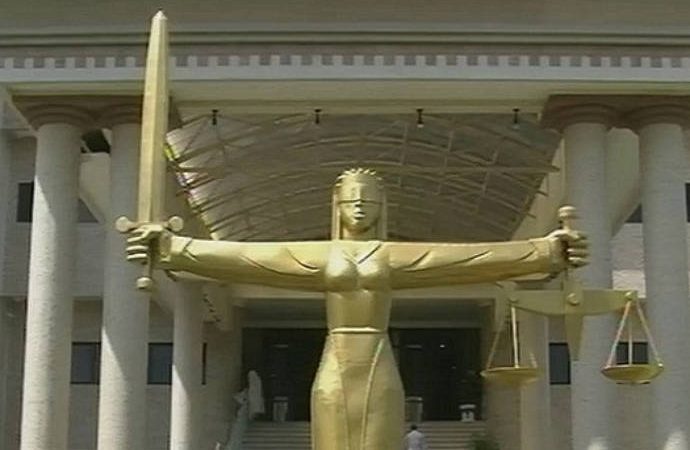
The Court of Appeal has inaugurated 375 judges for election petition tribunals across the country ahead of the 2027 general elections, setting in motion preparations for the adjudication of electoral disputes that may arise from the polls.
President of the Court of Appeal, Justice Monica Dongban-Mensem, inaugurated the judges on Monday at the Body of Benchers Complex in Abuja, coming 68 days before the 2027 general elections.
The tribunals will hear and determine petitions arising from elections into the National and State Houses of Assembly, as well as governorship elections, in line with the provisions of the 1999 Constitution, as amended.
Speaking at the inauguration, Dongban-Mensem said the exercise represents an important institutional step towards safeguarding constitutional democracy, upholding the rule of law and preserving the integrity of Nigeria’s electoral process.
She stressed that the responsibility of the judiciary extends beyond the formal determination of disputes, noting that the manner in which election petitions are handled has significant implications for public confidence in democratic governance.
“This gathering is more than a ceremonial event; it is an important institutional preparation for one of the most consequential responsibilities entrusted to the judiciary,” she said.
Dongban-Mensem maintained that the credibility of democratic institutions depends not only on the conduct of elections but also on the availability of impartial and effective judicial mechanisms for resolving disagreements over electoral outcomes.
“The credibility of democracy depends not only on the conduct of elections but also on the existence of impartial, effective, and timely mechanisms for resolving electoral disputes,” she added.
She further explained that the judiciary’s responsibility in electoral matters is central to ensure that the outcome of democratic contests is subjected to lawful scrutiny whenever challenged.
“Through the fair determination of such disputes, the Judiciary safeguards the people’s mandate, upholds constitutional supremacy and sustains public confidence in democratic governance,” Dongban-Mensem noted.
Providing a breakdown of the tribunal membership, Dongban-Mensem disclosed that the 375 judges were nominated from various courts and judicial institutions across the country.
She said 138 of the judges are returning members who had previously served on election petition tribunals, while 237 are newly nominated.
“Of this number, 138 are returning members with previous Tribunal experience, while 237 are newly nominated members,” she said.
The composition brings together judicial officers with previous experience in election petition proceedings and newly nominated members who will be participating in the tribunal process for the first time.
The Court of Appeal President urged the judges to approach their assignments with a strong sense of responsibility, reminding them that their conduct and decisions would attract considerable public scrutiny.
She cautioned them, in particular, to remain mindful of the significance of their judicial responsibilities in determining disputes capable of affecting the political fortunes of candidates and parties, as well as public confidence in the electoral process.
The tribunal judges are expected to discharge their duties in accordance with the Constitution and applicable electoral laws, ensuring that petitions brought before them receive fair and lawful consideration.
The inauguration is pursuant to the constitutional and statutory framework governing the establishment and operation of election petition tribunals in Nigeria.
Section 285(1) and (2) of the 1999 Constitution, as amended, vests in the President of the Court of Appeal the responsibility of constituting election petition tribunals to adjudicate disputes arising from National and State Houses of Assembly elections, as well as governorship elections.
Similarly, Section 134(3)(a) and (b) of the Electoral Act, 2026, prescribes timelines for constituting the tribunals and opening their registries.
These provisions establish the legal framework for the tribunals to commence operations and entertain petitions arising from the elections.
The inauguration of the 375 judges comes as the country prepares for the 2027 general elections, with the judiciary expected to play a critical role in resolving post-election disputes and determining challenges to electoral outcomes in accordance with the law.

The Nigeria Democratic Congress (NDC) governorship candidate in Lagos, Funso Doherty, has accused vested interests within the State’s informal transport sector of frustrating efforts to modernise public transportation.
Doherty made the remarks during the Lagos governorship debate on Friday organised by the Nigeria Debate Consortium comprising Channels Television, TVC News, The PUNCH, TheCable and Vanguard, where he criticised the continued reliance on ageing commercial buses and the influence of the agbero system in the State’s transport sector.
He questioned why successive administrations had failed to modernise public transportation despite the thousands of rickety buses operating across Lagos.
“Our public transportation system is not modernised. Thousands of rickety buses are moving around. We must ask ourselves: are these what our people deserve? Why has it taken so long to modernise public transportation?” he asked.
The NDC candidate argued that the failure to reform the system is not accidental, alleging that powerful interests benefit from the existing arrangement.
“In my opinion, the lack of modern transportation is not by accident. There are vested interests in operating the bus system the way it is. Many of us understand the agbero system; there is an ecosystem around it, and there is no political will to deal with that problem,” he said.
Doherty, who promised to overhaul the State’s public transportation system if elected, said his administration would not be beholden to informal transport networks.
“We would modernise public transportation because we would be elected by the people and not by the agbero network,” he added.