Metro
Police Yet to find Absconded Ajegunle Killer-Cop


- /home/rhoncare/pointblank.ng/wp-content/plugins/mvp-social-buttons/mvp-social-buttons.php on line 27
https://pointblank.ng/wp-content/uploads/2019/04/Dania-Ojo.jpeg&description=Police Yet to find Absconded Ajegunle Killer-Cop', 'pinterestShare', 'width=750,height=350'); return false;" title="Pin This Post">
- Share
- Tweet /home/rhoncare/pointblank.ng/wp-content/plugins/mvp-social-buttons/mvp-social-buttons.php on line 69
https://pointblank.ng/wp-content/uploads/2019/04/Dania-Ojo.jpeg&description=Police Yet to find Absconded Ajegunle Killer-Cop', 'pinterestShare', 'width=750,height=350'); return false;" title="Pin This Post">
The Lagos State Police Command has said it is still searching for a policeman, Inspector Dania Ojo, who allegedly shot dead a 20-year-old lady, Ada Ifeanyi, in the Ajegunle area of the state a few weeks ago.
Dania, on Saturday, April 13, 2019 at 7am, reportedly shot at Ada and her beau, 32-year-old Emmanuel Akomafuwa, who survived but with gunshot injuries.
The command subsequently arrested five policemen (Inspector Adamu Usman, Sergeant Adeyeye Adeoye, Sergeant Kashim Tijani, Sergeant Lucky Akigbe and Sergeant Paul Adeoye) in connection with the killing.
But Ojo fled, prompting the command to declare him wanted.
Speaking with SUNDAY PUNCH on Friday, the spokesperson for the state police command, DSP Bala Elkana, noted that apprehending Ojo was to prosecute him, stating that disciplinary action had already been taken on his case.
He said, “We are still on the trail of the fleeing policeman. There are rules in the police. We tried him in absentia and found him guilty of wrongful use of firearms. We have dismissed him and stopped his salary. The only thing left is that whenever we apprehend him, we will arraign him in court.”
He noted that five policemen were on duty that day and were about to close for another set to take over when the incident happened.
“The man and the lady were returning from a club when they said the car they were in hit an inspector. Ojo left his duty post and chased the car on a motorcycle,” said the Police Public Relations Officer.
He stated that Ojo became overzealous upon getting close to the car and shot at the occupants, leading to Ada’s death while Akomafuwa sustained gunshot wounds.
On the fate of other policemen with Ojo on the day of the incident, the spokesperson said following the killing, the command arrested the five policemen on duty that day.
He said the investigation carried out on the matter absolved the others as it was clear that Ojo was the only one guilty of professional misconduct.
The Punch



From smartphones and laptops to
vehicles and AI systems, semiconductors are essential to modern technology. Yet, the expertise required to design these components remains concentrated in a relatively small number of global
technology hubs.
ChipMango is working to expand access to semiconductor engineering skills and commercial opportunities for African engineers. Its journey also highlights why initiatives such as EIB’s Boost Africa matter. By supporting venture capital funds investing in innovative African businesses, Boost Africa helps strengthen the financing ecosystem needed to develop specialised technology companies. Watch the video to learn how
ChipMango is contributing to Africa’s place in the global technology industry.
Watch the video:
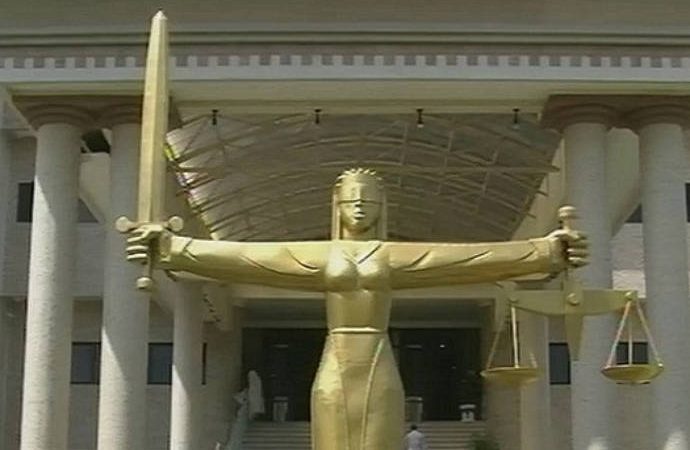
The Court of Appeal has inaugurated 375 judges for election petition tribunals across the country ahead of the 2027 general elections, setting in motion preparations for the adjudication of electoral disputes that may arise from the polls.
President of the Court of Appeal, Justice Monica Dongban-Mensem, inaugurated the judges on Monday at the Body of Benchers Complex in Abuja, coming 68 days before the 2027 general elections.
The tribunals will hear and determine petitions arising from elections into the National and State Houses of Assembly, as well as governorship elections, in line with the provisions of the 1999 Constitution, as amended.
Speaking at the inauguration, Dongban-Mensem said the exercise represents an important institutional step towards safeguarding constitutional democracy, upholding the rule of law and preserving the integrity of Nigeria’s electoral process.
She stressed that the responsibility of the judiciary extends beyond the formal determination of disputes, noting that the manner in which election petitions are handled has significant implications for public confidence in democratic governance.
“This gathering is more than a ceremonial event; it is an important institutional preparation for one of the most consequential responsibilities entrusted to the judiciary,” she said.
Dongban-Mensem maintained that the credibility of democratic institutions depends not only on the conduct of elections but also on the availability of impartial and effective judicial mechanisms for resolving disagreements over electoral outcomes.
“The credibility of democracy depends not only on the conduct of elections but also on the existence of impartial, effective, and timely mechanisms for resolving electoral disputes,” she added.
She further explained that the judiciary’s responsibility in electoral matters is central to ensure that the outcome of democratic contests is subjected to lawful scrutiny whenever challenged.
“Through the fair determination of such disputes, the Judiciary safeguards the people’s mandate, upholds constitutional supremacy and sustains public confidence in democratic governance,” Dongban-Mensem noted.
Providing a breakdown of the tribunal membership, Dongban-Mensem disclosed that the 375 judges were nominated from various courts and judicial institutions across the country.
She said 138 of the judges are returning members who had previously served on election petition tribunals, while 237 are newly nominated.
“Of this number, 138 are returning members with previous Tribunal experience, while 237 are newly nominated members,” she said.
The composition brings together judicial officers with previous experience in election petition proceedings and newly nominated members who will be participating in the tribunal process for the first time.
The Court of Appeal President urged the judges to approach their assignments with a strong sense of responsibility, reminding them that their conduct and decisions would attract considerable public scrutiny.
She cautioned them, in particular, to remain mindful of the significance of their judicial responsibilities in determining disputes capable of affecting the political fortunes of candidates and parties, as well as public confidence in the electoral process.
The tribunal judges are expected to discharge their duties in accordance with the Constitution and applicable electoral laws, ensuring that petitions brought before them receive fair and lawful consideration.
The inauguration is pursuant to the constitutional and statutory framework governing the establishment and operation of election petition tribunals in Nigeria.
Section 285(1) and (2) of the 1999 Constitution, as amended, vests in the President of the Court of Appeal the responsibility of constituting election petition tribunals to adjudicate disputes arising from National and State Houses of Assembly elections, as well as governorship elections.
Similarly, Section 134(3)(a) and (b) of the Electoral Act, 2026, prescribes timelines for constituting the tribunals and opening their registries.
These provisions establish the legal framework for the tribunals to commence operations and entertain petitions arising from the elections.
The inauguration of the 375 judges comes as the country prepares for the 2027 general elections, with the judiciary expected to play a critical role in resolving post-election disputes and determining challenges to electoral outcomes in accordance with the law.

The Nigeria Democratic Congress (NDC) governorship candidate in Lagos, Funso Doherty, has accused vested interests within the State’s informal transport sector of frustrating efforts to modernise public transportation.
Doherty made the remarks during the Lagos governorship debate on Friday organised by the Nigeria Debate Consortium comprising Channels Television, TVC News, The PUNCH, TheCable and Vanguard, where he criticised the continued reliance on ageing commercial buses and the influence of the agbero system in the State’s transport sector.
He questioned why successive administrations had failed to modernise public transportation despite the thousands of rickety buses operating across Lagos.
“Our public transportation system is not modernised. Thousands of rickety buses are moving around. We must ask ourselves: are these what our people deserve? Why has it taken so long to modernise public transportation?” he asked.
The NDC candidate argued that the failure to reform the system is not accidental, alleging that powerful interests benefit from the existing arrangement.
“In my opinion, the lack of modern transportation is not by accident. There are vested interests in operating the bus system the way it is. Many of us understand the agbero system; there is an ecosystem around it, and there is no political will to deal with that problem,” he said.
Doherty, who promised to overhaul the State’s public transportation system if elected, said his administration would not be beholden to informal transport networks.
“We would modernise public transportation because we would be elected by the people and not by the agbero network,” he added.