
Headlines
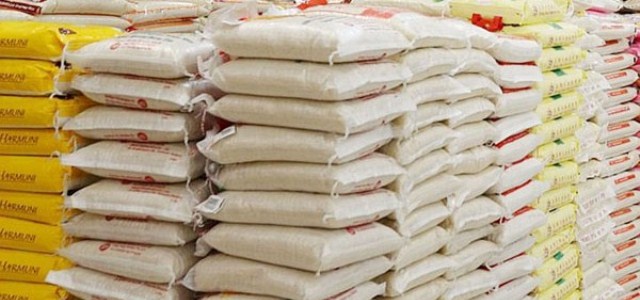
Rice: The New Edible Gold

By Eric Elezuo
About two months ago, the President Muhammadu Buhari led Federal Government ordered the closure of the nation’s borders, the Seme border inclusive. His reasons were bordered on the desire to stop the proliferation of small arms and illegal smuggling of food items, especially rice and frozen foods. Ever since then, rice, which hitherto has been Nigeria’s staple food, has become a luxurious commodity as its rice has hit the roof. Since the shutdown, the cost of a bag of imported rice has reportedly jumped by over 40% – from N14,000/15,000 to N21,000/23,000.
In the midst of the complains, the Nigerian government has maintained that its borders would remain closed until neighbouring countries begin to respect Nigeria’s policy on food importation. This notice has elicited negative reactions from neighbouring countries. Niger Republic for one has banned both importation and exportation of good from and to Nigeria; Ghana has cried out, inferring intimidation as they claimed Nigeria goods continue to enter the soil of Ghana while Ghana goods are not allowed to enter Nigeria among other complaints.
Comptroller-General of Customs, Hammed Ali, who spoke for the FG disclosed this when he visited Maigatari border in Jigawa State.
“Most of the criminals are not citizens of Nigeria. They come in at will and go out at will because our borders are so porous. They come and create havoc and disappear.
“This is why the President directed that we should go on and embark on this drill to ensure that we put into place a proper procedure for in and outflow of people.
“We must also get our neighbours to agree with us on the protocols of transit routes.”
He concluded his briefing with a line which many Nigerians considered hilarious. He said “Nigeria has enough food”, stressing that the country will ensure its borders are no longer porous.
Meanwhile, in towns, creeks, hinterlands and remote parts of the country, homes and families lament the adverse effect of the border closure as rice, the staple food of most Nigerian homes, has gone beyond the reach of not a few families.
The Boss investigation reveals that the Seme Border along the Badagry Expressway, has remained firmly under lock and key with security agencies, especially heavily armed military personnel and customs official parading the vicinity. A Seme border source said the security continue to apprehend dire devil smugglers and seizing their merchandise.
Most traders that ply the route complained the unfair treatment of the government in locking down borders, thereby depriving them of legitimate means of livelihood.
“I am a rice dealer. I buy from across the border and move them in legitimately, clearing through customs and other relevant agencies before getting passage. I know there are other criminals in the business who are not involved in the business of legitimacy. But the government should not have punished everybody for the sin of a few,” the trader, who identified himself simply as Ossy said.
He hinted that as a family man, he has been rendered unproductive, and things have become so terrible.
“At the moment, I can hardly feed my family, and swapping to a new kind of business has not been easy. The government should as a matter of urgency review the policy that necessitated the closure.
The trader argued that as a government, there should be a way of handling and dealing with criminally minded people without punishing the general public.
Mr Okechukwu Nwaibe is a transporter, who ply the Badagry/Seme route to take traders to and fro their businesses. He lamented that for the two months the border has been on lock down, he has not earned a coin. This is as activities of traders along the route has not only reduced but has become non-existent. He told The Boss in a voice full of emotion that life has become very unbearable.
It is not only those that ply their trade along the route that are complaining; the consumers of the grain, whose homes have been stripped of their staple food are lamenting more than loudly.
Rice is one food Nigerians keep in the house both for sustenance and emergency purposes. This is because it can be cooked with next to nothing and enjoyed on a low key and one will still be satisfied. The way the food come in handy when needed has made it the food of choice in most average Nigerian homes. Some consume it on a daily triangular basis, and that explains the reason behind the biting scourge as it has suddenly becomes scarce.
Hear Ladeinde Adegoke who works with a privately owned firm:
“I have three children, and if you add my wife, my wife’s niece staying with us and myself, that makes it six mouths to feed. I earn N60, 000 salary on a monthly basis with nothing else attached; no bonus of any kind irrespective of the season. So I have always managed to get a bag of rice for the family to manage on a monthly basis, but now, it has become something else. The price, if you ever find the product, is not affordable. This is what children takes to school every morning, and it has become increasingly difficult to sustain the family. The government is practically taking us back to the early days of Buhari when people had to buy a bag of rice for as high as N25,000,” he said.
Mr Adegoke’s story is the same in virtually every average Nigerian home. Most workers, who are on N100,000 salary and below has been on the receiving end. Even high profile businessmen are not spared as the spiraling effect continue to trickle down.
The Boss’ trip to the Okoko market on the Badagry Expressway where rice sellers converge was met with silence and forlorn faces. Most of the traders said they can no longer find the product to sell, and those who managed to get it has put the price beyond reach.
“As you can see, my shop is empty; I doubt if there is a better reason for closing the border if not to subject the common Nigerians to perpetual suffering. Can you imagine that Customs officials even raided over stores, where we used to pack the products, and carted away consignments in our possession. These were goods we had long before the borders were closed. Honestly, I don’t believe the government is checking anything; they just want to put us through unbearable hardship,” Mama Blessed, a rice seller said.
A very angry respondent, who refused to volunteer his name said “please help me ask them which rice Buhari, Oshiomhole and all of them eat in their homes. This is pure hypocrisy.”
In the meantime, the Economic Community of West African States (ECOWAS) has appealed to the Nigerian government to reopen the borders, even as the Chairman of the ruling All Progressives Congress (APC), Comrade Adams Oshiomhole, has said that the borders will not be opened until certain ‘measures’ are put in place.
The ECOWAS warned that the partial closing of border crossings to Benin and Niger, which prevents the free movement of people, is a violation of agreements signed by Nigeria.
“The closure of the Nigerian borders with Benin more than a month ago, and [with] Niger more recently, [are] a hindrance to the achievement of the Community’s main objective, which is to achieve the creation of a prosperous, borderless West African region where peace and harmony prevail,” the speaker of the Parliament, Moustapha Cisse Lo, said.
It is on record that President Muhammadu Buhari made agriculture and food surplus a policy of his administration on assumption in 2015. This, the government believe will reduce dependence on crude oil and create other means of obtaining foreign exchange. Also, rice and palm oil have been the agricultural product with the greater consideration.
But much as records show that there is increase in local rice production, as reflected between 2013 and 2017, there seems not to be enough to meet the demand of the over 200 million population.
The inability to meet up in addition to stringent import control measures, have kept the price of rice high and led to rampant smuggling of rice across borders.
But while the Nigerian government maintained that the border closure is yielding results, impounding bags of imported rice, Nigerians are asking to whom are the results beneficial.
Speaking to some Nigerians who said they are also feeling the pangs of the border closure, the Boss discovered that some are willing to see the end of the closure and what it portends.
“I think it is a good venture if the intentions are pure. This is because we need a check of this nature because we import almost everything we use in this country including things we can easily produce. Maybe, we will endure the suffering for a few more weeks and then, we fall back to our own products,” Frank Onyeije reasoned.
But in his reaction, the President, Nigeria-Slovakia Chambers of Commerce, Mr. Vitalis Njoku, said the closure would have made more sense if it was all encompassing, and not restricted to the Seme Border, and later to the border connecting Niger Republic. He reiterated that while these borders remained manned because they are structured, other borders are working at full force with little or no restriction.
He was of the view that there is no economic sense in closing borders to stop smuggling or the likes when there is not enough commodity for the populace, saying there can be two reasons for the closure 1. the need to impoverish a certain class of Nigerians and 2. to further enrich a certain class of Nigerians.
“It is laughable to say that the government closed the borders to improve the economy; which economy? There is hardly something you can call economy in this country. The closure as far as I am concerned is a calculated attempt to enrich some and impoverish some. Right now, the prices of food have sky-rocked. This is not about rice. Almost every product…everyone blames the hike in products to ‘closure of border’ and the ordinary man is paying through his nose to buy essentials,” Mr. Njoku said.
The entrepreneur hinted that there is every livelihood that the borders, especially the Lagos corridor, was closed on the insistence of the richest man in Africa, saying that the borders break his monopoly of the food items.
“There is a Dangote connection to this closure saga. Dangote is practically the greatest beneficiary to the closure; he is the one selling his products easily now, at whatever price he deems fit. Recall that he once complained about the importation of most things in the country through the Seme border. He once said, ‘having a neighbour like Benin Republic is bad luck’. The way it is now, the common man is suffering, and the elites don’t care. That is why the likes of Oshiomhole will canvass for continuous closure. They can afford whatever item at whatever price, but can the regular Nigerian?” he queried.
Mr. Njoku also noted that the government policy has heightened crime in the society as many who has been rendered jobless had ‘to do something by all means’. It was also discovered that very poor quality local rice are being re-bagged in foreign rice and sold at the price of foreign rice.
He advised the government to as a matter of urgency reopen the borders as very innocent Nigerians are at the receiving end. Not a few Nigerians fear that a bag of rice is likely to cost as high as N40/45, 000 by December.
In the midst of the confusion, Nigerians are asking ‘where does the seized rice go?’



President Bola Tinubu has expressed sadness over the death of Ambassador Patrick Dele Cole, describing him as a distinguished diplomat, journalist, politician and public servant.
Cole died at 86.
In a statement on Saturday, Tinubu said Cole devoted his life to national service and brought distinction to his work in diplomacy, journalism and politics.
“His career reflected the enduring value of dialogue, tact, mutual respect and the pursuit of shared interests in advancing national development and international cooperation,” the President said.
Tinubu noted Cole’s contributions to Nigeria’s media landscape, particularly as Managing Director of the Daily Times, where he upheld the role of the press in holding public officials accountable, speaking truth to power and strengthening democratic governance.
“His legacy in journalism and public life remains an enduring part of our national story,” he said.
The President said at 86, Cole witnessed defining moments in Nigeria’s history and contributed to national development, adding that his life stands as a testament to experience, principled engagement and commitment to public good.
Tinubu extended condolences to Cole’s family, friends, professional associates and all whose lives he touched, praying that memories of his remarkable life will bring comfort and strength.
“May Almighty God grant Ambassador Cole eternal rest and give his family and all who mourn him the fortitude to bear this profound loss,” he said.

Director-General of the World Trade Organisation (WTO), Mrs. Ngozi Okonjo-Iweala, has said that her probe of an alleged $2.4bn subsidy fraud led to the abduction of her mother.
It would be recalled that the former Finance Minister’s mother, Kamene Okonjo, was kidnapped from her home in Ogwashi-Uku, Delta State, in December 2012.
In a recent interview with Bloomberg, Okonjo-Iweala said the abductors demanded that she resign as minister of finance and leave the country.
The WTO director-general served as Nigeria’s finance minister between 2011 and 2015 under former President Goodluck Jonathan.
She said the subsidy investigation began after her office noticed a sharp increase in claims submitted by petrol importers.
“So I went to the president and said, look, something is going on here. Could we audit the accounts? And he said, yes, go ahead. And we found about $2.4 billion worth of fraud. So, we refused to pay,” she recounted.
She said her mother was abducted shortly after the decision was announced, adding that her captors demanded her resignation as a condition for her release.
“I was told (by the kidnappers) that for her to be released, I should resign and leave the country,” she said.
The former minister described the incident as one of the most traumatic experiences of her life, saying her mother was held in a forest before escaping.
“She was held in the middle of a forest, and one night she escaped. She’s still alive. She’s 96 now,” Okonjo-Iweala said.
“It was a terrible, terrible five-day ordeal. I think the worst in my life.”
“I never dreamt my parents could ever be touched in this way, that people would be that evil,” she added.
Okonjo-Iweala said she considered resigning before her mother regained her freedom, but her father warned her against giving in to the abductors’ demands.
“He said, ‘We don’t give in to blackmail’. And he said, ‘You’ve got to carry on. You’ve got to go to work’,” she recalled.
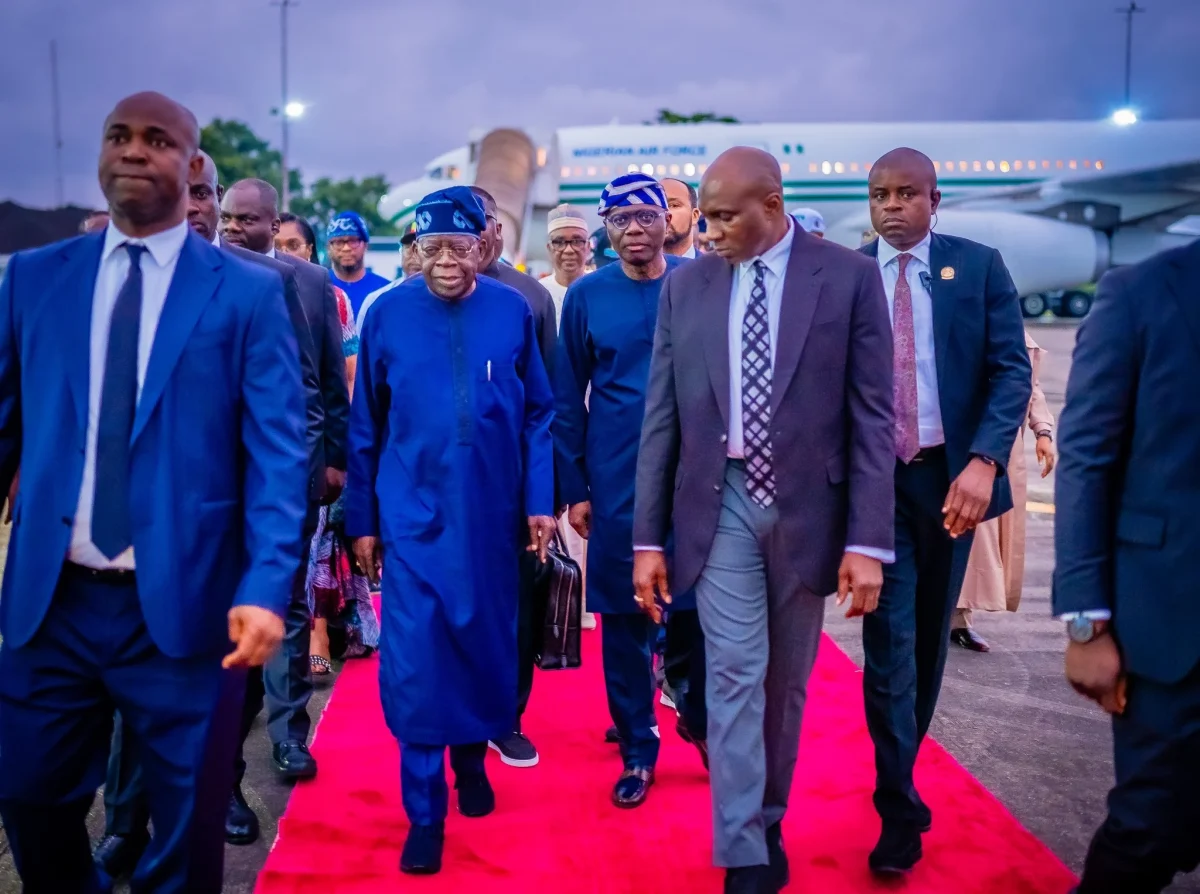
President Bola Tinubu has told members of the All Progressives Congress (APC) Presidential Campaign Council not to expect him to accompany them to every campaign event ahead of the 2027 general election, saying he must remain focused on governance and the country’s economic responsibilities.
Tinubu spoke on Wednesday during the inauguration of the APC Presidential Campaign Council in Abuja, where he urged members to take the party’s message to Nigerians across the states and local government areas while he continues to attend to matters of governance.
The president said he agreed with concerns that the demands of the campaign should not distract him from running the country, adding that Nigeria needs his attention at the moment.
“You’ve warned me not to allow the rigour of the campaign to distract me from governance, I hear you. I am in full agreement with your decision. Nigeria needs more attention now,” Tinubu said.
He told council members to excuse him from accompanying them to every campaign event, noting that his administration has bills to pay and international financial obligations to meet.
“So, you will excuse me from going everywhere with you, we have bills to pay. The American creditors cannot wait,” the President said.
Tinubu also said the government needs to attract investors who would commit to long-term investments in Nigeria and contribute to the future of the country’s children.
“We want those investors to come in, be here to stay, to invest for the future of our children,” he said.
The president, however, assured Nigerians that he would continue to engage them directly even as the campaign council took charge of mobilisation across the country.
“However, I will still make time to speak directly with Nigerians, even as you lead the campaign in the states and local government areas,” he said.
Tinubu described the inauguration of the council as more than a campaign activity, saying it represents a renewed commitment to Nigerians and the responsibilities of the ruling party.
“We have not gathered merely to inaugurate a council. We have gathered to renew a covenant. A covenant with Nigerian people and the historic responsibility they have entrusted to us as Nigeria’s governing party,” he said.
He added that the council is expected to communicate the administration’s vision, achievements and agenda to voters nationwide.
“This council will carry our vision, our records and our agenda to every Nigerian, and it will carry them to victory every ward of this country,” Tinubu said.
The president also commended APC members for completing the party’s congresses, recalling that some had predicted internal crises during the process.
He said the party has overcome the challenges and emerged united, crediting members for participating in the process from the ward level to the national leadership.
“They said there will be implosion. We passed through it. We did not fail. You didn’t let us down. We got here together,” he said.


