
Featured
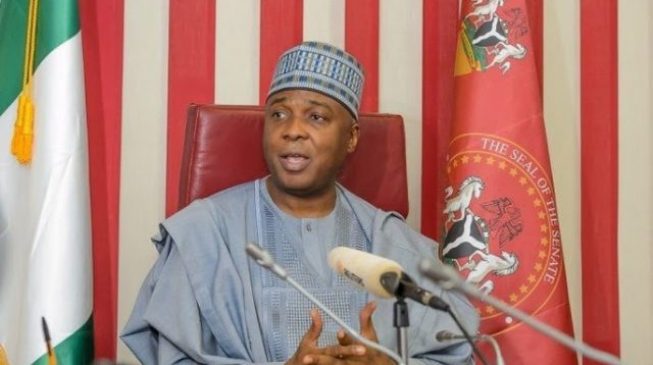
Saraki Winds Down Eight Senate, Says Theft of Mace Saddest Experience (Full Speech)

- /home/rhoncare/pointblank.ng/wp-content/plugins/mvp-social-buttons/mvp-social-buttons.php on line 27
https://pointblank.ng/wp-content/uploads/2019/04/saraki-e1554368999976-653x365.jpg&description=Saraki Winds Down Eight Senate, Says Theft of Mace Saddest Experience (Full Speech)', 'pinterestShare', 'width=750,height=350'); return false;" title="Pin This Post">
- Share
- Tweet /home/rhoncare/pointblank.ng/wp-content/plugins/mvp-social-buttons/mvp-social-buttons.php on line 69
https://pointblank.ng/wp-content/uploads/2019/04/saraki-e1554368999976-653x365.jpg&description=Saraki Winds Down Eight Senate, Says Theft of Mace Saddest Experience (Full Speech)', 'pinterestShare', 'width=750,height=350'); return false;" title="Pin This Post">
The eight Senate rounded up its session on Thursday with a valedictory session.
After other senators had taken turns to reflect on the eight Senate, Mr Saraki took the stage to deliver the last speech.
Mr Saraki thanked his colleagues for their support even in the face of trials while noting that the Senate invasion which led to the theft of the mace would remain ‘saddest’ moment for him.
Below is the full speech:
VALEDICTORY SPEECH BY THE PRESIDENT OF THE SENATE, HIS EXCELLENCY (DR.) ABUBAKAR BUKOLA SARAKI, CON, TO THE SENATORS OF THE 8TH SENATE OF THE FEDERAL REPUBLIC OF NIGERIA – JUNE 6, 2019.
1. Distinguished colleagues, as we come to the final plenary and the last few days of the eighth Senate, it is a victory in itself that we are seeing the journey to its momentous end. That I am here today, that you are here today, is a victory for democracy. It is a testament to what people can do when they come together for the greater good. This is also one of those occasions when the Supreme Creator reminds us, once again, that power does not reside in any one person.
2. Before I proceed, let us pause to honour the memory of colleagues with whom we started this journey but who sadly are not here with us today. We lost the late Senators Ali Wakili (Bauchi South), Isiaka Adetunji Adeleke (Osun West) and Bukar Mustapha (Katsina North) in the line of duty in this Senate. I ask that we observe a minute’s silence for the continuing repose of their souls [Minute’s Silence]. May the Almighty grant them eternal rest.
3. Distinguished colleagues, let me thank each and every one of you for your contributions towards making this the historic Senate that it is. When I think of the many trials and tribulations we have faced as an institution, and my own personal travails particularly at the Code of Conduct Tribunal, I am humbled, because none of our achievements would have been possible without the support and cooperation of the entire members of this chamber.
4. The invasion of the National Assembly by armed security operatives in August 2018 will live in infamy. This way down the line, however, I realise that the day of that invasion was the saddest – but in many ways it was also a good day for asserting the independence of the legislature and the triumph of democracy. It also turned out to be a showcase of the special relationship between this chamber and the House, as Honourable Members stood in unison with their Senate colleagues in defiance of the invaders. I thank the House of Representatives for the remarkable unity of the two chambers of the 8th National Assembly, for it was only in unity that we could withstand the storm.
5. The pieces of legislation we passed in the crucial areas and arenas affecting the daily lives of citizens – on the economy, in education, security, anti-corruption, health and so on – will remain a benchmark. Working together, we clocked many firsts in the 8th Senate, and we should rightly be proud of these, especially as they are imperishable legacies we are leaving for the people.
6. Our many firsts include the National Assembly Joint Public Hearing on the Budget, which we started with the 2016 Appropriation Bill. The engagement of the private sector and other stakeholders in crafting the economic legislative agenda was a watershed. For the first time, there were meetings and interactions with members of the public which were not previously the norm. One such interaction was the Public Senate, which gave youths the opportunity to spend a day with me as President of the Senate. I have pleasant memories of my reading to an audience of small children inside my office, where – in the true spirit of Children’s Day – the kids themselves were the dignitaries.
7. It was during this Senate that we patented the concept of the Roundtable. This was groundbreaking. We left the centre of power in Abuja to tackle pressing social issues at the very heart of the communities most affected. Notable among these were the Senate Roundtable on the Drug Use Crisis held in Kano in December 2017, and the one on Migration and Human Trafficking held in Benin City in February 2018. At both events, we not only dialogued for solutions with the relevant government agencies, international partners and community leaders – we heard from the victims themselves.
8. In Kano, we heard the harrowing story of Zeinab, a recovering drug addict. In Benin, we listened to the account of a young woman who was rebuilding her life after being trafficked to Russia for the sex trade; and we heard from Victory who had been being sold into slavery in Libya. We let these people know that their voices count. Indeed the voice of every Nigerian counts, and the 8th Senate lent its ear to them. We were alive to our responsibility to those whom we serve, and we engaged with them on their own terms.
9. It should be a matter of pride to all 109 senators and to our offspring that, in this chamber, we put humanity first. I will always be proud of the humaneness of the 8th Senate. Ours has been legislature with a human face, the personal touch, moved by the milk of human kindness. Whenever the situation demanded, we left the imposing edifice of the National Assembly to reach out to the person on the street. We showed that parliament belongs to the people, and that there should be no barrier between lawmakers and those they represent.
10. One of our major acts upon inauguration was the Senate visit in August 2015 to Maiduguri, Borno State – the first ever National Assembly delegation to see first-hand the living conditions of thousands displaced by the insurgency. A Senator from the South moved the motion that led us to Maiduguri, one of the many times we showed the world that senators act as Nigerians first, and not as southerners or northerners. The three senators representing Borno State were among the delegation on that memorable visit, as we called on the Shehu of Borno to assure him that rebuilding the North East was high on our agenda. We visited IDP camps, spoke with the people, carried their babies, comforted them, letting them know that their well-being was a priority for the Senate. Today, the North East Development Commission is a reality, and the people are being resettled into their normal lives.
11. Borno was by no means our only spotlight on the conditions of our people in IDP camps. We visited the Kuchingoro IDP Camp in Abuja during the holy month of Ramadan in 2017 and donated essential supplies to the inhabitants, while assuring them of our commitment to getting them back on their feet. A year later, we were at the Abagena IDP Camp in Benue State. Instead of bringing the children to Abuja for Children’s Day, we went to the children in Benue. We gave assurances that we would build on work already done on the ground by the Senate Ad-Hoc Committee on Review of Security Infrastructure to bring an end to killings and restore peace in the state.
12. There was a very moving encounter with Ali Ahmadu, the six-year-old Boko Haram victim from Chibok. Our joy knew no bounds when he returned, walking and smiling, after life-transforming surgery in Dubai. Little Ali from Chibok was one of many individuals whose lives were directly touched by the 8th Senate. We stood with families and communities across this country in times of trouble. I remember the case of Linda Igwetu, the NYSC corps member killed by a SARS operative here in Abuja. On behalf of the Senate, I placed a call to her sister to offer our condolences and to speak to the need for justice in the matter.
13. When Miss Hilda Eva Amadi tragically died at an NYSC Orientation Camp in Ilorin, Kwara State, we as the Senate were there to condole with those grieving her loss. We made donations towards the renovation of facilities at the camp and for topping up the medicine supply, to ensure the health and well-being of corps members there. Every single Nigerian life matters, and we demonstrated that in the symbolism and actuality of our actions at all times.
14. When Nigerians cried out for help, we did not turn deaf ears. Many will remember the case of Miss Monica Osagie who accused her lecturer of demanding sex for marks. As a responsive Senate, we backed up the Sexual Harassment law we had enacted by passing a resolution on the issue, and conducted an investigation into the allegation. Responding to the needs of Nigerians was our calling, and by so doing, I believe we made a real difference in people’s lives.
15. Where there was contention or strife, we were agents of peace and helped find a way forward. Through meetings with the Minister of Health, the Minister of Labour and Employment together with leaders of the Joint Health Sector Unions, we were able to bring an end to the biting six-week long JOHESU strike which had crippled the health sector in the country. We said we would help end the deadlock, and we kept the promise.
16. A Senate resolution was the critical factor in ending the two-year impasse at the Ladoke Akintola University of Technology (LAUTECH) in Ogbomoso, which had kept the 34,000-strong student body in limbo, due to the closure of the institution. The students were able to resume their education in September 2017. Another promise kept.
17. We promised transparency in the National Assembly Budget and kept our word, subjecting NASS Budget to public scrutiny for the first time since Nigeria’s return to democracy.
18. We engaged with a delegation of nurses and midwives led by my wife in her capacity as a Global Goodwill Ambassador to the International Confederation of Midwives, and listened to their concerns about high infant and maternal mortality rates in Nigeria. We promised to review relevant laws and pass new ones to make for better conditions of service for nurses and midwives, as one way of bringing about an improvement in mortality rates, in particular, and the health sector as a whole. We kept that promise, too, and one notable outcome was the setting aside of one per cent of the Consolidated Revenue Fund (CRF) for the Basic Health Care Provision Fund. This gave a massive boost to health funding in the country, allowing access to basic healthcare for thousands more Nigerians.
19. Just the other week the Minister of Health called the 1% CRF a “game changer”, no doubt because, by our activities in this chamber, we are touching the lives of Nigerians and even those unborn. Speaking of commendations, our interventions on health also won plaudits from international philanthropists Bill Gates and Bono, as well as the Director-General of the World Health Organisation (WHO). Similarly, our amendment of the Universal Basic Education Act, guaranteeing free education for children aged nine to twelve, won praise from education rights activist and Nobel Laureate, Malala Yousafzai.
20. Still on promises kept, we were at the Made In Aba Trade Fair held in Abuja in 2016, and that was to be the springboard for legislation – The Public Procurement Act (Amendment) Bill – in fulfilment of our vow to manufacturers at the fair. We maintained the focus with our Made-In-Nigeria initiative, which saw the Nigerian Army ordering 50,000 pairs of boots from Aba manufacturers that same year.
21. We cracked the code of several Bills that had eluded Senates before us. We broke the decade-old Petroleum Industry Bill (PIB) into a quartet of workable bills including the Petroleum Industry Governance Bill (PIGB), whose passage stands as a major achievement of the 8th Senate. The Companies and Allied Matters Act (CAMA) was the most comprehensive reform law governing Nigeria’s business environment in nearly 30 years. The Nigeria Financial Intelligence Unit (NFIU) Bill was one of the major anti-corruption laws we passed; and it saved the country from being expelled from the global body of the Egmont Group. And as recently as May 22, we passed the Nigerian Football Federation Bill which had been caught in the legislative bottleneck for 15 years.
22. In these four years, we were fully engaged on the state of insecurity in the country, and spearheaded many initiatives to bringsustainable peace, and secure and protect the lives and properties of citizens. The 8th Senate organised a National Security Summit which made recommendations for bringing an end to the problems. Moreover, the Senate engaged with security chiefs for proper understanding of the issues; and urged them to make presentations to us on their requirements, so we could facilitate the needed special appropriations.
23. We constantly engaged with the international community on the need for them to not only support the war against insurgency but to also lift the ban on sale of arms to Nigeria. The Senate had to cut short one vacation in order to receive a U.S. Congressional delegation and persuade them on the need to canvass for the lifting of the arms sales ban, for more effective counter-insurgency strategies. We assured them that human rights complaints had been addressed, and that we would ensure that any related issues would be thoroughly probed and appropriate actions taken. The U.S. delegation was able to leave with Senate’s guarantee, and the arms embargo was reversed.
24. At every turn, the Senate utilised every opportunity of courtesy visit, foreign visit, participation at international conferences and meetings to rally world powers behind the fight against Boko Haram and the need to bolster the arms, equipment and training capability of Nigeria’s security forces.
25. The Senate that passed the landmark Not-Too-Young-To-Run law to bring more young Nigerians into the governance framework, was also a great supporter and enabler of youthful aspiration and innovation. We met with members of the Not Too Young To Run Movement and promised to do our bit to help realise their dreams of assuming the mantle as leaders. The resultant law opened the pathways for the inclusion of fresh young faces in the 2019 elections, in a victory for participatory politics and democracy.
26. The 8th Senate has been there for Nigerians of every social class and in every field of endeavour. It gives me a sense of fulfilment to know that we did something worthwhile in this venerated space. My advice to whoever succeeds me is therefore along the same vein: be there for the people. Act in the interest of the average Nigerian, keep the legislature always at the behest of the citizens, let it be a people’s parliament. Whoever succeeds me, that person will still be a product of the 8th Senate. We did it together. Let there be continuity.
27. And as we say all the things we have done, we must also be reflective and candid enough to acknowledge the things we didn’t do. It is my hope that the 9th Senate will improve on our performance and deliver on those areas that we were not quite able to touch.
28. It is also important that I make some comments about Legislature-Executive Relations. My own take is that if the Executive sees the National Assembly’s work on the budget as interference despite the provision of the constitution, then there will continue to be problems between both arms of government. If the presidency refuses to have engagements and consultations with the leadership of the National Assembly before the President submits the budget to the legislature, then there will continue to be frictions. If the Executive sees the failure of a few of its appointees to secure confirmation by the Senate as a disagreement, then the relationship will not improve. If the Executive encourages its appointees who fail to secure Senate confirmation to remain in office, then there will continue to be disagreement. If the Executive believes the Legislature is a rubber stamp without the right to question its actions, then it will be a subversion of the Principles of Separation of Powers and Checks and Powers. My advice is that both arms of government have a role to play in our quest for good governance and their leadership should work for co-operation and fruitful engagement. At this juncture, I must express my gratitude to the Deputy President of the Senate, Ike Ekweremadu. History will be kind to you and providence will shine upon you. I am sure you never thought you would be Deputy Senate President in an APC majority parliament, but it happened. Nobody made you Deputy President of the Senate, the Almighty willed it.
29. I thank Majority Leader Ahmed Lawan; you have made your mark here and the record reflects it. I also thank former Majority Leader Ali Ndume; you also made your mark. Between the former Majority Leader and the current one, it is clear that one of you will be President of the Senate. Whoever emerges, I wish you the very best of luck. This I know: whatever the capacity, we should always do our best to serve the interest of the people. We should also have it in the back of our minds that power is transient.
30. I must not forget to pay tribute to my predecessor, the Distinguished Senator David Mark, for his quiet dignity and fine example to us all in this chamber. I will be forever grateful for your support and wisdom.
31. I am thankful for the strong and purposeful Senate leadership that has steered us through and guided this chamber for high performance and stability. Many thanks to Majority Leader, Ahmed Lawan; Minority Leader, Biodun Olujimi; Chief Whip, Olusola Adeyeye; Minority Whip, Phillip Aduda; Deputy Majority Leader, Bala Ibn Na’Allah; Deputy Minority Leader, Emmanuel Bwacha; Deputy Chief Whip, Alimikhena Asekhame; and Deputy Minority Whip, Emmanuel Paulker. Indeed, the entire Senate is grateful for your service.
32. There is no way I can end this speech without recalling a certain injunction which goes thus: If we speak the truth, we will die; and if we lie, we will die, so we might as well tell the truth. I am, of course, paraphrasing the inimitable Dino Melaye whose flamboyance, catchy turns of phrase and songs meant that the 8th Senate was never in danger of becoming staid. Dino and Senator Kabir Garba Marafa made sure that there was always just enough colour and exuberance to keep us chuckling now and then. They kept us from taking ourselves too seriously, and that too, had its place.
33. I thank the Clerk to the National Assembly, Mohammed Ataba Sani-Omolori who helmed the parliament’s administration admirably. The Chairman, Senate Committee on Ethics, Privileges and Public Petitions, Samuel Anyanwu, did a fine job of reviewing and ensuring due diligence with all the petitions. We cannot thank the Committee enough for the hard work they did, which will be a favourable reflection on the 8th Senate.
34. None of the day to day activities of the Senate would have been possible without the unsung people who ensure that all parts of the great machinery of this institution are kept moving and ticking. The Clerk to the Senate, the ever dependable Nelson Ajewoh, comes up for mention. Commendations too, to the Clerks at Table, the Sergeant at Arms, the Rapporteurs and the Technical Team. The mace bearer carried out his duty with diligence – though I recall that at one point some other persons wanted his job, but sanity prevailed.
35. I thank all staff – the ushers, the Senate Press Corps who ensured that everything we did here was communicated to Nigerians on all platforms. Last but not least, my heartfelt thanks to the tenacious and committed Staff of my Office who worked tirelessly to ensure that many of the visions now being celebrated were turned into reality.
36. In closing, distinguished colleagues, let me say that I am quite proud of the fact that there was not a whiff of scandal in this Senate. You carried yourselves with the bearing and sense of probity worthy of the office. You played your part in strengthening Nigeria’s democracy. May the work we have done here bear bountiful fruits in the length and breadth of this great country of ours, and may it be so for years to come.
37. And so to the question: how do we define the 8th Senate of the Federal Republic of Nigeria? We can define ourselves by the record number of bills passed, motions cleared, resolutions adopted, petitions treated. We can also define ourselves by the belief that we fought for democracy, held government to account and made personal sacrifices. For some of us, sacrifices are still being made, owing to the fallouts of some of the decisions taken. I have no regrets because, as first among equals, we bear collective responsibility for those decisions. As a leader, however, I take responsibility. The buck stops with me.
38. In doing all that we did in this chamber, we always used to believe that poverty knew no party, religion, tribe or region. We came together in response to the needs of Nigerians as a whole, and we got the job done. It will be said of us that we were truly representative of all our constituents. As we conclude the last plenary and the few more days of the 8th Senate, therefore, we should nurture the relationships we have built.
39. Once again, I thank you all for your support to me in this position. Above all, I thank Nigerians for the great privilege of service as President of the Eighth Senate. It has been my life’s goal to serve Nigeria, and I shall serve her always, in whatever capacity.
I thank you all.
PRESIDENT OF THE SENATE


A member of the Nigeria Union of Petroleum and Natural Gas Workers (NUPENG), Comrade Tope Ajagbe, has described as lies reports been circulated by the National Union of Edible Oil Tanker Drivers of Nigeria (NUEOTDN).
According to a statement, the member said “their baseless allegations, seen in the online edition of The Nation newspaper of Wednesday, September 16, 2026, are malicious, misleading, and deliberately intended to create panic within Nigeria’s product supply and distribution chain.”
He further wrote:
We strongly urge the Federal Government, law enforcement agencies, regulatory authorities, and other critical stakeholders to treat this orchestrated falsehood as an act of economic sabotage. NUEOTDN must be cautioned to desist from overheating the polity and maligning the reputation of NUPENG.
It is important to note that NUPENG leadership has consistently sought peaceful resolution of disputes between NUEOTDN and the Amalgamated Union of Wharf Truck Owners of Nigeria/Wharf 302 Products and Beverages Association of Tanker Drivers, who operate dedicated food-grade trucks. Unfortunately, NUEOTDN has repeatedly rejected conciliation efforts and continues to spread misinformation.
NUPENG operations are conducted with strict compliance to all relevant safety, environmental, and regulatory frameworks. We work closely with Federal Road Safety Corps (FRSC), Nigerian Midstream and Downstream Petroleum Regulatory Authority (NMDPRA), and other statutory agencies to ensure our practices meet the highest standards of public safety and consumer protection.
Our drivers undergo regular training, inspections, and certification to guarantee adherence to national and international best practices.
We categorically condemn NUEOTDN’s falsehoods and reaffirm that NUPENG remains a legally recognized and responsible union committed to professionalism, integrity, and the welfare of Nigerians.
We call on the Federal Government, regulators, law endorsement agencies and the public to disregard these unfounded claims and recognize NUPENG as a union that stands for responsibility, compliance, and national development.
It is also important to emphasize that any dedicated petroleum tanker found engaging in illegal activities, particularly in the lifting or distribution of edible products, must be apprehended by law enforcement agencies and made to face the full weight of the law. NUPENG remains a law-abiding union and will not condone any member involved in acts of illegality.

President Bola Ahmed Tinubu has been projected to emerge victorious in the 2027 presidential election, with a new political forecast giving him 20 states against nine for former Vice President Atiku Abubakar and eight for NDC candidate Peter Obi.
The projection was made by the Political Intelligence Group (PIG) of Politico.ng, which assessed the current political landscape and projected how the three major political figures could perform if the presidential election were conducted under the circumstances prevailing at the moment.
According to the projection, Tinubu would have a clear advantage over his major rivals, although the group acknowledged that the political situation could change significantly before the actual election.
The forecast places Tinubu strongly in the South-West while also giving him important victories outside the region. Atiku is projected to maintain considerable strength across parts of Northern Nigeria, while Obi is expected to retain support in selected areas where he performed strongly during the 2023 presidential election.
Tinubu Projected to Win 20 States
According to PIG, Tinubu is currently projected to win 20 states, making him the leading candidate in the forecast.
The president is expected to dominate the South-West, with all six states in the region projected to fall into his column. The region remains politically significant because of its voting strength and Tinubu’s long-standing political influence there.
Tinubu is also projected to win Lagos State in the 2027 presidential election. This would mark a change from the 2023 presidential election, when Tinubu lost Lagos State to Peter Obi.
The latest projection says that Tinubu would regain the state in 2027. Lagos has been central to his political career and remains one of the country’s most important electoral territories.
The inclusion of Kano among the states projected to go to Tinubu is one of the more striking aspects of the forecast. Kano is one of Nigeria’s largest states by voting population and has traditionally been an important battleground during presidential elections.
A victory in Kano would provide Tinubu with a major northern foothold and could strengthen his ability to build a broad national coalition beyond his traditional South-West base.
Tinubu’s eventual performance, however, could depend heavily on how Nigerians assess his administration by 2027.
Economic conditions, inflation, employment, security, infrastructure and the cost of living could influence voters’ decisions. The administration’s policies and its ability to communicate its achievements may also become important campaign issues.
Religion and ethnicity could also play a role in the political calculations. Nigeria’s voting patterns are sometimes influenced by regional, ethnic and religious considerations, although these factors compete with economic and political issues.
Atiku Projected to Win 9 States
PIG projects that Atiku Abubakar would win nine states in the 2027 presidential election.
The former vice president is expected to perform strongly in Northern Nigeria, with Kaduna State projected to go to him alongside several states in the North-East and North-West.
Atiku’s strength in the region could be connected to his established political network and his previous presidential campaigns. His ability to mobilise support across northern states could make him one of Tinubu’s strongest competitors in the region.
Another issue that could influence Atiku’s support is his position on fuel subsidy.
Atiku has advocated a review of the current fuel subsidy policy and has spoken about measures aimed at reducing the burden of petrol prices on Nigerians. If the high cost of transportation and living remains a major concern by 2027, such a promise could appeal to voters who want immediate relief from rising household expenses.
However, the fuel subsidy debate is likely to be more complicated than simply promising cheaper petrol.
Voters may want to know where the money required to fund the subsidy would come from and whether restoring or expanding the policy would be financially sustainable. Questions surrounding government revenue, public spending and the opportunity cost of subsidy payments could therefore become major campaign issues.
Religion and ethnicity may also influence Atiku’s support in some areas, particularly where regional identity remains politically important. However, these factors cannot be assumed to determine how every voter will behave.
The strength of Atiku’s campaign could ultimately depend on whether he can combine his northern support with meaningful backing from other parts of the country.
Obi Projected to Win 8 States
Peter Obi is projected to win eight states, according to the Politico.ng forecast.
The projection also places the Federal Capital Territory in Obi’s column. Edo State is another state where the Labour Party candidate is expected to emerge victorious.
Obi’s projected support reflects the political base he developed during the 2023 presidential election, when he performed strongly in several parts of the country.
His campaign has continued to appeal particularly to voters seeking political change and a different approach to governance. Economic management, accountability, public spending and the need for greater efficiency in government are likely to remain central to his political message.
However, Obi’s challenge could be expanding his support beyond the areas where he has historically performed strongly.
The 2027 election is expected to be highly competitive, and the emergence of new political alliances could significantly change the distribution of votes.
If opposition parties eventually cooperate or form a coalition, the calculations surrounding Tinubu, Atiku and Obi could change dramatically. Likewise, defections, the choice of running mates and the strength of party structures could influence the final outcome.
Religion and ethnicity could also feature in the contest, particularly as politicians seek to build geographically and demographically balanced tickets. Nevertheless, voters could also prioritise issues such as economic hardship, security, employment and government performance.
Projection Could Still Change
PIG’s forecast should not be interpreted as the final result of the 2027 presidential election.
The group reportedly indicated that if the election were held in September under the political circumstances currently prevailing, the APC would win.
Under that scenario, Tinubu would secure 20 states, Atiku would win nine, while Obi would take eight.
However, the actual election is still ahead, giving the major political players considerable time to change the current political equation.
The economy could improve or deteriorate. Petrol prices could become a bigger or smaller issue. New alliances could emerge, and candidates could gain or lose popularity.
The debate over fuel subsidy could become particularly important if Nigerians continue to struggle with transportation costs and the broader cost of living. Atiku’s position could therefore become a significant campaign talking point, while Tinubu would likely defend the economic direction of his administration.
Beyond economic issues, regional interests, religion, ethnicity and political identity are likely to remain part of the broader electoral calculations.
For now, however, the Politico.ng projection places Tinubu in the strongest position with 20 states, followed by Atiku with nine and Obi with eight.
The coming months and eventual campaign season will determine whether those numbers remain intact or whether Nigeria’s political landscape produces another major realignment before voters finally head to the polls in 2027.
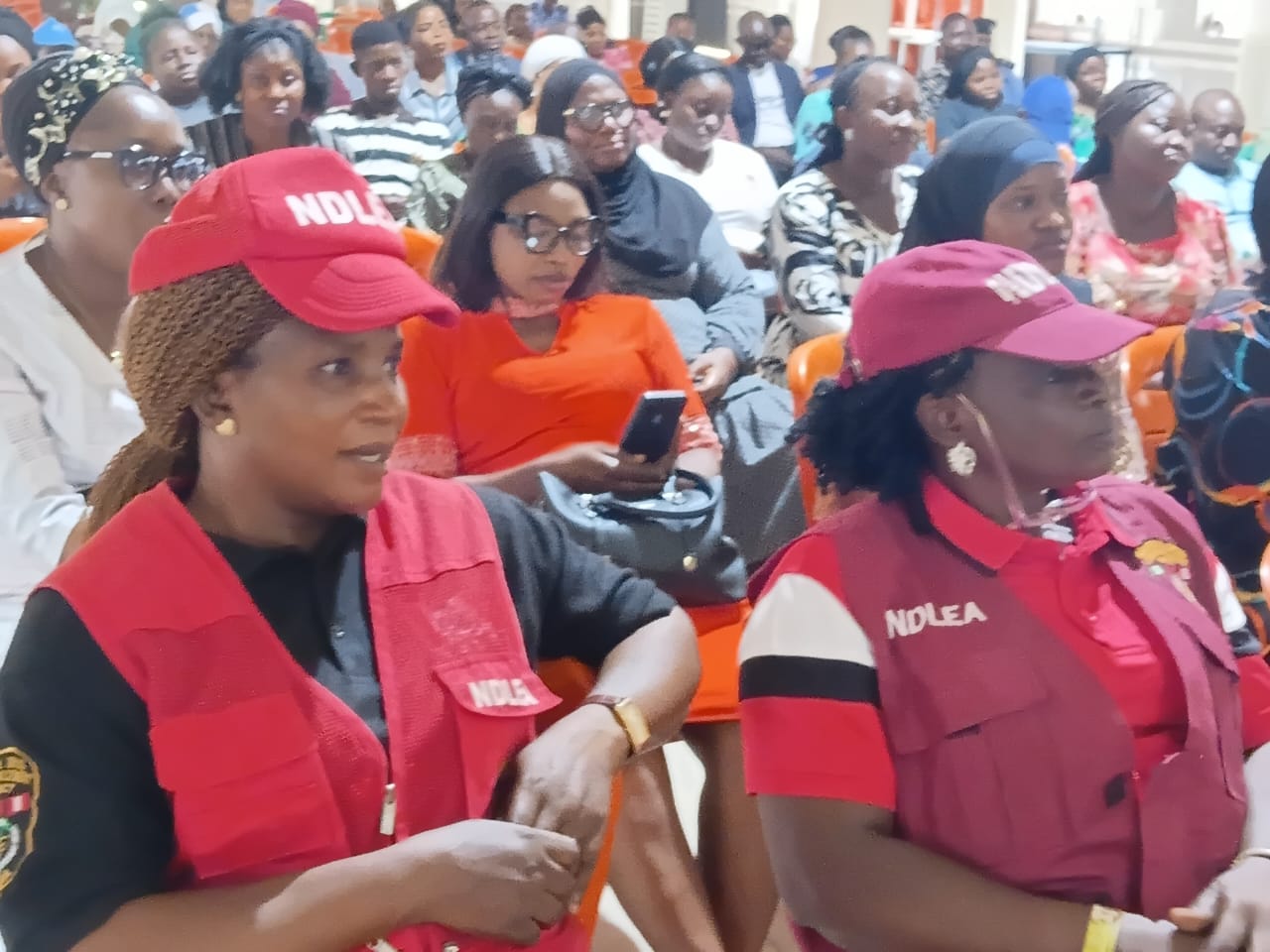
The Homat Megalite Event Centre, Igbogbo Road, Ikorodu, was filled to capacity penultimate Friday as Bottomline Media hosted the 2nd edition of the Ikorodu School Summit & Awards
With the theme, “Combating the Menace of Poor Orientation and Moral Decadence in Society,” the summit brought together students, teachers, school owners, parents, faith leaders, and security chiefs for a day of truth-telling, awards, and renewed commitment to rebuilding values in the society.
Supported by Education District II and LASUBEB, the summit has quickly become one of Ikorodu’s most important platforms for education, character, and community security.
The event recorded a strong presence from Nigeria’s security institutions. The Lagos State Commissioner of Police, CP Fatai Taiwo, was represented by the Area N Area Commander, Ijede, with the DPO, Igbogbo Police Station, CSP Akinola Clement who deployed full police security for summit also in attendance.
Speaking on behalf of the CP, the Area Commander commended Bottomline Media for the initiative and said there is an urgent need to “start early in educating the younger ones on moral uprightness.”
“An intelligent student without purpose and character will become an intelligent criminal,” he warned. He challenged society to pay more attention to values than to criminal success. “We celebrate criminal success at the expense of values. That must change if we want a safer Nigeria.”
The National Drug Law Enforcement Agency, NDLEA, Ikorodu Area Command, led by DCN Jonax David, delivered a hard-hitting lecture on the dangers of illegal and abusive drugs. The agency linked drug abuse directly to moral decadence and rising crime rates across the country.
NDLEA called on parents, schools, religious leaders, and teachers to do more in prevention and early intervention. The session left students asking questions and teachers requesting follow-up sensitization in schools.
Guest Speaker, Pastor Lanre Temenu, Pastor, Chapel of Transfiguration, COT Solution Centre, LASUTECH, anchored the moral conversation. His message on discipline, purpose, and right orientation resonated with audience who filled the hall from various discipline.
Dr. Henry Obidi anchored the programme with professionalism and energy, ensuring the day ran seamlessly from opening to the final award.
Proprietor of Homat Schools, Alhaji Olawale Amusa, hosted the summit at the Homat Megalite Event Centre, providing the venue that made the large turnout possible.
The awards segment was the emotional high point. Seven Prominent individuals and institutions were honoured and received a full 60-second standing ovation from the audience.
60-Second Standing Ovation Honorees
1. CP Fatai Tijani: Commissioner of Police, Lagos State Command
2. Lagos State Ministry of Education
3. Lagos State Ministry of Information & Strategy
4. Femi Falana, SAN , Legal luminary
5. Hon. Jimi Benson Member, House of Representatives, Ikorodu Federal Constituency
6. Senator Mukhail Adetokunbo Abiru, Senator, Lagos East Senatorial District
7. Ikorodu Division Peace & Security Initiative, Ikorodu
Champion of Moral Excellence & Societal Values Award
1. Lawrence Obilana: Proprietor, Meaning Resources School
2. Owenaze Blessing Ella: Managing Director, Unique Prella Schools
3. Pastor Lanre Temenu: Pastor, Chapel of Transfiguration, COT Solution Centre, LASUTECH
4. Princess Mulikat Fehintola Sanni, CEO, Mulifelong Motors
Excellence Recognition Award
Hon. Deen Sanwola, Mrs. Eyitayo Mojisola Olawunmi, Alhaji Taiwo Abiodun Odumbo, Dr. Henry Obidi, Alhaji Olawale Amusa.
Dr. Hakeem Babatunde Shittu: Executive Chairman, LASUBEB, Mr. Adesegun Ogundeji – Director of Public Affairs, Ministry of Information & Strategy, Dr. Bishop Joseph Edoro, Mr. Omotayo Layemo Sanni – Tutor-General/Permanent Secretary, Education District II, Hon. Mobolaji Abubakre Ogunlende, DCN Jonax David – Area Commander, NDLEA Ikorodu, and Engr. Mukadas Opeodu.
Education & School Excellence Awards
1. Miss Oyebode Sekinat Kofoworola, Civil Service Senior Model College, Igbogbo – _Outstanding Teacher of the Year_
2. Government Senior Model College, Owutu – _Outstanding Secondary School in Output_
3. Miss Alabi Taiwo Patience, Ikorodu Junior Grammar School – _Best Innovative School_
4. Lagos State Girls Junior Model College, Agunfoye – _Outstanding School with Best Learning Environment_
5. Mrs. Bolanle Moronkola Esho, Lagos State Civil Service Junior Model College, Igbogbo – _Best Education Administrator_
From the packed hall to the interactive Q&A, the summit achieved its goal: to confront poor orientation head-on and equip the next generation with character to match their intelligence.
Arthur Igbolaju Richard, Convener, Ikorodu School Summit & Awards 2.0 and CEO, Bottomline Media, said the goal is to make the summit an annual movement. “When students hear from the Police, NDLEA, Lawyers, teachers, and faith leaders in one room, the message is clear: society is watching, and society cares. We will keep building this table.”
With Education District II, LASUBEB, NDLEA, and the Nigeria Police on board, Ikorodu School Summit & Awards 2.0 ends as more than an event. It ends as a call to action.
#IkoroduSummit2.0 #ValuesFirst #BottomlineMedia


