
Featured
Senate Presidency: APC Backs Lawan’s Consultations with Opposition


The ruling All Progressives Congress on Sunday said it was not against the decision of Senator Ahmed Lawan and other senators-elect to consult with members of the opposition on the election of leaders of the Ninth National Assembly.
The party’s National Publicity Secretary, Lanre Issa-Onilu, said this in a statement made available to journalists in Abuja.
The party’s National Chairman, Adams Oshiomhole, had while announcing the party’s choice of Lawan as the next Senate President, boasted that the APC did not need members of the Peoples Democratic Party to produce the next presiding officials of the National Assembly.
There were, however, recent reports that Lawan had been reaching out to members of the opposition, a claim that has been confirmed by the senator’s campaign organisation.
Issa-Onilu said the APC was not against negotiation by Lawan and other senators-elect working to fulfil the position taken by the party.
He said, “We have been inundated with reports of our members in the National Assembly holding consultations with members of the opposition over the election of leaders into the Ninth National Assembly.
“Let me state that our party has no objection to such consultations. It is a normal democratic practice world over to stretch hands across the divides.
And contrary to some media reports, the actions of our members do not contradict the party’s position. APC has comfortable majority in both chambers, therefore; we have the number to produce the leadership.
“But democracy recognises the importance of the opposition, especially when you do not have two-third which would be required at some very critical situations.
The Punch



Golden Morn, Nigeria’s beloved cereal brand, is thrilled to announce the launch of a nationwide consumer promotion running till April 16, 2026. This exciting initiative offers over ₦80 million in cash and fantastic prizes, designed to reward our loyal consumers for their continued support.
Participants can look forward to winning exciting prizes, including cash rewards of up to ₦5 million, laptops, televisions, mobile phones, washing machines, and airtime. All you need to do is purchase any Golden Morn 30g or 45g special promo pack from your favorite store. Inside each pack, you will find a unique code. Simply dial 8011# and follow the prompts to enter your code for a chance to win!
Winners will be selected in bi-weekly draws, providing multiple opportunities to win throughout the promotion period.
Omofasa Orhiunu, Category Manager for Healthy Cereals at Nestlé Nigeria, expressed enthusiasm about the initiative, stating, “This promotion reflects Golden Morn’s commitment to nourishing families and rewarding our consumers for choosing our brand as part of their daily routines. We understand the importance of daily nourishment in Nigerian households, and this is our way of giving back to families who trust Golden Morn.”
Golden Morn is not just a delicious breakfast choice; it is also a source of essential nutrients made from locally sourced grains. By supporting local farmers, Golden Morn contributes to the livelihoods of communities across Nigeria, ensuring that families can enjoy nutritious meals while also uplifting the agricultural sector. This promotion is an opportunity for us to celebrate the everyday choices Nigerians make to care for themselves and their families.
The impressive ₦80 million prize pool reflects Golden Morn’s dedication to creating meaningful value for consumers. The rewards have been thoughtfully selected to meet everyday needs, from essential airtime to valuable household items, and significant cash prizes that can truly transform lives.
The Golden Morn promo runs from xxx till April 15, 2026. Consumers are encouraged to look out for the special promo packs in stores and take advantage of the opportunity to win while enjoying their favourite cereal.
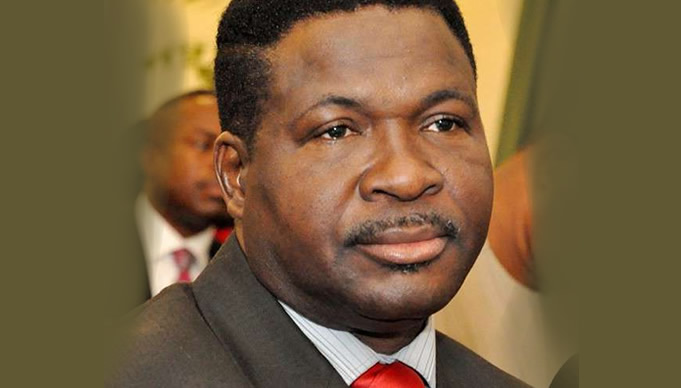
By Prof Mike Ozekhome SAN
INTRODUCTION
The last installment of this series continued from where the inaugural one stopped: the analogy of each corpse buried without justice being a clause in the Constitution buried in effigy. It then explained how inequality breeds violence, before moving onto how systemic lapses in law enforcement is the hidden engine of insecurity and erosion of rights. Later, it examined the contrast between constitutional mandate and institutional reality, followed by the politicization and weaponization of law enforcement; corruption as operational culture; and finally operational weaknesses and structural management. The week, we shall continue with same theme, after which we shall delve into the failure of internal accountability; collusion with criminal networks; erosion of civil liberties through enforcement practices; the cycle of impunity; abuse of judicial power and executive lawlessness targeted at the Bench. Thereafter, we shall consider various pathways and recommendations for addressing insecurity, rights protection and institutional weakness. Enjoy.
OPERATIONAL WEAKNESSES AND STRUCTURAL MISMANAGEMENT
Nigeria’s police-to-population ratio remains alarmingly low. With about 371,800 officers serving a population of over 236 million people, the country is well below the United Nations’ recommended benchmark of 222 officers per 100,000 people. This manpower gap severely hampers the Force’s capacity to tackle crime, especially in volatile areas plagued by insurgency and communal violence. To make matters worse, many of the limited officers available are deployed to safeguard high-profile politicians and elites rather than serving the broader public. In rural communities, especially in conflict-affected northern states, residents report waiting hours, sometimes days, for police to respond to distress calls, if they ever respond at all.
Compounding this problem is inadequate training. Many recruits receive minimal exposure to forensic methods, human rights protocols, or community policing principles. As a result, investigative work relies heavily on confessions, which are frequently extracted through coercion or torture. This not only violates constitutional guarantees against inhuman treatment but also produces unreliable evidence that weakens prosecutions.
Logistical deficits are equally damaging. Many police divisions operate without functioning patrol vehicles, secure communication equipment, or modern crime labs. The Inspector General of Police has acknowledged that, outside of Lagos, forensic capability is virtually non-existent. Without scientific investigation, crimes are either left unsolved or result in wrongful arrests, further undermining public trust
FAILURE OF INTERNAL ACCOUNTABILITY
In a functioning democracy, law enforcement personnel are subject to robust oversight, both internally and through independent bodies. In Nigeria, oversight mechanisms exist in name but not in consistent practice. The Police Service Commission (PSC), which is meant to handle recruitment, promotion, and discipline, is itself politically influenced and suffers from inadequate funding. Complaints of misconduct often disappear into opaque disciplinary processes, and there is little transparency about the outcomes.
When abuses are too public to ignore, as with the October 2020 End SARS protests, Commissions of Inquiry are established, testimonies are heard, and reports are submitted. Yet, implementation of recommendations remains rare. In Lagos, for example, despite the panel’s findings implicating specific officers in excessive force and unlawful killings, few have been prosecuted. Instead, many have returned quietly to duty. This pattern sends a dangerous message to the rank-and-file officers: violations carry reputational risk but rarely legal consequence.
COLLUSION WITH CRIMINAL NETWORKS
Perhaps the most alarming dimension of enforcement failure is the documented collusion between security personnel and criminal actors. In the Niger Delta, security forces have been implicated in illegal oil bunkering, the very crime they are deployed to prevent. In parts of the North-West, reports from Amnesty International and local media allege that bandit groups pay “protection fees” to avoid military or police raids.
Such collusion transforms law enforcement from an adversary of crime into a stakeholder in it. This is not merely passive negligence; it is active participation in the shadow economy of insecurity. In these areas, communities quickly learn that reporting crimes may not only be futile but dangerous, as information shared with authorities can be leaked to perpetrators.
EROSION OF CIVIL LIBERTIES THROUGH ENFORCEMENT PRACTICES
The systemic lapses in law enforcement also directly erode civil liberties. Arbitrary arrests, prolonged detentions without trial, suppression of lawful assembly, and harassment of journalists are not isolated acts but part of an entrenched enforcement culture. The constitutional right to personal liberty under Section 35 is regularly violated under the guise of maintaining public order.
Protesters face preemptive crackdowns, often justified by vague references to national security. During the #Revolution Now protests in 2019, dozens of demonstrators were detained, some for weeks, without formal charges. In many cases, court orders for their release were ignored by security agencies, underscoring the absence of legal consequence for disobedience of judicial authority.
This disregard for civil liberties creates a chilling effect on political participation and civic engagement. Citizens learn that speaking out carries personal risk, and self-censorship becomes a survival strategy. Over time, this quietens public dissent, enabling further abuses by both government and non-state actors.
THE CYCLE OF IMPUNITY
The combination of politicization, corruption, operational weakness, and lack of accountability feeds into a self-reinforcing cycle of impunity. Officers learn that their actions are judged not by legality but by political expediency. Politicians, in turn, see law enforcement as a tool to protect themselves and punish adversaries. Criminal networks exploit these gaps, securing protection through bribery or political patronage.
Once entrenched, this cycle is difficult to break. Each unpunished violation becomes a precedent, normalizing the idea that power grants immunity from the law. This normalization spreads beyond law enforcement to other institutions, eroding the very foundations of democratic governance.
THE ABUSE OF JUDICIAL POWER AND EXECUTIVE LAWLESSNESS AGAINST THE BENCH
In a functioning democracy, the judiciary serves as the impartial referee between the powerful and the powerless. It is the last line of defence for the citizen and the final hope for justice. But what happens when that sacred institution itself becomes the object of aggression? What happens when the enforcers of state power turn their weapons not on criminals, but on the judges who interpret the law? Nigeria confronted these very questions in October 2016, when the homes of senior judges across the country were invaded by heavily armed operatives of the Department of State Services under the cover of night.
These raids, carried out in Abuja, Gombe, and Port Harcourt, targeted some of the most senior members of the judiciary, including Justices Walter Onnoghen and Sylvester Ngwuta of the Supreme Court, and Federal High Court judges Adeniyi Ademola and Nnamdi Dimgba. The DSS claimed they were investigating corruption, yet their conduct betrayed a more sinister motive. Homes were stormed in Gestapo fashion, judges were treated like fugitives, and search warrants reportedly carried incorrect names or were not presented at all. The judiciary was under siege. In Rivers State, Governor Nyesom Wike arrived at the residence of one of the judges to intervene and was reportedly shoved, injured, and threatened by DSS operatives. It was not an arrest. It was a constitutional assault.
I spoke firmly and publicly against this invasion. I said then what I still affirm now: the DSS acted outside the bounds of the law. As I told journalists and as reported by Premium Times, the operation was not only illegal and unconstitutional but a dangerous desecration of the rule of law. No agency of government, including the DSS, has the authority to arrest or search the premises of serving judicial officers without going through the National Judicial Council, which is constitutionally empowered to discipline judges. If there are allegations of corruption, there is a process. That process was willfully ignored. What we saw instead was a show of force meant to intimidate and humiliate. It was executive lawlessness under the guise of anti-corruption.
The greatest tragedy, however, was not merely that these events occurred. It was the manner in which they were received. The Bar, which ought to have risen as a united force, was sluggish in its response. Statements were issued, but no real action followed. There were no mass protests, no urgent court filings to challenge the illegality. The judiciary itself offered little more than murmurs of disapproval. That silence was deafening. It spoke to a larger issue: the slow death of institutional courage. When judges are raided in their homes and lawyers look away, then the entire legal profession stands indicted. If we cannot defend our own, how then can we defend the people?
This unfortunate episode also calls into question the internal health of the judiciary. The Nigerian Law Society recently criticized the widespread abuse of power within judicial institutions, pointing to opaque appointments, poor welfare, and inconsistent rulings. According to their statement reported by the Guardian, the lower courts remain underpaid and under-respected, leaving many judicial officers vulnerable to compromise. It is undeniable that some within the judiciary have failed in their duties, and that corruption has indeed crept into its chambers. However, even in the face of that, the remedy is never brute force. It is lawful accountability, constitutional procedure, and institutional reform. The rule of law must never be sacrificed on the altar of expediency.
When security agents raid the homes of judges without due process, they are not upholding the law, they are undermining it. And when the legal community reacts with silence or justification, it invites a repeat. What began with judges will not end there. Such violations set a precedent that can easily extend to journalists, lawmakers, academics, and eventually, ordinary citizens. Today it is the gavel. Tomorrow it will be the pen, the vote, the voice. That is how authoritarianism begins not always with a declaration, but often with silence.
It is not too late to reset the balance. But we must remember that a judiciary that submits to fear is no judiciary at all. A legal profession that only whispers in the face of injustice is unworthy of its robes. We must return to our roots, as defenders of liberty and protectors of due process. Let the judiciary regain its independence, and let the Bar reclaim its courage. Only then can we begin to restore the broken faith between the Nigerian people and the system that was meant to serve them.
PATHWAYS AND RECOMMENDATIONS FOR ADDRESSING SECURITY, RIGHTS PROTECTION, AND INSTITUTIONAL WEAKNESS IN NIGERIA
The challenges outlined in this paper reveal a complex web of governance failures, enforcement gaps and systemic disregard for constitutional rights. Addressing these issues requires deliberate and sustained action across multiple fronts. The following ten pathways provide a practical blueprint for reform.
Reform of Law Enforcement Institutions
The Nigerian Police Force, the Department of State Services, and related agencies need deep structural reforms. Recruitment should be based on merit and integrity rather than political patronage. Training should include human rights education, forensic investigation, and conflict-sensitive community policing. The practice of diverting a large proportion of officers to serve political elites must be stopped so that policing resources are redirected toward public safety.
Creation of Independent Oversight and Accountability Mechanisms
A civilian-led oversight authority should be established with the power to investigate and prosecute cases of misconduct by law enforcement officials. This body must have full access to records, the ability to compel testimony, and legal safeguards for whistleblowers. Its findings should be made public to ensure transparency and build trust. (To be continued).
THOUGHT FOR THE WEEK
“Money and corruption are ruining the land, crooked politicians betray the working man, pocketing the profits and treating us like sheep, and we’re tired of hearing promises that we know they’ll never keep”. (Ray Davies).

Women of Substance, founded by renowned media consultant Chief Ify Onyegbule (Ada Di Ora Mma), is set to host the maiden edition of the “Sisters’ Hangout”, a strategic networking and empowerment gathering for women across diverse sectors, designed to foster collaboration, visibility, personal growth, and impactful partnerships.
Scheduled as an exclusive lunch-table conversation for Women, by Women, and powered by Women, the Sisters’ Hangout brings together established and emerging voices in journalism, business, education, media, fintech, philanthropy, data science, food services, and grassroots development.
The Hangout has already confirmed an extraordinary lineup of accomplished women, each bringing unique perspectives and deep industry insights.
1. Petra Akinti Onyegbule — Corporate Communications Strategist
Petra is an authority in leadership communication, storytelling, and brand clarity. She will lead conversations on how to keep a brand alive, relevant, and competitive in a saturated marketplace.
2. Theresa Moses — Journalist, Humanitarian & Media Leader
Theresa Moses, Convener of Pad Me A Girl Initiative, Head of Gatmash Media, Chairperson of Nigeria Online Media Alliance (NOMA), and CEO of Vita Baites Foods (makers of premium Kuli-Kuli), will share how she successfully combines media leadership with running a fast-growing FMCG brand.
3. Anthonia Ojenagbon — Founder, Silton African Kitchen
A food service expert specializing in large-scale catering, Anthonia will discuss navigating the pressures of cooking for large events and remaining excellent outside one’s comfort zone.
4. Chioma Iroabuchi — Digital Transformation Leader
Chioma, a driver of fintech-enabled process optimization, will break down the beginner steps into opportunities in the fintech sector, especially for women exploring tech.
5. Oluwatomisin Adebukola — Award-Winning Broadcast Journalist
A leadership coach and community development advocate, she will highlight realities of working in grassroots spaces, and how passion-driven initiatives bring hope to underserved communities.
6. Olayinka Mayaki-Yusuf — General Manager, Shipshape Cleaners Limited
Olayinka will share the business of professional cleaning, project management, and what it takes to thrive in a highly competitive service industry.
7. Temitayo Oluwatobi Adetoba — Data Scientist & Girls’ Education Advocate
Tayo will educate attendees on how data shapes decision-making and why women must tap into the booming data ecosystem.
8. Cordy Nachi Opara — Educator & Relationship Coach
Cordy will shed light on nurturing children with different personalities, and how mothers can be intentional leaders in the home.
9. Chief Yinka Kenny — Broadcast Journalist & Gender Champion
Yinka brings decades of media experience and will reveal the behind-the-scenes challenges faced by women in media, along with strategies for thriving in the industry.
10. Ijeoma Uzozie Mark-Abii — Estate Surveyor & Travel Expert
Ijeoma will demystify the business of tourism and hospitality, sharing what most people are never told about the travel industry.
11. Anusiem DO (Nwachukwu Delphine Onyinye) — Author & Humanitarian
The visionary behind Brisa Women Foundation will highlight stories of women impacted through empowerment programs and the importance of community-driven action.
12. Wemimo Adebiyi — Therapist & Child Mental Health Advocate
UK-trained therapist and educator, Wemimo will engage women on child mental health, school systems, and the power of effective communication at home.


