
Featured
When a Nation Undermines Citizens’ Rights (Pt. 3)

- /home/rhoncare/pointblank.ng/wp-content/plugins/mvp-social-buttons/mvp-social-buttons.php on line 27
https://pointblank.ng/wp-content/uploads/2022/09/Mike-Ozekhome-1.jpg&description=When a Nation Undermines Citizens’ Rights (Pt. 3)', 'pinterestShare', 'width=750,height=350'); return false;" title="Pin This Post">
- Share
- Tweet /home/rhoncare/pointblank.ng/wp-content/plugins/mvp-social-buttons/mvp-social-buttons.php on line 69
https://pointblank.ng/wp-content/uploads/2022/09/Mike-Ozekhome-1.jpg&description=When a Nation Undermines Citizens’ Rights (Pt. 3)', 'pinterestShare', 'width=750,height=350'); return false;" title="Pin This Post">
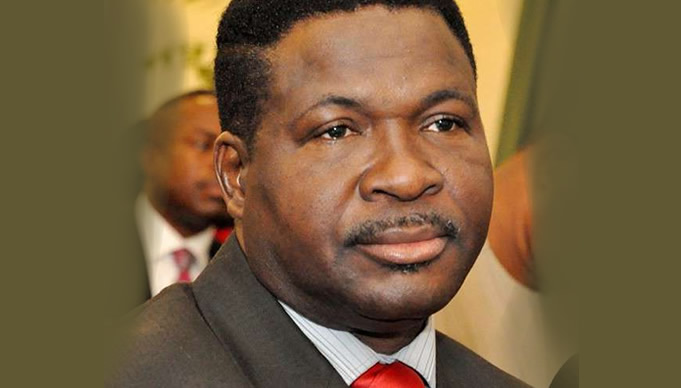
By Prof Mike Ozekhome SAN
INTRODUCTION
The last installment of this series continued from where the inaugural one stopped: the analogy of each corpse buried without justice being a clause in the Constitution buried in effigy. It then explained how inequality breeds violence, before moving onto how systemic lapses in law enforcement is the hidden engine of insecurity and erosion of rights. Later, it examined the contrast between constitutional mandate and institutional reality, followed by the politicization and weaponization of law enforcement; corruption as operational culture; and finally operational weaknesses and structural management. The week, we shall continue with same theme, after which we shall delve into the failure of internal accountability; collusion with criminal networks; erosion of civil liberties through enforcement practices; the cycle of impunity; abuse of judicial power and executive lawlessness targeted at the Bench. Thereafter, we shall consider various pathways and recommendations for addressing insecurity, rights protection and institutional weakness. Enjoy.
OPERATIONAL WEAKNESSES AND STRUCTURAL MISMANAGEMENT
Nigeria’s police-to-population ratio remains alarmingly low. With about 371,800 officers serving a population of over 236 million people, the country is well below the United Nations’ recommended benchmark of 222 officers per 100,000 people. This manpower gap severely hampers the Force’s capacity to tackle crime, especially in volatile areas plagued by insurgency and communal violence. To make matters worse, many of the limited officers available are deployed to safeguard high-profile politicians and elites rather than serving the broader public. In rural communities, especially in conflict-affected northern states, residents report waiting hours, sometimes days, for police to respond to distress calls, if they ever respond at all.
Compounding this problem is inadequate training. Many recruits receive minimal exposure to forensic methods, human rights protocols, or community policing principles. As a result, investigative work relies heavily on confessions, which are frequently extracted through coercion or torture. This not only violates constitutional guarantees against inhuman treatment but also produces unreliable evidence that weakens prosecutions.
Logistical deficits are equally damaging. Many police divisions operate without functioning patrol vehicles, secure communication equipment, or modern crime labs. The Inspector General of Police has acknowledged that, outside of Lagos, forensic capability is virtually non-existent. Without scientific investigation, crimes are either left unsolved or result in wrongful arrests, further undermining public trust
FAILURE OF INTERNAL ACCOUNTABILITY
In a functioning democracy, law enforcement personnel are subject to robust oversight, both internally and through independent bodies. In Nigeria, oversight mechanisms exist in name but not in consistent practice. The Police Service Commission (PSC), which is meant to handle recruitment, promotion, and discipline, is itself politically influenced and suffers from inadequate funding. Complaints of misconduct often disappear into opaque disciplinary processes, and there is little transparency about the outcomes.
When abuses are too public to ignore, as with the October 2020 End SARS protests, Commissions of Inquiry are established, testimonies are heard, and reports are submitted. Yet, implementation of recommendations remains rare. In Lagos, for example, despite the panel’s findings implicating specific officers in excessive force and unlawful killings, few have been prosecuted. Instead, many have returned quietly to duty. This pattern sends a dangerous message to the rank-and-file officers: violations carry reputational risk but rarely legal consequence.
COLLUSION WITH CRIMINAL NETWORKS
Perhaps the most alarming dimension of enforcement failure is the documented collusion between security personnel and criminal actors. In the Niger Delta, security forces have been implicated in illegal oil bunkering, the very crime they are deployed to prevent. In parts of the North-West, reports from Amnesty International and local media allege that bandit groups pay “protection fees” to avoid military or police raids.
Such collusion transforms law enforcement from an adversary of crime into a stakeholder in it. This is not merely passive negligence; it is active participation in the shadow economy of insecurity. In these areas, communities quickly learn that reporting crimes may not only be futile but dangerous, as information shared with authorities can be leaked to perpetrators.
EROSION OF CIVIL LIBERTIES THROUGH ENFORCEMENT PRACTICES
The systemic lapses in law enforcement also directly erode civil liberties. Arbitrary arrests, prolonged detentions without trial, suppression of lawful assembly, and harassment of journalists are not isolated acts but part of an entrenched enforcement culture. The constitutional right to personal liberty under Section 35 is regularly violated under the guise of maintaining public order.
Protesters face preemptive crackdowns, often justified by vague references to national security. During the #Revolution Now protests in 2019, dozens of demonstrators were detained, some for weeks, without formal charges. In many cases, court orders for their release were ignored by security agencies, underscoring the absence of legal consequence for disobedience of judicial authority.
This disregard for civil liberties creates a chilling effect on political participation and civic engagement. Citizens learn that speaking out carries personal risk, and self-censorship becomes a survival strategy. Over time, this quietens public dissent, enabling further abuses by both government and non-state actors.
THE CYCLE OF IMPUNITY
The combination of politicization, corruption, operational weakness, and lack of accountability feeds into a self-reinforcing cycle of impunity. Officers learn that their actions are judged not by legality but by political expediency. Politicians, in turn, see law enforcement as a tool to protect themselves and punish adversaries. Criminal networks exploit these gaps, securing protection through bribery or political patronage.
Once entrenched, this cycle is difficult to break. Each unpunished violation becomes a precedent, normalizing the idea that power grants immunity from the law. This normalization spreads beyond law enforcement to other institutions, eroding the very foundations of democratic governance.
THE ABUSE OF JUDICIAL POWER AND EXECUTIVE LAWLESSNESS AGAINST THE BENCH
In a functioning democracy, the judiciary serves as the impartial referee between the powerful and the powerless. It is the last line of defence for the citizen and the final hope for justice. But what happens when that sacred institution itself becomes the object of aggression? What happens when the enforcers of state power turn their weapons not on criminals, but on the judges who interpret the law? Nigeria confronted these very questions in October 2016, when the homes of senior judges across the country were invaded by heavily armed operatives of the Department of State Services under the cover of night.
These raids, carried out in Abuja, Gombe, and Port Harcourt, targeted some of the most senior members of the judiciary, including Justices Walter Onnoghen and Sylvester Ngwuta of the Supreme Court, and Federal High Court judges Adeniyi Ademola and Nnamdi Dimgba. The DSS claimed they were investigating corruption, yet their conduct betrayed a more sinister motive. Homes were stormed in Gestapo fashion, judges were treated like fugitives, and search warrants reportedly carried incorrect names or were not presented at all. The judiciary was under siege. In Rivers State, Governor Nyesom Wike arrived at the residence of one of the judges to intervene and was reportedly shoved, injured, and threatened by DSS operatives. It was not an arrest. It was a constitutional assault.
I spoke firmly and publicly against this invasion. I said then what I still affirm now: the DSS acted outside the bounds of the law. As I told journalists and as reported by Premium Times, the operation was not only illegal and unconstitutional but a dangerous desecration of the rule of law. No agency of government, including the DSS, has the authority to arrest or search the premises of serving judicial officers without going through the National Judicial Council, which is constitutionally empowered to discipline judges. If there are allegations of corruption, there is a process. That process was willfully ignored. What we saw instead was a show of force meant to intimidate and humiliate. It was executive lawlessness under the guise of anti-corruption.
The greatest tragedy, however, was not merely that these events occurred. It was the manner in which they were received. The Bar, which ought to have risen as a united force, was sluggish in its response. Statements were issued, but no real action followed. There were no mass protests, no urgent court filings to challenge the illegality. The judiciary itself offered little more than murmurs of disapproval. That silence was deafening. It spoke to a larger issue: the slow death of institutional courage. When judges are raided in their homes and lawyers look away, then the entire legal profession stands indicted. If we cannot defend our own, how then can we defend the people?
This unfortunate episode also calls into question the internal health of the judiciary. The Nigerian Law Society recently criticized the widespread abuse of power within judicial institutions, pointing to opaque appointments, poor welfare, and inconsistent rulings. According to their statement reported by the Guardian, the lower courts remain underpaid and under-respected, leaving many judicial officers vulnerable to compromise. It is undeniable that some within the judiciary have failed in their duties, and that corruption has indeed crept into its chambers. However, even in the face of that, the remedy is never brute force. It is lawful accountability, constitutional procedure, and institutional reform. The rule of law must never be sacrificed on the altar of expediency.
When security agents raid the homes of judges without due process, they are not upholding the law, they are undermining it. And when the legal community reacts with silence or justification, it invites a repeat. What began with judges will not end there. Such violations set a precedent that can easily extend to journalists, lawmakers, academics, and eventually, ordinary citizens. Today it is the gavel. Tomorrow it will be the pen, the vote, the voice. That is how authoritarianism begins not always with a declaration, but often with silence.
It is not too late to reset the balance. But we must remember that a judiciary that submits to fear is no judiciary at all. A legal profession that only whispers in the face of injustice is unworthy of its robes. We must return to our roots, as defenders of liberty and protectors of due process. Let the judiciary regain its independence, and let the Bar reclaim its courage. Only then can we begin to restore the broken faith between the Nigerian people and the system that was meant to serve them.
PATHWAYS AND RECOMMENDATIONS FOR ADDRESSING SECURITY, RIGHTS PROTECTION, AND INSTITUTIONAL WEAKNESS IN NIGERIA
The challenges outlined in this paper reveal a complex web of governance failures, enforcement gaps and systemic disregard for constitutional rights. Addressing these issues requires deliberate and sustained action across multiple fronts. The following ten pathways provide a practical blueprint for reform.
Reform of Law Enforcement Institutions
The Nigerian Police Force, the Department of State Services, and related agencies need deep structural reforms. Recruitment should be based on merit and integrity rather than political patronage. Training should include human rights education, forensic investigation, and conflict-sensitive community policing. The practice of diverting a large proportion of officers to serve political elites must be stopped so that policing resources are redirected toward public safety.
Creation of Independent Oversight and Accountability Mechanisms
A civilian-led oversight authority should be established with the power to investigate and prosecute cases of misconduct by law enforcement officials. This body must have full access to records, the ability to compel testimony, and legal safeguards for whistleblowers. Its findings should be made public to ensure transparency and build trust. (To be continued).
THOUGHT FOR THE WEEK
“Money and corruption are ruining the land, crooked politicians betray the working man, pocketing the profits and treating us like sheep, and we’re tired of hearing promises that we know they’ll never keep”. (Ray Davies).


A member of the Nigeria Union of Petroleum and Natural Gas Workers (NUPENG), Comrade Tope Ajagbe, has described as lies reports been circulated by the National Union of Edible Oil Tanker Drivers of Nigeria (NUEOTDN).
According to a statement, the member said “their baseless allegations, seen in the online edition of The Nation newspaper of Wednesday, September 16, 2026, are malicious, misleading, and deliberately intended to create panic within Nigeria’s product supply and distribution chain.”
He further wrote:
We strongly urge the Federal Government, law enforcement agencies, regulatory authorities, and other critical stakeholders to treat this orchestrated falsehood as an act of economic sabotage. NUEOTDN must be cautioned to desist from overheating the polity and maligning the reputation of NUPENG.
It is important to note that NUPENG leadership has consistently sought peaceful resolution of disputes between NUEOTDN and the Amalgamated Union of Wharf Truck Owners of Nigeria/Wharf 302 Products and Beverages Association of Tanker Drivers, who operate dedicated food-grade trucks. Unfortunately, NUEOTDN has repeatedly rejected conciliation efforts and continues to spread misinformation.
NUPENG operations are conducted with strict compliance to all relevant safety, environmental, and regulatory frameworks. We work closely with Federal Road Safety Corps (FRSC), Nigerian Midstream and Downstream Petroleum Regulatory Authority (NMDPRA), and other statutory agencies to ensure our practices meet the highest standards of public safety and consumer protection.
Our drivers undergo regular training, inspections, and certification to guarantee adherence to national and international best practices.
We categorically condemn NUEOTDN’s falsehoods and reaffirm that NUPENG remains a legally recognized and responsible union committed to professionalism, integrity, and the welfare of Nigerians.
We call on the Federal Government, regulators, law endorsement agencies and the public to disregard these unfounded claims and recognize NUPENG as a union that stands for responsibility, compliance, and national development.
It is also important to emphasize that any dedicated petroleum tanker found engaging in illegal activities, particularly in the lifting or distribution of edible products, must be apprehended by law enforcement agencies and made to face the full weight of the law. NUPENG remains a law-abiding union and will not condone any member involved in acts of illegality.

President Bola Ahmed Tinubu has been projected to emerge victorious in the 2027 presidential election, with a new political forecast giving him 20 states against nine for former Vice President Atiku Abubakar and eight for NDC candidate Peter Obi.
The projection was made by the Political Intelligence Group (PIG) of Politico.ng, which assessed the current political landscape and projected how the three major political figures could perform if the presidential election were conducted under the circumstances prevailing at the moment.
According to the projection, Tinubu would have a clear advantage over his major rivals, although the group acknowledged that the political situation could change significantly before the actual election.
The forecast places Tinubu strongly in the South-West while also giving him important victories outside the region. Atiku is projected to maintain considerable strength across parts of Northern Nigeria, while Obi is expected to retain support in selected areas where he performed strongly during the 2023 presidential election.
Tinubu Projected to Win 20 States
According to PIG, Tinubu is currently projected to win 20 states, making him the leading candidate in the forecast.
The president is expected to dominate the South-West, with all six states in the region projected to fall into his column. The region remains politically significant because of its voting strength and Tinubu’s long-standing political influence there.
Tinubu is also projected to win Lagos State in the 2027 presidential election. This would mark a change from the 2023 presidential election, when Tinubu lost Lagos State to Peter Obi.
The latest projection says that Tinubu would regain the state in 2027. Lagos has been central to his political career and remains one of the country’s most important electoral territories.
The inclusion of Kano among the states projected to go to Tinubu is one of the more striking aspects of the forecast. Kano is one of Nigeria’s largest states by voting population and has traditionally been an important battleground during presidential elections.
A victory in Kano would provide Tinubu with a major northern foothold and could strengthen his ability to build a broad national coalition beyond his traditional South-West base.
Tinubu’s eventual performance, however, could depend heavily on how Nigerians assess his administration by 2027.
Economic conditions, inflation, employment, security, infrastructure and the cost of living could influence voters’ decisions. The administration’s policies and its ability to communicate its achievements may also become important campaign issues.
Religion and ethnicity could also play a role in the political calculations. Nigeria’s voting patterns are sometimes influenced by regional, ethnic and religious considerations, although these factors compete with economic and political issues.
Atiku Projected to Win 9 States
PIG projects that Atiku Abubakar would win nine states in the 2027 presidential election.
The former vice president is expected to perform strongly in Northern Nigeria, with Kaduna State projected to go to him alongside several states in the North-East and North-West.
Atiku’s strength in the region could be connected to his established political network and his previous presidential campaigns. His ability to mobilise support across northern states could make him one of Tinubu’s strongest competitors in the region.
Another issue that could influence Atiku’s support is his position on fuel subsidy.
Atiku has advocated a review of the current fuel subsidy policy and has spoken about measures aimed at reducing the burden of petrol prices on Nigerians. If the high cost of transportation and living remains a major concern by 2027, such a promise could appeal to voters who want immediate relief from rising household expenses.
However, the fuel subsidy debate is likely to be more complicated than simply promising cheaper petrol.
Voters may want to know where the money required to fund the subsidy would come from and whether restoring or expanding the policy would be financially sustainable. Questions surrounding government revenue, public spending and the opportunity cost of subsidy payments could therefore become major campaign issues.
Religion and ethnicity may also influence Atiku’s support in some areas, particularly where regional identity remains politically important. However, these factors cannot be assumed to determine how every voter will behave.
The strength of Atiku’s campaign could ultimately depend on whether he can combine his northern support with meaningful backing from other parts of the country.
Obi Projected to Win 8 States
Peter Obi is projected to win eight states, according to the Politico.ng forecast.
The projection also places the Federal Capital Territory in Obi’s column. Edo State is another state where the Labour Party candidate is expected to emerge victorious.
Obi’s projected support reflects the political base he developed during the 2023 presidential election, when he performed strongly in several parts of the country.
His campaign has continued to appeal particularly to voters seeking political change and a different approach to governance. Economic management, accountability, public spending and the need for greater efficiency in government are likely to remain central to his political message.
However, Obi’s challenge could be expanding his support beyond the areas where he has historically performed strongly.
The 2027 election is expected to be highly competitive, and the emergence of new political alliances could significantly change the distribution of votes.
If opposition parties eventually cooperate or form a coalition, the calculations surrounding Tinubu, Atiku and Obi could change dramatically. Likewise, defections, the choice of running mates and the strength of party structures could influence the final outcome.
Religion and ethnicity could also feature in the contest, particularly as politicians seek to build geographically and demographically balanced tickets. Nevertheless, voters could also prioritise issues such as economic hardship, security, employment and government performance.
Projection Could Still Change
PIG’s forecast should not be interpreted as the final result of the 2027 presidential election.
The group reportedly indicated that if the election were held in September under the political circumstances currently prevailing, the APC would win.
Under that scenario, Tinubu would secure 20 states, Atiku would win nine, while Obi would take eight.
However, the actual election is still ahead, giving the major political players considerable time to change the current political equation.
The economy could improve or deteriorate. Petrol prices could become a bigger or smaller issue. New alliances could emerge, and candidates could gain or lose popularity.
The debate over fuel subsidy could become particularly important if Nigerians continue to struggle with transportation costs and the broader cost of living. Atiku’s position could therefore become a significant campaign talking point, while Tinubu would likely defend the economic direction of his administration.
Beyond economic issues, regional interests, religion, ethnicity and political identity are likely to remain part of the broader electoral calculations.
For now, however, the Politico.ng projection places Tinubu in the strongest position with 20 states, followed by Atiku with nine and Obi with eight.
The coming months and eventual campaign season will determine whether those numbers remain intact or whether Nigeria’s political landscape produces another major realignment before voters finally head to the polls in 2027.
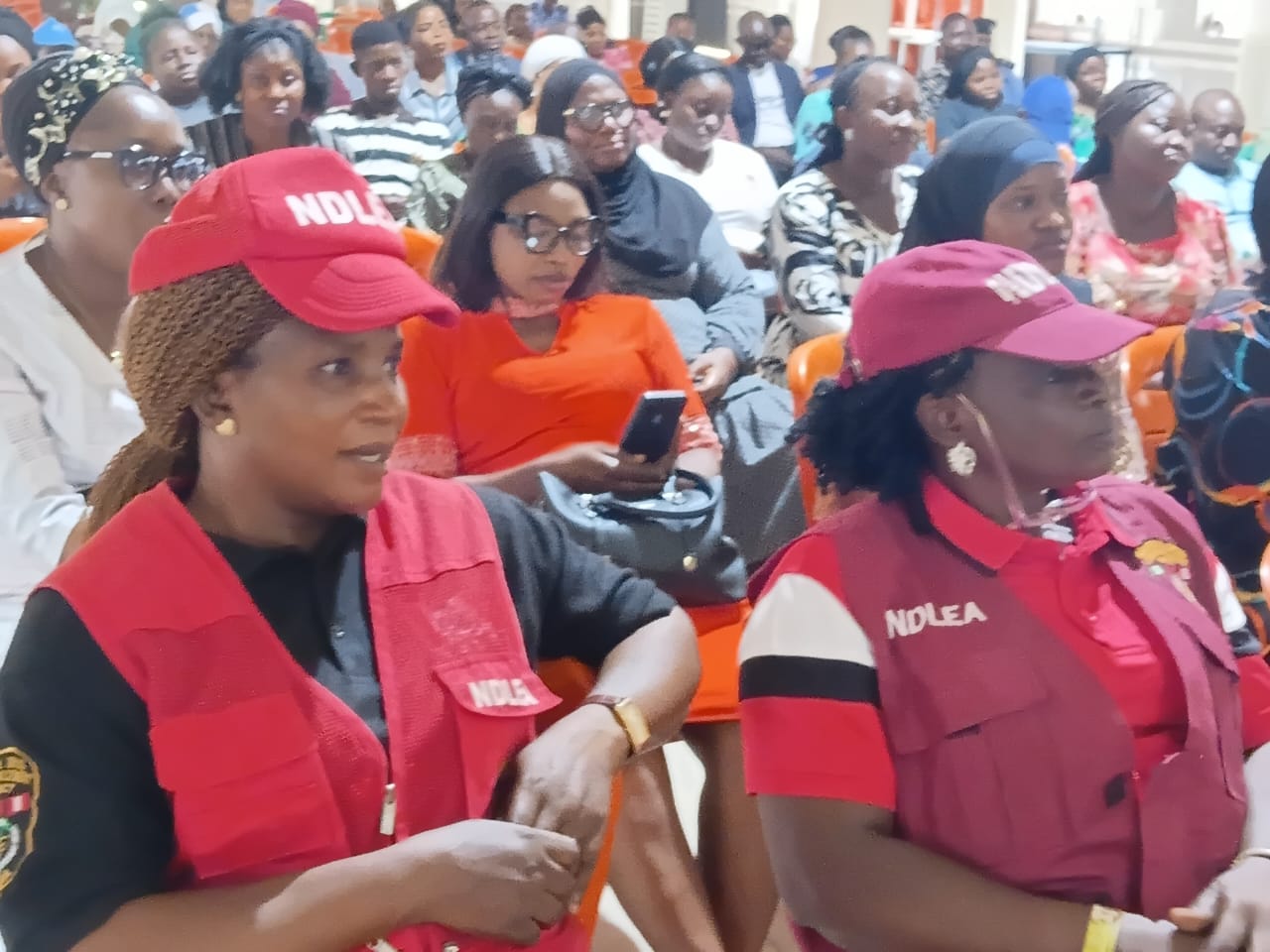
The Homat Megalite Event Centre, Igbogbo Road, Ikorodu, was filled to capacity penultimate Friday as Bottomline Media hosted the 2nd edition of the Ikorodu School Summit & Awards
With the theme, “Combating the Menace of Poor Orientation and Moral Decadence in Society,” the summit brought together students, teachers, school owners, parents, faith leaders, and security chiefs for a day of truth-telling, awards, and renewed commitment to rebuilding values in the society.
Supported by Education District II and LASUBEB, the summit has quickly become one of Ikorodu’s most important platforms for education, character, and community security.
The event recorded a strong presence from Nigeria’s security institutions. The Lagos State Commissioner of Police, CP Fatai Taiwo, was represented by the Area N Area Commander, Ijede, with the DPO, Igbogbo Police Station, CSP Akinola Clement who deployed full police security for summit also in attendance.
Speaking on behalf of the CP, the Area Commander commended Bottomline Media for the initiative and said there is an urgent need to “start early in educating the younger ones on moral uprightness.”
“An intelligent student without purpose and character will become an intelligent criminal,” he warned. He challenged society to pay more attention to values than to criminal success. “We celebrate criminal success at the expense of values. That must change if we want a safer Nigeria.”
The National Drug Law Enforcement Agency, NDLEA, Ikorodu Area Command, led by DCN Jonax David, delivered a hard-hitting lecture on the dangers of illegal and abusive drugs. The agency linked drug abuse directly to moral decadence and rising crime rates across the country.
NDLEA called on parents, schools, religious leaders, and teachers to do more in prevention and early intervention. The session left students asking questions and teachers requesting follow-up sensitization in schools.
Guest Speaker, Pastor Lanre Temenu, Pastor, Chapel of Transfiguration, COT Solution Centre, LASUTECH, anchored the moral conversation. His message on discipline, purpose, and right orientation resonated with audience who filled the hall from various discipline.
Dr. Henry Obidi anchored the programme with professionalism and energy, ensuring the day ran seamlessly from opening to the final award.
Proprietor of Homat Schools, Alhaji Olawale Amusa, hosted the summit at the Homat Megalite Event Centre, providing the venue that made the large turnout possible.
The awards segment was the emotional high point. Seven Prominent individuals and institutions were honoured and received a full 60-second standing ovation from the audience.
60-Second Standing Ovation Honorees
1. CP Fatai Tijani: Commissioner of Police, Lagos State Command
2. Lagos State Ministry of Education
3. Lagos State Ministry of Information & Strategy
4. Femi Falana, SAN , Legal luminary
5. Hon. Jimi Benson Member, House of Representatives, Ikorodu Federal Constituency
6. Senator Mukhail Adetokunbo Abiru, Senator, Lagos East Senatorial District
7. Ikorodu Division Peace & Security Initiative, Ikorodu
Champion of Moral Excellence & Societal Values Award
1. Lawrence Obilana: Proprietor, Meaning Resources School
2. Owenaze Blessing Ella: Managing Director, Unique Prella Schools
3. Pastor Lanre Temenu: Pastor, Chapel of Transfiguration, COT Solution Centre, LASUTECH
4. Princess Mulikat Fehintola Sanni, CEO, Mulifelong Motors
Excellence Recognition Award
Hon. Deen Sanwola, Mrs. Eyitayo Mojisola Olawunmi, Alhaji Taiwo Abiodun Odumbo, Dr. Henry Obidi, Alhaji Olawale Amusa.
Dr. Hakeem Babatunde Shittu: Executive Chairman, LASUBEB, Mr. Adesegun Ogundeji – Director of Public Affairs, Ministry of Information & Strategy, Dr. Bishop Joseph Edoro, Mr. Omotayo Layemo Sanni – Tutor-General/Permanent Secretary, Education District II, Hon. Mobolaji Abubakre Ogunlende, DCN Jonax David – Area Commander, NDLEA Ikorodu, and Engr. Mukadas Opeodu.
Education & School Excellence Awards
1. Miss Oyebode Sekinat Kofoworola, Civil Service Senior Model College, Igbogbo – _Outstanding Teacher of the Year_
2. Government Senior Model College, Owutu – _Outstanding Secondary School in Output_
3. Miss Alabi Taiwo Patience, Ikorodu Junior Grammar School – _Best Innovative School_
4. Lagos State Girls Junior Model College, Agunfoye – _Outstanding School with Best Learning Environment_
5. Mrs. Bolanle Moronkola Esho, Lagos State Civil Service Junior Model College, Igbogbo – _Best Education Administrator_
From the packed hall to the interactive Q&A, the summit achieved its goal: to confront poor orientation head-on and equip the next generation with character to match their intelligence.
Arthur Igbolaju Richard, Convener, Ikorodu School Summit & Awards 2.0 and CEO, Bottomline Media, said the goal is to make the summit an annual movement. “When students hear from the Police, NDLEA, Lawyers, teachers, and faith leaders in one room, the message is clear: society is watching, and society cares. We will keep building this table.”
With Education District II, LASUBEB, NDLEA, and the Nigeria Police on board, Ikorodu School Summit & Awards 2.0 ends as more than an event. It ends as a call to action.
#IkoroduSummit2.0 #ValuesFirst #BottomlineMedia


