
News
Sermon: Dreams Die: Build a Legacy


By Babatunde Jose
“O Prophet! Truly We have sent thee as a Witness, a Bearer of Glad Tidings,
and a Warner, And as one who invites to Allah’s (Grace) by His leave, and as a Lamp spreading Light. (Quran 33:45-46)
In this verse of the Quran, Allah summarizes the legacy of Prophet Muhammad as the harbinger of good tidings, the warner, the summoner unto Allah, and as the lamp spreading light in a world that was plunged in darkness; a man who delivered a message to humanity that enlightened every aspect of human life, carrying with it solutions to every problem that humanity would ever face – political, economic, social, judicial, moral and spiritual – for all times, places and people, to take mankind from the darkness and oppression of man-made ways of life and systems to the light and justice of the System from the Lord of the Worlds.
There are many great characters in history, but none of their legacies impacted the world nor shaped the politics and lives of nations to the extent that the life and legacy of Prophet Muhammad. Indeed he was the most influential man in history, as agreed by many historians and writers, including Michael H. Hart, the American author, who ranked Muhammad as number 1 in his book, “The 100 Most Influential Persons in History”, writing, “Of humble origins, Muhammad founded and promulgated one of the world’s great religions and became an immensely effective political leader. Today, thirteen centuries after his death, his influence is still powerful and pervasive.”
First, is the unparalleled political system he pioneered and left behind through the Revelation of Allah – a system that was emulated by the Muslims following his death – and continued for 1300 years – right from the Khilafah Rashidun of Abu Bakr, Umar bin Al Khattab, Uthman bin Affan, and Ali ibn Abu Talib, through the Umayyad, Abbasid, and Uthmani Khilafah until the destruction of this magnificent state at the hands of the western colonialists and their agents in 1924.
It was a political system that was the embodiment of guardianship and care of the people and whose distinctive qualities were justice and accountability in governance as acknowledged by Muslims and non-Muslims alike. A system fashioned upon the words of Allah in Surah an-Nisa: “O ye who believe! Stand out firmly for justice, as witnesses to Allah, even as against yourselves, or your parents, or your kin, and whether it be (against) rich or poor: For Allah can best protect both. Follow not the lusts (of your hearts), lest ye swerve, and if ye distort (justice) or decline to do justice, verily Allah is well acquainted with all that ye do.” (Quran 4:135)
Apart from leaving a legacy of a sound political system based on justice, fairness and equity, the Prophet also left a legacy of good leadership. The Caliber of Leaders the Prophet left behind can be gleaned from the life of the Khalifs: Leaders who truly understood their heavy duty to be the guardians and servants of their people, caring for their every need. The prophet said: “Each of you is a guardian and each of you is questioned over his subjects, the Imam is responsible over the people and he is questioned over his responsibility.”
Leaders such as Khalifah Umar bin Al Khattab who during the famine in Medina refused to eat anything but coarse food. His health began to deteriorate and he was advised to take care of himself, but he replied, “If I don’t taste suffering, how can I know the suffering of others?” This was a ruler who would patrol the streets at night to ensure every single one of his citizens had their needs met and was cared for.
He left behind a legacy of leaders who would use their own wealth to make their people rich even if they died poor – like Khalifah Umar bin Abdul Aziz. Before he became a ruler he was a rich man; in fact it took 100 camels to bring his possessions to the city. But he died with only one shirt to his name despite the Khalifah enjoying economic prosperity at the time, because he had spent his wealth for the sake of his Ummah. This was a man who refused to use even a drop of public oil to fuel his lamp for his personal affairs or even use water heated with the state charcoal for his ablution due to his immense sense of accountability over state funds. Subhanallah!
Can we say these about our leaders? Do they even understand what it means to leave a legacy of service?
A leader’s legacy is established by leaving something of enduring quality behind for the organization and its people. Effective leadership occurs when the leader strengthens others’ capacity to learn, to reflect and to extract meaning from their learning.
In essence, “legacy” is what you leave behind when you’re gone. It’s that “thing” that you did either for better or worse, and it’s most often the “thing” for which you are most remembered.
Integrity is perhaps the most important principle of leadership because it demands truthfulness and honesty. … Integrity means telling the truth even if the truth is ugly. Better to be honest than to delude others, because then you are probably deluding yourself, too. Do our leaders pass this benchmark?
Legacy is fundamental to what it is to be human. Research shows that without a sense of working to create a legacy, adults lose meaning in their life. … Being reminded of death is actually a good thing, because death informs life. It gives you a perspective on what’s important.
Let us live to leave a lasting legacy. May Allah guide us a right. It is understandable then why, George Bernard Shaw, the famous British writer and political activist once stated, “I have studied Muhammad – the wonderful man – and in my opinion far from being an anti-Christ, he must be called the Saviour of Humanity. I believe that if a man like him were to assume the dictatorship of the modern world, he would succeed in solving its problems in a way that would bring it the much needed peace and happiness: I have prophesied about the faith of Muhammad that it would be acceptable to the Europe of tomorrow as it is beginning to be acceptable to the Europe of today.”
Barka Juma’at and Ramadan Kareem


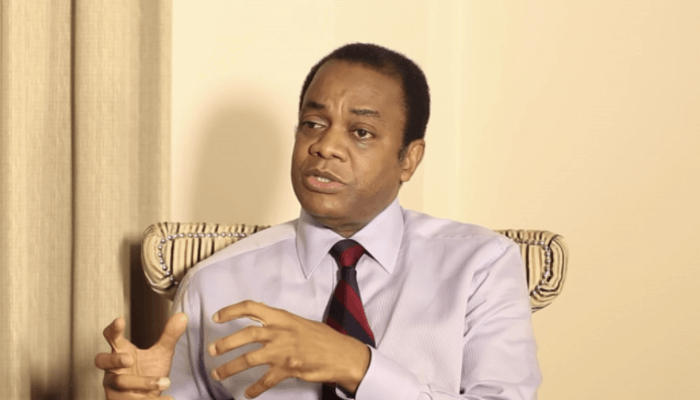
Former Governor of Cross River State, Donald Duke, has resigned from the Peoples Democratic Party (PDP), formally pitching his tent with the African Democratic Congress (ADC).
Duke registered as an ADC member in Ward 5 of Calabar Municipality, where he collected his party membership card, marking his official entry into the opposition party.
His move comes amid recent internal concerns within the ADC in Cross River State. Former ADC governorship candidate, Dr Effiong Nyong, had written to the party’s National Chairman, protesting the inclusion of some individuals from the state in the ADC’s 50 Wise Men and Women Policy Manifesto Committee.
Nyong faulted a statement by the ADC National Publicity Secretary, Mallam Bolaji Abdullahi, which listed persons who, according to him, neither resigned from the PDP nor made contributions to the ADC, calling for their removal.
Political observers believe Duke’s swift formal registration may be linked to the controversy, as the former governor had earlier been named among prominent figures associated with the party.
Recall that Duke previously left the PDP for the Social Democratic Party (SDP), where he emerged as the party’s presidential candidate under controversial circumstances.
Meanwhile, ADC leaders in Bakassi Local Government Area have intensified calls on Cross Riverians to identify with the party, describing it as a credible alternative ahead of future elections.
Rising from a stakeholders’ meeting involving chapter executives, ward chairmen, and secretaries, party leaders accused the ruling All Progressives Congress (APC) of misrule and urged Nigerians to reclaim the country.
In a statement signed by the Bakassi Chapter Chairman, Emmanuel Asuquo, and Secretary, Eko Boco, the party reaffirmed its loyalty to the ADC national leadership, pledging support for the National Chairman, Senator David Mark, and National Secretary, Ogbeni Rauf Aregbesola, while urging undecided citizens to join the party’s “transformative agenda.”
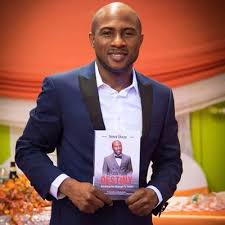
By Henry Ukazu
Dear Destiny Friends,
Did you know that life is full of different currencies? Yes, just like different countries have their unique currencies, different human beings, governments, schools, organizations and institutions have unique currencies that not only work for them, but also set them apart from others. Anyone with the intent to work with any of them therefore, must be prepared to present their currency, and speak in the language they understand.
Currencies in this context are not limited to medium of exchange as in money, but includes every gesture and body language that propel acknowledgement, connectivity and acceptance when in deals with another party.
Let’s take a case study of the United States of America; their trading currency is dollars, and some of the characteristics that made them unique are:
Core Values and Freedoms: The U.S. is built on principles of individual rights, religious freedom, and limited government, enshrined in the Constitution.
The “American Dream“: Is a pervasive culture of opportunity that allows for upward mobility and the ability to pursue personal success regardless of background.
Innovation and Entrepreneurship: A leading global hub for technology, invention, and business, from Silicon Valley to space exploration.
Diversity and Inclusion: A “melting pot” that blends cultures, ideas, and people from around the world into a unique national identity.
All these are currencies that make the United States the greatest country on earth. If any progressive mind can tap into any of these principles, they stand a greater chance of succeeding in America if they work hard and play by the rules.
The same principle is applicable in any country, government school, organization and institution. Every school, institution, organization and human being have core values and principles which can be likened to currencies. It is these core values that make them unique.
When the word currency is mentioned, it’s easy for one to think of money, but currency does not relate only to money. There are many qualities that one may have that’s more than money. For instance, good health, values, character, and principles are some qualities money can’t buy. It’s only small minds who think highly of money.
As a matter of fact, there are individuals who can sell their soul for money. These sets of people don’t really have conscience because they are merely concerned about themselves. They might have the mindset of use what you must get what you don’t have. When you contrast such a mindset with people with values, you will discover that the difference is clear, because these great minds are big on legacy. They stand for the right ideology even if it means for them to stand alone. This is the kind of currency I am talking about.
Some of the social currencies that uninformed minds are not aware of are knowledge, good health, God, relationship, access, internet, and skill. These are powerful currencies resourceful people use to thrive globally. Some might have money, but that same money can’t get access to certain groups of people, while some people might not have money, but they have access to certain people and if they successfully use their “currency” they can use it as an exchange of value to get money from rich people.
The same principle is applicable in relationships. As a matter of fact, I strongly feel apart from God, the strongest currency one can have is relationship. One might have education with good grades, money, and social currency, but lack how to establish and nurture a good relationship with people.
In social networking, the maxim is who do you know? But in advanced networking, the rule has changed to who knows you because you might know President Trump or Elon Musk, but do they know you? Do you know that who you know might open the door for you, but who knows you will give you a seat at the table. That’s the hallmark of a relationship. According to Robin Sharma “The business of business is relationships; but the business of life the business of life is human connection”.
The internet is also a social currency. The internet is called the fifth estate for a reason. In this 21st century, the internet has made us understand that the world is a global village. You can literally connect with anyone via social media. It’s sad to see people on social media but find it difficult to use it to advance their cause and careers in addition to connecting with the right people.
In all honesty, I am a big fan of social media because it has enabled me to connect with great people all over the world. I use my social media pages as a platform to share what I do and I have been privileged to connect with some great people. Like, I always say, why be local when you can be global?
Let’s analyze the four main currencies: Time, Energy, Attention and Money. (TEAM)
Time: Your most finite resource; it cannot be earned back, so how you spend your hours defines your life
Energy: The driving force for action, encompassing physical, mental, and emotional fuel for creativity and resilience
Attention: Where you focus your mind, determines what grows and flourishes in your life amidst distractions.
Money: A tangible means of exchange for goods, services, and opportunities, but its value depends on how it serves your goals.
In conclusion, just like everyone is unique and blessed with several gifts/talents, we are blessed with one form of currency which we can use to attract people into our life. So, quit looking outside and start looking inside. When you figure your currency, you’ll not only be attractive, you’ll become one of the most highly sought after person when you have developed your talent. So, I will conclude by asking you, what currency do you have?
Henry Ukazu writes from New York. He works with the New York City Department of Correction as the Legal Coordinator. He’s the founder of Gloemi. He’s a Transformative Human Capacity and Mindset coach. He is also a public speaker, youth advocate, creative writer and author of Design Your Destiny Design and Unleash Your Destiny . He can be reached via info@gloemi.com

The Federal High Court in Ibadan has nullified the Peoples Democratic Party (PDP) National Convention held on November 15, 2025, in Ibadan, Oyo State. The court also barred Turaki and others from presenting themselves as national officers of the party.
Despite internal disputes, the PDP went ahead with its highly anticipated two-day 2025 Elective National Convention at Lekan Salami Stadium, Adamasingba, Ibadan. Tagged #Ibadan2025, the convention drew thousands of party delegates and leaders.
The convention was expected to elect a new National Working Committee (NWC), including a National Chairman, who would steer the party ahead of the 2027 general elections. The court’s ruling casts uncertainty over the legitimacy of the leadership and raises questions about the party’s preparations for the next electoral cycle.
Party members and legal experts are now awaiting further clarification on the implications of the judgement for the PDP’s national leadership structure.


