Connect with us

Headlines

Soyombo Goes into Hiding as Plot to Arrest Journalist Thickens

Published

on

Nigerians have condemned an alleged plot by security operatives to seize investigative journalist, Fisayo Soyombo.

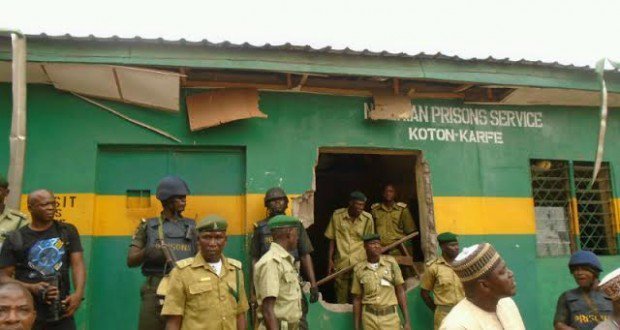
The reporter, whose undercover stories exposed corruption in Nigerian police cells and prisons, has since gone into hiding. The “threat is real,” he told The Guardian, noting, however, that he is “safe and calm.”

The first instalment of the three-part investigation by Soyombo, a former editor of The Cable and a contributor to Al Jazeera, detailed how policemen “pervert the course of justice in their quest for ill-gotten money”.

In the second part published on Monday by The Cable, he exposed “how the courts shortchange the law and (how) the prisons are themselves a cesspool of the exact reasons for which they hold inmates.”

The final part of the report is yet to be published.

During the investigation, Soyombo had taken the alias ‘Ojo Olajumoke’, spent five days in a cell at Pedro Police Station, Shomolu, Lagos, and eight days in Ikoyi prison.

His report is backed with audio, pictorial and video evidence of alleged corruption in the country’s judicial system.

The Guardian learned that the second part of Soyombo’s story irked prison authorities, especially the comptroller-general.

A security source told The Guardian yesterday morning that Soyombo, scheduled to speak at a workshop on fake news organised by Goethe Institute the same day, was to be arrested at the venue. He has since pulled out of the event.

“Prisons authorities are very angry and have decided to get the journalist arrested,” the source said, adding: “He is to be charged to court and prosecuted under Section 29 of the Nigeria Correctional Service Act.”

Subsection 1 (d) of the Act states that a person is deemed to have committed an offence if he “procures or facilitates the procurement of communication devices for an inmate or makes conversation or aids the making of conversation through a mobile phone or other devices to an inmate other than as provided in the Correctional Standing Orders and other related correctional policies.”

Another source said the journalist has been forced to vacate his residence, which rent he recently renewed, and has gone underground.

The hounding of journalists in Nigeria is gaining notoriety. Agba Jalingo, a journalist and publisher of online newspaper, CrossRiverWatch, is currently in jail, accused of treason after publishing a story on the alleged diversion of N500 million by Cross River State Governor Ben Ayade.

Another, Jones Abiri, is also facing prosecution under Nigeria’s cybercrimes act, anti-sabotage act, and terrorism prevention act, for crimes allegedly carried out in 2016.

Abiri was held by Nigeria’s secret police without any charge between July 2016 and August 2018, only to be rearrested nine months after the Department of State Services (DSS) freed him.

In #KeepFisayoSafe, which is trending on Twitter, some Nigerians expressed their disappointment at the development.

Amnesty International Nigeria said it was “concerned about threats to the life of Fisayo Soyombo, an investigative journalist whose work recently exposed injustice and human rights violations.”

Enough Is Enough, a network of individuals and organisations committed to good governance and public accountability, also said: “These moves against future investigative stories are actually attacks by the state on democratic governance and the authority of the citizenry.”

Ayò Bánkólé @AyoBankole wrote: “You cannot claim to fight corruption, yet turn around to witch-hunt a journalist who went undercover (at risk to his own life) to expose the biggest corruption racket within your own law enforcement agency. It shows your corruption fight is nothing but a fraud!”

Another, Chxta@Chxta, said: “Paying N10,000 ($28) to delete a prisoner’s record, because he has plans to run for political office, is not a crime. Telling the world that this is what happens in a prison in Nigeria is apparently a crime.”

Socio-Economic Rights and Accountability Project @SERAPNigeria, said the alleged plan to arrest Soyombo was yet another assault on media freedom in Nigeria and puts investigative journalism in the digital age under serious threat.

“The Police should vigorously denounce the threats and reported plan to arrest Soyombo and shouldn’t be tools in the hands of politicians to harass, intimidate and arbitrarily arrest journalists simply for doing their job.

“The threats against Soyombo are unacceptable; they must be investigated and those responsible held accountable in order to protect responsible, investigative and independent journalism.”

Advocacy for Integrity and Economic Development (AIED) described the alleged move to arrest Soyombo as “nauseating” and “appalling”.

In a statement by its director of media and publicity, Comrade O’Seun John, the organisation accused the Federal Government of going against its anti-corruption stand and sliding into totalitarianism.

It said: “Mr. Fisayo is a national hero that puts himself in dangerous circumstances to protect whatever is left of the sanity of this country. Instead of having him fear for his life and that of his family, the Federal Government should be concentrating resources on arresting and prosecuting all those who have turned our institutions to barter.”

Human Rights Writers Association of Nigeria (HURIWA) said news of the planned arrest didn’t come as a surprise because “Nigeria is back to the dark ages of tyranny.” In a statement by its national coordinator, Emmanuel Onwubiko, the group said it condemned the “satanic agenda.”

Vice president of the Nigerian Guild of Editors (southwest), Mustapha Isah, said Soyombo should instead be applauded and given an award by the government, not intimidated or harassed.

The president, Lagos State chapter of the Nigeria Union of Journalists (NUJ), Dr. Rotimi Akinreti, said Soyombo had only assisted the government, presidency, police and the prison service. According to him, the report should help them to clean up.

He added: “Why would they want to arrest him? Let them look into the system and clean it up. It portrays Nigeria in a bad image. The only way is to ensure that we don’t have a repeat of horrendous and disgraceful service in the police and prisons. People have been alleging these ills, and Soyombo took a step further by doing a good report. The inspector-general should commend him for doing a good job.”

But Francis Enabore, the spokesman of the Nigerian Correctional Service, dismissed Soyombo’s report as packed with lies. He said the picture of drugs in bottles was a figment of the reporter’s imagination, accusing him of playing to the gallery. “For instance, he mentioned the name of one service personnel who is no longer in Lagos but is now a state controller in the southeast. I can sponsor your trip to the said facility to see things for yourself,” he said.

The Guardian
Continue Reading
Advertisement


1 Comment

1 Comment

Leave a Reply

Your email address will not be published. Required fields are marked *

Headlines

Will Kwankwaso Dump Obi?

Published

on

By Eric Elezuo

The Nigerian political circle is fast taking shape as the 2027 presidential election draws closer. As a result, permutations regarding who contests for what position, and under what platform is gaining momentum.

From every indication, three political parties have so far shown cause as the main  platforms of choice, that is if feelers from the reviving Peoples Democratic Party (PDP) and its newest bride, former President Goodluck Jonathan, are anything to ignore.

The parties are the ruling All Progressives Congress (APC), the erstwhile coalition group, African Democratic Congress (ADC) and the freshly introduced Nigerian Democratic Congress (NDC). One common denomination attached to these political parties is that they all congresses.

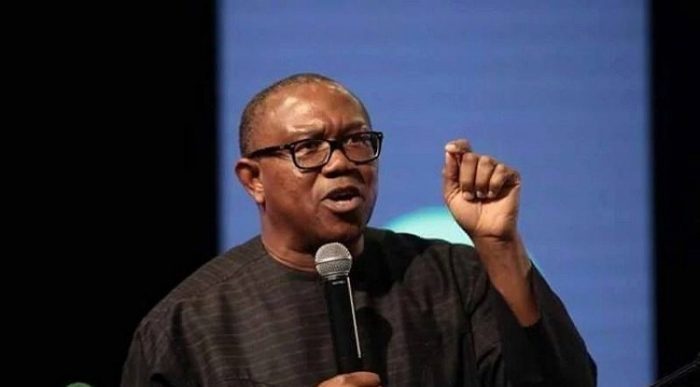
Among the three frontline parties is the NDC, whose life was recently enhanced with the inclusion of two south and north politicians; Mr Peter Obi, who contested under the umbrella of the Labour Party in 2023, and unarguably made serious in-roads even as a newcomer, and Alhaji Rabiu Kwankwaso, who contested under the New Nigeria People’s Party (NNPP). Kwankwaso’s influence was restricted to his native Kano State, but garnered a total of 1.4 million votes across boards. Today, the two politicians are joining forces in what has been termed Obi-Kwankwaso (OK) Movement to attempt to wrestle power from President Bola Tinubu. Both are also bringing with them their vocal movements; the Obidients and the Kwankwasiyya.

But analysts, stakeholders and observers alike have various considered the alliance of the two political heavyweights, wondering if the marriage is of strange bedfellows that may discard each other in the nearest future, or if there is any iota of seriousness among them that can lead to materializing its lofty objectives.

Recall that on Sunday, May 3, the duo of Obi and Kwankwaso dumped the ADC, and joined the NDC, blaming external interference and unending litigation that may hinder aspirants in the party from actualising their aspirations in 2027.

The move comes just nine months after Obi, Kwankwaso and the defacto leader of the coalition, Alhaji Atiku Abubakar joined the ADC. However, from available indices, the coalition quickly became mired in legal battles over party leadership. Obi blamed the new obstacles set before the party were direct consequences of the Tinubu-led Federal Government.

“The same Nigerian state and its agents that created unnecessary crises and hostility within the Labour Party that forced me to leave now appear to be finding their way into the ADC,” Obi had said while being received by the NDC leadership.

It is important to out on record that various voices speaking for Tinubu and federala Government have denied that they have in the quagmire that befell ADC, or has been trying to sabotage opposition parties.

Obi, 64, and Kwankwaso, 69, were formally received at the NDC’s national headquarters in Abuja by the party’s national leader, Senator Seriake Dickson, on Sunday.

Speaking afterwards, both men called for national unity, greater opportunities for young people, and an end to the infighting that has plagued Nigeria’s opposition.

However, their decision risks upsetting allies within the coalition built around the ADC, which had been positioning itself as the main vehicle for opposition unity.

Some figures within the bloc have privately expressed a sense of betrayal, raising fresh doubts about whether Nigeria’s fragmented opposition can sustain a coordinated challenge against President Tinubu, who celebrated his 74th birthday in March.

Across sectors, platforms and political corners, the influence of the Obi-Kwankwaso combination continues to grow given the political terrain a new agenda for discussion.

However, many stakeholders, among whim the very informed, have said that the union may end as abruptly as it started, stressing that political equilibrium or exigency are mostly not determined by absolutely loyalty, but most of the times by self interest and aggradizement. This, they said may turn out to be the hallmark of Alhaji Kwankwaso.

Some have reasoned that the five years age difference between Obi and Kwankwaso, with Kwankwaso having the upper hand, the academic superior of the former Kano governor, and his lengthier days in his political sojourn may form the criteria for him to refuse whatever arrangement already on the ground, including playing the running mate fiddle to Obi.

But even at that, it is important to note that Barack Obama was 47 years old when he became president, and his Vice, Joe Biden, was 66 years old. So Kwankwaso is not going to set a world record as vice that is older than his principal? Definitely not.

Another group has hinted that Kwankwaso is only oiling his own personal path to 2031, when the coast will be ripe for the candidate of northern extraction to vie for the presidency.

“Consequently, his intention is far from working for Obi’s victory nor Atiku, for neither of the two can conveniently bow out in 2031. The only person permitted by law not to seek election in 2031 is President Tinubu, if he wins the 2027 election. So, conveniently, any ambitious person with eye on the presidency will definitely want Tinubu to win,” a source told The Boss.

Another school of thought has hinted that with the sudden interest of Goodluck Jonathan in the presidency, the path may be cleared for Kwankwaso to deputize for Jonathan instead of Obi. However, as at the time that membership registration register was closed on May 10, 2026, Jonathan was a member of the Turaki-led PDP while Kwankwaso is still in the NDC.

But Kwankwaso in his speech during the inaugural convention of the NDC insisted that the presidency should be zoned to the South, noting that the south should be allowed to complete its eight years tenure. Whether he meant that for his new party, or for the Tinubu administration, the speech explains in details:

Fellow Nigerians,

It is with immense pleasure and a deep sense of fulfilment that I address you today on this historic occasion of the National Convention of our great party, the Nigeria Democratic Congress (NDC), in Abuja.

Since we joined this party, together with numerous stakeholders, millions of supporters, and well-meaning Nigerians, the NDC has continued to attract quality members and ignite enthusiastic conversations among citizens and observers both at home and abroad. What began as a bold movement is steadily becoming a formidable platform for national renewal.

Ladies and Gentlemen, Nigeria stands at a critical crossroads. The world is undergoing a profound geopolitical shift, yet our nation has been caught unprepared, largely because of poor leadership. Instead of positioning Nigeria to seize emerging opportunities, bad governance has left us bearing the brunt of global changes.

We are witnessing a sharp decline in the quality of life. Insecurity has created widows and orphans across the land. Millions have been displaced from their homes. Investments are fleeing, critical infrastructure is neglected, the education system is collapsing, and harsh economic policies have been imposed on citizens without meaningful safety nets or relief.

Yet Nigeria’s history teaches us that in our most challenging moments, visionary alliances have provided the way forward. In 1954, a historic partnership was formed between the Northern Elements Progressive Union (NEPU), led by Aminu Kano and the National Council of Nigeria and the Cameroons (NCNC), led by Nnamdi Azikiwe to achieve national unity.

Again, in 1960, against steep odds, Dr Nnamdi Azikiwe’s National Council of Nigeria and the Cameroons (NCNC) formed a coalition with the Northern People’s Congress (NPC) to birth our independence.

In the Second Republic, the alliance between Shehu Shagari and Alex Ekwueme under the National Party of Nigeria (NPN) helped restore civilian rule and national unity after years of military dictatorship.

It is therefore with great sense of unity and solidarity, that as a loyal party member, I support the decision to zone the presidential ticket of the NDC to the South, so that it allows the region to complete its turn in producing national leadership.

This represents a true opportunity for true national healing. We shall work in abidance with the party’s agreement to ensure fairness and federal character in all ramifications.

This party shall also ensure to change the way things are done today by prioritising leadership without ethnic jingoism and religious favouritism.

The leadership standard we shall set will therefore restore Nigeria’s dignity and will guarantee that our citizens at home and the diaspora will be treated with respect and dignity.

Lastly, we can only achieve that by continuing to mobilise to register with INEC to vote, and the NDC to belong to this noble cause. Please register, today.

Thank you.

Long Live the Nigeria Democratic Congress!

Long Live the Federal Republic of Nigeria!

From every indication, the dumping of Obi by Kwankwaso may remain a page in a fiction narrative, since it is absolutely impossible for more defections to occur at this time, according to the new Electoral Act 2026.

However, the page of whether he is totally in support of Obi as his principal, still remains unwritten and blank. What is obvious is the two, by present political exigency, may lead the charge as NDC attempt to dislodge Tinubu as president, and also stop Alhaji Atiku Abubakar, who may lead the ADC attack, from making any headway.

By May 30 according to Independent National Electoral Commission (INEC) table, all flag bearers would have been known and observers are throwing their hats in the ring to predict another 3-horse race, exactly as witnessed in 2023.

What would change would depend heavily on the homework every candidate has done prior to this time, and the alliances created on and off the political circle.

But would Kwankwaso Dump Obi at this time, the answer is likely in the negative. The level of cohesion he is willing to give is what however, that is still contentious about.

Time is almost at hand!

Continue Reading

Headlines

NDC Zones 2027 Presidential Ticket to Southern Nigeria, Paves Way for Obi, Others

Published

on

The Nigeria Democratic Congress, NDC, has thrown the 2027 race wide open by zoning
its presidential ticket to the South for a single four-year term, a move that instantly puts Peter Obi and other southern aspirants in play.

The decision came at the party’s national convention on Saturday after a motion by Rep. Afam Victor Ogene of Anambra’s Ogbaru constituency. Delegates adopted it without dissent.

Under the arrangement, the South gets the ticket for 2027 only. Once that four-year term ends, the ticket automatically shifts back to the North.

The zoning formula settles months of backroom jostling inside the NDC over where the party should field its standard-bearer. By locking the North into a wait-and-hold position, the convention has effectively cleared the runway for southern heavyweights to move.

For Obi, the former Anambra governor who ran in 2023, the resolution removes the biggest structural hurdle to picking up the NDC’s form. Other southern aspirants now have the same green light to purchase and process nomination forms.

Party leaders framed the deal as a balance between regional equity and political strategy ahead of 2027. Critics inside the party will watch whether the “automatic” handoff to the North holds once the race gets hot.

For now, the South has its window. The question is who walks through it first.

Continue Reading

Headlines

Senate Amends Own Rules, Blocks ‘Freshers’ from Leadership Positions

Published

on

The Senate has amended its Standing Orders, limiting eligibility to contest for its presiding officers and principal officers to only members of the 10th Senate.

In the new rules, a senator shall only qualify to contest for Senate Presidency and Deputy Senate Presidency if he/she has won election to the Senate for at least one term of four years.

To be eligible to contest for any principal office, a senator must have won election for two consecutive periods, the last one must immediately precede the inauguration of the next Senate.

By implication, any senator who plans to vie to become a presiding officer in the 11th Senate (2027-20231) must have been a senator for at least one term preceding the inauguration.

For principal offices (chief whip, deputy whip, minority whip, etc), the senator must have been a member of the current 10th Senate, or they are not eligible to contest.

Under the new provision on “qualification of presiding officers”, it is stated in Order 3,”A Senator vying for the Office of the President of the Senate and the Deputy President of the Senate must have served at least one term of four (4) years in the Senate as a senator of the Federal Republic.”

Similarly, nomination for the positions shall strictly follow ranking in the following order: former president of the Senate; former deputy president of the Senate; former principal officers of the Senate; senators who had served for at least one term of four (4) years; and senators who had been members of the House of Representatives.

According to the provision, it is only the absence of the above that a first-term senator can be nominated to contest for the positions of presiding officers.

Under Order 5, a senator seeking to be a principal officer must have “served as a senator for at least two consecutive terms immediately preceding such nomination. “

The Senate passed the rules after a lengthy executive session presided over by the President of the Senate, Godswill Akpabio, on Tuesday.

The new rules impliedly gives Akpabio, other former presiding officers, principal officers and ranked senators the right of first refusal.

Findings indicated that the new rules might be what some sources described as “self-serving” or designed to serve the interest of the present presiding officers and members of the 10th Senate.

For instance, some State governors contesting the 2027 election to the Senate in the hope of vying for the presidency of the Senate, are effectively barred by the new rules.

It was also learnt that even within the Senate, the new rules will stop some senators from vying to become principal officers as they would not have attained two consecutive terms prior to 2027.

Continue Reading