
Business
Stanbic IBTC Restates Commitment to Improve Multi-sectoral Nigerian Businesses

- /home/rhoncare/pointblank.ng/wp-content/plugins/mvp-social-buttons/mvp-social-buttons.php on line 27
https://pointblank.ng/wp-content/uploads/2022/01/44116259-stanbic-ibtc-1024x768-1.jpg&description=Stanbic IBTC Restates Commitment to Improve Multi-sectoral Nigerian Businesses', 'pinterestShare', 'width=750,height=350'); return false;" title="Pin This Post">
- Share
- Tweet /home/rhoncare/pointblank.ng/wp-content/plugins/mvp-social-buttons/mvp-social-buttons.php on line 69
https://pointblank.ng/wp-content/uploads/2022/01/44116259-stanbic-ibtc-1024x768-1.jpg&description=Stanbic IBTC Restates Commitment to Improve Multi-sectoral Nigerian Businesses', 'pinterestShare', 'width=750,height=350'); return false;" title="Pin This Post">
Stanbic IBTC Holdings PLC, a member of Standard Bank Group, has expressed its unwavering commitment to improving and supporting Nigerian businesses across all sectors, the organisation said in an official launch and media briefing to unveil its proposition for businesses of different sizes and across different sectors
The leading end-to-end financial services provider revealed a bouquet of offerings that cater to businesses in all sectors, locally and internationally. These offerings are innovative financial solutions across the agribusiness, education, engineering, trade, commerce, telecoms, manufacturing, healthcare, maritime, real estate, oil and gas financing, debt capital markets, equity capital markets, principal finance solutions, and equity capital markets, amongst other sectors, and are for businesses of all sizes from SMEs to national and multinational companies operating in these sectors.
The unveiling ceremony showcased the need to partner Nigerian businesses and support them through their challenges and demonstrated the limitless solutions and possibilities via collaboration. The Executive Director, Business and Commercial Clients, Stanbic IBTC Bank, Remy Osuagwu, stated that the organisation is repositioning to reflect the Nigerian local and international business scene while creating solutions that address the growth challenges affecting Nigerian businesses.
He said: “We know that some businesses struggle because they think they can grow alone, but the truth is no business can survive without the right partner. We are glad that we are positioned as an experienced financial partner to support business growth”.
The main idea behind our launch is to showcase all the financial solutions, including advisory services that businesses can take advantage of to meet their growth aspirations, especially in the face of the current challenging operating terrain. Stanbic IBTC’s solutions are thoughtfully created to meet the needs of business across diverse sectors.” according to Remy, “one of our solutions, the Africa-China Trade Solution (ACTS), facilitates trade dealings, imports, and exports with China. Our customers in that line of business are covered because it grants African enterprises access to new markets, expands their customer base, and creates a mutually beneficial relationship between the two countries and the rest of the Asian continent.”
Speaking on strategic solutions for Corporates, Eric Fajemisin, Executive Director Corporate and Investment Banking, Stanbic IBTC Bank, said “We strive to be a valued and trusted partner to our clients, by offering opportunities and risk management strategies . As a member of the Standard Bank Group, we leverage our 160 years heritage, fit-for-purpose representation outside Africa, and a strategic partnership with the Industrial and Commercial Bank of China (ICBC) to provide tailored solutions to our clients. We connect our clients to opportunities across Africa and beyond through our proven experience in emerging markets, local insight and our on-the-ground presence in 20 countries in Africa”.
He said, Our Global Markets team offer a range of trading and risk management solutions across different asset classes in the financial markets, including foreign exchange positions, interest rate protection, and hedges in the Equities and Commodities market. Our Investment Banking team provide a full suite of advisory and financing solutions, from term lending to highly structured and specialised products across the equity and debt capital markets. Our Transactional Products and Services team provides a range of transactional solutions, including cash management, international trade, and custodial and securities services, primarily across Africa. Our Client Coverage team is made up of specialist relationship managers that work to develop clients business and aspirations, and in turn link them to the full capabilities of Stanbic IBTC, and our specialist products. In this way, we provide all the operational support, insight, and personalised service needed to profitably scale the business”
The TV commercials unveiled during the event spoke to the limitless possibilities of business solutions offered by the organisation to all its clients.
Stanbic IBTC reiterates its dedication to equipping entrepreneurs and businesses with beneficial facilities for their growth and the expansion of the nation’s economy.


Africa’s Global Bank, United Bank for Africa (UBA) Plc, has launched a Group-wide Climate Action Week to deepen climate awareness, promote responsible environmental practices and advance sustainable finance across its African and international operations.
The five-day campaign, running from October 26 to 30, 2026, is themed “Banking on Africa’s Climate Future” and reflects the Bank’s commitment to integrating environmental responsibility into its operations, customer engagement and financing solutions.
The initiative commenced with the deployment of waste segregation bins across UBA offices and measures to reduce the use of single-use plastics at the Bank’s head offices. These activities underscore UBA’s commitment to translating sustainability principles into practical actions within its workplace and across its wider ecosystem.
Throughout the week, UBA will disseminate educational content across its media and digital platforms to highlight the causes and consequences of climate change, including its impact on food prices, energy consumption and urban flooding. The campaign will also promote responsible plastic disposal, recycling and the critical role of financial institutions in financing clean energy, sustainable agriculture and other environmentally responsible businesses.
As part of the campaign’s community engagement component, UBA staff volunteers will participate in a Group-wide clean-up exercise on Saturday, November 7, in major cities across its markets. In Nigeria, the exercise will take place in Lagos, Kano and Port Harcourt, mobilising employees to contribute directly to cleaner and healthier communities.
UBA’s Group Managing Director/Chief Executive Officer, Oliver Alawuba, emphasised the importance of collective responsibility in addressing the growing impact of climate change.
“Climate change is no longer a distant environmental concern; it is increasingly shaping everyday life across Africa. We see its effects in rising food costs, increased energy demand and flooding that disrupts homes, businesses and livelihoods.
“At UBA, we believe that building a sustainable future requires collective action, beginning with the choices we make at work, at home and in our communities. Through this Climate Action Week, we are encouraging every member of the UBA Tribe, alongside our customers and other stakeholders, to embrace practical, sustainable habits and inspire others to do the same,” Alawuba said.
As part of its stakeholder engagement activities, UBA will sponsor Climate Convergence Week in Lagos on Friday, October 30, where the Bank will deliver a speaking session and participate in a panel discussion. The engagement will provide an opportunity to showcase UBA Green Finance, highlight the Bank’s sustainability initiatives and explore how financial institutions can support Africa’s transition to a more sustainable and climate-resilient economy.
Alawuba, noted that climate considerations were increasingly important to business resilience, risk management and long-term economic growth.
“Climate change presents significant risks to businesses, communities and economies. These risks can affect business continuity, operating costs and financial performance, making sustainability an increasingly important consideration for both businesses and the financial institutions that support them.
“Through UBA Green Finance, we seek to support eligible businesses investing in cleaner technologies and more sustainable operations. By helping customers explore financing solutions aligned with their needs, we can contribute to a more resilient private sector while unlocking opportunities for sustainable economic growth across Africa,” Alawuba further said.
In a further step towards strengthening its sustainability capabilities, UBA is set to join the Sustainability Professionals Institute of Nigeria (SPIN). The move is expected to deepen the Bank’s environmental, social and governance (ESG) expertise and support the continued professional development of its employees in sustainability-related disciplines.
The Climate Action Week forms part of UBA’s broader sustainability strategy, which integrates environmental responsibility into its Customer First philosophy through responsible business practices, employee engagement, community initiatives and green finance. By combining awareness, practical action and financing solutions, the Bank aims to encourage more sustainable choices while supporting businesses and communities in navigating the challenges and opportunities of climate change.
United Bank for Africa is one of Africa’s leading financial institutions and one of the largest employers in the continent’s financial sector, with approximately 25,000 employees and over 45 million customers globally. Operating in 20 African countries, as well as the United Kingdom, the United States of America, France and the United Arab Emirates, UBA provides retail, commercial and institutional banking services, advancing financial inclusion and leveraging technology to deliver innovative financial solutions.
Business
UBA Secures Court Order Against Vitol, Four Others in $242m Petroleum Products Diversion Claim
A Lagos State High Court, last Thursday, granted interim preservative orders of Mareva Injunction against Vitol SA – a Switzerland based Energy Trading company, and four other shipping companies in favour of United Bank for Africa Plc.
The bank alleged Vitol of wrongful release of cargoes of petroleum products which were consigned to the order of United Bank for Africa Plc in the Bills of Lading.
Addressing the Court, Bode Olanipekun, SAN, lead counsel for United Bank for Africa, urged the Court to grant the interim preservative orders against Vitol and the other shippers.
In a ruling on the application, the presiding judge, Honourable Justice K. A. Jose (Mrs.) granted three prayers in UBA’s application, including requests to restrain the dissipation of assets and dealings with funds up to the disputed amount by Vitol S.A.
“Prayers 1–3 are granted as prayed against the 2nd Respondent only,” the judge ruled.
The application was brought pursuant to Order 43 Rule 1 of the High Court of Lagos State (Civil Procedure) Rules 2019 and the Lagos State High Court Practice Direction No. 2 of 2019.
UBA is seeking to contend in the substantive proceedings that Vitol SA and the owners of the vessels, are liable for alleged conversion, misrepresentation and negligence arising from the non-delivery of the petroleum products.
UBA also cited 34 financial institutions and public agencies, including commercial banks, merchant banks, microfinance banks, the Nigerian Ports Authority and the Nigeria Customs Service, in connection with the application.
In an affidavit supporting the application, UBA’s Group Head of Recoveries and Remedial Management, Anthony Chilaka, stated that the bank issued a letter of credit for the benefit of Vitol SA to facilitate a petroleum products transactions.
UBA alleged that the cargo was transported to Nigeria and that the vessels’ masters issued several bills of lading.
The bank further alleged that Vitol subsequently endorsed the bills of lading “to the order of” UBA and handed over the original copies to it.
UBA maintained that the endorsement entitled it to take possession of the cargo upon completion of the voyage.
However, Chilaka stated that the bank had not received the gasoil despite the completion of the voyage.
“The applicant has not been given possession of the gasoil despite completion of the voyage,” the affidavit stated.
UBA alleged that the cargo was instead, applied to the use of another party, contending that the respondents’ failure to deliver it amounted to conversion and negligence.
The bank argued that the respondents had obligations arising from the transaction and the endorsement of the shipping documents, which it claimed were not fulfilled.
The bank alleged that the cargoes associated with those transactions were also diverted to the use of other parties after their voyages, rather than delivered to UBA.
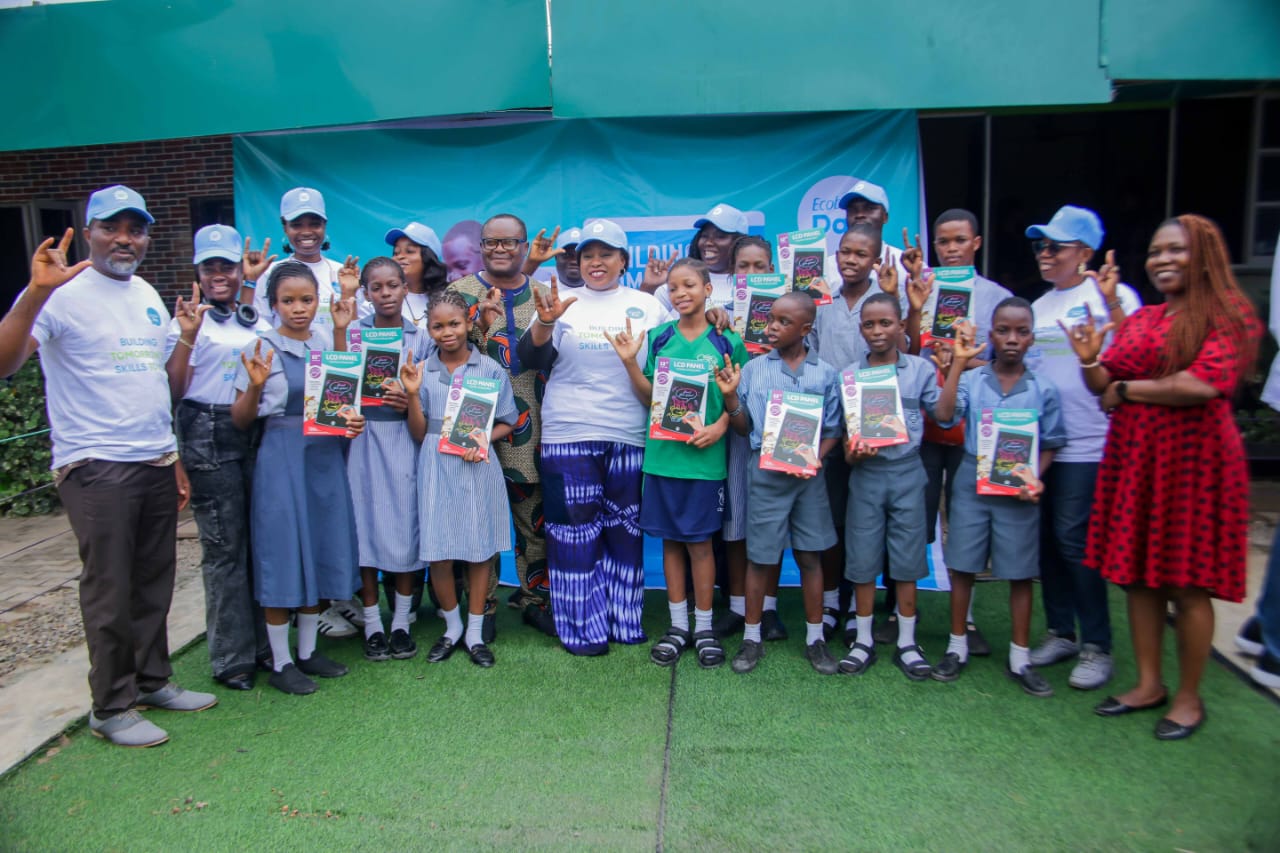
Ecobank Nigeria has commemorated the 14th edition of Ecobank Day, its flagship Group-wide Corporate Social Responsibility (CSR) initiative, across four regions of the country, reaffirming its commitment to empowering communities through education and digital inclusion.
The selected schools include: Hope Fountain Foundation for the Deaf, Agege, Lagos; Ibadan School for the Deaf, Ibadan; Special Secondary School for the Deaf, Odakpu, Onitsha, and Kaduna State Special Education School, Kaduna.
This year’s Ecobank Day was celebrated under the theme, “Digital Education,” with a focus on equipping persons with disabilities and young people with essential digital skills that can enhance their educational, personal, and career development in today’s technology-driven world.
The initiative underscores Ecobank’s commitment to extending its impact beyond banking by helping to equip Africa’s youth with the digital and artificial intelligence (AI) skills required to succeed in the future economy.
As part of the programme, Ecobank employees visited selected schools across the four regions, where they conducted digital literacy sessions and donated learning materials and educational resources to support students’ development and prepare them to thrive in an increasingly digital world.
Speaking during the commemoration, the Managing Director/Regional Executive, Ecobank Nigeria, Bolaji Lawal said: “It is a pleasure to join you today as we commemorate the 14th edition of Ecobank Day, our Group-wide Corporate Social Responsibility initiative dedicated to creating meaningful impact across the communities we serve. “Ecobank Day reflects our commitment to being more than a bank. It demonstrates our dedication to empowering people and contributing to sustainable development across Africa.”
Bolaji noted that digital education has become increasingly important in bridging knowledge gaps and creating opportunities for young people, particularly those living with disabilities, enabling them to participate fully in today’s digital economy.
School proprietors and administrators who participated in the programme commended Ecobank for the initiative, describing it as a timely intervention that will help broaden students’ access to digital knowledge and opportunities.
They expressed appreciation to the Bank for investing in the future of young people and supporting inclusive education within their communities.
For 14 years, Ecobank Day has served as an annual platform for Ecobank employees across Africa to give back to society through impactful volunteer activities that address critical social challenges.
The initiative continues to demonstrate the Bank’s dedication to fostering sustainable development and creating lasting positive change across the communities where it operates.


