
Headlines
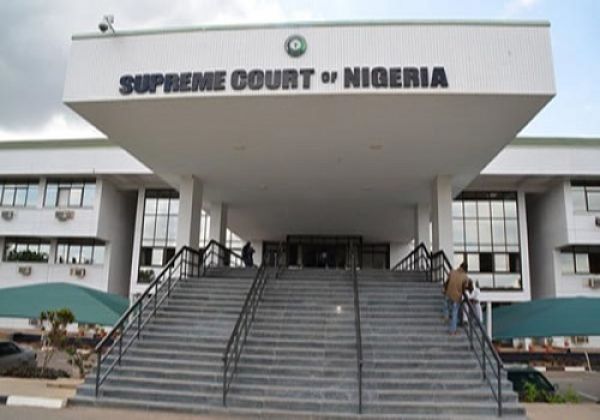
Supreme Court Affirms Election of Ikpeazu, Okowa, Ishaku, Bello

- /home/rhoncare/pointblank.ng/wp-content/plugins/mvp-social-buttons/mvp-social-buttons.php on line 27
https://pointblank.ng/wp-content/uploads/2020/01/Supreme-Court.jpg&description=Supreme Court Affirms Election of Ikpeazu, Okowa, Ishaku, Bello', 'pinterestShare', 'width=750,height=350'); return false;" title="Pin This Post">
- Share
- Tweet /home/rhoncare/pointblank.ng/wp-content/plugins/mvp-social-buttons/mvp-social-buttons.php on line 69
https://pointblank.ng/wp-content/uploads/2020/01/Supreme-Court.jpg&description=Supreme Court Affirms Election of Ikpeazu, Okowa, Ishaku, Bello', 'pinterestShare', 'width=750,height=350'); return false;" title="Pin This Post">
The Supreme Court on Wednesday upheld the elections of governors of four states across the federation.
The governors are Okezie Ikpeazu of Abia State, Darius Ishaku of Taraba State, Ifeanyi Okowa of Delta State and Abubakar Bello of Niger State.
The seven-member panel of the Supreme Court in its series of hearings and judgments delivered within six hours reaffirmed verdicts earlier given at the lower court.
In all, the apex court’s decision saw the four incumbent governors emerging victorious over the various election petitions filed against them.
Abia
The Supreme Court affirmed the election of Mr Ikpeazu as Governor of Abia State.
Justice Paul Galinje, a member of the seven-member panel, who read the unanimous judgment, held that the appellant’s reliance solely on the smart card readers in proving the alleged over-voting was fatal to their case.
Mr Galinje also held that the law is clear that the petitioner must tender the voter’s register, and should relate the document to the specific area where the elections were affected.
According to Mr Galinje, the card reader print out tendered by the appellants at the tribunal is not part of the constitution or electoral act which determines the conditions for over-voting.
The judge said that the appellants failed to lead credible evidence in proving their case.
The candidate of the All Progressive Grand Alliance (APGA), Alex Otti, and his party had approached the apex court to set aside the judgment of the Court of Appeal which upheld the election of Mr Ikpeazu.
They had in their appeal argued by their lawyer, Lateef Fagbemi, asked the apex court to nullify the election of Mr Ikpeazu on grounds of over-voting and noncompliance with the electoral laws.
Mr Fagbemi in his argument urged the court to allow the appeal and set aside the judgment of the lower court and declare Mr Otti as the lawful winner of the March 9 governorship election in Abia State or in the alternative order a fresh election.
In their separate replies, the respondents urged the court to dismiss the appeal for lacking in merit.
The lawyer to the Independent National Electoral Commission (INEC) adopted his brief of argument and urged the apex court to dismiss the appeal. The lawyer to Mr Ikpeazu and the Peoples Democratic Party (PDP), Wole Olanipekun and Levy Uzoukwu, respectively told the court that the case of the appellants lacked merit because it was hinged on alleged over-voting occasioned by non-use of the card reader which the apex court has held cannot dethrone the manual accreditation of voters.
Delivering the judgment on Wednesday, Mr Galinje held that the appeal lacked merit and accordingly dismissed it.
The Court of Appeal in Owerri, the Imo State capital, headed by Justice R. A. Adah, had struck out the appeal filed by Mr Otti, and validated Mr Ikpeazu’s victory.
A three-member panel of the Governorship Election Petition Tribunal in Umuahia, the Abia State capital, chaired by A.L. Ogumoye, had also earlier dismissed the petition
The tribunal ruled that the petitioner failed to prove the case of over-voting and noncompliance to the INEC election guideline and the electoral act.
Mr Otti had asked the tribunal to cancel the results of elections in 15 out of the17 local government areas in Abia State.
He claimed that the respondents, PDP and Mr Ikpeazu, perpetrated excessive malpractice in those local governments.
Not satisfied with the tribunal judgment which threw out his the petition, Mr Otti approached the appellate court asking it to quash the tribunal ruling and uphold the reliefs he (Otti) sought in court.
Delta
In a similar decision, the apex court also ruled against an appeal by Great Ogboru of the All Progressive Congress (APC) who had challenged the election of Governor Ifeanyi Okowa on grounds that the election was marred by vote-buying.
Respondents in the appeal are Mr Okowa, PDP and INEC.
Mr Ogboru and his party, APC, had sought to upturn the decision of the Delta State Governorship Election Petition Tribunal which affirmed Mr Okowa’s election for a second term as governor of Delta State. INEC had declared Okowa and PDP winner of the March 9 governorship election in Delta State.
Justice Centus Nweze who read the decision of the apex court on Wednesday affirmed the election Mr Okowa.
In his argument, Yunus Usman, who represented the appellants, argued that the votes claimed by Mr Okowa exceeded the total number of accredited voters for the March 9, 2019 governorship election.
According to him a total of 757,754 registered for the election in the state, while the final declared numbers at the end of the election were 955,274 votes.
However, Mr Okowa’s lawyer, Damian Dodo, urged the court to dismiss the appeal for being incompetent and unmeritorious.
Mr Damian said the appellants have failed to prove all their allegations both at the tribunal and at the court of appeal.
But dismissing the appeal on Wednesday, the seven-member panel led by Justice Nweze, unanimously held that the appellants, Mr Ogboru and the APC, failed to prove allegations of over-voting.
Mr Nweze said: “the appeal is a share waste of the precious time of the court.”
Taraba
In the case of Taraba, the All Progressive Congress (APC) argued that the governor, Darius Ishaku, was not duly elected by a majority of lawful votes cast in the election.
The appellants also alleged noncompliance with the provisions of the Electoral Act (2010)
However, the lawyer who represented Mr Ishaku and the PDP, Kanu Agabi, urged the court to dismiss the APC’s appeal for being incompetent and lacking in merit.
Mr Agabi said the APC’s appeal has become academic following the withdrawal of their governorship candidate, Abubakar Danladi, from the petition, after his disqualification over false age declaration.
Responding to Mr Agabi’s submissions, the APC lawyer, Ishiaka Dikko, while admitting that the party’s candidate was disqualified from the election, said that the first runner up in the APC primaries ought to have been allowed to contest the election.
Mr Dikko urged the court to nullify Mr Ishiaku’s election and order a fresh election.
Delivering the judgment, the justices of the apex court all agreed that APC did not have a legal candidate at the election due to Mr Danladi’s disqualification.
One of the justices held that the APC’s argument that the runner up in the primaries be allowed to contest the election, was wrong because Sani Yahaya did not participate at any stage of the election. He said APC lacked the locus standi to file a petition in the first place at the tribunal.
Niger
The Supreme Court also affirmed the election of Abubakar Bello as the governor of Nover State.
The apex court while striking out the appeal filed by Umar Nasco of the Peoples Democratic Party (PDP), held that it lacked merit.
In the unanimous judgment read by Justice Mary Abaji, the court held that the Supreme Court will not tamper with the decisions of the Court of Appeal.
Mrs Abaji held that the Court of Appeal was right in holding that the decision of the tribunal delivered outside the 180 days allowed by law was a nullity. She said that a judgment already declared a nullity by the appellate court cannot confer any benefit on the PDP candidate and any other party.
She, therefore, agreed that the Supreme Court has no jurisdiction to entertain the appeal and consequently struck it out for want of jurisdiction.
Mr Nasko had challenged the election of Governor Bello at the tribunal on the ground that he submitted forged documents and gave false information in his form CF001 submitted to INEC to secure clearance for the March 9, 2019 election.
However, the tribunal failed to deliver judgment in the petition within 180 days allowed by law, prompting the Appeal Court to declare the judgment of the tribunal a nullity, having been delivered outside the required period.
Premium Times


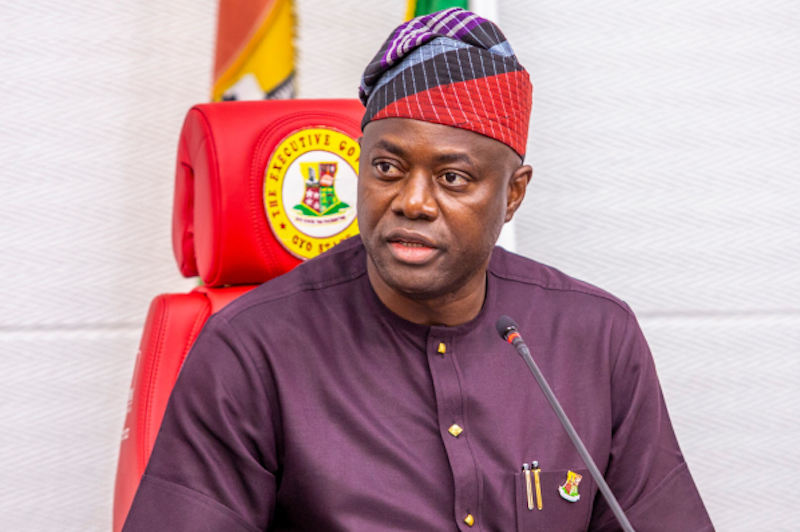
The Allied Peoples Movement (APM) presidential candidate, Seyi Makinde, on Thursday, criticised President Bola Tinubu’s “Emi Lokan” slogan ahead of the 2027 presidential election.
Makinde said Nigerians do not need “turn-by-turn nepotism”, arguing that voters should be free to decide who becomes the country’s next president in 2027.
The Oyo State governor spoke during the APM’s town hall meeting in Akure, Ondo State.
Makinde asked: “How can someone say ‘Eemi lokan’ in a country like Nigeria? You were given the opportunity. If you recall the 1999 presidential election, the South-West voted massively for Baba Olu Falae, but the rest of Nigerians voted for Baba Obasanjo. So, this is not an issue that only the South-West can resolve; it is an issue we must address collectively as Nigerians.
“We do not want ‘turn-by-turn nepotism’, nor do we want a situation where people say, ‘I will vote for projects because it is my turn’. You will not finish those projects, and when it becomes someone else’s turn, they will do the same thing. We will end up with a Nigeria where we cannot get value for the resources belonging to Nigerians.
“The Reset Nigeria agenda is about building a country where infrastructure development supports economic growth and addresses the concerns of young people and women.
“Once we fix our economy, no zone will be left behind, and no demographic group will be left behind.”
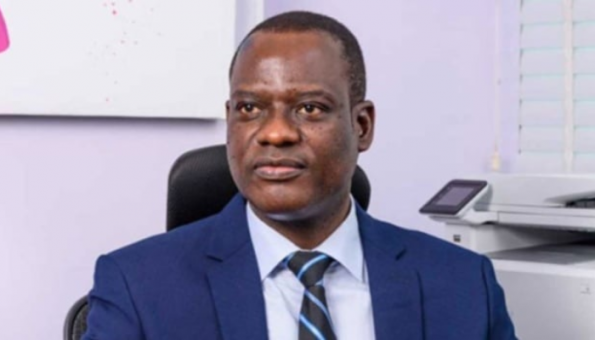
Minister of Finance and Coordinating Minister of the Economy, Taiwo Oyedele, has denied saying the Federal government will introduce a fuel tax when the economy stabilises and income levels improve.
In a post on X on Tuesday, Oyedele said his remarks during an interview with ARISE News was misrepresented, insisting that a “fuel tax is not on the table.”
However, during the interview with Rotus Odiri, ARISE News Business Correspondent, on the sidelines of the 2026 International Monetary Fund and World Bank annual meetings in Bangkok, Thailand, Oyedele said the tax would come when income levels improve enough for Nigerians to accommodate it.
He said taxes account for between 20 and 80 percent of pump prices in some countries, while many African countries impose between six and 10 different taxes on fuel products.
He said introducing fuel tax while petrol was still subsidised would have been counterproductive because government would effectively be paying the tax itself.
According to him, imposing the tax immediately after removal of petrol subsidy would be insensitive to Nigerians.
“The objective should be that instead of trying to suppress prices, which hasn’t worked for us, it hasn’t worked for any country in the world, not one. Instead of trying to suppress prices, think about how to grow income faster than prices rise,” Oyedele said.
“That’s how you bring prosperity and grow the middle class and that is exactly what we are doing as led by Mr. President himself.
“At the appropriate time, when the economy has stabilizes and income level will be able to accommodate it, those taxes will come. Not because we want to impose taxes,” he added.
In his Tuesday post, the minister reiterated that introducing a fuel tax at this time would be insensitive following removal of petrol subsidy, describing reports that government will introduce the levy when the economy stabilises as “fake news.”
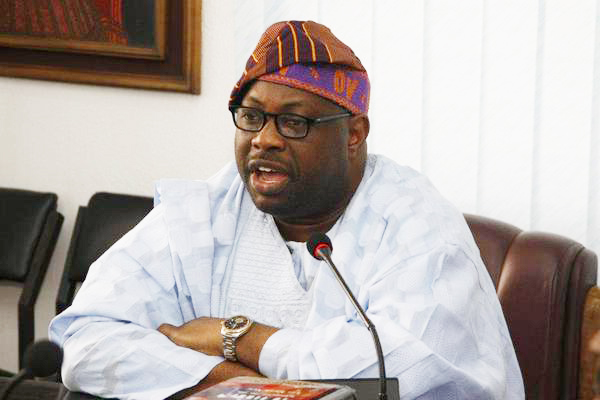
A chieftain of the African Democratic Congress (ADC), and Deputy Director of the Presidential Campaign Council, Chief Dele Momodu, has described former Vice-President Atiku Abubakar as the most nationally formidable and experienced among the leading contenders for the 2027 presidential election.
Momodu said Atiku’s experience at the national level distinguishes him from President Bola Tinubu and former Anambra State Governor, Peter Obi.
He stated this on Wednesday during an interview on Eagle 102.5 FM, Ilese-Ijebu, in Abeokuta.
“If you look at the antecedents of the three major candidates, between Atiku Abubakar and Peter Obi, you will see that Atiku is the most experienced. He has managed our country at the highest level,” he said.
Momodu traced Atiku’s political journey to the 1992 Social Democratic Party (SDP), presidential primary where he contested against late MKO Abiola and stepped down for him.
He said Atiku accepted the outcome without crisis even after he was not picked as Abiola’s running mate, describing it as a mark of true democratic temperament.
“He is the only one who started from around 1992, contested the SDP primary against Abiola and stepped down with uncommon equanimity. He did not make any noise,” Momodu said.
He noted that Atiku was among the founders of the Peoples Democratic Party, PDP, and served as Vice-President from 1999 to 2007.
Comparing Atiku with Obi, Momodu argued that while Obi’s best was demonstrated in Anambra, Atiku’s was at the presidency level managing the national economy.
“Peter Obi has tried his best in Anambra, while Atiku’s best is at the level of vice president controlling the economy of Nigeria. The difference is clear. He has matured in experience and exposure,” he said.
Momodu also said President Tinubu’s experience was largely limited to Lagos.
“What I’m trying to say is that Tinubu’s experience was limited to Lagos, and that is why when he became president, he thought Nigeria was Lagos. And he has found out now that Nigeria is not Lagos,” he said.
He argued that the current economic hardship under the present administration did not show prosperity, insisting Atiku remained better positioned to lead the country.
“Well, we are yet to see that prosperity, and if yesterday would determine today and tomorrow, it is obvious that Tinubu should retire now and let someone else do it,” Momodu added.
DailyPost


