Business
Suspend ATM, Mobile Transfer, Electricity Charges – PDP Demands


- /home/rhoncare/pointblank.ng/wp-content/plugins/mvp-social-buttons/mvp-social-buttons.php on line 27
https://pointblank.ng/wp-content/uploads/2019/04/PDP.jpg&description=Suspend ATM, Mobile Transfer, Electricity Charges – PDP Demands', 'pinterestShare', 'width=750,height=350'); return false;" title="Pin This Post">
- Share
- Tweet /home/rhoncare/pointblank.ng/wp-content/plugins/mvp-social-buttons/mvp-social-buttons.php on line 69
https://pointblank.ng/wp-content/uploads/2019/04/PDP.jpg&description=Suspend ATM, Mobile Transfer, Electricity Charges – PDP Demands', 'pinterestShare', 'width=750,height=350'); return false;" title="Pin This Post">
The Peoples Democratic Party (PDP) has in a statement by its National Publicity Secretary, Kola Ologbondiyan, on Sunday in Abuja, demanded the suspension of ATM, mobile transfer and electricity charges.
It stated that the suspension of such charges should be part of the panacea to ease the burden on poor Nigerians during the lockdown.
The party called on the Central Bank of Nigeria (CBN) to immediately open an arrangement with commercial banks to suspend the charges.
Mr Ologbondiyan said the lockdown had subjected majority of Nigerians to extensive use of ATM and mobile transfers for survival, making the suspension of charges on minimal transactions within this period of restriction highly imperative.
He said that the lifting of the charges within the period of COVID-19 pandemic would ease the burden on cash withdrawals by vulnerable citizens and encourage more Nigerians to support one another at this critical time.
“The PDP demands the CBN to immediately liaise with commercial banks and stimulate a special social sustenance modality to defray the cost of such charges, particularly to cover minimal transactions in favour of vulnerable Nigerians.”
Mr Ologbondiyan also urged the federal government to activate similar social sustenance scheme to immediately defray electricity tariff, particularly in areas populated by low income and vulnerable Nigerians within the period of the lockdown.
“The PDP calls on the federal government to show compassion on suffering Nigerians whose means of subsistence have been crippled by the lockdown, and immediately provide funds to electricity distribution companies to actuate the tariff suspension within this period.”
He also advised the federal government to immediately commence the collation of data from trade unions and cooperative societies covering low income groups such as market women, Okada riders, artisans, cab drivers and labourers among others.
This, according to him, is for possible economic recovery funds and loans to buoy their businesses at the end of the lockdown.
He said that citizens were passing through difficult and harrowing experiences.
Mr Ologbondiyan said that the PDP was worried that the federal government was yet to reach out to most vulnerable Nigerians, whose survival directly depended on daily income in the markets, shops and streets crippled by the COVID-19 lockdown.
“Consequently, the PDP restates its call on President Muhammadu Buhari to immediately extend similar financial intervention that was released to Lagos State to all other states of the federation,” he said.
He also called on the president to take immediate steps to end alleged corruption in the social intervention scheme, especially palliatives funds.
“Such social investment funds should be channeled to states for disbursement through the machinery of local governments, traditional institutions and community leadership to ensure that they reached the target vulnerable groups,” he said.
He also called on the federal government to declare monies so far donated by private individuals, firms and donor agencies.
Mr Ologbondiyan called on the government to immediately constitute an Eminent Nigerian Group drawn from the private sector to manage the fund to eliminate corruption, bureaucratic and political bottlenecks.
He said: “Our primary focus as a party remains the welfare of our citizens as we stand with them in this battle to check the spread of COVID-19 pandemic in our country.”
(NAN)


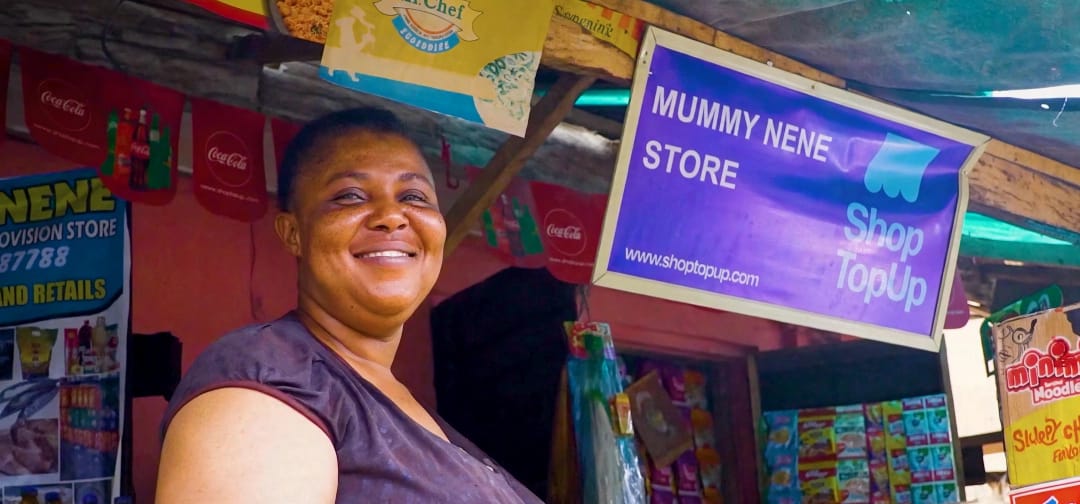
While conversations about the future of retail increasingly focus on supermarkets, shopping malls and online shopping platforms, millions of African consumers continue to rely on a more familiar and accessible business: the neighbourhood shop.
From small provision stores and corner shops to kiosks and informal retailers, these businesses remain an important part of everyday commerce, connecting communities to essential household products. However, behind their convenience lies a supply chain challenge that often limits their growth.
For many small retailers, sourcing products, managing inventory and securing enough working capital to keep their shelves stocked can be difficult. Fragmented distribution networks, multiple intermediaries and limited access to financing often make it harder for them to compete and expand.
Technology is beginning to offer a different possibility.
Digital platforms can simplify the way neighbourhood retailers purchase goods by connecting them more directly with manufacturers and distributors. They can streamline ordering, improve product availability and make inventory management more efficient.
Access to financial technology can further strengthen these businesses by helping eligible retailers secure the working capital required to replenish stock, respond to customer demand and grow sustainably.
One Nigerian technology company working to address these challenges is TradeDepot, which is using digital innovation to connect small retailers with manufacturers and distributors.
By making product sourcing and distribution more efficient, the company is helping to address some of the longstanding barriers facing small businesses in Africa’s retail sector.
However, scaling technology-driven solutions across a fragmented retail market requires more than innovation. It also demands significant investment.
This is where development finance and venture capital become important.
Through Boost Africa, the European Investment Bank (EIB) invested in Partech Africa Fund, a venture capital fund that subsequently backed TradeDepot. The investment illustrates how development finance can reach innovative African businesses through investment funds, providing capital to companies working to solve real economic challenges.
Boost Africa is a joint initiative of the European Investment Bank and the African Development Bank, with support from the European Union. The initiative supports African businesses and strengthens the continent’s entrepreneurial ecosystem by improving access to finance and opportunities for growth.
The wider significance of this investment goes beyond the technology platform itself. Strengthening neighbourhood retailers can contribute to more efficient supply chains, support small business growth and improve access to everyday consumer goods across communities.
For Africa, where small retailers remain central to local economies, the opportunity is substantial.
The future of retail may not necessarily involve replacing traditional neighbourhood shops with large supermarkets or online marketplaces. Instead, it could depend on equipping these existing businesses with better technology, stronger distribution networks and improved access to finance.
Ultimately, transforming retail may begin with something as familiar as the shop around the corner.
Boost Africa: From Capital to Impact.
Watch how TradeDepot is bringing commerce closer to communities through technology and investment
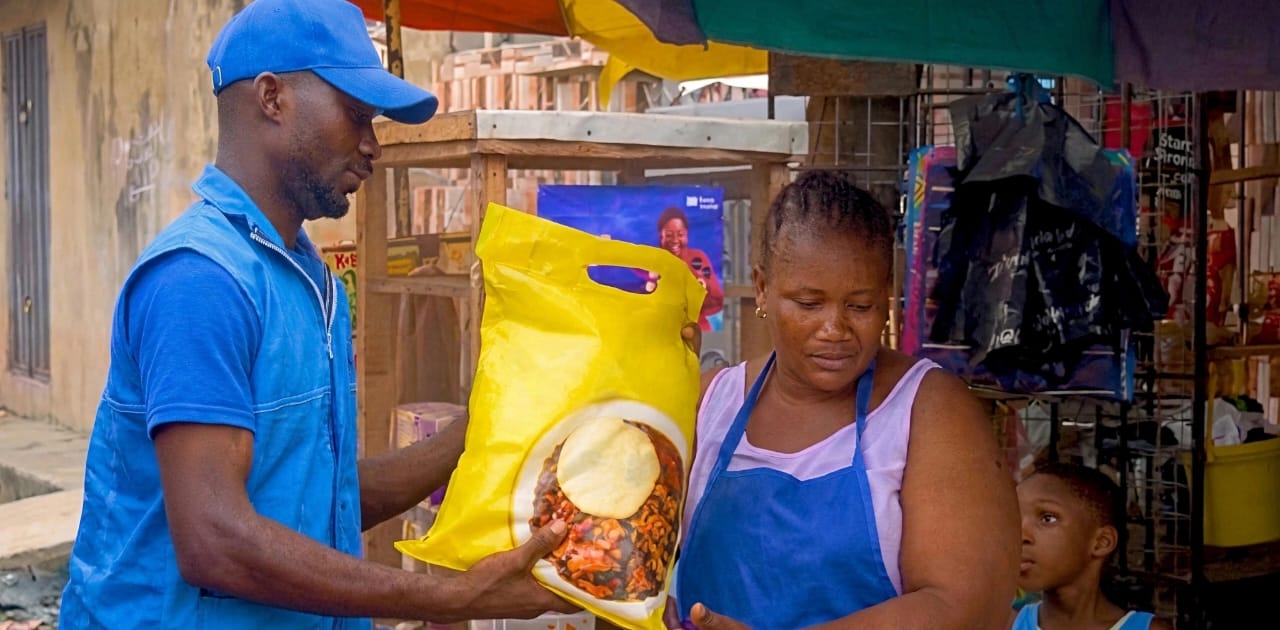
Ever wondered how the products on your neighbourhood shop shelves get there? Behind everyday purchases is a supply chain that can be costly, complex and inefficient, particularly for small retailers.
Nigerian technology company TradeDepot is changing this process by using technology to connect small retailers with manufacturers and distributors, making it easier for shop owners to order and receive the goods they need.
But transforming retail distribution takes more than an innovative idea. It requires investment to build, expand and scale.
Through Boost Africa, the European Investment Bank (EIB), alongside the African Development Bank and with support from the European Union, is helping strengthen the financing ecosystem for innovative African businesses.
One example is the EIB’s investment in Partech Africa Fund, which subsequently backed TradeDepot, helping channel capital into a Nigerian business working to improve how goods move from suppliers to neighbourhood shops.
The impact goes beyond technology. More efficient distribution can help small retailers access inventory, strengthen connections between manufacturers and suppliers, and bring commerce closer to the communities they serve.
Ultimately, TradeDepot’s story demonstrates how investment can go beyond funding to support stronger businesses, more efficient markets and opportunities for small retailers.
Boost Africa: From Capital to Impact.
Watch how TradeDepot is bringing commerce closer to communities.
▶ https://www.youtube.com/watch?v=zw9t2asF9Pc
Business
Beyond University Degrees: How ChipMango is Preparing African Engineers for Global Tech Industry

A university degree is a starting point, but practical industry experience can make all the difference.
Nigerian technology company ChipMango is bridging the gap through specialised semiconductor training and real-world chip design and verification projects, preparing African engineers for opportunities in the global technology industry.
Through Boost Africa, the EIB, AfDB and EU are strengthening the investment ecosystem supporting innovative African businesses.
Watch the video to discover how ChipMango is connecting engineering talent to real industry opportunities.
Watch the video: