
News
The Potential Game-Changer (Pt. 2)


- /home/rhoncare/pointblank.ng/wp-content/plugins/mvp-social-buttons/mvp-social-buttons.php on line 27
https://pointblank.ng/wp-content/uploads/2019/09/Adegoke-1000x600.jpg&description=The Potential Game-Changer (Pt. 2)', 'pinterestShare', 'width=750,height=350'); return false;" title="Pin This Post">
- Share
- Tweet /home/rhoncare/pointblank.ng/wp-content/plugins/mvp-social-buttons/mvp-social-buttons.php on line 69
https://pointblank.ng/wp-content/uploads/2019/09/Adegoke-1000x600.jpg&description=The Potential Game-Changer (Pt. 2)', 'pinterestShare', 'width=750,height=350'); return false;" title="Pin This Post">
By Tolulope A. Adegoke, Ph.D.
“The ‘Zero’ that isn’t empowered will never Emerge a HERO; Reason being that Opportunities without adequate and necessary preparations would always yield to futility (vice-versa).”
The Potential Game-Changer in this context is the number “Zero”. It is used in this context to describe someone who has the potential to cause a massive transformation, despite having the similitude of a failure. It was Abraham Lincoln who said: “Nobody had ever expected me to become president.” He contested and failed severally before eventually becoming the President of the United States of America.
Lincoln aside, the success of Portugal at Euro 2016 football tournament has a powerful message for every one of us, in every sphere of life. That Portugal beat France 1-0 to become the European Football champion in July 2016 is no longer news. The big news however is the fact that it was a substitute player who was not considered fit to start the same game, who scored the winning and history-making goal. Before the game, all eyes had been on the great Cristiano Ronaldo. But just in the 14th minute, he was carried off the field on a stretcher with a knee injury!
Naturally, with Ronaldo, the star player, injured, panic erupted amongst football fans worldwide and the Portuguese team in particular. In all truth, Portugal probably thought their end had come! But Eder, a substitute from the bench, scored an epochal goal during the extra-time, thereby securing Portugal’s first European Championship title.
Interestingly, when the trophy was presented, it was lifted by Cristiano Ronaldo, who had broken down in tears at the final whistle. That day, he and the watching world had learnt an unforgettable lesson: If you desire to see true success and progress, never underrate anyone. If you wish to see outstanding results in every area of life, you must be determined to pursue total unity and team work because a tree cannot make a forest and nobody is indispensable!
Portugal won without King Ronaldo on the field! Never underestimate any man. Don’t despise your zero because it might end up being your HERO, just as Eder proved to be. We also have the biblical example of David, who emerged from being a mere shepherd boy in the wilderness to becoming a military general, and then, the king of Israel!
The other side of the “ball game”
So far, we have considered zero as a positive potential that must be nurtured from dormancy to vibrancy and greatness. However, there is something else that zero could represent and unlike the previous representations of zero, this does not require being nurtured but being neutralised. This is because like other forms of zero, this also has the potential to grow – in this case, though, into something destructive. This zero is the ‘zero of the weak point’
The story of some individuals would only revolve around their weak point, especially how it limited them from fulfilling their purpose and destiny. A weakness is often a behavioural flaw that prevents or limits someone from being (a game changer) fully effective. Whichever way this flaw is handled can result in great consequences. Both the Bible and contemporary history are replete with stories of individuals who had great potentials but did nothing to neuter their weaknesses and thus exposing themselves to failure and regret.
We have the example of Moses who was called by God to the lead the Israelites out of Egypt, their land of slavery. The exceptional grace on his life made him a HERO. The Lord used him to perform many miracles in Egypt. Through him, God afflicted the Egyptians with ten plagues. The Lord also used him in parting the Red Sea and in demonstrating other wonders in the wilderness (Exodus 33:22-23). Yet, his weak point of anger terminated his mission of leading the Israelites to the Promised Land (Exodus 17, Exodus 32:19-20).
As the Bible records, the congregation of children of Israel had journeyed from the wilderness of Sin. Thus, the people began to reproach Moses and Aaron, their leaders. Moses had gone to God to present the complaints of the people and God had instructed him to speak to the rock for water, but he had struck the rock instead, as a result of his anger at the attitude of the Israelites. God was not happy with this. Eventually, Moses only saw Canaan from afar but didn’t get there.
Samson is another good example to be used here to describe the flaws of mighty individuals. In spite of his great strength, he was eventually captured and became a victim. Ironically, he had been born to be a deliverer of the Israelites (Judges 13). Due to the anointing of God upon him, he had become the most powerful man on earth. He could face 10,000 soldiers all alone, and he once killed a lion with his bare hands. At the height of his strength, the Philistines were afraid of Israel. However, he had a character flaw, which he considered to be a zero – that is, an insignificant weakness. That flaw was the love of women, especially wayward women, which was against the conditions given to him by God. That seeming zero would eventually lead to his downfall, when he revealed the secret of his power to Delilah, one of his wayward women (Judges 16). Towards the end of his life, the same Samson who had been a terror to the Philistines ended up as their puppet and slave. They blinded him and turned him to an object of scorn.
In our contemporary times, there are many whose “zero” character and behavioural flaws such as careless use of the tongue, addictions to drinks and drugs, lust for the opposite sex, love of money, uncontrolled temper, have cut short their lives and destinies. The reason being that they did not realise where their unchecked flaws or could lead them until it was too late.
The fact, as has been stated, is that everyone has a weak point which can be easily dismissed as a zero. This means that within every hero, there lies a zero. Or to put it in another way, “there is a kid in every king.” What this requires is for you to tackle your zero so as not to be drowned in the valley of life. Starve your weak point to develop the hero in you, though the journey to achieving it may not be smooth, because it is truly not easy to be easy! Crave for a good change, work on yourself, by allowing the Potter (God Almighty) to break, remould, bake and make very good use of your earthen vessel for His glory; only via this means would you be able to overcome your flaws and emerge a global game-changer in your area(s) of calling(s) or purpose.



A United States representative, Anna Paulina Luna, has raised the alarm over what she described as the incessant attacks and killings of Christians across different communities in Plateau State by Fulani ethnic militia terrorists and Islamist extremists.
The US lawmaker, who made the allegations in a statement shared on her verified X account on Friday, accused both the state and the federal governments of not doing enough to protect Christians in the state from the regular attacks they suffer when the terrorists descend on the communities.
In a post titled, “What is happening in Nigeria right now?”, the US lawmaker lamented that thousands of Christians in Plateau were facing a mortal threat while security forces had struggled to contain the situation.
“Hundreds of Fulani ethnic militia terrorists descended on Christian communities across Plateau State.
“Thousands of civilians are under mortal threat while the Nigerian Army and security forces struggle to hold the line,” Luna wrote.
According to her, the attacks were preceded by a series of violent incidents targeting Christians and other civilians in the affected communities.
Giving some specifics, Paulina said a pastor and his church secretary were shot dead while they were on their way to church in the days leading up to the latest attacks, while five Christians were attacked in another incident while travelling in a vehicle.
“A pastor and his church secretary were shot dead on their way to church. Five Christians were ambushed in their car.
“A civilian guard was killed outside his own home. A man and his son were beaten and left in critical condition,” the lawmaker said.
The US representative also alleged that security agencies had never taken warnings and security alerts issued before the attacks seriously, questioning why they had not been followed.
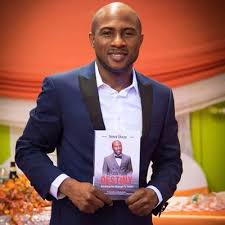
By Henry Ukazu
Dear Destiny Friends,
Last week, we began discussing a grey and near-controversial topic, “pursue passion more than profit”. The topic cannot be exhaustive. Depending on who one is speaking to, different answers and understanding will be received because different things work for different people, and as they say, ‘different strokes for different people’.
It I worthy of note that a family man who is passionate about teaching or working in the non-profit space will be tempted to engage in business to feed his family. But someone with a stable financial background can afford to follow his passion and work as a teacher or in the non-profit space where the pay is not lucrative.
From a practical perspective, I currently work for the New York City Department of Correction as the Legal Coordinator. This is an agency that pays a good salary to the uniformed officers after they work for 51/2 years. In addition to the money they receive, there are countless hours of overtime, which doubles their income depending on how many hours they work. Some call it blood money because they can hardly get the same money in other institutions.
Why am I sharing this information? According to most of the officers; they basically work in the agency because of the money. Most of the officers are of the opinion that they can hardly make such money working in other private or public enterprises. The majority of these officers are not passionate about the job; they are just there to take care of their pressing bills. Some of them even have a timeline: they can work and then resign to start up their business or work in their areas of interest. This goes to tell you that they are trading their passion for profit, which is kind of work if looked at from a particular point of view, but then they are trading their joy and peace.
Let me share another example. In Nigeria, a popular artist, David Adeleke, aka Davido, is one man who followed his passion. This young man came from a wealthy background. He literally left generational wealth to sing. Many thought he was crazy. Davido’s father, billionaire businessman Adedeji Adeleke, initially opposed his music career, but he eventually became fully supportive. Davido’s father went as far as having police shut down shows or arresting people involved when Davido left school in the US to pursue music in Nigeria. Due to his passion for singing, Davido had to fund his early career secretly and rebel against his family’s wishes before breaking through.
Once Davido achieved massive success and proved he could be successful in the industry, his father accepted his path and gave him his blessing. Davido once stated that despite making his own fortune, his billionaire father still surprises him with huge financial gifts, such as wiring him $300,000 after a major performance at the State Farm Arena in Atlanta.
I doubt that Davido would have become this famous if he didn’t follow his passion. Davido can be described as a man whose passion is stronger than power.
I had to share these two perspectives to give clarity on the relativity of passion and profit.
Let’s analyze the concept of passion and profit. If I may ask you, what is passion? What is profit? And what does passion and profit mean to you? According to Cambridge University, passion was defined as a very strong feeling, emotion, or deep enthusiasm for a person, activity, or cause. For example, someone can have a strong emotion or a powerful state of feeling like intense love, excitement, anger, or hatred for something or somebody.
Passion can also be a deep interest or hobby which gives someone a strong liking or enthusiasm for an activity, such as cooking, music, or sports. In romantic cases, it can be a romantic or sexual desire: An intense physical or emotional attraction toward someone. In the spiritual context, it can be understood as the Sufferings of Jesus: Historically and in a religious context, it refers to the suffering and death of Jesus Christ between the Last Supper and the crucifixion (the Passion of Christ).
Profit, on the other hand, is the financial gain that remains when total revenue from an activity or business exceeds the total expenses and costs incurred, according to Investopedia. There are different types of profit:
- Gross Profit: Revenue minus the direct cost of producing goods or services (COGS).
- Operating Profit: Gross profit minus day-to-day operating expenses, excluding interest and taxes.
- Net Profit: The final “bottom line” earnings left after all expenses, taxes, and interest are deducted.
Having given an overview of what passion and profit entail, let’s take a minute to understand the thin line between passion and profit. Just like authority is respected more than power, passion has more influence and is generally respected more than profit. No doubt, it’s good to make a profit in business, but in this context, I am referring to the human resource space or human capacity development
On the surface, people may respect someone for the money one has, but they will value a person who is more passionate about a cause than one who has money but does not believe in the message they are preaching. There’s a saying: human beings are more than money. Just like, it’s better to have a good name than to have money.
People generally follow a leader or someone who they can relate to rather than someone who gives them money but is careless about their feelings. One message I heard countless times from one of my revered mentors regarding my career was to pursue passion over profits. According to him, passion is stronger than power. He likened passion to a scenario where a woman loves a man who has less money compared to a man who has money but does not have the values and vision she represents. According to these sets of ladies, money is good, but love conquers everything because if tomorrow the money travels, the marriage is bound to hit a rock, compared to a scene where a lady loves a man for who he is and what he represents. Even when the money is out, the friendship will still thrive.
According to the opposing schools of thought, while passion is good, it is they also believe that hard work beats talent, especially when talent is not put to good use. So, even if one is passionate about a cause or has a talent that is yet to be developed, if one does not intentionally develop it, it will lie fallow. So, invariably, even if one is passionate about a cause, if they don’t have the strength to work on their passion, it’s advisable for them to focus on making money.
Here is my opinion: even though I subscribe to the position of focusing on or working for passion rather than for money, one must apply wisdom in navigating this tough terrain. One can decide to work for money and gather enough money to fund their passion because, at the end of the day, we all want to be happy, because happiness and fulfilment mean everything
In summary, while it is good to do what works for one and what is readily available, it’s imperatively important for one to strive for excellence and perfection, which can be found in passion.
Henry Ukazu writes from New York. He works with the New York City Department of Correction as the Legal Coordinator. He’s the founder of Gloemi. He’s a Transformative Human Capacity and Mindset coach. He is also a public speaker, youth advocate, creative writer and author of Design Your Destiny- Actualizing Your Birthright to Success, Unleash Your Destiny and The Six Pillars of Success . He can be reached via info@gloemi.com

The Lagos State Police Command has commenced disciplinary action against an inspector following a viral video in which he was seen making disparaging ethnic remarks while travelling in a public vehicle.
The officer, identified as Inspector Osumah Frank, made what the Command described as “careless, inappropriate and uncultured remarks,” according to a statement issued on Friday, September 25, 2026, and signed by the Command’s Police Public Relations Officer, SP Abimbola Adebisi.
In the video, Frank, who was in police uniform, was heard making remarks about Igbo people and discussing the political ambitions of a former Governor of Anambra State, Peter Obi. He also made comments involving President Bola Tinubu and former Vice President Atiku Abubakar.
The inspector was further heard suggesting that police officers could collect money to frustrate a political candidate’s chances of succeeding.
Reacting to the video, the Command said the officer’s remarks were made in his personal capacity and did not represent the position or views of either the Lagos State Police Command or the Nigeria Police Force.
“The Command has commenced appropriate disciplinary action against the officer in line with established regulations of the Nigeria Police Force,” the statement said.
“It also wishes to make it clear that the statements made by the officer were made in his personal capacity and do not represent the position, views or official disposition of the Lagos State Police Command or the Nigeria Police Force,” it added.
The Commissioner of Police (CP) Tijani Fatai, said police personnel are required to maintain professionalism and respect for members of the public at all times.
“All personnel are expected to maintain professionalism, civility, discipline and respect for members of the public at all times,” the statement quoted Fatai as saying.
He said wearing the police uniform came with a responsibility to uphold the dignity and integrity of the Force, adding that the Command would not condone any conduct capable of bringing the police into disrepute or undermining public confidence in the Force.
The Command reaffirmed its commitment to transparency, accountability and “policing with humility and integrity.”
The video, which circulated widely on social media from around September 23, had drawn criticism over the officer’s remarks, particularly those concerning Igbo people and his comments about police officers collecting money to frustrate a political candidate.
The police did not state the specific disciplinary measures being taken against Frank.


