Business
Towards a Stronger Union – Year 105 in Review


- /home/rhoncare/pointblank.ng/wp-content/plugins/mvp-social-buttons/mvp-social-buttons.php on line 27
https://pointblank.ng/wp-content/uploads/2021/01/Union-Bank.png&description=Towards a Stronger Union – Year 105 in Review', 'pinterestShare', 'width=750,height=350'); return false;" title="Pin This Post">
- Share
- Tweet /home/rhoncare/pointblank.ng/wp-content/plugins/mvp-social-buttons/mvp-social-buttons.php on line 69
https://pointblank.ng/wp-content/uploads/2021/01/Union-Bank.png&description=Towards a Stronger Union – Year 105 in Review', 'pinterestShare', 'width=750,height=350'); return false;" title="Pin This Post">
The year 2022 was remarkable for Union Bank of Nigeria (Union Bank). The leading financial institution celebrated its 105th year of serving Nigerians with the announcement of the completion of a landmark transaction that saw the integration of the Bank with Titan Trust bank to form a stronger union. This announcement kicked off several noteworthy events and major milestones, and Union Bank is pleased to recapitulate these milestones the Bank recorded in 2022. The noteworthy events in each month are summarised below under their respective headings.
January 2022: Union Bank celebrates its 105th year of operations as Titan Trust Bank gets nod from regulators for the official integration. The fusion of both entities created expanded networks, increased operational efficiency and capacity as well as improved service delivery for the customers. The new direction set Union Bank on a path of delivering prosperity and shared growth for its partners and customers all over the African continent.
February 2022: As part of its commitment to push beyond banking to promote innovation and creativity nationwide, Union Bank partnered with AfricaNXT – formerly known as Social Media Week, to host the largest gathering of innovators across Africa. As an organisation focused on accelerating digital innovation, Union Bank showcased some of its ‘Digital Ventures’ products (Kula, Booster and M36) at the event via an interactive booth. The Bank also hosted two insightful sessions – a panel discussion and a masterclass session – targeted at the tech ecosystem.
March 2022: As an organisation committed to leading the charge for inclusion and parity, Union Bank has consistently leveraged International Women’s Day (IWD) to promote impactful discourse and encourage positive action for gender equality 2022 was no different. In in line with the 2022 global theme #BreakTheBias, the Bank hosted an event to celebrate everyday women breaking biases and shattering barriers in their professional and personal lives.
A key highlight of the event was the inauguration of the first executives for Wehub – Union Bank’s Women Empowerment Hub which is an internal network launched in 2016 to motivate, connect and provide support to women within the Bank. The newly elected executives were charged with the task to drive the implementation of impactful initiatives aimed at advancing the Bank as a progressive place to work.
April 2022: As part of its ‘Beyond Banking’ strategy and commitment to innovation and technological advancement in Nigeria, Union Bank launched SpaceNXT a future-forward, purpose designed co-working technological and innovation hub built to promote innovation and encourage collaboration within the tech ecosystem in Nigeria. Located within the Union Bank Head Office in Lagos Nigeria, SpaceNXT provides an enabling environment where tech enthusiasts, visionaries and creators can converge for the propagation of new ideas. It is a launching pad for innovators to collaborate, develop and improve on ideas around digital systems and tech-based solutions.
May 2022: Following the completion of the official integration, and the subsequent receipt of all necessary regulatory approvals, Union Bank posted a formal notice of change in control with TGI Group, parent of TTB, now the majority shareholder and core investor in Union Bank. In addition to this, the Bank also announced the completion of the divestment of the Bank’s entire shareholding interest (direct and indirect) in its subsidiary, Union Bank (UK) Plc (“UBUK”) and the effective appointment of a Chief Executive Officer, Board Chair, and the reconstitution of a new Board of Directors. The new CEO, Mr Mudassir Amray and Board Chair, Farouk Gumel assumed office on the 2nd of June 2022
June 2022: Leading development bank Afrexim Bank backed Titan Trust Bank with the sum of $300,000,000 to support the integration with Union Bank. This is to ensure the Bank is well positioned to deliver value to its customers and shareholders.
July 2022: Following a successful first season, Union Bank announced the return of Save & Win Promo, its flagship campaign aimed at rewarding new and existing customers with cash rewards and other gift items worth over N55,000,000. The second edition of the nationwide campaign coincides with the Bank’s 105th anniversary and will benefit more customers to appreciate them for their support and loyalty over the years.
August 2022: As part of its continued commitment to UN SDG5, Union Bank continued its long-standing partnership with Junior Achievement Nigeria (JAN) to impact over 300 girls, in the 21st edition of the Leadership Empowerment Achievement and Development (LEAD) Camp which marked the eighth year of collaboration between JAN and Union Bank. The week-long event was used to provide guidance and improve the skill sets of the girls in areas of financial literacy, entrepreneurship, technology, creative arts, and entertainment. Development sessions in the program included coding, understanding sexual abuse, and personal hygiene, while the participants also received mentorship from respectable and high-ranking women in the country’s private and public sectors.
September 2022: Mr. Farouk Gumel, Chairman, Board of Directors, Union Bank of Nigeria delivered the keynote address that formed part of the theme for the 15th Annual Banking and Finance Conference tagged Repositioning the Financial Services Industry for an Evolving Global Context. In his remarks, Farouk Gumel emphasised how the rapidly expanding agricultural sector in Nigeria has the potential to grow exponentially and contribute not just to the advancement of the Nigerian economy, but also the welfare of the local farmers who form a large percentage of the unbanked.
He highlighted how Union Bank in their 105-year history continues to support the Nigerian farmer and pointed out that the recent integration with the parent TGI group has further opened more opportunities for the Bank to leverage international partnerships to service the rural economy.
In the same month, Union Bank partnered with WACOT Rice Limited – a foremost rice producing company and subsidiary of Tropical General Investment (TGI) Group, to provide banking solutions for 6,000 local farmers including men, women, and young people across 4 Local Government Areas in Kebbi State. This partnership, called the Kebbi Financial Inclusion Drive is in line with Union Bank’s commitment to boost financial inclusion in Nigeria.
October 2022: Union Bank signed a partnership with Mobihealth – a globally recognised, integrated telehealth provider based in the UK, facilitating health solutions for underserved communities in Africa. This first of its kind partnership is part of Union Bank’s commitment to enabling success for its customers. The Bank aims to leverage this partnership to expand access to high-quality and convenient healthcare services for its customers at discounted rates.
In addition, Union Bank also secured a $25 million funding line from Africa Agriculture & Trade Investment Fund (AATIF) to expand its agricultural business footprint in Africa. This funding aims to support the Bank’s agri-expansion and outreach strategy and is expected to further contribute to the growth of the competitive food and agricultural sector in Nigeria that is fully aligned with national priorities – including improving food security, increased agricultural production and local food processing.
November 2022: To expand its footprint in Africa, Union Bank signed an MOU with Attijariwafa Bank – a leading multinational commercial bank and financial services company based in Morocco. Through this partnership both Banks will develop new joint business opportunities for their respective customers that seek to support the trade finance and investment corridors between Nigeria and all the countries where Attijariwafa bank operates.
December 2022: To closeout it’s 105th year anniversary activities, Union Bank launched a brand-new sonic identity tagged ‘The Sound of Union’. The launch of the Sound of Union – a 9-track EP, spanning different genres including afrobeats, highlife, jazz, alternative rock and more – is part of the Bank’s strategy to engage with todays and tomorrow’s generations. The goal of the launch is to leverage the universality of music to build better connections with new and existing audiences through this unique sound identity. The Sound of Union EP is now streaming exclusively on Boomplay.
Awards & Recognitions: In 2022, the Bank received several awards and recognitions both locally and globally including the Global Finance award for the Best SME Bank 2023, the Euro Money Euromoney ‘Highly Regarded’ Bank for Corporate Banking, Corporate and Social Responsibility (CSR) and Environmental, Social and Governance and ‘Notable’ Bank for SME Banking and Digital Solutions. We were also awarded the Middle East and Africa Banking Innovation Awards for Best Trade Finance Platform 2022, and Budgit Active Corporate Citizens award for Civic Investments.
Please note that as a summary, this is not a comprehensive listing of the Bank’s events and activities during each stated period. As we look ahead to 2023, Union Bank remains committed to providing simpler and smarter solutions for its customers.


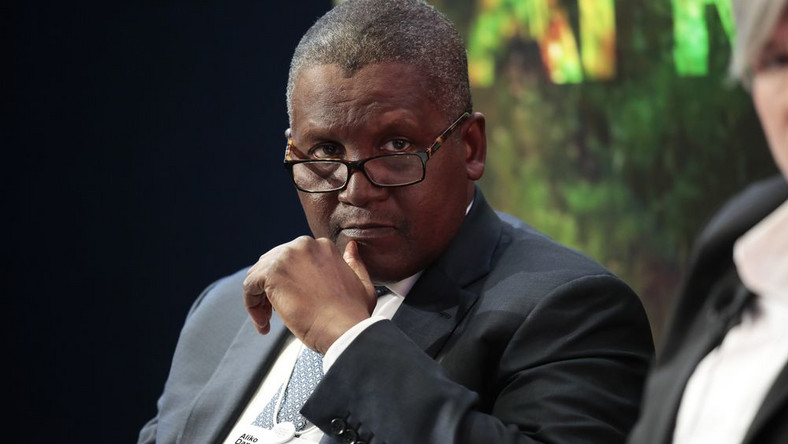
Ugandan President, Yoweri Museveni, has met with Nigerian billionaire Aliko Dangote at State House, Entebbe, to discuss investment opportunities in energy, petroleum, agriculture, and mining. A key area of interest was the fertilizer industry, aimed at enhancing regional food security.
According to Museveni, the meeting highlighted progress on Uganda’s crude oil refinery project, a joint venture with Alpha MBM from the United Arab Emirates, with an initial capacity of 60,000 barrels per day.
This meeting follows Dangote’s recent launch of the multi-billion-dollar Dangote East Africa Petroleum Refinery in Lamu County, Kenya.
Museveni, who attended the occasion, welcomed the development, emphasising Africa’s shift from exporting raw materials to local processing.
Museveni welcomed the development, noting that Africa is gradually moving away from decades of exporting raw materials instead of processing them locally.
“I am happy to see Africa waking up and moving away from the 70-year betrayal of exporting raw materials,” President Museveni said. “Dangote, who started as an importer and has become a national and continental asset, is a good example of the transformation we need.”
Addressing regional energy infrastructure needs, Museveni clarified that Kenya’s new mega-refinery would not conflict with Uganda’s own downstream ambitions or existing cross-border partnerships.
“Uganda’s refinery will be built, and our cooperation with Tanzania on Tanga stands. There is no harm in having more refineries in the region. What Africa needs is value addition, industrialisation and bigger integrated markets,” Museveni noted, adding: “East African political integration must ultimately be treated as a matter of strategic survival.”

Africa’s informal retail sector presents a major opportunity for economic growth, as technology companies explore ways to improve how small businesses source products, manage supplies and serve consumers.
Nigerian technology company TradeDepot is addressing the challenge by connecting neighbourhood shops, kiosks, market stalls and small provision stores with manufacturers and distributors through digital solutions.
The initiative targets a largely underserved segment of Africa’s retail industry, where many small businesses face difficulties accessing reliable suppliers, efficient distribution networks and appropriate financial services.
By improving access to products and simplifying procurement, TradeDepot aims to help retailers reduce supply-chain challenges and focus more on serving customers.
The impact could extend beyond individual businesses to manufacturers and distributors through improved market access, more efficient product distribution and stronger connections with local communities.
The company’s growth has also received institutional investment support. Through its Boost Africa initiative, the European Investment Bank (EIB) invested €10 million in Partech Africa Fund, which subsequently backed TradeDepot.
Boost Africa, a partnership supporting innovative African businesses, demonstrates how investment capital can help technology companies develop solutions for underserved markets.
As Africa’s retail landscape evolves, the informal sector is increasingly attracting attention as a major driver of commerce, employment and enterprise development.
TradeDepot’s approach highlights the potential of using technology and investment to strengthen the small businesses already supplying everyday goods to millions of African consumers.
Watch the video: https://www.youtube.com/watch?v=zw9t2asF9Pc

From manufacturers and distributors to neighbourhood retailers, technology and investment are reshaping the systems that move products across African markets.
When a customer walks into a neighbourhood shop and finds exactly what they need, the transaction may appear simple. But behind that everyday purchase is a complex network of businesses, people and systems working together to make it happen.
Manufacturers produce the goods, distributors move them through supply channels, logistics providers handle transportation, and retailers ensure products reach consumers. Payment systems and financing also play important roles in keeping this commercial ecosystem running.
However, across many African markets, the infrastructure connecting these players remains fragmented, creating challenges that affect how businesses operate and how efficiently products reach consumers.
For small retailers, sourcing products can involve dealing with multiple intermediaries, navigating inefficient distribution networks and managing unpredictable supplies. Limited access to working capital can further complicate inventory management, making it difficult to keep essential products consistently available.
These challenges point to a bigger issue: the future of commerce is not just about selling more products or creating new shopping experiences. It is also about strengthening the infrastructure that makes buying, selling and distribution possible.
Technology is increasingly becoming part of the solution.
Digital platforms can connect retailers with manufacturers and distributors, simplify ordering processes and improve visibility across supply networks. When combined with efficient logistics and access to financing, these innovations can help businesses manage inventory, improve distribution and build stronger commercial relationships.
This is the space in which TradeDepot, a Nigerian technology company, is making its contribution. By using technology to connect small retailers with manufacturers and distributors, the company is helping address some of the structural challenges within traditional retail supply chains.
Its approach reflects a broader opportunity in Africa’s digital transformation: moving beyond solutions that simply improve the customer experience to innovations that strengthen the underlying systems supporting businesses, distribution networks and economic activity.
Investment also plays a critical role in making this transformation possible.
Through Boost Africa, the European Investment Bank (EIB) invested €10 million in Partech Africa Fund, which subsequently backed TradeDepot. The investment demonstrates how development finance and venture capital can support African technology companies working to address fundamental market challenges.
Beyond supporting individual businesses, such investments can contribute to the development of stronger commercial networks, improved infrastructure and innovative solutions that make entire economic value chains more efficient.
Ultimately, a thriving retail sector needs more than shops and customers. It needs reliable supply chains, efficient distribution networks, accessible financing and technology that connects every part of the journey.
Because the future of commerce will not be determined only by what businesses sell, but also by how effectively the systems behind those transactions work.
Boost Africa: From Capital to Impact.
Watch how TradeDepot is bringing commerce closer to communities through technology and the Boost Africa initiative: