
Metro
Tribute to Nigeria’s Unsung Heroes


- Share
- Tweet /home/rhoncare/pointblank.ng/wp-content/plugins/mvp-social-buttons/mvp-social-buttons.php on line 69
https://pointblank.ng/wp-content/uploads/2019/05/Nigeria.jpg&description=Tribute to Nigeria’s Unsung Heroes', 'pinterestShare', 'width=750,height=350'); return false;" title="Pin This Post">
By Ayo Oyoze Baje
“A true hero isn’t measured by the size of his strength, but by the strength of his heart” – Hercules
They are out there sacrificing their sweat, valuable time, boundless energy and precious resources to make a positive impact on the quality of life of fellow citizens, virtually on daily basis.They are diligent at their duties; exhibiting promptitude, passion and perseverance, not counting the cost, if only to put a smile on other people’s faces. But they are hardly recognized at high class award ceremonies, all because they are not the Dangotes, the Otedolas, the Jim Ovias and the Alakijas, or even the wave-making entertainers and so called celebrities. Yet, we clamour for a better country and a brighter world. What a life of contradictions!
Mind you, their professional spectrum spans different fields of human endeavor – from teachers, nurses, office assistants, through skillful artisans, security personnel to commited caregivers. But what marks them out is their avowed commitment to duty and the selfless service to humanity. Their moving mantra, or propelling philosophy is to bring out the best in them for the good of others. That is true leadership for you, all because you do not need to wear a title to be a leader, as the world- acclaimed author, Mark Sanborn rightly highlighted in his bestselling book of the same title.
Of great significance therefore, is the increasing need for Nigeria’s mass media to begin to identify, project and promote such unique and rare individuals as the society’s enduring heroes. They should be projected as our moral compass, more so in this strange era of overt focus on maddening money and mindless materialism, irrespective of their sources of inflow. Indeed, this is also the right moment to understand such individuals as the beacon bearers the younger generation of Nigerians need to guide them forward through the long, dark tunnel of ignorance and poverty. A few examples would shed more light on the purpose of this clarion call.
In fact, a personal experience evolved between the subject of the matter and my humble self back in 2018. We became friends on Facebook and yours truly always appreciated his prayers. To hit the nail on the head, he confessed that he was attracted to my person because reading through my weekly opinion essays as published by different newspapers, magazines and online portals, clearly convinced him that I have passion for good governance in Nigeria.By November of that year he invited me as one of the members of his Foundation- the Ibiyinka Macaulay Foundation with the mission of giving a helping hand to the needy. Worthy of note is that the United Kingdom -based Ibiyinka Macaulay happens to be of the Fourth generation in the lineage of the late political icon, Herbert Macaulay.
Fast forward to Saturday May 18, 2019 and yours truly was the Media Consultant to the Foundation which kick- started the provision of different gift items such as food, drugs as well as cash for the needy Nigerians at different parts of Lagos. These included the Modupe Cole Memorial Child Care and Treatment Home at Akoka, the Lagos Cheshire Home,Mushin and the Tower of Refuge Orphanage/ Motherless Babies Home, Aguda, Surulere. But that was not all there was to his uncommon spirit of generosity.
In addition to these the Macaulay Foundation also commissioned boreholes, renovated toilets and presented electric generators and television sets to schools at Iyu Road, Surulere. And after that he led the program of feeding the underprivileged people at the close of their fasting at Ebute Meta axis of Lagos state. But have you heard about Ibiyinka Macaulay before now? That is the million- naira question. Yet, there are several other unsung heroes making their mark in Nigeria’s socio– economic landscape.
Mr. Solomon Folorunsho is another of such precious pearls of humanity. As a pastor who practices what he preaches he is the Coordinator of the Internally Displaced Persons( IDP) camp at Uhogua, Benin, Edo state. He and members of his able team have been at the forefront of the provision of various food items, drugs, clothing materials and the payment of school fees for the children there in the camp. Good enough, some of them have maximized the opportunities provided to improve on their skills and learning, moving from there to some tertiary institutions.
It was therefore, a piece of heart-warming news that in November 2024 the Benin branch of the Nigeria Society of Engineers ( NSE ) provided food items at the camp. Perhaps, some other concerned Nigerians would reach out to the IDP camp to provide solar-powered boreholes,solar lights and more hostels that they are requesting for. It is big kudos to Pastor Folorunsho for beaming his God-given light of hope for survival for the needy in the darkness of hunger and poverty, as one of the country ‘s unsung heroes.
As a way forward in recognizing our history- making change makers, across various fields of human endeavor different organizations that give awards should take a cue from Cadbury Schweppes company. It established the Bournvita Teachers’ Awards in 2002. The noble and praise -worthy aim of course, is to celebrate excellence in the long-forgotten field of quality education delivery. The award which comes with a plaque,a GSM phone with sim card, N100,000 cash and one-year supply of Bournvita is part of the company’s Corporate Social Responsibility ( CSR ). The award which had Mrs. Philomena Igweze and Mr. John Ukaonu as the best teachers in both primary and secondary schools across the country back in 2002 has since transformed in scale and style. Laudable, is it not?
Of course, it is.
So, to guide the society right on the solid path to moral and professional rejuvenation, this is the time to change the narrative from the base sentiments of thinking that only the celebrities and politicians, who are supposed to be our servants are the only important people around. No! “Real leadership is that of leaders recognizing that they serve the people, that they lead”. That is according to Pete Hoekstra and it should serve as food – for – thought for us all.


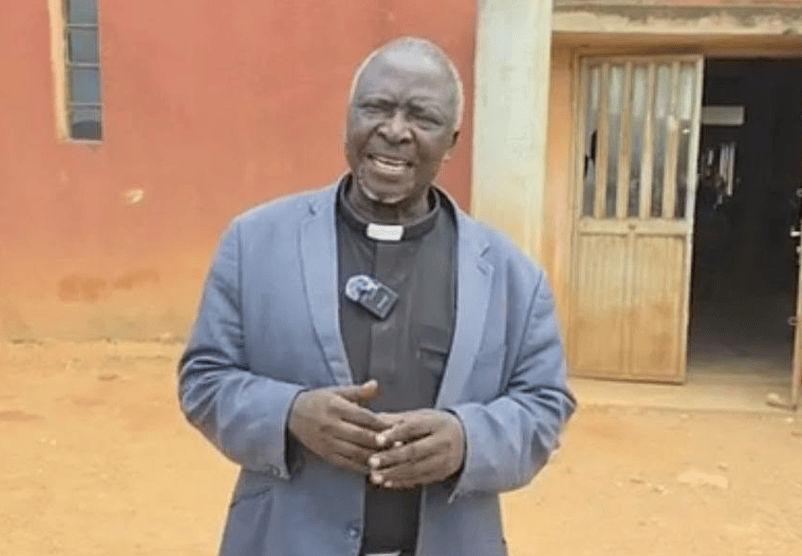
The Regional Chairman of Church of Christ in Nations (COCIN), Barkin Ladi Local Government Area of Plateau State, Rev. Ezekiel Dachomo, has denied reports that he prayed for the re-election of President Bola Tinubu and Vice President Kashim Shettima in the 2027 presidential election.
Dachomo, who is currently in Israel on what he described as his first International Christian Advocacy Tour, said his visit was aimed at drawing the attention of world leaders to the plight of Christians in Plateau.
The cleric made the clarification in a social media post on Monday night following reports that he had prayed for the success of the All Progressives Congress (APC) presidential ticket and expressed support for the Muslim-Muslim ticket.
Dachomo said his earlier post, in which he prayed for Nigeria, had been misconstrued as an endorsement of Tinubu and Shettima ahead of the 2027 election.
According to him, there was nowhere in the post where he prayed for the President and Vice-President to win the election.
“People are trying to frame me, saying I prayed for a Muslim-Muslim ticket. But I did not, and I will never pray for a Muslim-Muslim ticket because Nigeria belongs to both Muslims and Christians,” he said.
Dachomo said his prayers were for the well-being and success of Nigeria and its citizens, irrespective of their religious affiliations.
“I pray for both Muslims and Christians in Nigeria. I pray for Nigeria to succeed. If you truly want to come to God, come with a clean heart,” he added.
The cleric further stated, “I did not pray for President Tinubu and Vice President Shettima to win in 2027. My prayers have always been for Nigeria to succeed.”
Dachomo’s clarification came amid reactions to his ongoing advocacy tour in Israel, where he is seeking international attention to security challenges and what he described as the persecution of Christians in Plateau.
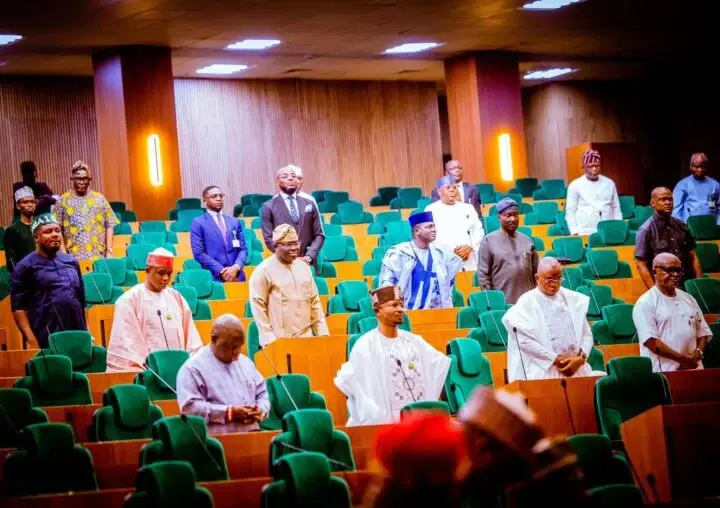
Ahead of the 2027 election, the House of Representatives Committee on Electoral Matters has urged the Independent National Electoral Commission (INEC) to disqualify candidates whose names are not contained in political party registers, as stipulated by the Electoral Act 2026.
In a statement on Tuesday, the Chairman of the committee, Bayo Balogun, drew the commission’s attention to a Supreme Court ruling on Sections 77(5), 77(6) and 77(7) and called for their full enforcement across all political parties.
Balogun, a member of the All Progressives Congress, APC, said that pending legal proceedings concerning the interpretation, constitutionality and enforceability of the sections had been resolved by virtue of the Supreme Court judgment.
The lawmaker recalled that the Supreme Court, on September 24, 2026, restored the provisions after setting aside the Court of Appeal judgment that had declared them unconstitutional.
According to him, the apex court held that the provisions were not inconsistent with the 1999 Constitution.
Balogun explained that Section 77(5) provides that only members whose names are contained in the membership register submitted to INEC are eligible to vote or be voted for at party primaries, congresses and conventions.
He said that Section 77(6) requires political parties to use the register submitted to the electoral umpire for such exercises.
Balogun urged INEC to proceed without further delay to enforce Sections 77(4) to 77(6) in the administration and monitoring of political parties and their electoral activities.
He further urged the commission to audit the membership registers and candidates submitted by political parties to establish whether the names of the candidates are contained in the registers earlier submitted to INEC in compliance with Section 77(5).
“This will be a litmus test for the commission – any culpable political party and candidates should be disqualified.
“Diligent enforcement of the provision would help prevent disputes and reduce the volume of litigation that could arise from alleged irregularities or non-compliance with Sections 77(4) to 77(6) of the Electoral Act,” Balogun said.
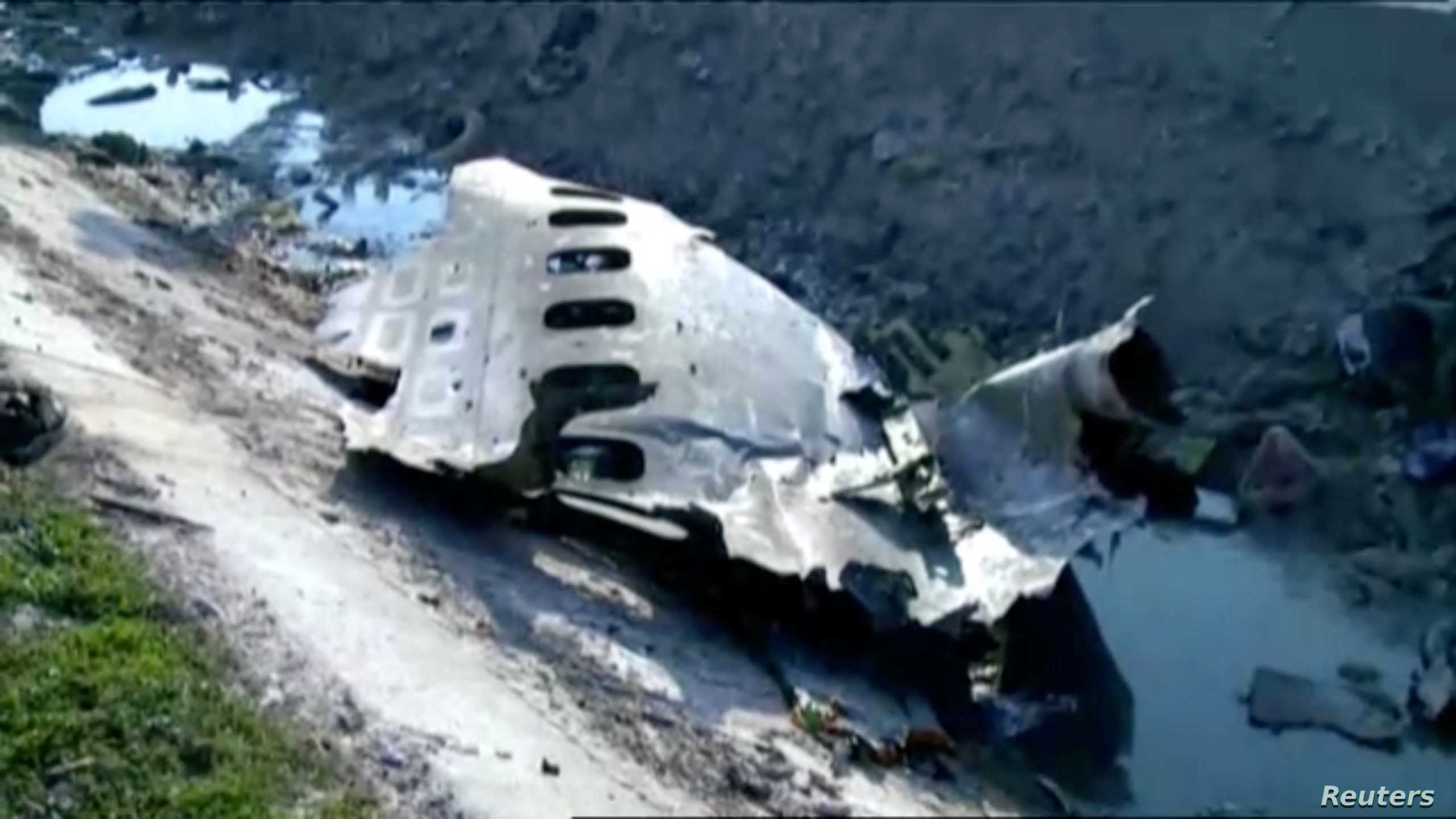
An helicopter crashed into a swamp near Naval Base in Igbokoda, the headquarters of Ilaje Local Government Area of Ondo State, on Monday.
The incident occurred at about 11.00a.m during heavy down pour, throwing the coastal community into panic.
The number of people on board of the helicopter was yet to be officially confirmed, while the condition of possible survivors cannot be confirmed.
Confirming the incident, Maurice Oripenaiye, the Chairman of the local government, told the News Agency of Nigeria (NAN) in a telephone interview that he could not ascertain the number of the victims.
Oripenaye also said he was yet to ascertain the identity of the crashed helicopter and the passengers.
“It happened during the heavy rainfall at about 11.00a.m. I cannot confirm the number of the people on board. I have deployed some youths to the area for rescue purpose,” he told NAN.
Similarly, the Police Command in Ondo State while confirming the crash, said details surrounding the incident were still emerging.
The command in a statement by its spokesperson, Abayomi Jimoh, a deputy superintendent of police, in Akure, said efforts were ongoing to establish the full circumstances surrounding the crash.
“The command urges members of the public, particularly residents of Igbokoda and adjoining communities, to remain calm and refrain from circulating unverified information.
“The public will be duly informed as soon as further credible information becomes available,” it stated.
(NAN)


