
Headlines
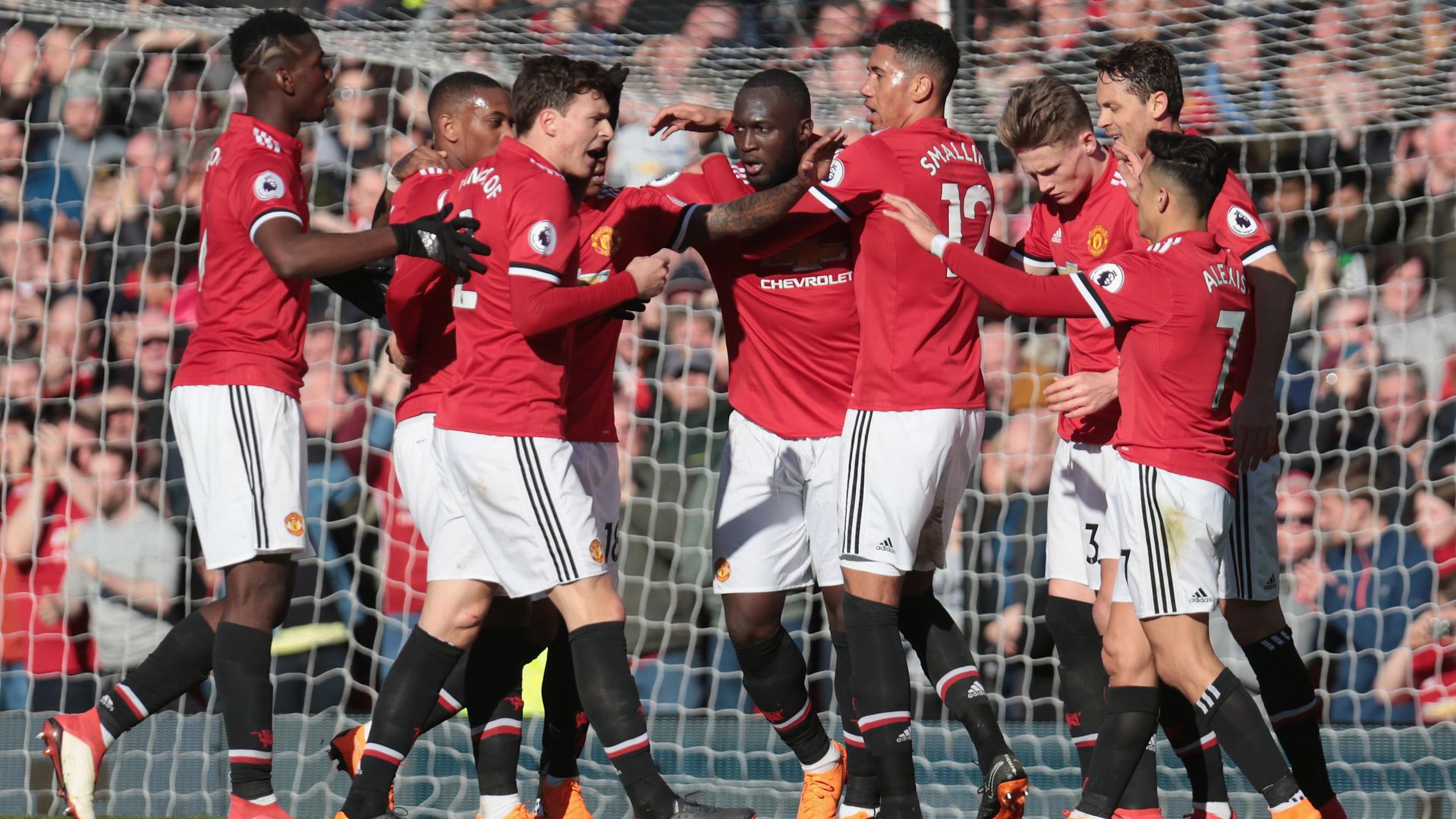
Twelve European Clubs Announce Launch of Disputed Super League

- /home/rhoncare/pointblank.ng/wp-content/plugins/mvp-social-buttons/mvp-social-buttons.php on line 27
https://pointblank.ng/wp-content/uploads/2019/10/Man-U-1000x600.jpg&description=Twelve European Clubs Announce Launch of Disputed Super League', 'pinterestShare', 'width=750,height=350'); return false;" title="Pin This Post">
- Share
- Tweet /home/rhoncare/pointblank.ng/wp-content/plugins/mvp-social-buttons/mvp-social-buttons.php on line 69
https://pointblank.ng/wp-content/uploads/2019/10/Man-U-1000x600.jpg&description=Twelve European Clubs Announce Launch of Disputed Super League', 'pinterestShare', 'width=750,height=350'); return false;" title="Pin This Post">
Twelve of Europe’s most powerful clubs announced the launch of a breakaway European Super League on Monday in a potentially seismic shift in the way football is run but faced accusations of greed and cynicism.
Six Premier League teams — Liverpool, Manchester United, Arsenal, Chelsea, Manchester City, and Tottenham — are involved, alongside Real Madrid, Barcelona, Atletico Madrid, Juventus, Inter Milan, and AC Milan.
The ESL said the founding clubs had agreed to create a “new midweek competition” but would continue to “compete in their respective national leagues”.
It said it hoped the inaugural edition would start “as soon as practicable”.
Three more founding clubs would be announced, the ESL said in a statement, with a further five places up for grabs through a qualifying system each year.
Crucially, the 15 initial members would be guaranteed qualification every season.
Clubs would be split into two groups of ten, playing each other home and away. The top three in each group would qualify for the quarter-finals and the teams in fourth and fifth would play a two-legged play-off for the two remaining spots.
Then the competition would adopt the same two-leg knockout format used in the Champions League before a single-leg final in May.
In terms of the financial draw for clubs, organisers said they would receive “solidarity payments” that would be “substantially higher than those generated by the current European competition”.
For signing up to the new league, “Founding Clubs will receive an amount of 3.5 billion euros solely to support their infrastructure investment plans and to offset the impact of the COVID pandemic,” the statement added.
– ‘Cynical project’ –
The ESL clubs were accused of greed, criticised by the leaders of Britain and France, and threatened with international exile.
Despite their pledge to continue playing in their domestic leagues, European football’s governing body UEFA and the three countries’ football authorities warned the clubs would be barred from their national competitions and the Champions League.
“We… will remain united in our efforts to stop this cynical project, a project that is founded on the self-interest of a few clubs at a time when society needs solidarity more than ever,” read a joint statement.
UEFA also threatened that players from the participating clubs “could be denied the opportunity to represent their national teams”.
British Prime Minister Boris Johnson said the clubs “must answer to their fans and the wider footballing community before taking any further steps”.
With no French team among the initial ESL clubs, President Emmanuel Macron said the plans risked “threatening the principle of solidarity and sporting merit”.
The ESL announcement was timed to pre-empt UEFA’s own scheduled unveiling of reforms to the Champions League on Monday, with an expansion to 36 teams from 32 and two ‘wildcard’ slots expected to be among the plans. There would be a minimum of 10 games for each team.
FIFA expressed its “disapproval” at the Super League plans and called on all parties “to engage in calm, constructive and balanced dialogue for the good of the game.”
The Premier League, the richest in Europe, issued a furious statement.
“Fans of any club in England and across Europe can currently dream that their team may climb to the top and play against the best,” it said.
“We believe that the concept of a European Super League would destroy this dream.”
Arsenal, who currently sit ninth in the Premier League, well off the qualification spots for Europe, hinted at the obstacles ahead, saying “there’s lots more to do to bring the competition to life”.
The European Club Association (ECA) said it “strongly opposes” the Super League.
Juventus, whose president Andrea Agnelli was also chief of the ECA, said the club and its boss had left the body.
The club warned that it “cannot assure that the project will be eventually successfully launched”.
Juventus are facing a battle to finish in the Serie A top four this season and seven-time European champions AC Milan have not played in the Champions League since 2014.
Real Madrid chief Florentino Perez, who was announced as the first ESL president, said the breakaway reflected the big clubs’ wishes.
“Football is the only global sport in the world with more than four billion fans and our responsibility as big clubs is to respond to their desires,” he said.
Manchester United’s American co-chairman Joel Glazer, who will be a vice-chairman of the Super League, said it “will open a new chapter for European football”.
The clubs also said a women’s version of the competition will be created.
– German, French clubs on sidelines –
French and German clubs, including reigning European champions Bayern Munich and last season, ‘s beaten Champions League finalists Paris Saint-Germain, were not among the initial ESL clubs.
“We thank those clubs in other countries, especially the French and German clubs, who have refused to sign up to this,” UEFA said.
La Liga president Javier Tebas compared the ESL clubs to drunks leaving a bar at 5:00am “intoxicated with selfishness and a lack of solidarity”.
German Football League boss Christian Seifert said the breakaway could “irreparably damage the national leagues”.
The announcement was also condemned by some supporters’ groups, with Liverpool’s Spirit of Shankly tweeting it was “appalled”.


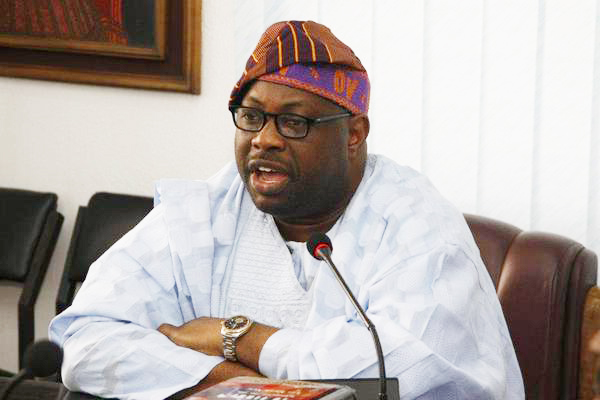
A chieftain of the African Democratic Congress (ADC), and Deputy Director of the Presidential Campaign Council, Chief Dele Momodu, has described former Vice-President Atiku Abubakar as the most nationally formidable and experienced among the leading contenders for the 2027 presidential election.
Momodu said Atiku’s experience at the national level distinguishes him from President Bola Tinubu and former Anambra State Governor, Peter Obi.
He stated this on Wednesday during an interview on Eagle 102.5 FM, Ilese-Ijebu, in Abeokuta.
“If you look at the antecedents of the three major candidates, between Atiku Abubakar and Peter Obi, you will see that Atiku is the most experienced. He has managed our country at the highest level,” he said.
Momodu traced Atiku’s political journey to the 1992 Social Democratic Party (SDP), presidential primary where he contested against late MKO Abiola and stepped down for him.
He said Atiku accepted the outcome without crisis even after he was not picked as Abiola’s running mate, describing it as a mark of true democratic temperament.
“He is the only one who started from around 1992, contested the SDP primary against Abiola and stepped down with uncommon equanimity. He did not make any noise,” Momodu said.
He noted that Atiku was among the founders of the Peoples Democratic Party, PDP, and served as Vice-President from 1999 to 2007.
Comparing Atiku with Obi, Momodu argued that while Obi’s best was demonstrated in Anambra, Atiku’s was at the presidency level managing the national economy.
“Peter Obi has tried his best in Anambra, while Atiku’s best is at the level of vice president controlling the economy of Nigeria. The difference is clear. He has matured in experience and exposure,” he said.
Momodu also said President Tinubu’s experience was largely limited to Lagos.
“What I’m trying to say is that Tinubu’s experience was limited to Lagos, and that is why when he became president, he thought Nigeria was Lagos. And he has found out now that Nigeria is not Lagos,” he said.
He argued that the current economic hardship under the present administration did not show prosperity, insisting Atiku remained better positioned to lead the country.
“Well, we are yet to see that prosperity, and if yesterday would determine today and tomorrow, it is obvious that Tinubu should retire now and let someone else do it,” Momodu added.
DailyPost
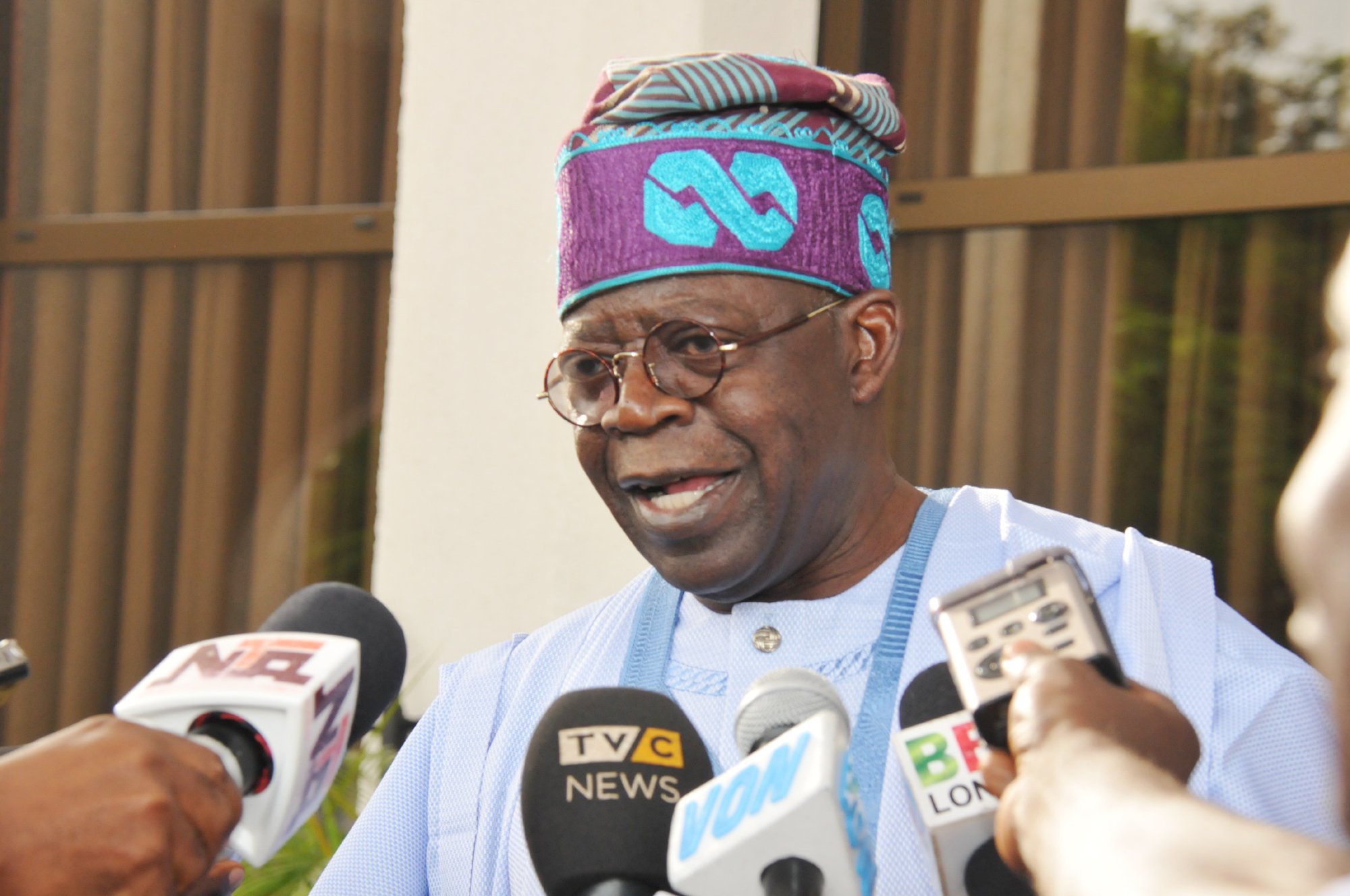
President Bola Tinubu says he has no regrets over the removal of petrol subsidy and other economic reforms introduced by his administration, insisting that Nigeria could not borrow its way to greatness.
Meanwhile, Minister of Finance and Coordinating Minister of the Economy, Taiwo Oyedele, has warned Nigerians against returning to petrol subsidy. He said the backtrack could trigger capital flight, undermining investor confidence and pushing the Naira to N3,000, N3,500 or even N4,000 per dollar.
But the Director of Media and Publicity of the African Democratic Congress (ADC) Presidential Campaign Council (PCC), Kola Ologbondiyan, challenged Oyedele to publish the economic model behind his warning that a return to fuel subsidy could push the naira to N4,000 per dollar.
The President spoke on Monday during the City Boys Movement retreat in Abuja, where he charged members of the group to mobilise support for his administration ahead of the 2027 general elections, insisting that the country’s future mattered more than the ambition of any individual candidate.
“No regrets,” Tinubu said, insisting that his administration would not be pushed back from its reform agenda.
He took a swipe at his political opponents, promising to restore the petrol subsidy, saying Nigeria could no longer afford to pay the fuel subsidy, and warning that reversing the policy would take the country back to an unsustainable economic path.
Defending his decision to remove the subsidy on his first day in office, Tinubu said the country was on the verge of financial collapse and could no longer afford the policy’s cost.
Tinubu also sought to reassure Nigerians about the direction of the economy, arguing that growth was steady and that the sacrifices associated with his reforms would ultimately offer citizens a future worth believing in.
Oyedele disclosed during a press briefing of the International Monetary Fund (IMF) and World Bank Annual Meetings in Bangkok, Thailand, yesterday, that investors had repeatedly questioned whether the government would abandon its reforms ahead of the next election cycle.
Ruling out the reversal of the government’s economic reforms, he maintained that any signal that Tinubu’s administration was contemplating or reinstating the subsidy would immediately affect financial markets, raise borrowing costs and worsen economic pressures on households.
“In all the meetings I have had, I came to a conclusion that the markets, including the domestic market, which you can read from the capital market, and the international market, have largely written off the opposition in Nigeria as unserious.
“If, for any reason, the President were to say we are merely considering the return of fuel subsidy, capital would react immediately, airfares would struggle, the naira would come under severe pressure, potentially moving towards 3,000, 3,500 or even 4,000.
The very fuel people want subsidised would become far more expensive in Naira terms,” Oyedele warned.
However, Ologbondiyan accused the Federal government of using fear to discourage debate on fuel subsidy, insisting that Nigerians deserve evidence, not alarming projections, on the potential economic consequences of restoring the policy.
Speaking to journalists, he described the minister’s warning as scaremongering and demanded that the government explain how it arrived at the projected exchange rate.
“The Minister of Finance is merely scaremongering. He cannot claim that a return to fuel subsidy will cause the naira to depreciate to N4,000 to the dollar without showing Nigerians the model behind that projection,” he said.
He questioned the reliance on investors’ concerns to oppose a subsidy’s return, challenging the government to identify the sources of the projections and disclose their calculations.
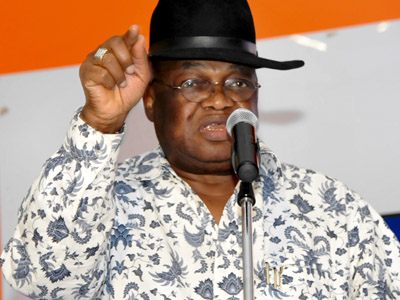
President Bola Tinubu has expressed sadness over the death of Ambassador Patrick Dele Cole, describing him as a distinguished diplomat, journalist, politician and public servant.
Cole died at 86.
In a statement on Saturday, Tinubu said Cole devoted his life to national service and brought distinction to his work in diplomacy, journalism and politics.
“His career reflected the enduring value of dialogue, tact, mutual respect and the pursuit of shared interests in advancing national development and international cooperation,” the President said.
Tinubu noted Cole’s contributions to Nigeria’s media landscape, particularly as Managing Director of the Daily Times, where he upheld the role of the press in holding public officials accountable, speaking truth to power and strengthening democratic governance.
“His legacy in journalism and public life remains an enduring part of our national story,” he said.
The President said at 86, Cole witnessed defining moments in Nigeria’s history and contributed to national development, adding that his life stands as a testament to experience, principled engagement and commitment to public good.
Tinubu extended condolences to Cole’s family, friends, professional associates and all whose lives he touched, praying that memories of his remarkable life will bring comfort and strength.
“May Almighty God grant Ambassador Cole eternal rest and give his family and all who mourn him the fortitude to bear this profound loss,” he said.


