Business
UBA Secures Court Order Against Vitol, Four Others in $242m Petroleum Products Diversion Claim

- /home/rhoncare/pointblank.ng/wp-content/plugins/mvp-social-buttons/mvp-social-buttons.php on line 27
https://pointblank.ng/wp-content/uploads/2024/01/uba-1000x600.png&description=UBA Secures Court Order Against Vitol, Four Others in $242m Petroleum Products Diversion Claim', 'pinterestShare', 'width=750,height=350'); return false;" title="Pin This Post">
- Share
- Tweet /home/rhoncare/pointblank.ng/wp-content/plugins/mvp-social-buttons/mvp-social-buttons.php on line 69
https://pointblank.ng/wp-content/uploads/2024/01/uba-1000x600.png&description=UBA Secures Court Order Against Vitol, Four Others in $242m Petroleum Products Diversion Claim', 'pinterestShare', 'width=750,height=350'); return false;" title="Pin This Post">
A Lagos State High Court, last Thursday, granted interim preservative orders of Mareva Injunction against Vitol SA – a Switzerland based Energy Trading company, and four other shipping companies in favour of United Bank for Africa Plc.
The bank alleged Vitol of wrongful release of cargoes of petroleum products which were consigned to the order of United Bank for Africa Plc in the Bills of Lading.
Addressing the Court, Bode Olanipekun, SAN, lead counsel for United Bank for Africa, urged the Court to grant the interim preservative orders against Vitol and the other shippers.
In a ruling on the application, the presiding judge, Honourable Justice K. A. Jose (Mrs.) granted three prayers in UBA’s application, including requests to restrain the dissipation of assets and dealings with funds up to the disputed amount by Vitol S.A.
“Prayers 1–3 are granted as prayed against the 2nd Respondent only,” the judge ruled.
The application was brought pursuant to Order 43 Rule 1 of the High Court of Lagos State (Civil Procedure) Rules 2019 and the Lagos State High Court Practice Direction No. 2 of 2019.
UBA is seeking to contend in the substantive proceedings that Vitol SA and the owners of the vessels, are liable for alleged conversion, misrepresentation and negligence arising from the non-delivery of the petroleum products.
UBA also cited 34 financial institutions and public agencies, including commercial banks, merchant banks, microfinance banks, the Nigerian Ports Authority and the Nigeria Customs Service, in connection with the application.
In an affidavit supporting the application, UBA’s Group Head of Recoveries and Remedial Management, Anthony Chilaka, stated that the bank issued a letter of credit for the benefit of Vitol SA to facilitate a petroleum products transactions.
UBA alleged that the cargo was transported to Nigeria and that the vessels’ masters issued several bills of lading.
The bank further alleged that Vitol subsequently endorsed the bills of lading “to the order of” UBA and handed over the original copies to it.
UBA maintained that the endorsement entitled it to take possession of the cargo upon completion of the voyage.
However, Chilaka stated that the bank had not received the gasoil despite the completion of the voyage.
“The applicant has not been given possession of the gasoil despite completion of the voyage,” the affidavit stated.
UBA alleged that the cargo was instead, applied to the use of another party, contending that the respondents’ failure to deliver it amounted to conversion and negligence.
The bank argued that the respondents had obligations arising from the transaction and the endorsement of the shipping documents, which it claimed were not fulfilled.
The bank alleged that the cargoes associated with those transactions were also diverted to the use of other parties after their voyages, rather than delivered to UBA.


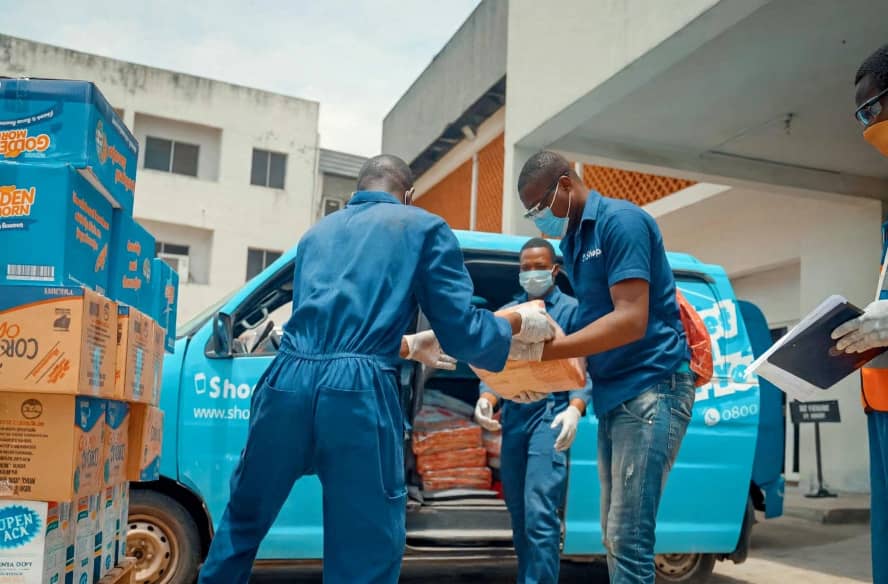
Africa’s informal retail sector presents a major opportunity for economic growth, as technology companies explore ways to improve how small businesses source products, manage supplies and serve consumers.
Nigerian technology company TradeDepot is addressing the challenge by connecting neighbourhood shops, kiosks, market stalls and small provision stores with manufacturers and distributors through digital solutions.
The initiative targets a largely underserved segment of Africa’s retail industry, where many small businesses face difficulties accessing reliable suppliers, efficient distribution networks and appropriate financial services.
By improving access to products and simplifying procurement, TradeDepot aims to help retailers reduce supply-chain challenges and focus more on serving customers.
The impact could extend beyond individual businesses to manufacturers and distributors through improved market access, more efficient product distribution and stronger connections with local communities.
The company’s growth has also received institutional investment support. Through its Boost Africa initiative, the European Investment Bank (EIB) invested €10 million in Partech Africa Fund, which subsequently backed TradeDepot.
Boost Africa, a partnership supporting innovative African businesses, demonstrates how investment capital can help technology companies develop solutions for underserved markets.
As Africa’s retail landscape evolves, the informal sector is increasingly attracting attention as a major driver of commerce, employment and enterprise development.
TradeDepot’s approach highlights the potential of using technology and investment to strengthen the small businesses already supplying everyday goods to millions of African consumers.
Watch the video: https://www.youtube.com/watch?v=zw9t2asF9Pc

From manufacturers and distributors to neighbourhood retailers, technology and investment are reshaping the systems that move products across African markets.
When a customer walks into a neighbourhood shop and finds exactly what they need, the transaction may appear simple. But behind that everyday purchase is a complex network of businesses, people and systems working together to make it happen.
Manufacturers produce the goods, distributors move them through supply channels, logistics providers handle transportation, and retailers ensure products reach consumers. Payment systems and financing also play important roles in keeping this commercial ecosystem running.
However, across many African markets, the infrastructure connecting these players remains fragmented, creating challenges that affect how businesses operate and how efficiently products reach consumers.
For small retailers, sourcing products can involve dealing with multiple intermediaries, navigating inefficient distribution networks and managing unpredictable supplies. Limited access to working capital can further complicate inventory management, making it difficult to keep essential products consistently available.
These challenges point to a bigger issue: the future of commerce is not just about selling more products or creating new shopping experiences. It is also about strengthening the infrastructure that makes buying, selling and distribution possible.
Technology is increasingly becoming part of the solution.
Digital platforms can connect retailers with manufacturers and distributors, simplify ordering processes and improve visibility across supply networks. When combined with efficient logistics and access to financing, these innovations can help businesses manage inventory, improve distribution and build stronger commercial relationships.
This is the space in which TradeDepot, a Nigerian technology company, is making its contribution. By using technology to connect small retailers with manufacturers and distributors, the company is helping address some of the structural challenges within traditional retail supply chains.
Its approach reflects a broader opportunity in Africa’s digital transformation: moving beyond solutions that simply improve the customer experience to innovations that strengthen the underlying systems supporting businesses, distribution networks and economic activity.
Investment also plays a critical role in making this transformation possible.
Through Boost Africa, the European Investment Bank (EIB) invested €10 million in Partech Africa Fund, which subsequently backed TradeDepot. The investment demonstrates how development finance and venture capital can support African technology companies working to address fundamental market challenges.
Beyond supporting individual businesses, such investments can contribute to the development of stronger commercial networks, improved infrastructure and innovative solutions that make entire economic value chains more efficient.
Ultimately, a thriving retail sector needs more than shops and customers. It needs reliable supply chains, efficient distribution networks, accessible financing and technology that connects every part of the journey.
Because the future of commerce will not be determined only by what businesses sell, but also by how effectively the systems behind those transactions work.
Boost Africa: From Capital to Impact.
Watch how TradeDepot is bringing commerce closer to communities through technology and the Boost Africa initiative:
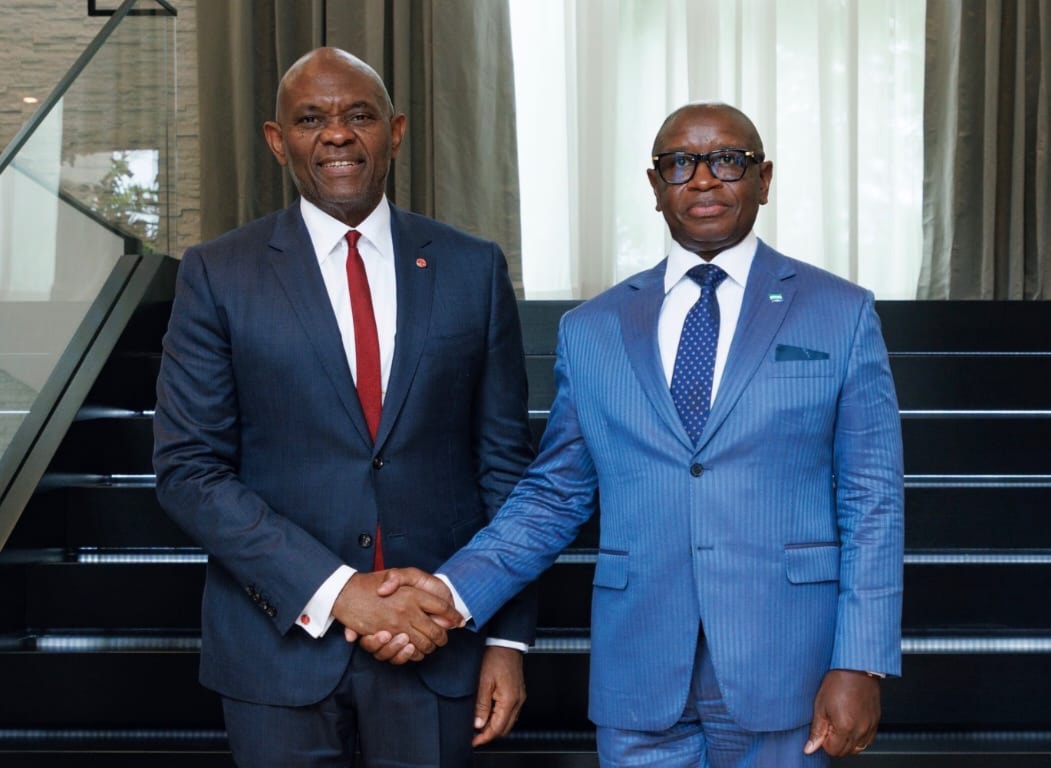
Heirs Holdings, the pan-African investment group founded by African investor and philanthropist Tony O. Elumelu, CFR, will play a leading role at the inaugural West Africa Integration andĥ Investment Summit (WAIIS 2026), taking place November 16–18 in Sierra Leone.
As a Principal Partner of the Summit, the Group is bringing its senior business leadership, investment expertise and extensive operating experience across critical sectors of the African economy to advance the region’s integration and investment agenda.
Mr Elumelu, Group Chairman of Heirs Holdings and a member of the Summit’s Private Sector Advisory Board, is leading private sector mobilisation for the event, convened under the leadership of His Excellency Julius Maada Bio, President of Sierra Leone.
He will be joined by senior executives from across the Group’s portfolio, including Obong Idiong, CEO of Heirs Technologies, who will speak at the Investment Opportunity Session on connecting West Africa’s markets through payments, data and digital networks and Peter Ikenga, CEO of Transcorp Power, who will co-chair the power session alongside Mamadou Sangafowa-Coulibaly, Côte d’Ivoire’s Minister of Mines, Oil and Energy.
The Summit brings together African Heads of State, policymakers, institutional investors, development finance institutions and business leaders to accelerate economic integration and unlock investment opportunities across West Africa.
A longstanding advocate of Africapitalism and a business turnaround expert, Elumelu champions the principle that Africa’s development must be driven by African entrepreneurs and businesses, with long-term private investment creating both economic and social wealth. His leadership at WAIIS reflects a conviction that regional integration must move beyond policy commitments to practical commercial partnerships, cross-border investment and the development of competitive African enterprises.
Heirs Holdings’ prominent role at WAIIS is reinforced by its scale, investment footprint and track record of building businesses across sectors critical to Africa’s economic transformation. As of 31 March 2026, the value of its portfolio companies stood at approximately US$15.08 billion. With investments and operations spanning 24 countries and a workforce of more than 40,000 people across the Group and its portfolio companies, Heirs Holdings is a significant pan-African private-sector investment platform.
For Heirs Holdings, West African integration represents a significant opportunity to expand the region’s economic potential and attractiveness to investors. A more connected region creates larger markets, strengthens intra-regional trade, facilitates the movement of capital, attracts investment, creates jobs, and enables African businesses to achieve greater scale and compete more effectively in the global economy.
As governments, investors and business leaders convene in Sierra Leone, Heirs Holdings reaffirms its commitment to working with public and private sector partners to turn regional integration into a commercial reality that will create lasting economic and social value across the continent.
Heirs Holdings is a leading pan-African investment company. Its investment portfolio spans the energy, power, banking, insurance and financial services, technology, real estate, hospitality and healthcare sectors, operating in twenty-four countries worldwide.
Heirs Holdings is inspired by Africapitalism, the belief that the private sector is the key enabler of economic and social wealth creation in Africa. Driven by this philosophy, Heirs Holdings invests for the long-term, bringing strategic capital, sector expertise, a track record of business success, and operational excellence to its portfolio companies.