
News
You Need to Know What Your Mother Is Sharing on Whatsapp, Don’t Mute Her


- /home/rhoncare/pointblank.ng/wp-content/plugins/mvp-social-buttons/mvp-social-buttons.php on line 27
https://pointblank.ng/wp-content/uploads/2019/04/Popoola.jpg&description=You Need to Know What Your Mother Is Sharing on Whatsapp, Don’t Mute Her', 'pinterestShare', 'width=750,height=350'); return false;" title="Pin This Post">
- Share
- Tweet /home/rhoncare/pointblank.ng/wp-content/plugins/mvp-social-buttons/mvp-social-buttons.php on line 69
https://pointblank.ng/wp-content/uploads/2019/04/Popoola.jpg&description=You Need to Know What Your Mother Is Sharing on Whatsapp, Don’t Mute Her', 'pinterestShare', 'width=750,height=350'); return false;" title="Pin This Post">
By Joel Popoola
To many Nigerians, WhatsApp is the internet. 85% of Nigeria’s 24 million internet users – over 17 million people – use the application to keep in touch with friends and family. Increasingly, it is their main source of news too.
Less affected by unreliable internet connections than other platforms and not needing users to create profiles or remember passwords, it’s particularly popular with older Nigerians. And having not grown up with the internet like younger generations, some users have yet to learn that they cannot trust everything they read.
Current “news” being shared on WhatsApp by well-meaning Nigerians includes Russian President Putin releasing lions onto the streets to enforce his country’s own coronavirus lockdown.
One Nigerian woman’s tweet about her mother placing an onion in the corner of every room to “absorb toxins” after being forwarded the “advice” from “the WhatsApp mother’s cult” was retweeted almost 50,000 times, with a worrying number of Nigerians admitting their mothers had done the same thing.
Some Nigerians have reported being so bored of their mothers sending them advice about which underpants apparently give you cancer that they are muting them.
This is the wrong thing to do.
Think about the COVID-19 crisis. Thanks to WhatsApp, some Nigerians are – as we speak – sharing a video of the coronavirus leaving the Earth in the form of a giant flying dragon.
It may sound silly, but we all know older people are the most at risk from the deadly disease. If they don’t take the necessary steps to keep themselves safe because they believe this crisis is over as COVID-19 has taken the form of an enormous winged reptile and flown off into space, this nonsense could even become a matter of life and death.
Another COVID-19 myth doing the rounds on African social media was the story of Chinese-owned businesses being destroyed across Nigeria. The video in question actually showed a street market in Ibadan on fire, but the video was viewed over a million times before Twitter removed it.
Younger generations of Nigerians are more digitally literate than their parents and grandparents. Instead of tuning out, they have a responsibility to educate and enlighten their relatives – as infuriating as it is.
Or, they could direct them to more reliable information.
I am the founder of the Digital Democracy project, created to use technology to bring people and politics closer together. One of our initiatives is the Rate Your Leader app. Using the free app, users are put in direct person-to-person contact with their local politicians. That way they can get information straight from the people who really know what they are talking about.
Of course, we are not so naive to believe that all politicians will give you good information.
America’s President Trump has recommended fighting the coronavirus by drinking bleach, whilst Tanzanian President John Magufuli has recommended inhaling steam to kill off the virus. Despite coming from world leaders both these pieces of information were wrong and potentially dangerous.
So this is where the rating comes in. If a politician gives out wrong information, voters can rate them badly. That way, their neighbours can objectively see if this source of information is a reliable one.
As our nation celebrates Democracy Day this week is it important not just to celebrate the restoration of democracy to Nigerian but to think about its future. A future where Nigeria is Africa’s first truly digital democracy.
For the first time in our nation’s history, digital technology gives everyone the same access to information, and literally puts it in the palm of their hand.
But this information must be the right information.
Information which comes unfiltered from our political leaders and institutions, delivered in the spirit of transparency and accountability, carries the watermark of credibility that no alternative source can match.
And if people publically endorse those sources of information, it creates a virtuous circle of improved trust in those leaders and institutions, and wider democratic engagement.
To some, this might sound a daunting challenge. But it is better than having your mother put an onion in the corner of every room.
Joel Popoola is a Nigerian tech entrepreneur, digital democracy campaigner and creator of the free Rate Your Leader app. Contact us via Joel@rateyourleader.com


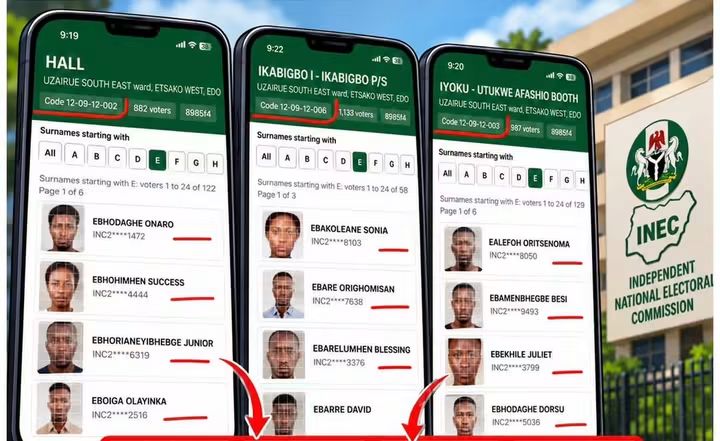
The Independent National Electoral Commission (INEC) has attributed the appearance of suspected artificial intelligence-generated photographs and other questionable entries in its preliminary voter register to irregularities allegedly introduced by some registration officers.
The commission’s Director of Information and Communication Technology, Dr. Lawrence Bayode, disclosed this during an interview on Arise Television on Friday.
Bayode explained that some registration officers across the country allegedly used their login credentials to introduce irregular records into the voter database.
He said INEC uncovered the questionable entries through its Automated Biometric Identification System (ABIS), which was deployed to examine the registration records.
“We have registration officers on the field. And these registration officers, they have login details to log into the system.
“So what we have found is that some of these registration officers, not all of them now, some of them across the states nationwide, they’ve done different things to bring these irregularities onto the register,” he said.
The ICT director explained that while some of the suspicious photographs were generated using AI, others were products of poor registration procedures.
“Some of these pictures are AI-generated. Some of them not AI-generated, but very bad registration. And this thing got into the register by the registration officers and because they have access to register people,” Bayode said.
“When the ABIS was run on the system, we saw these people. We know what they did. We know how they did it. But honestly, I don’t know why,” he added.
Bayode said INEC has begun cleaning up the voter register before making the preliminary version available to the public, noting that the exercise is being carried out within the statutory 90-day period.
His disclosure follows concerns raised over suspicious photographs and other discrepancies after the commission uploaded its preliminary register of voters to its website on October 26.
Screenshots circulated on social media had shown photographs suspected to be AI-generated attached to voter records in parts of Edo State.
Other complaints involved alleged duplicate entries and reports by some registered voters that their details were missing from the online register.
INEC had earlier explained that the online version was the same preliminary register displayed physically at Registration Areas across the country from October 9 to 15 for the Display, Claims and Objections exercise.
In a statement issued on October 27, the commission said it had identified and flagged some questionable records during the physical display and had commenced a review to correct the irregularities.
It also clarified that the published document was not the final certified register, adding that the online release did not capture all the data-cleanup activities still underway.
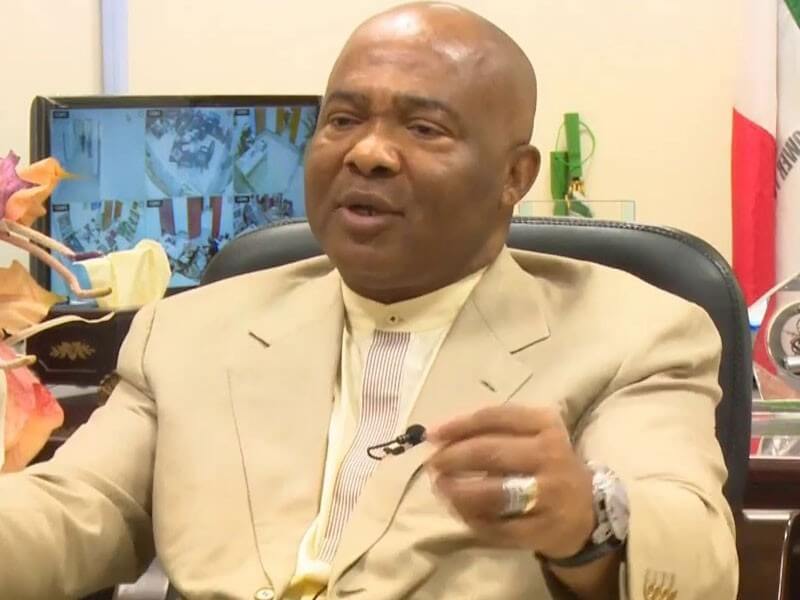
A Federal High Court in Abuja has ordered the Independent National Electoral Commission (INEC) to replace Imo State Governor Hope Uzodinma with former governor Rochas Okorocha as the All Progressives Congress (APC) candidate for Imo West Senatorial District in the 2027 general elections.
Justice Obiora Egwuatu gave the order on Thursday, ruling that Uzodinma did not win the APC senatorial primary election conducted on May 18 and monitored by INEC.
Egwuatu consequently directed INEC to remove Uzodinma’s name from the list of candidates for the senatorial district and publish Okorocha as the winner of the primary.
The court also ordered the APC to submit Okorocha’s name to INEC as its candidate for the Imo West Senatorial District in the 2027 elections.
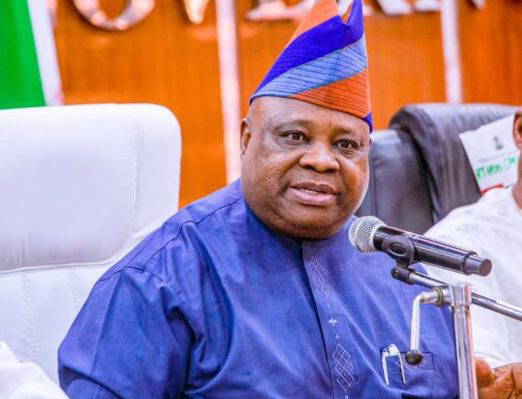
Osun State governor, Senator Ademola Adeleke, has dismissed reports suggesting he reached an agreement with the All Progressives Congress (APC) to share legislative and local government positions, insisting that his political alliance with the Presidency is focused on the 2027 presidential election.
The governor’s position was contained in a statement by his spokesperson, Olawale Rasheed, following social media reports claiming that the alleged deal would see the Osun Accord and the state APC share positions in the Senate, House of Representatives, State Assembly and local governments.
Adeleke reaffirmed his commitment to the re-election of President Bola Tinubu, but described reports of an agreement to share offices with the APC as “mere fabrication and fake news”.
He said negotiations to resolve the local government crisis in Osun were aimed at protecting the interests of both APC chairpersons and elected Peoples’ Democratic Party (PDP) chairmen and councilors.
“As the governor of all Osun indigenes and residents, we are working to resolve the local government matter by ensuring that all interests are protected and cared for. As at now, all stakeholders agreed that restoring grassroots governance is a condition for our successful campaign ahead of the 2027 elections,” the governor reportedly said.
Adeleke expressed confidence that the local government crisis would be resolved before the end of the year.
He, however, maintained that the political alliance with the Presidency did not extend to legislative elections, stressing that candidates of different parties would compete for those positions.
“As I said while inaugurating the Presidential Campaign Council, the coalition is targeted at the presidential election. Partners agreed to join hands to ensure our dear president is re-elected. All other legislative positions are open for competition. I will work and campaign for Accord candidates for Senate, House of Representatives and the State House of Assembly,” he said.
The governor urged political parties to campaign for their candidates, insisting that the electorate would determine the outcome of the legislative contests.
“I urge all political parties to campaign for their candidates as I will do for Accord candidates. We have no deal on the National Assembly and the State Assembly elections. All our candidates will face the electorate who has the final say,” Adeleke added.


