Business
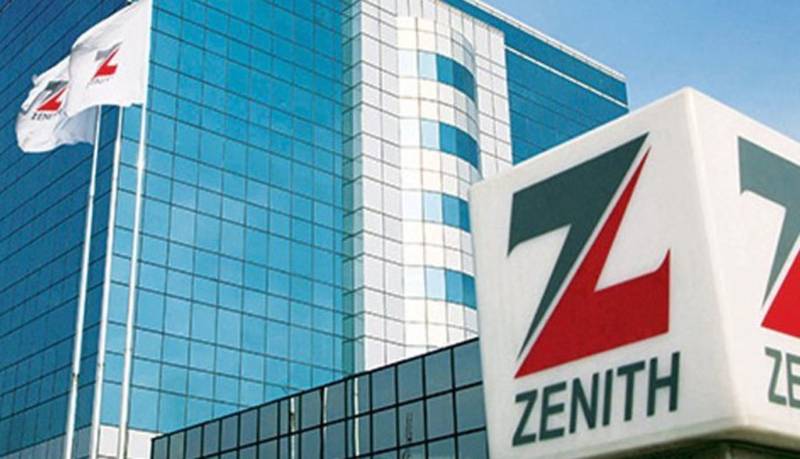
Zenith Bank Sustains Market Leadership with 189% Growth in Q1 Earnings

- /home/rhoncare/pointblank.ng/wp-content/plugins/mvp-social-buttons/mvp-social-buttons.php on line 27
https://pointblank.ng/wp-content/uploads/2022/03/Zenith-Bank-1024x587-1.jpg&description=Zenith Bank Sustains Market Leadership with 189% Growth in Q1 Earnings', 'pinterestShare', 'width=750,height=350'); return false;" title="Pin This Post">
- Share
- Tweet /home/rhoncare/pointblank.ng/wp-content/plugins/mvp-social-buttons/mvp-social-buttons.php on line 69
https://pointblank.ng/wp-content/uploads/2022/03/Zenith-Bank-1024x587-1.jpg&description=Zenith Bank Sustains Market Leadership with 189% Growth in Q1 Earnings', 'pinterestShare', 'width=750,height=350'); return false;" title="Pin This Post">
Zenith Bank Plc has announced its unaudited results for the first quarter ended 31st March 2024, with an impressive triple-digit growth of 189% in Gross Earnings, from ₦270 billion reported in Q1 2023 to ₦781 billion in Q1 2024. This is despite the challenging operating environment and tightening monetary policy stance.
From the unaudited statement of account submitted to the Nigerian Exchange (NGX) on Friday, 3rd May 2024, this impressive growth in the topline also enhanced the bottom line, as profit before tax (PBT) rose to ₦320 billion in Q1 2024, representing an increase of 270% from the ₦87 billion reported in Q1 2023. Profit after tax (PAT) equally grew significantly by 291% from the ₦66 billion reported in Q1 2023 to ₦258 billion in the current period.
Interest and non-interest income contributed significantly to the growth in gross earnings. Interest income grew by 155% from the ₦192billion reported in the quarter ended March 2023 to ₦489 billion in the period to 31 March2024. The growth in interest income is due to the repricing of risk assets, owing to the increase in the central bank’s Monetary Policy Rate (MPR), which currently stands at 24.75%.The growth in net interest income is primarily due to the increase in fees and commissions as well as trading grains.
The Group reported an impairment charge of ₦56 billion for Q1 2024, up from ₦8 billion recorded in Q1 2023. This is attributable to significant growth in risk assets, primarily driven by the revaluation of its USD loans, which necessitated additional impairment on the bank’s foreign currency-denominated loans.
The cost of funds grew by 48% from 2.7% in Q1 2023 to 4% in Q1 2024 due to the high-interest rate environment, while interest expense increased by 157% from ₦71 billion reported inQ1 2023 to ₦182 billion in the period to March 2024. Notwithstanding the year-on-year(YoY) increase in interest expense, net interest margin (NIM) grew by 20% from 6.9% in the3 months ended March 2023 to 8.3% in the current period ending 31 March 2024. Return on Average Equity (ROAE) and Return on Average Assets (ROAA) increased year-on-year (YoY) by 114% and 119%, respectively, due to improved profitability.
Gross loans, which are largely funded by customer deposits, grew by 30% from ₦7.1 trillion in December 2023 to ₦9.2 trillion in March 2024. Customer deposits also grew by 11%from ₦15.2 trillion in December 2023 to ₦16.8 trillion in March 2024, underpinning continued customer confidence in the Zenith brand. Total assets increased by 19% to ₦24 trillion within the same period.
The Group has consistently maintained all prudential ratios well above the minimum regulatory requirement. At the end of Q1 2024,Capital Adequacy Ratio (CAR) andLiquidity Ratio stood at 20% and 67%, respectively, demonstrating the Group’s ability to maintain a strong and liquid balance sheet.
The Group is making progress on the planned capital raise to support future growth and is very optimistic about meeting the new minimum capital requirements in line with the CBN’s recapitalisation directive. As the Group accelerates migration to its new technology architecture and alsotransitions into a holding company, it remains poised to maximise value for all stakeholders.



While conversations about the future of retail increasingly focus on supermarkets, shopping malls and online shopping platforms, millions of African consumers continue to rely on a more familiar and accessible business: the neighbourhood shop.
From small provision stores and corner shops to kiosks and informal retailers, these businesses remain an important part of everyday commerce, connecting communities to essential household products. However, behind their convenience lies a supply chain challenge that often limits their growth.
For many small retailers, sourcing products, managing inventory and securing enough working capital to keep their shelves stocked can be difficult. Fragmented distribution networks, multiple intermediaries and limited access to financing often make it harder for them to compete and expand.
Technology is beginning to offer a different possibility.
Digital platforms can simplify the way neighbourhood retailers purchase goods by connecting them more directly with manufacturers and distributors. They can streamline ordering, improve product availability and make inventory management more efficient.
Access to financial technology can further strengthen these businesses by helping eligible retailers secure the working capital required to replenish stock, respond to customer demand and grow sustainably.
One Nigerian technology company working to address these challenges is TradeDepot, which is using digital innovation to connect small retailers with manufacturers and distributors.
By making product sourcing and distribution more efficient, the company is helping to address some of the longstanding barriers facing small businesses in Africa’s retail sector.
However, scaling technology-driven solutions across a fragmented retail market requires more than innovation. It also demands significant investment.
This is where development finance and venture capital become important.
Through Boost Africa, the European Investment Bank (EIB) invested in Partech Africa Fund, a venture capital fund that subsequently backed TradeDepot. The investment illustrates how development finance can reach innovative African businesses through investment funds, providing capital to companies working to solve real economic challenges.
Boost Africa is a joint initiative of the European Investment Bank and the African Development Bank, with support from the European Union. The initiative supports African businesses and strengthens the continent’s entrepreneurial ecosystem by improving access to finance and opportunities for growth.
The wider significance of this investment goes beyond the technology platform itself. Strengthening neighbourhood retailers can contribute to more efficient supply chains, support small business growth and improve access to everyday consumer goods across communities.
For Africa, where small retailers remain central to local economies, the opportunity is substantial.
The future of retail may not necessarily involve replacing traditional neighbourhood shops with large supermarkets or online marketplaces. Instead, it could depend on equipping these existing businesses with better technology, stronger distribution networks and improved access to finance.
Ultimately, transforming retail may begin with something as familiar as the shop around the corner.
Boost Africa: From Capital to Impact.
Watch how TradeDepot is bringing commerce closer to communities through technology and investment

Ever wondered how the products on your neighbourhood shop shelves get there? Behind everyday purchases is a supply chain that can be costly, complex and inefficient, particularly for small retailers.
Nigerian technology company TradeDepot is changing this process by using technology to connect small retailers with manufacturers and distributors, making it easier for shop owners to order and receive the goods they need.
But transforming retail distribution takes more than an innovative idea. It requires investment to build, expand and scale.
Through Boost Africa, the European Investment Bank (EIB), alongside the African Development Bank and with support from the European Union, is helping strengthen the financing ecosystem for innovative African businesses.
One example is the EIB’s investment in Partech Africa Fund, which subsequently backed TradeDepot, helping channel capital into a Nigerian business working to improve how goods move from suppliers to neighbourhood shops.
The impact goes beyond technology. More efficient distribution can help small retailers access inventory, strengthen connections between manufacturers and suppliers, and bring commerce closer to the communities they serve.
Ultimately, TradeDepot’s story demonstrates how investment can go beyond funding to support stronger businesses, more efficient markets and opportunities for small retailers.
Boost Africa: From Capital to Impact.
Watch how TradeDepot is bringing commerce closer to communities.
▶ https://www.youtube.com/watch?v=zw9t2asF9Pc
Business
Beyond University Degrees: How ChipMango is Preparing African Engineers for Global Tech Industry

A university degree is a starting point, but practical industry experience can make all the difference.
Nigerian technology company ChipMango is bridging the gap through specialised semiconductor training and real-world chip design and verification projects, preparing African engineers for opportunities in the global technology industry.
Through Boost Africa, the EIB, AfDB and EU are strengthening the investment ecosystem supporting innovative African businesses.
Watch the video to discover how ChipMango is connecting engineering talent to real industry opportunities.
Watch the video: