
Metro
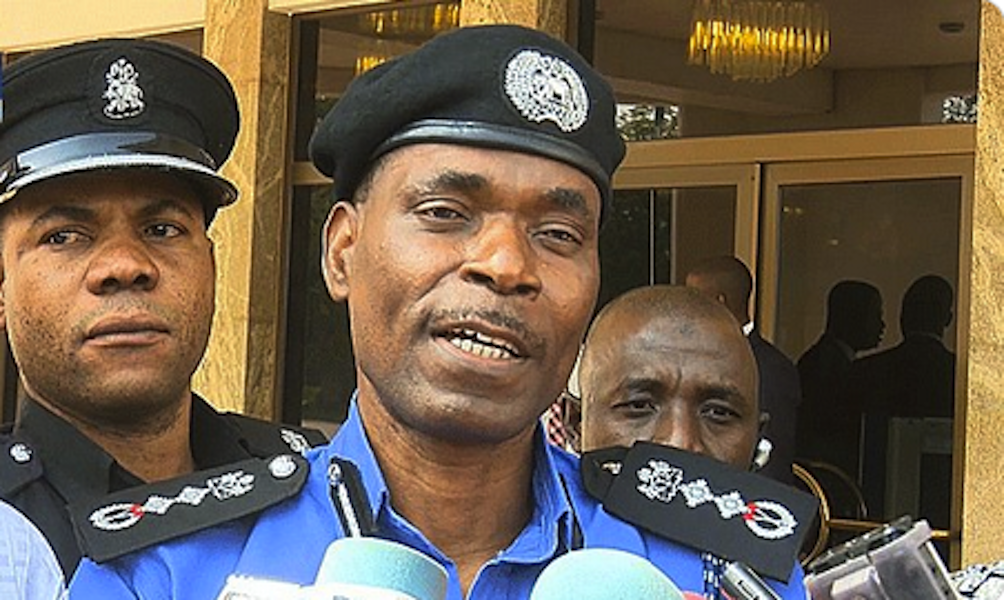
Bandits Demand N100m for Six ASPs in Katsina Kidnappers’ Den

- /home/rhoncare/pointblank.ng/wp-content/plugins/mvp-social-buttons/mvp-social-buttons.php on line 27
https://pointblank.ng/wp-content/uploads/2019/04/IGP-Adamu-1000x600.png&description=Bandits Demand N100m for Six ASPs in Katsina Kidnappers’ Den', 'pinterestShare', 'width=750,height=350'); return false;" title="Pin This Post">
- Share
- Tweet /home/rhoncare/pointblank.ng/wp-content/plugins/mvp-social-buttons/mvp-social-buttons.php on line 69
https://pointblank.ng/wp-content/uploads/2019/04/IGP-Adamu-1000x600.png&description=Bandits Demand N100m for Six ASPs in Katsina Kidnappers’ Den', 'pinterestShare', 'width=750,height=350'); return false;" title="Pin This Post">
The bandits holding six Assistant Superintendents of Police captive in Katsina State for over one week are demanding N100m ransom for their release.
The PUNCH gathered that the ASPs were among the nine who were just promoted to their current rank. They were attached to the Mobile Police Squadron 6, Maiduguri, Borno State.
Findings on Wednesday indicated that they were demobilised from the riot unit and eight of them were on their way to the Zamfara State Police Command on transfer when they were ambushed in the Dogondaji area of Katsina State and taken into the forest.
A reliable police source explained that the nine ASPs were planning to go to Zamfara State together but one of them changed his mind at the last minute while the others embarked on the trip in a commercial bus.
On getting to Kano, the driver was said to have asked them to join another vehicle as his bus had developed a fault.
The source said, “When they were released to go to Zamfara, they scheduled a day for the trip from Maiduguri, but one of them said he wasn’t comfortable with the trip and declined to join them. He said he had something to do and promised to join them in Zamfara later.
“So, the eight others left, but on getting to Kano, the driver said he couldn’t continue the journey to Zamfara, because his vehicle had developed a fault. They joined another vehicle and on their way around Dongodaji in Katsina State, the bandits accosted and kidnapped them.
“While being taken away, two of them escaped and one of them was shot in the leg though he didn’t die. He found himself at a village and the villagers took him to a police station and he was taken to a hospital. The other six officers are still with the bandits who are demanding N100m ransom.”
A senior police officer said the Commander, Mopol 6, could not account for the men when asked about their abduction, adding that he referred inquiries on the missing men to the Zamfara State Police Command.
The officer explained that the normal procedure was for the commander to send a signal to the Zamfara command informing it that he had released the nine ASPs, but he allegedly failed to follow the official procedure.
The source stated, “The problem came from the Commander, Mopol 6, their former squadron leader, who released them on transfer to Zamfara. He was supposed to relay the information on the kidnap incident, but he said he didn’t know about it when he was asked; instead, he referred inquiries to the Zamfara State Police Command.
“The commander should have sent a signal that the men had been released to go to Zamfara, but he didn’t do that. Normally, the Zamfara command would send a signal to Borno confirming that the men had resumed.”
Findings indicated that the families of the missing police officers were anxious about the safety of their breadwinners following the N100m ransom demanded by the bandits.
It was learnt that the families were attempting to raise N3m for the release of the captives or N500,000 each.
The Force spokesman, DCP Frank Mba, had yet to respond to inquiries on the incident as he did not respond to calls and SMS sent to his mobile telephone as of the time of filing in this report.
When contacted by one of our correspondents, one of the officers, who escaped from the abductors, said he was too weak to recount the incident.
“I have high BP (blood pressure); I just came back from a check-up. I cannot remember everything now. The incident happened on Sunday along the Katsina-Gusau Road,” he simply said.
The Public Relations Officer, Borno State Police Command, DSP Edet Okon, said there was no reported case of policemen from the command being abducted, adding that the alleged victims were no longer serving at the command because they had been transferred.
“The Borno State Police Command has not received any signal in respect of her officers being abducted. The alleged abduction of officers is still unknown to us as we have yet to receive any alert on the matter. That is the official position of the command as of this moment,” Okon stated.
When one of our correspondents visited the Mopol 6 base in Maiduguri, he observed that police personnel were overwhelmed by the kidnap of their colleagues, which came weeks after some of their men were killed and several others injured during an attack on the convoy of the Borno State Governor, Prof. Babagana Zulum.
The mood in the barracks was very sober with little or no activity going on except for a few anti-riot policemen in uniform clustered in groups obviously discussing the incident.
It was gathered that some personnel of the command were recently attacked at the Bama Local Government Area of the state and the latest development had dampened the morale of the policemen.
The PUNCH did not see women and children in the barracks except for a few at the market square.
Except for the command headquarters, where some cops were sighted sitting under trees and in other strategic locations, the entire barracks, which houses a police training college, state police command and Mopol 6 base, was scanty.
The Punch


The FCT Council of the Nigeria Labour Congress (NLC) has declared an indefinite strike across the Federal Capital Territory, directing workers in the public and private sectors to shut down schools, hospitals, government offices and other establishments.
The strike began on Wednesday, October 7, following the expiration of a seven-day ultimatum issued to the FCT Administration (FCTA) over the promotion of teachers.
The labour council said the FCTA failed to satisfactorily address its demands, particularly its call for the removal of the requirement for vacancies before teachers can be promoted.
The dispute centres on the FCTA’s position that teachers can only advance when vacancies are available. The NLC said the policy has contributed to years of career stagnation among teachers and is not applicable to the teaching profession.
In resolutions signed by its Chairman, Comrade Knabayi Adalo, the council argued that FCT teachers are not core civil servants or pool staff and should therefore not be subjected to a vacancy-based promotion system designed for pool officers.
It said teachers recruited by the FCT Universal Basic Education Board, UBEB, and FCT Secondary Education Board, SEB, were employed specifically to teach and should be promoted “as and when due.”
The NLC is also demanding that teachers who became eligible for promotion in 2025 be allowed to sit for their promotion examination before or alongside the 2026 candidates.
Another demand is the withdrawal of redeployment and demotion letters issued to directors who benefited from the Harmonised Retirement Age for Teachers Act, 2022.
The council is further calling for the immediate reinstatement of the dissolved management teams of FCT SEB and FCT UBEB.
The decision to commence the strike was taken at the council’s State Executive Council, SEC, meeting held on October 6, at the NLC FCT Secretariat.
At the meeting, the labour body rejected the FCTA’s response to its ultimatum, describing it as “neither clear, positive, nor genuine.”
According to the SEC, the response did not address the vacancy requirement, which it described as the “root cause of career stagnation”, and was also silent on what the council called the “illegal redeployment of directors.”
“The response of the FCTA is ambiguous and totally unacceptable,” the SEC said.
The council added that it “will no longer tolerate the continued dehumanisation of FCT teachers through obnoxious policies alien to the teaching profession.”
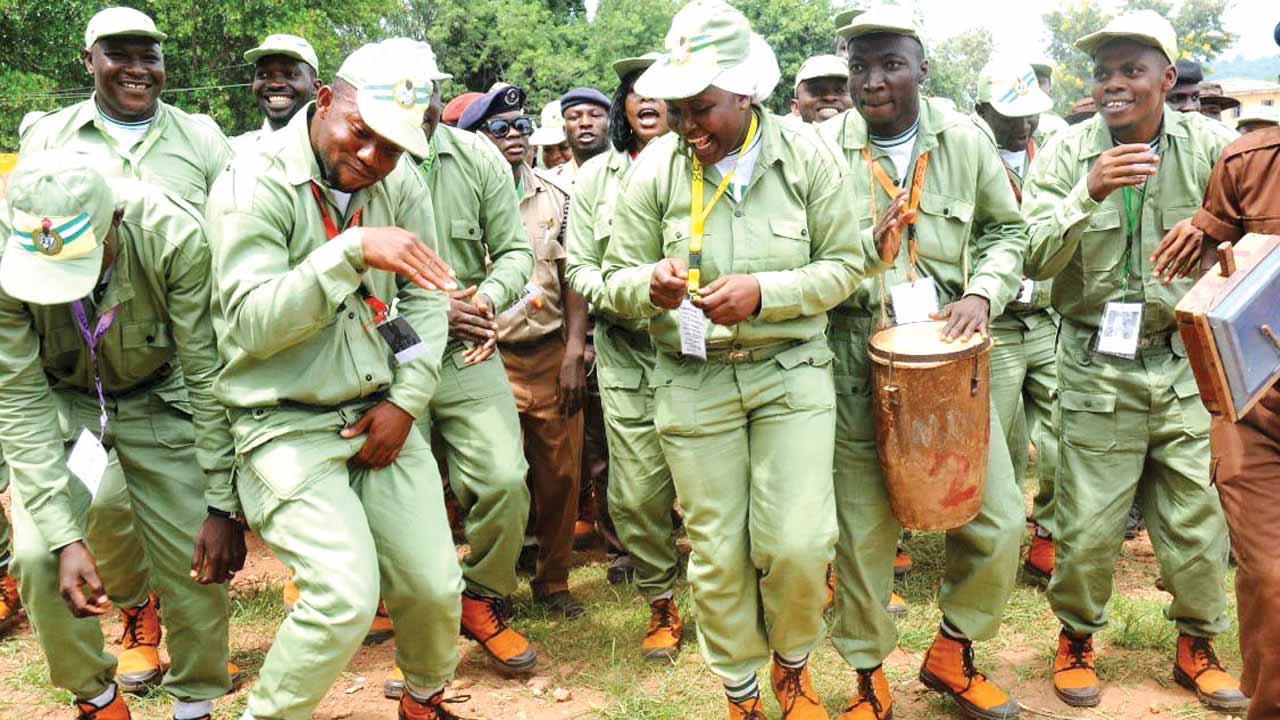
The 20 prospective National Youth Service Corps (NYSC) members and one other abducted along the Owerri-Onitsha Road in Imo State have regained their freedom.
The victims were rescued from the Amakohia-Ubi forest in Owerri West Local Government Area of the state following a coordinated operation involving security agencies.
They have since been taken to the Department of State Services (DSS) Hospital in Owerri, where they are receiving medical attention and undergoing necessary medical checks.
The Director-General of the National Youth Service Corps Brigadier General Olakunle Oluseye Nafiu visited the DSS Clinic in Owerri, where he addressed the rescued victims.
He was in company of the Imo State Commissioner of Police, Director DSS and Brigade Commander 34 artillery Imo State.
Details of the operation, including whether any arrests were made or ransom was paid, have not yet been made public.
However, in a statement issued by the Force Public Relations Officer, Ani Iniedu, the police said, “Efforts are ongoing to apprehend those responsible for the abduction, as the Police and other security agencies sustain coordinated operations towards bringing all culpable persons to justice.”
The victims were abducted on October 1 while travelling from Ibadan, Oyo State, to NYSC orientation camps in Abia and Akwa Ibom states.
The two buses conveying the prospective corps members came under attack near Umunoha in the Mbaitoli Local Government Area of Imo State.
Following the abduction, security agencies launched a coordinated search-and-rescue operation to locate the victims and their abductors.
The Imo State Police Command later said its operatives had located the kidnappers’ camp through drone surveillance but were unable to immediately enter the location because it was reportedly mined with improvised explosive devices (IEDs).
The police subsequently deployed additional operational assets, including bulldozers and armoured personnel carriers, as efforts intensified to reach the victims.
The development also triggered anxiety among the victims’ families after reports that the abductors were demanding ₦50 million for each victim.
Police had earlier confirmed that 10 victims were rescued following the attack, while efforts continued to locate the remaining abductees.
The latest development brings an end to the ordeal of the 20 corps members and the other abducted victim, who have now been reunited with safety and are receiving medical attention in Owerri.
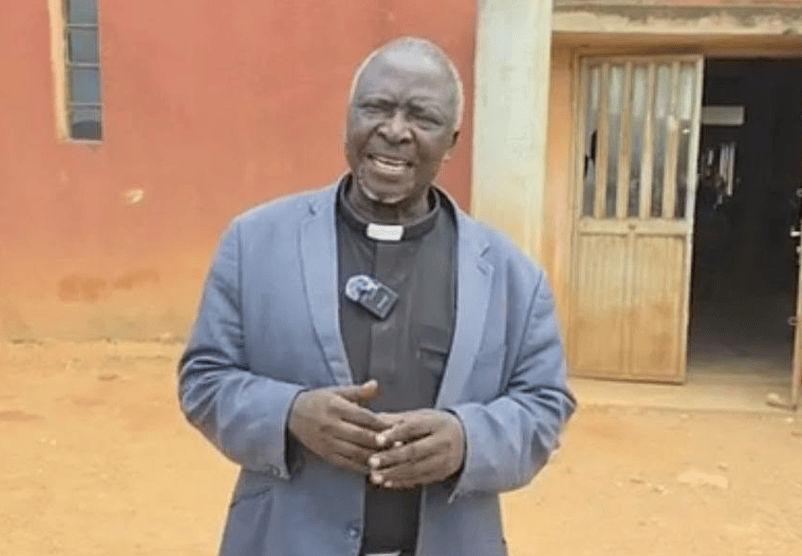
The Regional Chairman of Church of Christ in Nations (COCIN), Barkin Ladi Local Government Area of Plateau State, Rev. Ezekiel Dachomo, has denied reports that he prayed for the re-election of President Bola Tinubu and Vice President Kashim Shettima in the 2027 presidential election.
Dachomo, who is currently in Israel on what he described as his first International Christian Advocacy Tour, said his visit was aimed at drawing the attention of world leaders to the plight of Christians in Plateau.
The cleric made the clarification in a social media post on Monday night following reports that he had prayed for the success of the All Progressives Congress (APC) presidential ticket and expressed support for the Muslim-Muslim ticket.
Dachomo said his earlier post, in which he prayed for Nigeria, had been misconstrued as an endorsement of Tinubu and Shettima ahead of the 2027 election.
According to him, there was nowhere in the post where he prayed for the President and Vice-President to win the election.
“People are trying to frame me, saying I prayed for a Muslim-Muslim ticket. But I did not, and I will never pray for a Muslim-Muslim ticket because Nigeria belongs to both Muslims and Christians,” he said.
Dachomo said his prayers were for the well-being and success of Nigeria and its citizens, irrespective of their religious affiliations.
“I pray for both Muslims and Christians in Nigeria. I pray for Nigeria to succeed. If you truly want to come to God, come with a clean heart,” he added.
The cleric further stated, “I did not pray for President Tinubu and Vice President Shettima to win in 2027. My prayers have always been for Nigeria to succeed.”
Dachomo’s clarification came amid reactions to his ongoing advocacy tour in Israel, where he is seeking international attention to security challenges and what he described as the persecution of Christians in Plateau.


