
Personality in Focus
Dignitaries Shower Encomiums on Tinubu at Launch of The Iconic by Samson Oki, Other in Lagos


The highly publicized book on Nigeria’s President-elect, Asiwaju Bola Ahmed Tinubu titled ‘THE ICONIC Bola Ahmed Tinubu: An Inspiration to African Youths’ was on Wednesday 12th April 2023 officially launched in an atmosphere of ceremonial grandeur and glamour at the lavish Grand Ballroom of the Oriental Hotel, Lagos. The 380-page book authored by two young media gladiators and the multi-award winning publisher of Trek Africa Newspaper, Oki Olatunji Samson and Abayomi Oyelami is a mentorship book written as a legacy of knowledge and wellspring of impetus for young Africans to learn on their road to greatness. Taking cues from the life of Nigeria’s President-elect, Asiwaju Bola Ahmed Tinubu, the book draws from his life of dedication, hard work, perseverance, and resilience, and his results are proofs.
The book hailed the sagacity, strength of capacity, willpower, and dexterity of the Aare Ago of Yorubaland and Jagaban of Borgu while using these qualities to challenge African youths to ‘take a retrospect at your life. When you were growing up, you had a lot of dreams and aspirations, where are they now? What are you doing about your own dream? Are you hungry for success? How far are you pushing for the realization of your vision? How much work are you putting into your life’s goals? ASIWAJU, the whole world knows, what about you? Hardwork will beat talent if talent does not work hard’.
It also features chapters and segments on the wife of President-elect, Senator Oluremi Shade Tinubu OON; the Vice President-elect, H. E. Senator Kashim Shettima; the President of the Republic of Liberia, H. E. George Manneh Weah; Uganda’s young presidential candidate and popular musician, Robert Kyagulanyi Ssentamu (aka Bobi Wine), media/PR giant and youth ambassador, Amb. Seyi Tinubu among other bigwigs.
Great personalities, royal fathers, young and old, from various parts of the world further sends in an array of tributes. The book has gained widespread commendation and prominence within Nigeria and outside the shores of the country.
The book launch which had the Chairman of the occasion, the Board Member of the Lagos State Security Trust Fund (LSSTF) and CEO of Executive Group, Dr. Ayo Ogunsan got the royal blessings of the Ooni of Ife, Arole Oodua of the Source, HIM Adeyeye Enitan Ogunwusi as represented by HRM Olalekan Anthony Fasesin, the Alade Okin of Oriade, Osun state; the youngest royal father in Yorubaland, HRM Oba Oloyede Adeyeoba Adekoya, Arujale Ojima of Okeluse, Ondo state; and Sarki overall of Alimosho LGA Hausa community, HRH Sarki Ahmed Kuraja.
The event cochaired by the Executive Secretary/CEO of Lagos State Security Trust Fund (LSSTF), Dr. Abdurrazaq Balogun was massively attended by the staunch advocates and disciples of Asiwaju Bola Ahmed Tinubu in Nigeria and the high and mighty from different parts of Africa who expressed high optimisms about the Renewed Hope Agenda which will deliver prosperity to the most populous Black nation.
The event also got the distinguished presence of the daughter of President-elect and Iyaloja-General of the federation, Chief Mrs. Folashade Tinubu Ojo who was represented by Mrs. Folashade Ogungboye; the Chairman/CEO of Nigerians in Diaspora Commission (NIDCOM), Hon Dr. Abike Dabiri-Erewa OON as represented by Mr. Dipo Odebowale, Head of NIDCOM Lagos; former Commissioner of Police, Lagos, AIG Hakeem Odumosu (retd); the Special Adviser (Special Duties & Intergovernmental Affairs) to Lagos State Governor, Hon. Mobolaji Ogunlende RAK; Commissioner, Lagos State Local Government Service Commission, Hon. Hakeem Ajasa Bamgbola; the SSA (Housing) to the Lagos State Governor, Hon. Abdul-Akeem Ayodeji Amodu; the Managing Director of Lagos State Waterways Authority (LASWA), Mr. Oluwadamilola Emmanuel.
Also in attendance were the Executive Chairman of Coker-Aguda LCDA, Hon. Rasaq Ibrahim Olamilekan; Convener, Asiwaju Distinguished Ambassadors Movement and Vice Chairman, Ikorodu LGA, Aarebinrin Folashade Olabanji-Oba; former FRSC Lagos Sector Commander, ACM Olusegun Ogungbemide as represented by ACC Esther E. Uzoma, FRSC Unit Commander Lagos Island; Bishop Dr. Osaze Williams from Republic of Liberia; Hon. Hammed Oladipupo, Council Leader, Itire-Ikate LCDA; CEO of Badinson Security, Mr. Matthew Ibadin; President, Evolving Women in Politics, Hajia Dr. Fatima Bello; National Treasurer, Evolving Women in Politics, Olori Aderonke Erinle; veteran Nollywood actor, Bose Joseph; foremost June 12 activist, Comrade Awa Bamiji; and CEO of Lillie’s Trend, Margaret Adewunmi among others.
Hailing the man that he always call ‘Daddy’, the Chairman of the occasion, Dr. Ayo Ogunsan said ‘some of us don’t call him by name, we call him Daddy because he has touched our lives. He is a Consultant-General for winning elections. Nigerians will experience a new moment with a man like him.’
‘I believe that this man will help us fix the broken walls in our country. He is a leader of leaders, a manager of men and resources, a distinguished Nigerian, and very passionate. I look at my life at the time when I met him and now for more than 20 years, I have to give kudos to this man.’
On his part, the Executive Secretary/CEO of LSSTF, Dr. Abdurrazaq Balogun remarked: ‘Most of the youths may have views about the personality of the President-elect Asiwaju Bola Ahmed Tinubu. But for me Asiwaju Bola Ahmed Tinubu is someone I have worked with closely. I have been under his tutelage for the past 21 years, I worked with him as a principal officer of the State Assembly when he was Governor.’
‘He will encourage us to build a very smooth relationship in the House despite our divergent views which sometimes the arguments can be heated. He is someone who protects the truth, has a large heart, despite our issues then, we passed a lot of iconic legislations which have been replicated across the country’, he added.
Speaking at the event, the Ooni of Ife, Arole Oodua of the Source, HIM Oba Adeyeye Enitan Ogunwusi who was represented by HRM Oba Olalekan Anthony Fasesin assured that ‘the traditional institution would continue to support every laudable project that brings unification to the country and encourage youths to aspire.’
The former Commissioner of Police, Lagos State Command, AIG Hakeem Odumosu (retd) said any book written or anything said about Bola Ahmed Tinubu is not more than what he has done, ‘Since my first encounter with him as a young commissioned police officer about 30 years ago, his spirit of forgiveness, a virtue, I have learnt from him as a quintessential leader, is golden. I have vowed to work with him and remain loyal till the last day.’
Sharing his personal encounter about the President-elect, Asiwaju Bola Ahmed Tinubu, the Special Adviser to Lagos State Governor on Special Duties and Intergovernmental Agency, Hon Mobolaji Ogunlende RAK commended the authors for their excellent job, adding that they were already replicating what THE ICONIC did by ‘grabbing the bull by the horns’.
‘The generation behind us will see these excellent work you have done. For Nigeria to be better, everyone has a role to play. Therefore, change and take responsibility of your community. Tinubu has set a template, a foundation for the youths’, Ogunlende remarked.
Also, the Senior Special Assistant (Housing) to Gov. Babajide Sanwo-Olu, Surveyor Ayodeji Amodu called on Nigerian youths to believe in the coming government headed by Asiwaju Bola Ahmed Tinubu. ‘Bola Ahmed Tinubu understood what the youths needed; the tenacity at which the youths needed to be inclusive in government. He is a man that believes in the youths and ensure that a lot of them were employed into the Civil Service in 2004. You can see the LASTMA, Kick Against Indiscipline (KAI) and Lagos State Neighbourhood Watch. These were people met to be street urchins, but employed them enmasse and can see what they been able to bring to the table.’
In a separate interview, the author Samson Olatunji Oki said the inspiration to write a book on the President-elect, Bola Ahmed Tinubu was birthed in 2015 during the presidential campaign trail of President Muhammadu Buhari at the Teslim Balogun Stadium in Lagos. ‘As a reporter craving for news, I stood close to him. I also realized that throughout the campaign, he didn’t really sit down. He looked very engaged. At a point, two chilled can coke were brought to him. He held it momentarily, opened one of it and gulped it. He took the second and did the same. From there, he moved straight to the podium to address the crowd. I thought about his personality and got inspired. He is rich, well connected and had lots of influences, yet, was so much committed. With his antecedents in government and how he has carried the youths along, I saw him as not only a role model, but a mentor and an inspiration to the African Youths.’
‘This is a book for the youths. Tinubu is an enigma; a person the youths can look up to for drive and inspiration. He is a man every youth should emulate. He carries everybody along – people of different culture and ethnic backgrounds – provided the person is talented. He is astatue and not biased’, said the awardwinning publicist cum media guru.
In the same vein, the co-author Abayomi Oyelami added that Asiwaju Bola Ahmed Tinubu’s dedication to humanity and preservation of democratic tenets were the driving force. ‘We actually started writing in 2018 and we are glad that in 2023, we have officially unveiled the book. It is a mentorship book that looks critically at the man Tinubu; the life style, personality and the dexterity he has displayed in life.’
The fellow of Young African Leaders Initiative (YALI) and nonprofit leader added: ‘Everytime I was writing this book, I remembered the story of the June 12 Presidential election annulment. This was a time the media was gagged but the name: Bola Ahmed Tinubu kept recurring. That was my first impression about him’.
‘He, with others, started Radio Kudirat – in honour of late Kudirat Abiola. I saw him as a man to be studied and people can learn from because in a true democracy, free press is a key component and that is why I like to say that Asiwaju Bola Ahmed Tinubu is a person both the youths and the media can learn from. Tinubu is, indeed, a leader. Let us learn from him’, Oyelami reiterated.


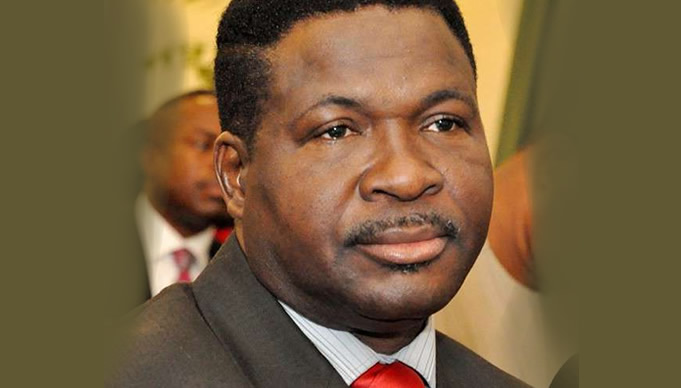
The Attorney General of the Federation (AGF) and Minister of Justice, Lateef Fagbemi (SAN), has taken over the criminal case brought against a senior lawyer, Mike Ozekhome (SAN), by the Independent Corrupt Practices and other related offences Commission (ICPC).
The development, however, stalled Ozekhome’s planned arraignment before a High Court of the Federal Capital Territory (FCT) on the three-count charge filed against him by the ICPC and in which he is accused of, among others, forgery.
At the day’s proceedings, the Director of Public Prosecution of the Federation, Rotimi Oyedepo (SAN), said he was representing the AGF and informed the court of the AGF’s decision to take over the case from the ICPC.
Oyedepo said the AGF was acting under his powers as provided in Section 174 of the Constitution.
Counsel for the ICPC, Osuebeni Akpomisingha, did not object to the takeover of the case by the AGF.
Similarly, a former Attorney General of the Federation, Kanu Agabi (SAN), who led a team of lawyers, comprising 15 SANs for the defence, also did not object to the takeover of the case by Fagbemi.
Upon an application for adjournment by Oyedepo, which was not opposed by Agabi, Justice Peter Kekemeke adjourned till February 24 for arraignment.
The Federal High Court Abuja had fixed January 26 to rule on the final forfeiture of a London property linked to a former Minister of the Federal Capital Territory (FCT), the late Jeremiah Useni.
The decision followed the failure of any individual or representative of Useni’s estate to appear within the 14-day statutory window to show cause why the property should not be forfeited to the Federal Government.
The proceedings arose from an ex parte application filed in late 2025 by the Code of Conduct Bureau (CCB), which sought an interim forfeiture and preservation order over the disputed property, alleging it was acquired with proceeds of unlawful activity.
On November 28, Justice Binta Nyako granted the interim forfeiture order, directing the CCB to advertise the order in a national newspaper within 14 days to invite “any person or body” with an interest in the property to come forward and prove legitimate acquisition.
The property is located on 79 Randall Avenue, London NW2 7SX; named in the property dispute are Ozekhome (SAN), and Useni, a retired Lieutenant-General.
The matter was filed at the First Tier Tribunal (Property Chamber) Land Registration, UK, under case number ref/2023/0155, with Tali Shani as the applicant and Ozekhome as the respondent.
The property had been claimed by one “Ms Tali Shani” on one hand and Ozekhome on the other.
The SAN said he received the house as a gift from “Mr Tali Shani” in 2021, while lawyers for “Ms Shani” insisted she was the rightful owner.
A witness known as “Mr Tali Shani” had testified in favour of Ozekhome, claiming that he had “powers of attorney” over the property and had transferred the property to the respondent (Ozekhome).
Mr Tali Shani asserted ownership of the property from 1993 and claimed he later appointed Useni as his property manager, describing Useni as an “elder friend and business partner”.
On the other hand, several documents, including an obituary announcement, NIN card, ECOWAS passport, phone number, etc were tendered by witnesses of Ms. Tali Shani to claim ownership of the property.
However, the tribunal found all the documents tendered for Ms. Tali Shani to be fake.
The tribunal subsequently dismissed all claims, ruling that neither “Mr” nor “Ms” Tali Shani existed.

Former Minister of Justice and Attorney-General of the Federation, Abubakar Malami (SAN), has accused the Department of State Services (DSS) of actions he said were aimed at frustrating his constitutional right to fair hearing and effective legal defence.
In a statement signed by his Special Assistant on Media, Mohammed Bello Doka, Malami said the continuous denial of access to his lawyers had impaired his ability to consult, prepare court filings and give instructions to his legal team.
He described the actions of the DSS as a clear frustration of due process.
“This sequence of events clearly suggests a pattern where arrest precedes investigation, with evidence sought after detention, an approach that is a blatant violation of the rule of law and constitutionally guaranteed rights,” the statement said.
“It is deeply troubling that the DSS appears to be adopting a similar practice of arrest, detention, and then evidence gathering.”
Malami recalled that following charges filed against him by the Economic and Financial Crimes Commission (EFCC), the Federal High Court granted him bail.
However, he alleged that the EFCC delayed submitting his international passports to the court for about one week, despite the documents being a key condition for the perfection of bail.
According to him, the delay unnecessarily prolonged his detention and obstructed the execution of a valid court order.
“Immediately after Mr. Malami eventually perfected his bail and was released from Kuje Custodial Centre, he was rearrested by the Department of State Services,” the statement said.
“He was thereafter detained for five days without access to his lawyers or family, and was only allowed to meet his legal team on Friday after prolonged isolation, delays, and grave violations of his fundamental human rights.”
It stressed that bail granted by a court must be respected.
“No agency should be permitted to neutralise judicial orders through coordinated delays, rearrests, or denial of access to legal representation. Such actions undermine the authority of the courts and pose a serious threat to fundamental human rights,” it said.
Malami reaffirmed his readiness to defend himself in court.
“Mr. Malami remains ready to defend himself fully in court and in accordance with the law, and calls on all state institutions to respect court orders, constitutional guarantees, and the rule of law.”
Personality in Focus
Commander Adesoji Speaks on Forest Guard’s Relevance to Nigeria’s Security Strategy
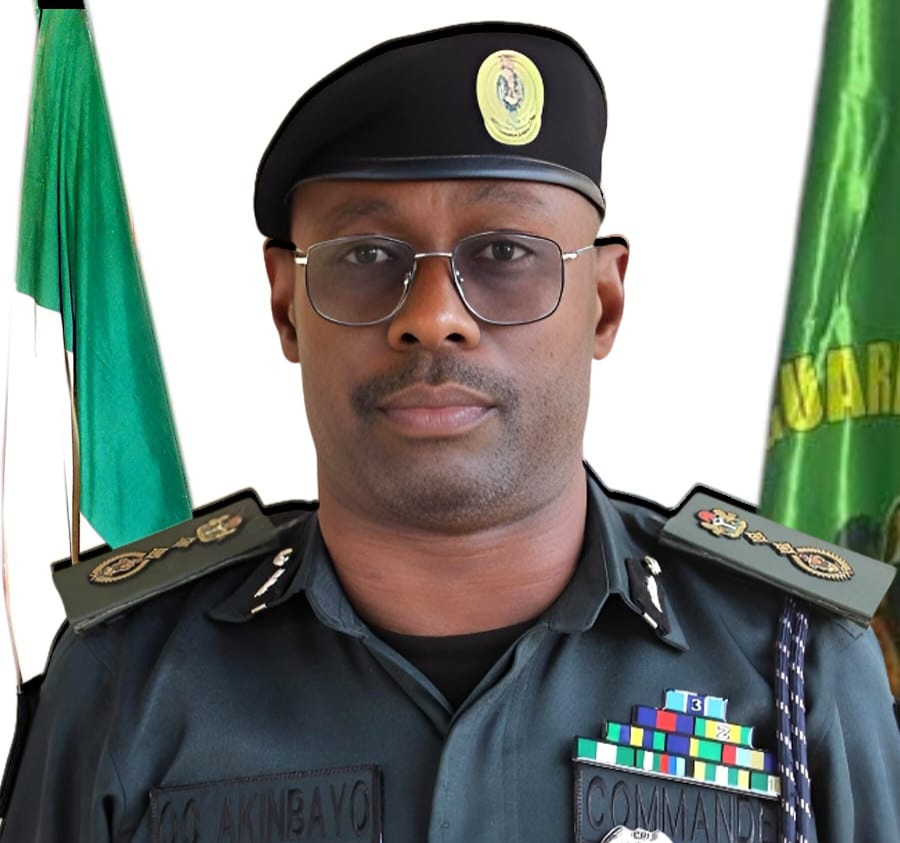
Across Nigeria’s vast forest belts, ungoverned spaces have increasingly become theatres for violent crime, farmer–herder conflicts, illegal grazing, banditry, arms movement, and environmental crimes. These forests are not isolated wildernesses; they are living corridors linking farms, rural settlements, trade routes, sacred sites, and border communities. As conventional security agencies face mounting pressure, Forest Guards are emerging as a critical but often under-examined layer of Nigeria’s internal security architecture, tasked with early warning, terrain control, community intelligence, and conflict prevention in spaces where insecurity often incubates unseen, National Association of Online Security News Publishers, NAOSNP can report.
Forest Guards operate closest to these fault lines. Their effectiveness, however, depends less on force and more on legitimacy. As was repeatedly emphasised at a recent national training in Osun State, forest security succeeds only when authority is exercised lawfully, professionally, and with the consent of the communities that live and work around forest spaces. Without this foundation, security operations risk collapsing into resistance, intelligence failure, and avoidable violence.
It was against this backdrop that the National Forest Guard Training Camp (“Forest Camp”) in Ila-Orangun, Osun State, hosted a set of strategic lectures in January 2026 aimed at redefining how forest security should be practiced in Nigeria. The sessions brought together recruits, rank-and-file operatives, and ward and sector formations from across the country to interrogate a central operational question: how can Forest Guards enforce the law effectively without becoming a source of fear in already vulnerable rural spaces?
The answer, according to the training, lies in a unified doctrine that places lawful authority, disciplined conduct, and community legitimacy at the heart of forest operations.
Delivered in an intensive 2–3 hour integrated format combining classroom instruction, guided discussion, and field-based application, the lectures focused on Ethics and Professional Conduct in Forest Security Operations and Community Engagement, Conflict Resolution, and Trust-Building in Contemporary Forest Policing.
Ethics as Law, Not Preference
Delivering the lectures, the Commander of the Enugu State Forest Guard (ESFG), Dr. Akinbayo O. Olasoji, Deputy Commissioner of Police (Rtd.), framed ethics as a legal obligation rather than a personal choice. He stressed that forest security authority is derived entirely from law and governance frameworks, not from uniforms, weapons, or discretion.
“Ethics in forest security is not a personal value judgment or discretionary behaviour,” he told participants. “It is a binding statutory obligation.”
He anchored this position in existing legal instruments guiding Forest Guard operations, including the Enugu State Forest Guard Law, 2020, the 1999 Constitution (as amended), the Enugu State Prohibition of Open Grazing and Regulation of Cattle Ranching Law, 2021, the Firearms Act, the Administration of Criminal Justice Act, and the Evidence Act, 2011, alongside public service rules and recognised law-enforcement ethics standards. Reinforcing a core operational doctrine of the ESFG, he declared: “Authority exists only within the law.”
BUILDING SECURITY THROUGH TRUST, NOT FEAR
Beyond legality, the lectures placed strong emphasis on community legitimacy as the foundation of effective forest security. Dr. Olasoji reminded operatives that forests are not empty spaces, but environments connected to daily human activity and livelihoods.
“Forests are not isolated zones,” he explained. “They are linked to farms, settlements, markets, footpaths, and sacred sites. That reality makes community partnership a decisive operational factor.”
According to him, the consequences of poor community engagement are immediate and severe. He warned that mistrust leads to intelligence breakdowns, delayed early warning, increased hostility toward operatives, and the escalation of minor disputes into violent confrontations, outcomes that ultimately endanger officers themselves.
In contrast, he argued, trust transforms communities into security partners. As he put it:
“Community engagement is not weakness; it is operational strength. Trust is a force multiplier. When you win the community, you win the forest.”
NON-NEGOTIABLE STANDARDS OF CONDUCT
The sessions translated ethical principles into concrete operational standards applicable to patrols, checkpoints, arrest support, intelligence handling, and inter-agency cooperation. Participants were reminded that public confidence and mission success rise or fall with officer conduct.
Among the non-negotiable standards reinforced were universal human-rights compliance, lawful and proportionate use of force, zero tolerance for torture, brutality, corruption, extortion, or record falsification, strict confidentiality of operational information and informant protection, and political neutrality.
Human-rights compliance, Dr. Olasoji stressed, “applies to everyone, always,” while the use of force must satisfy “lawfulness, necessity, and proportionality.”
Mandatory reporting of misconduct, supported by whistle-protection safeguards, was also emphasised as an institutional duty rather than an individual risk.
DECISION-MAKING UNDER PRESSURE
To strengthen field judgment, the lectures adopted a practical ethical decision model consistent with international enforcement doctrine: L-N-P-A — Legality, Necessity, Proportionality, Accountability.
Operatives were trained to ask four questions before acting: Is it lawful? Is it genuinely required? Is it the minimum reasonable response? Can it be defended openly, in writing, and before lawful authority?
The guiding rule, as repeatedly emphasised, was uncompromising:
“If you cannot defend it, don’t do it.”
EARLY WARNING AND CONFLICT PREVENTION
A major focus of the engagement lecture was early warning and early response. Participants were trained to identify indicators such as rumour patterns, unusual movement along forest corridors, resource-pressure signals linked to farmer–herder tensions, and enforcement-related triggers capable of igniting rapid conflict.
Forest Guards, Dr. Olasoji explained, are not merely enforcers but stabilisers.
“Forest Guards are peace managers,” he noted, “but they must operate strictly within legal limits.”
A standard dispute-management workflow was reinforced: Assess, Stabilise, Separate, Dialogue, Decide (Enforce or Refer), Document, Report, and Follow-up, with clear thresholds for referral to the Police, DSS, courts, and civil authorities.
HIGH-SENSITIVITY ENFORCEMENT: OPEN GRAZING
Given the sensitivity of open-grazing enforcement nationwide, the lectures stressed that operations must remain calm, law-based, non-discriminatory, and free of harassment, extortion, ethnic profiling, or improper impoundment. Ethical professionalism, participants were told, is central to preventing rural instability and escalation in mixed-use forest zones.
TRAINING, ACCOUNTABILITY, AND INSTITUTIONAL RESPONSIBILITY
The sessions employed scenario-based learning, decision drills, and misconduct case studies to ensure practical understanding. Ethics and community-engagement competence were presented as mandatory core requirements, forming part of refresher training and promotion criteria, with completion formally recorded in personnel files.
Responsibility for trust-building was distributed across the command structure, from state and zonal commands to sector, ward, and frontline formations, embedding accountability into institutional culture.
A BROADER NATIONAL LESSON
In one of the most quoted moments of the lectures, Dr. Olasoji told participants:
“A Forest Guard is a trust-bearer, not a power-holder. Uniform and equipment do not create authority; character does. Without integrity, authority collapses.”
Security analysts say the Ila-Orangun engagement underscores a broader national lesson: that sustainable forest security in Nigeria depends less on coercion and more on professionalism, legality, and partnership with communities.
As Nigeria continues to grapple with insecurity across rural and forested regions, the lessons from Ila-Orangun point to a clear conclusion—when Forest Guards operate within the law and with the people, forests shift from being security liabilities to strategic assets in national security management.


