Personality in Focus
Marwa: Birthday Tribute to an Enigma


- /home/rhoncare/pointblank.ng/wp-content/plugins/mvp-social-buttons/mvp-social-buttons.php on line 27
https://pointblank.ng/wp-content/uploads/2021/09/116569156_bubamarwamuhammadbubamarwanationaldruglawenformentagencychairman.jpg&description=Marwa: Birthday Tribute to an Enigma', 'pinterestShare', 'width=750,height=350'); return false;" title="Pin This Post">
- Share
- Tweet /home/rhoncare/pointblank.ng/wp-content/plugins/mvp-social-buttons/mvp-social-buttons.php on line 69
https://pointblank.ng/wp-content/uploads/2021/09/116569156_bubamarwamuhammadbubamarwanationaldruglawenformentagencychairman.jpg&description=Marwa: Birthday Tribute to an Enigma', 'pinterestShare', 'width=750,height=350'); return false;" title="Pin This Post">
By Femi Babafemi
The danger of writing a tribute to any high profile personality in Nigeria today is obvious: the writer runs the risk of being misrepresented as a political praise singer, or at times, time and tide can cast him as a bootlicker, especially, if the subject of his adulation suffers a reversal of fortune, materially or reputation-wise. But with Brig. Gen. Mohamed Buba Marwa (Retd), OFR, you can safely write an eulogy because, you can be sure that ten years later, his stock will remain bullish. So, as he clocks 68 today, September 9, 2021, any piece of writing about him is no piece of sophistry because Marwa has been as constant as the Northern Star in the affairs of leadership, as he is presently exhibiting as the Chairman and Chief Executive of the National Drug Law Enforcement Agency, NDLEA, where his exploits are making leadership such a fine art that gladdens the hearts of many Nigerians and international partners in this unending season of anomie.
Indeed, to those who know him up close and personal, Marwa is an enigma: humble, self-effacing, industrious, practical, efficient by nature, diligent, always thinking about things he needs to accomplish or how to get ahead on his next assignment, a complete Virgo, if you care to assess him by his Zodiac sign. But in plain terms, he is a case of a man who set out to always make a difference wherever he found himself. Not the kind of difference other men pursue to grandstand, but the type that impacts humanity and makes life easier for people. And of this, his track record is unassailable.
A look back at his trajectory gives a chronicle of exemplary service to the country and a profile of pure patriotism from an individual. He could have chosen to live his life as an ordinary soldier, or at best be content with his name in the history book as one of the ‘boys’ of military maximum rulers. But he chose a different road to travel. Borno State remembers him as the military governor who gave them peace and security at a perilous time when rebels from Chad were raiding Nigerian border communities, not unlike the ravage of Boko Haram and bandits across today’s Nigeria. A practical Marwa had shown the necessity of firm action in such grave matters by birthing Operation Yaki, a combined Joint Task Force of military formation, and in few months reined in the Bandidos from across the border, making his territory safe and secure. Lagos State also remembers him as a hero, for bringing sanity, order, peace, progress to an otherwise, chaotic near-dystopic state, groping and groaning under the siege of local and transnational robbers. Col. Marwa solved the Gordian knot with Operation Sweep. Now at the NDLEA, it is too early to talk about the Marwa Revolution, but he has orchestrated a turnaround that signals a rebirth of the anti-narcotic agency at a time when the country needs to escalate its fight against illicit drugs.
For Marwans, his exploit did not come as a surprise. Everywhere he has served, he has always left indelible marks and his first six months in the NDLEA has brought the agency from relegation and obscurity to the frontline position that has attracted both local and international partnerships. His leadership at the NDLEA is refreshing to the collective psyche of Nigerians and a loud rebuttal to the tribe of pessimists, locally and globally, who cling to the odious belief that Nigerians are incapable of effective leadership.
Thunder, it is said, doesn’t strike twice; well, in the case of Marwa, it strikes repeatedly. Nigerians used to think the height of his service was Lagos, with what is unreeling in the NDLEA, Marwa’s leadership magnum opus is perhaps yet to come. The cynical assumption that his achievements in Lagos were due to the military ecosystem of the time has fallen flat like a pack of cards with the ongoing transformation of the NDLEA. Out of Khaki, garbed in Babanriga, Marwa has been able to transmit military’s discipline, purpose-driven action and go-getting attitude to the workforce of a paramilitary organisation operating in a laissez-faire society. How he did it, is, again, the stuff of leadership.
Yet, if Borno and Lagos seem a distant memory, here before us, is what is fast becoming a locus classicus of leadership, this rejuvenation of NDLEA, which stands in sharp relief against the backdrop of the insecurity in the country. He has been one of President Muhammadu Buhari’s best appointments thus far.
Without any doubt, there is a swell in the number of students of the Marwa School of Leadership. The younger generation, who only heard of his exploits of yesteryears are now seeing evidence of management skill, and are paying attention to the lessons therein.
Right before their eyes, Marwa is teaching the anatomy of how to make an organisation relevant. Previously, NDLEA was down in the sinkhole of obscurity, but Marwa engineered a resurgence that has seen the Agency basking in the limelight for its record-breaking achievement. 8,634 arrests. 1,630 convictions. Over two million kilograms of drugs seized. Over N100 billion in cash and drugs seized. And the officers and men of the NDLEA are still rearing to go. What magic? No, magic, but a prudent application of management principles from the master of the game.
Marwa is also teaching the mechanics of how to win support for a cause as he continues to crisscross the length and breadth of Nigeria talking to communities and their leaders, about the imperative of joining forces to defeat the twin evils of illicit drug abuse and trafficking. And he’s doing a good job at it.
Another lesson from him is that thorny problems should be approached with offensive campaigns (like he has done with the War Against Drug Abuse, WADA initiative and Operation Offensive Action), motivated workforces and strategic alliance with critical partners.
Today, he stands tall as a colossus, one of Nigeria’s emblems of capable leadership, an amalgam of the best of Harvard education, Nigeria’s military capabilities, and the virtues of a Nigerian. Far removed from the tribal sentiment that is fast gaining root in the country, his cosmopolitan outlook has won him friends from North, West, South and East of Nigeria, and a firm recognition as a one-of-a-kind pan-Nigerian leader.
As he clocks 68 today, Nigerians including myself have only prayers, plenty of prayers for him, wishing him many happy returns, and wishing to continue to see him in leadership positions where he can better improve the lot of the citizenry of this country.
Femi Babafemi is NDLEA’s Director of Media & Advocacy


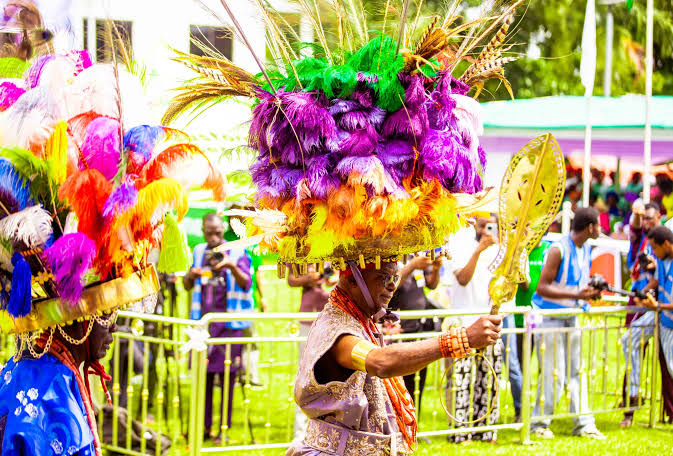
The Obi of Onitsha, His Majesty Igwe Alfred Nnaemeka Achebe, has commended Globacom for its unwavering commitment to the preservation and promotion of Nigeria’s cultural heritage, noting that the telecommunications company’s sustained support has helped transform the Ofala Festival into a world-renowned cultural celebration.
Speaking on the 2026 edition of the festival, held at Ime Obi, Onitsha, Anambra State, on Friday, the monarch paid a glowing tribute to Globacom for its longstanding role as the principal sponsor of the festival, a partnership that has spanned fifteen consecutive years since 2011.
According to the monarch, “Their partnership has transformed the festival from a palace ritual to a world-renowned cultural festival owes a great deal to purposeful partnership. Since 2011, Globacom has stood with us as our principal partner – now fifteen consecutive years of unwavering commitment.” He added that “In good times and challenging times, Globacom has helped us preserve the authenticity of Ofala while enhancing its presentation, documentation, broadcast and global reach. They have helped take a living heritage to the global stage”.
Igwe Achebe also applauded the vision of Globacom’s Chairman, Dr Mike Adenuga Jr., whose commitment to cultural preservation, he noted, reflects a profound appreciation of the role of indigenous traditions in strengthening national identity and social cohesion.
“I thank Globacom and its Chairman, Otunba (Dr) Mike Adenuga Jr., GCON, a true man of culture, for his vision and belief that culture is not a luxury but a foundation for unity,” the monarch said.
Commenting on the theme of this year’s festival, “Igba Mbo, Iga N’Iru” — Strive and Advance — Igwe Achebe described it as a compelling call to diligence, excellence, self-improvement and collective progress. He explained that the theme embodied the enduring spirit of the forebears who built the Onitsha kingdom on the banks of the Niger, while challenging younger generations to preserve that legacy through enterprise, purposeful endeavour and a commitment to progress.
In his goodwill message to the monarch and the people of Onitsha, Dr Adenuga described Globacom’s association with the Ofala Festival “since 2011 has been much more than a corporate partnership. It has been a relationship which we cherish deeply and regard as a privilege”. He expressed profound appreciation to Igwe Achebe for the opportunity afforded Globacom to contribute to the preservation, celebration and wider projection of the community’s priceless cultural heritage.
He noted that the annual festival provides a valuable platform for showcasing the rich cultural traditions, dignity and enduring values of the Onitsha people to audiences across Nigeria, Africa and the wider world.
Through its longstanding partnership with Ofala, Globacom continues to demonstrate that corporate citizenship extends beyond commercial enterprise to the preservation of the cultural foundations that give communities their identity, strengthen their unity and connect generations.
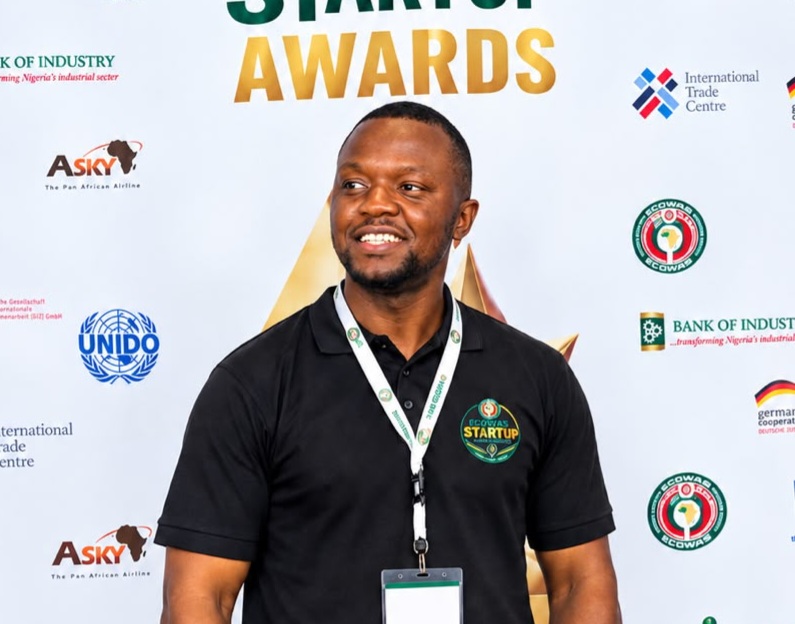
Kardinal Business Travel, a travel technology company with African and global focus, was among 60 startups that pitched at the 2nd edition of the Economic Community of West African States (ECOWAS) Startup Awards, held at the ECOWAS Commission headquarters in Abuja recently.
The company’s Chief Executive Officer and Founder, Cornelius Ugwunwa, presented the company’s case at the three-day event. The awards was part of an ECOWAS initiative to help West African businesses and startups scale through digital transformation, regional integration and sustainable value chains, with the aim of widening access to global markets.
Temitope Kareem, founder of Nigerian healthtech firm HubPharm Africa, won the top prize of $30,000. Senegal’s Gaynako took home $20,000 as first runner-up, while Steve Bah Blesson’s MyOpinion from Côte d’Ivoire won $15,000 as second runner-up.
Speaking during his pitch, Ugwunwa said Africa needs a new system for business travel. He cited a market with $75 billion in inbound travel spending and a strong business travel component in 2025, while travel and tourism as a whole contributed $228 billion to the regional economy.
“When a company sends its employees across Africa for a business engagement, we at Kardinal noticed the challenges of countless inboxes, spreadsheets and emails, mostly after the trip.
Businesses keep asking: How much did we spend? Who did we spend it on? Was it above or below budget? Can we reconcile everything on one platform?” he said.
He described African business travel as a $30 billion market that is largely fragmented and overly dependent on manual processes.
According to him, many businesses lose over $1 billion to manual travel processing and cannot track spending in real time. “That is why Kardinal exists: to solve this entrenched problem,” he said.
Ugwunwa said GoKardinal is an artificial intelligence-driven platform built to track expenses for African businesses. It brings the entire business travel lifecycle (planning, budgeting, booking, financing and expense tracking) onto one platform, in real time.
“GoKardinal is not another travel platform. It is an infrastructure for business travel, powered by AI for expense management,” he said, adding that the idea is to help businesses move without delay from one location to another to do their best work, expand and make profit.
On the company’s performance, he said the platform serves over 51 businesses in Nigeria and across Africa, with estimated weekly profit of $10,000 and gross merchandise value of over $1 million, growing at 65 per cent annually. he added.
He noted that about 80 per cent of African businesses still run their business travel manually, without any form of expense tracking, in a market worth over $30 billion annually. “African business travel is not just travelling for the fun of it.
It is an ecosystem with the potential to generate over $70 billion when digitalised,” Ugwunwa said.
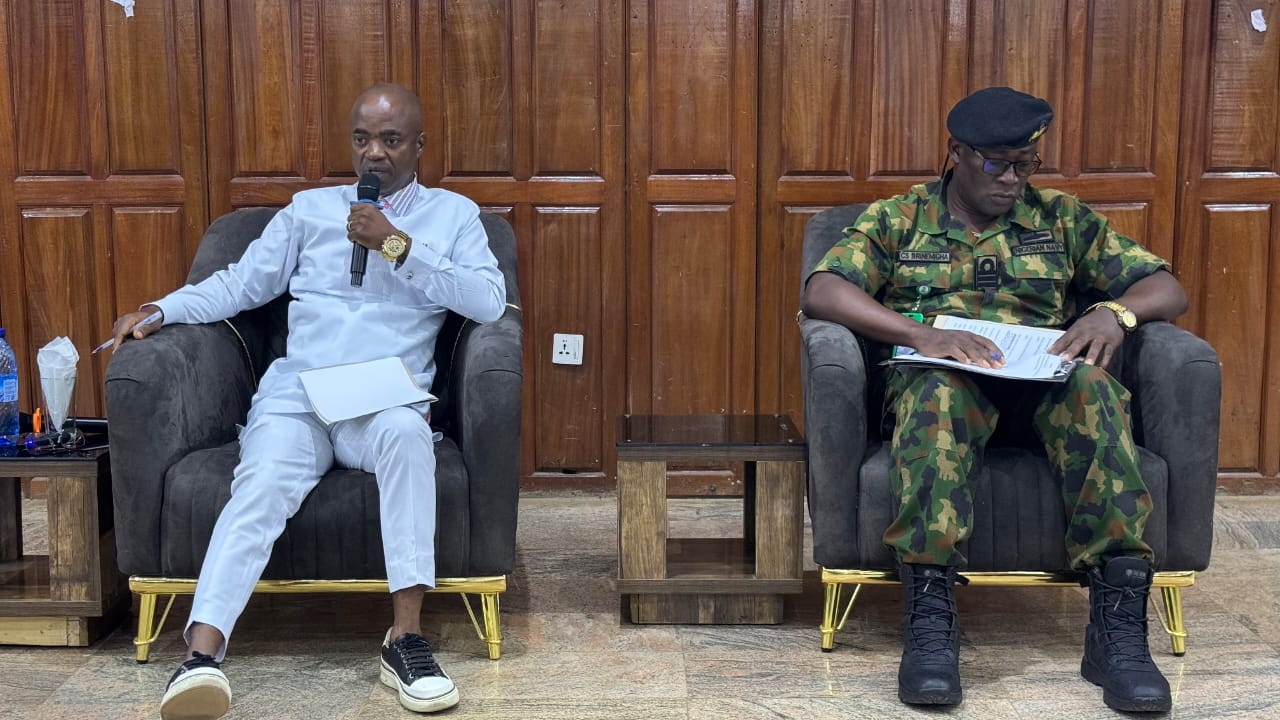
The President of Security Resources & Risk Management Academy, Lagos, Mr. Matthew Ibadin, has charged officers of the Nigerian Armed Forces and allied nations to practice emotional discipline, warning that unmanaged anger remains a greater threat to a Staff Officer than the enemy.
Ibadin, who is also a doctoral researcher at the Nigerian Defence Academy (NDA) and University of Abuja, stated this on Monday while delivering a lecture on “Emotional Discipline Under Pressure and Anger Management for Staff Officers” to participants of Senior Course 48 at the Armed Forces Command and Staff College (AFCSC), Jaji, Kaduna.
The lecture was attended by 436 officers comprising the Nigerian Army, Nigerian Navy, Nigerian Air Force and officers from eight friendly nations.
Describing anger as “a temporary madness that leaves a permanent record,” Ibadin warned officers that “the line between a respected officer and an inmate is thinner than you can imagine.”
“Anger may enter the room, but must never take command,” he said.
The Lion Principle
Illustrating his point with the parable of the lions, Ibadin noted that while both male and female lions roar, the female roars only when necessary and lives 15-18 years compared to 10-12 years for the male.
“She lives longer not because she is weaker, but because she is more disciplined. Many of us have become male lions in uniform – fighting juniors, spouses, traffic, minor disagreements even when no real threat exists. That constant agitation slowly destroys what you have built,” he said.
He therefore charged officers to “be a female lion in strategy and a male lion only when tactically necessary.”
Five Battlefields Where Anger Destroys
Ibadin identified five battlefields where undisciplined anger destroys officers: Health, Home Front, Office and Command, Career and Prison, and Relationships.
On health, he described anger as a silent killer that triggers hypertension, stroke and cardiac arrest, noting that many officers survive the war front but do not survive peacetime.
“At Jaji, your rank commands respect, but at home your rank is irrelevant. If you win at the office and lose at home, you have lost. An officer whose home is under emotional fire cannot think clearly at the command post,” he cautioned.
He warned that signatures appended in anger to operational orders, procurement papers and personnel assessments could lead to Boards of Inquiry, career ruin and mission failure.
He added that 70 percent of inmates in correctional centres for murder never planned to kill, but acted in a moment of unmanaged anger.
Practical Tools
Ibadin introduced practical tools including the 90-Second Rule and the S.T.O.P Protocol – Stop, Take a Breath (4-4-4), Observe, and Proceed with Discipline – for decisions under pressure.
He adopted Aristotle’s five tests for disciplining anger: Right Person, Right Reason, Right Time, Right Degree, and Right Manner.