
Personality in Focus
The Problem of Drugs in Nigeria is Enormous, But Marwa is Tackling Them – Femi Babafemi

- /home/rhoncare/pointblank.ng/wp-content/plugins/mvp-social-buttons/mvp-social-buttons.php on line 27
https://pointblank.ng/wp-content/uploads/2021/08/IMG-20210825-WA0095-1000x600.jpg&description=The Problem of Drugs in Nigeria is Enormous, But Marwa is Tackling Them – Femi Babafemi', 'pinterestShare', 'width=750,height=350'); return false;" title="Pin This Post">
- Share
- Tweet /home/rhoncare/pointblank.ng/wp-content/plugins/mvp-social-buttons/mvp-social-buttons.php on line 69
https://pointblank.ng/wp-content/uploads/2021/08/IMG-20210825-WA0095-1000x600.jpg&description=The Problem of Drugs in Nigeria is Enormous, But Marwa is Tackling Them – Femi Babafemi', 'pinterestShare', 'width=750,height=350'); return false;" title="Pin This Post">
Since January 2021, when the National Drug Law Enforcement Agency (NDLEA) came under the leadership of Brig. Gen. Mohamed Buba Marwa (retd) as the new Chairman/CEO, the agency has received a new burst of life. The number of arrests and drug seizures that were made in the past eight months has probably never been made in the past 30 years of existence of the security agency. With more than two million kg of illicit drugs seized, 5000 drug traffickers arrested and over 500 convictions, the former Military Administrator of Lagos state have proven that he is the round peg in the round hole when it comes to fighting drug crimes. He has also affirmed the confidence reposed on him by the President Muhammadu Buhari who gave him the job.
It will be recalled that until his appointment early January 2021, Brig. Gen. Buba Marwa (retd) was the Chairman of the Presidential Advisory Committee for the Elimination of Drug Abuse (PACEDA) spanning 2018 – 2020. This position probably allowed the retired Army General to have an on-the-spot assessment of the decadence which has eaten deep into the fabric of the nation. The country is said to have 15 million citizens abusing drugs.
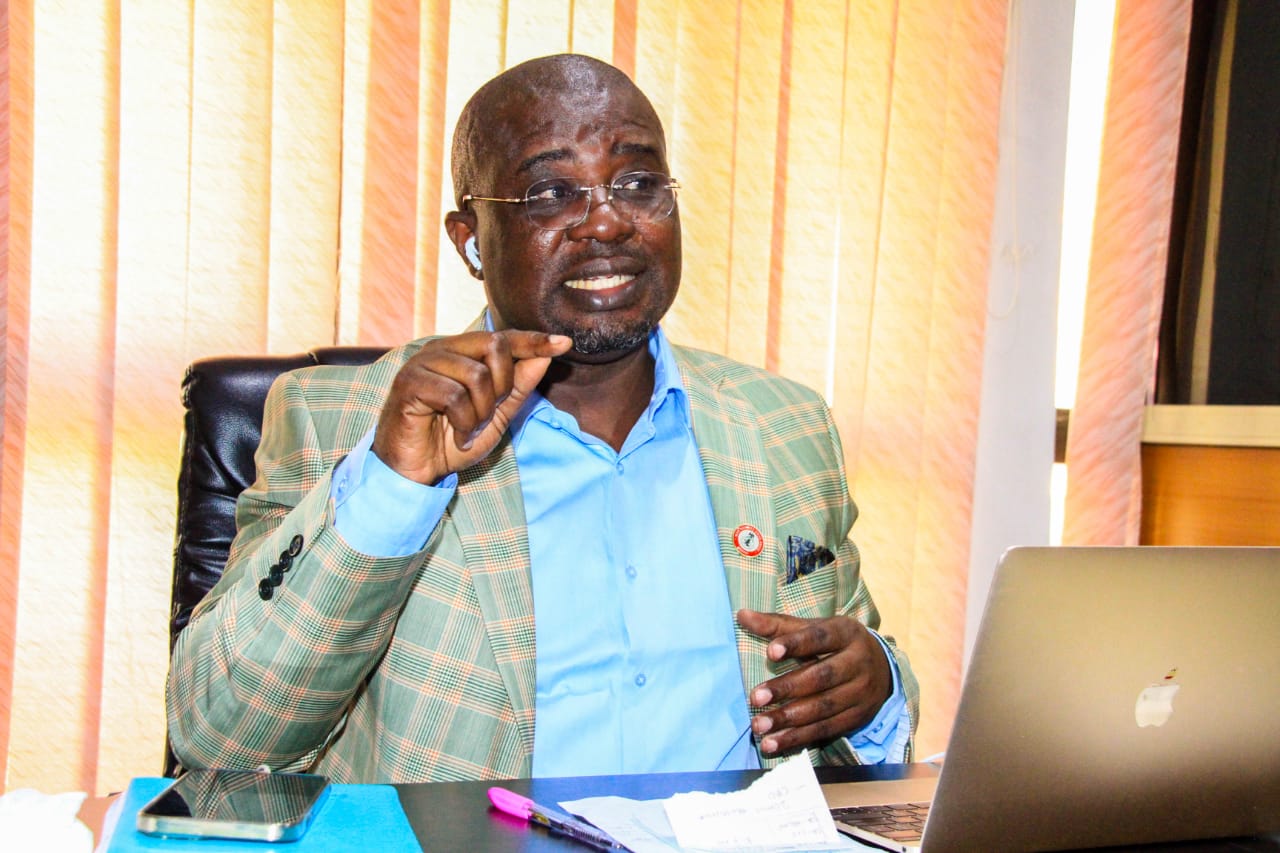
In his exclusive interview with the National President of National Association of Online Security News Publishers (NAOSNP), SAMSON OKI, in his Abuja office, the Director of Media and Advocacy, NDLEA Headquarters, Abuja, Mr. Femi Babafemi disclosed more on the performance and potentials of the National Drug Law Enforcement Agency (NDLEA). He spoke on the role that parents and the general public can play so that the country can cut the rate of drug abuse and addiction.
NAOSNP: The NDLEA has received new life under the leadership of Brig. Gen. Mohammed Buba Marwa (retd). Tell us ‘how has he been able to bring about this new reality’?
Femi Babafemi: With the coming of Gen. Marwa January of this year, it has changed a lot of things on ground in NDLEA and the best way to show this is to give an overview of what is being happening between January and now, either in the area of operations, administration, or two major plans of the agency which is drug supply reduction and drug demand reduction.
Talking about drug supply reduction, the agency has for the past 5-6 months arrested over 5000 drug traffickers from whom more than 2 million kg of drugs have been seized. Out of this arrest, we have had more than 500 convicted in court. We have 3000 still facing charges.
As I speak with you, we have counseled, rehabilitated, and reintegrated back into the society a total of 2,772 of those that abuse drugs. What this shows is a fair balance between efforts on drug demand reduction and drug supply reduction.
In the area of drug demand reduction, we are also advocating that people should undergo drug test. This is basically to ensure that those that are not yet on drugs are prevented from going on drugs and those that have started to make sure that they are discovered early and treated because the earlier we discover, the better for you because you can seek treatment.
This is why the Chairman has been advocating drug test for intending couples, students – fresher and returning, those seeking public office, workers, so that we can save quite a number of people from slipping into the cycle of drug abuse. Approximately 15 million Nigerians are abusing drug in the country.
NAOSNP: How have you been able to keep the officers and men of the NDLEA motivated for this task?
Femi Babafemi: In the areas of administration, the new leadership met a number of issues on ground. One of them is the issue of career stagnation of officers and men and that was why one of the first things that the Chairman did was to set up a Harmonization Committee and the result of that was promotion of 3506 officers of the agency which is about 70% of the workforce. As I speak with you, there are efforts on that regard as another committee is sitting on how to resolve the issue of harmonization of ranks and promotion of officers and men. We also talk of some of the liabilities met on ground in terms of payment of entitlement to officers and men and death and burial expense to families of deceased officers. Efforts are ongoing and by tomorrow, families of 188 deceased officers will be paid their burial entitlement that has been hanging since 2014/15.
All of these are been done by the leadership to motivate and encourage officers to do their work. That is why today, you will see everyday arrests and seizures at the seaport, airport, land borders, on the roads and across the country. What we do give out in our statement to the public is probably 0.1% of the figure of our arrests and seizures because we don’t want to bore the public. We just pick a few of what we think are a representative of the work of the agency so as to get the people informed.
We are glad that Nigerians now know the enormity of the problem of drugs in our country. The agency is not relenting yet because the agency has the support of the President, the highest authority in the country who is supporting the Chairman in every way possible and that is why we are going all out.
NAOSNP: In Nigeria, we have the issue of ‘crime fighting back when it is been tackled’, what are you doing to ensure that criminals don’t attack your men and officers?
Femi Babafemi: The work of the agency is intelligence-based. One of the things that the Chairman has done is to strengthen our Directorate of Intelligence to make them proactive, to make them respond to threats, but beyond that he has also created an Elite Strike Force which are well-trained, heavily armed, and is headed by a Director.
These are part of the things that the Chairman is doing to reinforce the confidence of the officers when they are going for operations and again to protect and secure vital installation and premises of the agency as well as other officers in their various assignments.
NAOSNP: In Nigeria, we have the issue of ‘strong men but not-strong institutions’, Nigerians are hopeful that this giant strides will not end with the tenure of Brig. Gen. Marwa, what are you putting in place to ensure that NDLEA will continue to be a strong institution beyond now?
Femi Babafemi: This is one of the things we are hoping that will happen. That is why whatever is being done now is building solid and strong structures for an institution that is already over 30 years old. There is quite a lot of concerted efforts been put in place to build strong structure for the agency so that whoever is going to come after him will have something solid to build on.
NAOSNP: Talking about the incessant rate of addiction among youths, how do we nip it in the bud?
Femi Babafemi: There are quite a number of factors responsible for this and I tell you that the consciousness is there now because of the volume of arrests and seizures. Prior to January, we didn’t realize it but the problem had been there. But because we are hearing of arrests and seizures know that is why everyone is surprised that the issue is this much.
Quite a number of factors are responsible. One of them is poor parenting because for every problem, there is a root in the family level. And for the solution also, it must also start from the family level. When parents abdicate their responsibility to bring up their children, for example, a parent sending children to bring alcohol or drugs is indirectly encouraging the child to take the same thing.
Some parents also don’t bother when they see changes in the attitude of their children. For instance, if your kids that you usually watch TV together is withdrawn into the room and you are not bothered to ask questions. When your child is avoiding eye contact with you meaning he is trying to prevent you from checking the redness of his eyes or hide something from you. Or suddenly your children start moving in the company of strange fellows. These are red flags that parents overlook to find out what is wrong and by the time they know, the kids are neck deep into drugs.
We also have the issue of peer pressure. They want to try what their friends do. Social media influence is another. When they see what celebrities do, yet some of them may just be doing it for the sake of the arts performance, some of these young ones go and try it and that is how we have a generation of addicts.
Then, we cannot run away from socioeconomic issues that lead people into drug abuse and addiction. They take drugs to forget their sorrows but drugs will only give relief for hours but at the end when the drugs wear out, the problem is still there. Why do you have to compound your problem because the drug will affect your physical health? Some may even affect mental health.
NAOSNP: What more are you doing to end the scourge?
Femi Babafemi: Fortunately, we are not folding our arms. We are doing as much as possible to cut access to these drugs. That’s why you see the volume of drugs that we are mopping up from the streets. We are even destroying the farms and those concealed inside the forests. By the grace of God and with the people buying-in and taking ownership of the fight, it will be much easier to win that leaving it alone for NDLEA. We believe that we may all end up as victims if we don’t all join hands to make sure that we rid our homes, communities, and country of this scourge.


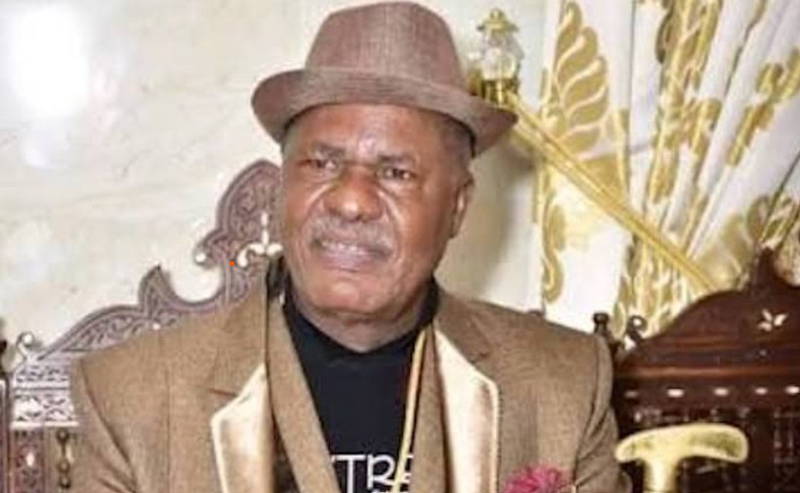
Gunmen who kidnapped the chairman of Jezco Group, Chief Joseph Ezeokafor, have reportedly increased their ransom demand from N700 million to N1.5 billion for his release.
Ezeokafor, a septuagenarian businessman, was reportedly abducted in Anambra State about a week ago.
The kidnappers initially demanded N700 million from the businessman’s family.
Unofficial reports quoting an anonymous source said the kidnappers had established contact with the family after the abduction.
The source said the family accepted the initial N700 million demand as part of efforts to secure Ezeokafor’s release.
However, the kidnappers later increased the ransom to N1.5 billion.
The source said the family remains willing to negotiate with the abductors, but the kidnappers have allegedly stopped further communication.
The development has reportedly left the family in a difficult situation, as attempts to restore contact with the abductors have not yielded results.
Ezeokafor was kidnapped on Tuesday at about 2am after he reportedly left his home for a prayer ground as part of his annual spiritual rejuvenation.
He was said to have left his security details behind when he stepped out of his residence, which the kidnappers capitalized on, to abduct him.
One week after the incident, the police and the State government authorities have yet to make any official statement on the businessman’s abduction.
The Anambra State Police Command has also not publicly commented on the incident.
Personality in Focus
Lessons from Dickem Farms: Two Decades of Pioneering Innovation in Nigeria’s Aquaculture Industry
By Ayo Oyoze Baje
“Our philosophy has always been simple: innovation should solve real problems, create opportunities and improve livelihoods.”
Introduction
For over two decades, Dickem Farms has remained committed to transforming Nigeria’s aquaculture industry through innovation, technology, enterprise development and human capacity building. What began in 1999 as a vision to improve fish production has evolved into one of the country’s respected aquaculture enterprises, recognized for pioneering practical solutions that have strengthened fish farming and empowered the next generation of agripreneurs.
Dickem Farms was the first to introduce mobile fish ponds into the Nigerian market, making fish farming more flexible, affordable and accessible to investors and smallholder farmers. The company also pioneered the local production of a floating fish feed extruder that uses locally available materials, reducing dependence on imported technology while lowering production costs for fish farmers. In addition, Dickem Farms has invested in modern hatchery systems that produce healthy, high-quality fingerlings to support commercial fish production.
Our philosophy has always been simple: innovation should solve real problems, create opportunities and improve livelihoods.
Recent experiences and initiatives
To get more important information about the farm there were questions on the different aspects, starting with the experiences in the past five years. Let us glean from the horse’s mouth. According to the Managing Director, Godwin Emaketenemi, “Over the last five years, we have continued to strengthen our production systems for both catfish and tilapia. Our focus has been on improving fingerling quality, enhancing pond management practices and maintaining strict water-quality monitoring to maximise fish survival and productivity.
“We also introduced better feeding programmes and comprehensive record-keeping systems that enable us to monitor growth performance, feed conversion efficiency and mortality rates.
Rather than pursuing rapid expansion, we have adopted a disciplined strategy of scaling only after achieving consistent operational results.
“This measured approach has enabled Dickem Farms to build a resilient business capable of supplying quality fish and aquaculture services to customers in Lagos and across Nigeria.”
Overcoming challenges:
On the challenges faced and how they were overcome, he stated that: “Like every agricultural enterprise, we have encountered significant challenges. Rising feed costs, unreliable electricity supply and disease management remain major concerns within the aquaculture industry. Instead of allowing these obstacles to limit our growth, we viewed them as opportunities for innovation.
Producing our own quality fish feed has significantly reduced production costs while giving us greater control over feed quality and formulation. We have also improved water-management systems and operational planning to minimize the effects of power instability.
“At the farm level, stronger biosecurity measures, improved hygiene and proactive fish-health monitoring have substantially reduced disease outbreaks and production losses.”
Marketing strategies
With regards to marketing he explained that; “Production alone does not guarantee success; a reliable market is equally important. Dickem Farms has therefore, built long-term relationships with wholesalers, retailers, restaurants and institutional buyers. We grade our fish according to customer specifications and schedule harvesting to coincide with periods of stronger market demand.”
Training programs
Furthermore, with the focus on training he explained that: “Our reputation has been built on dependable supply, consistent quality and customer trust.
One of our proudest achievements is our investment in people. We believe that sustainable agriculture depends not only on technology but also on developing competent professionals and entrepreneurs.
Over the years, Dickem Farms has trained hundreds of staff, industrial attachment (IT) students, graduates and aspiring fish farmers in practical aquaculture.
“Our training covers hatchery management, pond construction and management, fish nutrition, water-quality management, fish-health monitoring, biosecurity and business record-keeping.
More importantly, we do not stop at training. We mentor young graduates and entrepreneurs, providing technical guidance and business support until they are confident enough to establish and successfully manage their own enterprises. Seeing former trainees become successful employers and business owners remains one of our greatest rewards.
“Continuous learning has also shaped our growth. Through partnerships with foreign organisations and technical visits to leading aquaculture companies, we have gained valuable knowledge in modern hatchery technology, fish-health management, production efficiency and operational excellence.”
Government ‘s support
Coming to the need for government’s support he beamed light on it this way:
“These experiences have strengthened our technical capacity and enabled us to transfer global best practices to Nigerian farmers.
Nigeria possesses enormous potential to become a leading aquaculture producer in Africa. However, unlocking that potential requires stronger collaboration between government and the private sector.
We recommend tax exemptions or significant tax incentives for fish farming and aquaculture value-chain businesses to encourage investment.
“Farmers also need affordable financing with realistic repayment terms, reliable access to quality fingerlings, improved energy support and stronger extension services that provide timely technical guidance on fish health and disease prevention. Organized marketing systems that connect producers directly with institutional buyers will further strengthen the industry’s competitiveness.”
Piece of advice to the younger generation:
His piece of advice to young people who might be interested to go into fish farming:
“To young people considering aquaculture as a career or business, my advice is straightforward: seek proper training and find a credible mentor. Fish farming is a science and a business that rewards discipline, knowledge and patience. Begin with manageable investments, keep accurate records, master water-quality management and learn from experienced practitioners before expanding.
“A good mentor can save years of costly mistakes and accelerate the journey to success.”
As the future beckons:
As for plans for the future he highlighted that: “Looking ahead, Dickem Farms will continue to invest in innovation, local technology development, commercial hatchery expansion, fish-feed production, modern aquaculture equipment and practical capacity building. Our ambition is not only to grow our business but also to contribute meaningfully to food security, employment creation and economic development.
Our long-term vision extends beyond Nigeria.
“We believe Africa possesses the resources, talent and entrepreneurial spirit to feed itself and compete globally. Through innovation, strategic partnerships and investment in people, Dickem Farms will continue to play its part in building a modern aquaculture industry that delivers prosperity for farmers, affordable nutrition for families and sustainable growth for the continent.
Our mission remains unwavering: to inspire a future where Africans feed Africa through innovation, enterprise and excellence in agriculture.”
These indeed, are brilliant submissions for us all to learn from now and always.
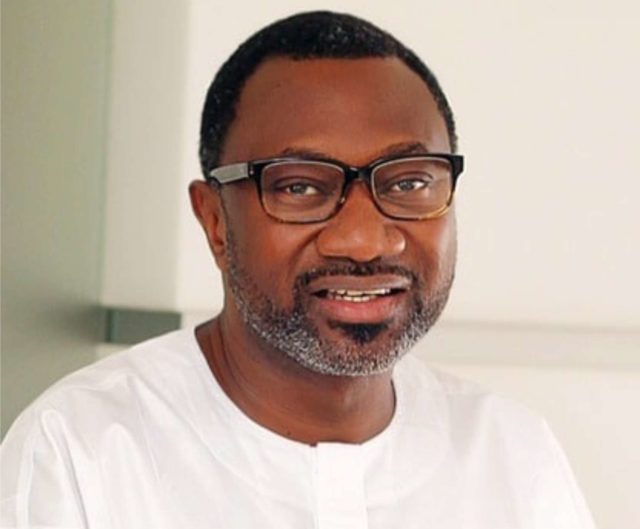
The Chairman of First HoldCo, Femi Otedola, has strengthened his stake in the financial institution after acquiring an additional 1.77 billion shares valued at N222.20 billion.
Details contained in a disclosure filed with the Nigerian Exchange (NGX) showed that the shares were purchased on Thursday through his investment company, Calvados Global Services Limited.
The latest transaction raised Otedola’s shareholding in First HoldCo from 9.99 billion shares to 11.77 billion shares, with his ownership increasing from 21.96 per cent to 25.88 per cent.
The purchase marks Otedola’s second major investment in the company this July, following his acquisition of 706.13 million shares worth N77.58 billion on July 22.
With the fresh acquisition, Otedola’s total investment in First HoldCo has climbed to N1.47 trillion, making him the institution’s largest shareholder.


