
Headlines
Messi Unveiled As World’s Highest-Paid Athlete, Followed by Lebron James, Ronaldo


- /home/rhoncare/pointblank.ng/wp-content/plugins/mvp-social-buttons/mvp-social-buttons.php on line 27
https://pointblank.ng/wp-content/uploads/2021/08/Messi-1-1000x600.jpg&description=Messi Unveiled As World’s Highest-Paid Athlete, Followed by Lebron James, Ronaldo', 'pinterestShare', 'width=750,height=350'); return false;" title="Pin This Post">
- Share
- Tweet /home/rhoncare/pointblank.ng/wp-content/plugins/mvp-social-buttons/mvp-social-buttons.php on line 69
https://pointblank.ng/wp-content/uploads/2021/08/Messi-1-1000x600.jpg&description=Messi Unveiled As World’s Highest-Paid Athlete, Followed by Lebron James, Ronaldo', 'pinterestShare', 'width=750,height=350'); return false;" title="Pin This Post">
PSG and Argentina forward, Lionel Messi, has been unveiled as the world’s highest-paid athlete, with Manchester United’s Cristiano Ronaldo made to settle for third place, reports dailystar.co.uk.
As arguably the two greatest of all-time, it is no surprise that Messi and Ronaldo are the two footballers to rake in the biggest amounts of cash. It’s not only their on-field antics that allow them to live lavish lifestyles though, with their incredible marketability allowing for various endorsements to bring in almost just as much money.
The only footballer to join Messi and Ronaldo on the top 10 list is the former’s PSG team-mate, Neymar. There are several basketball superstars raking it in, while some experienced heads from other sports have their big-money deals to thank for their growing net worth.
Forbes claim Messi made well over £100 million in pre-tax gross earnings over the last 12 months.
NBA legend, LeBron James, didn’t have a season to remember on the court as the LA Lakers missed out on the playoffs. However, the 37-year-old keeps on winning when it comes to making money.
James will have picked up a tidy pay cheque from starring in last year’s Space Jam: A New Legacy movie, more success from his YouTube talk show The Shop, and selling and re-investing in various assets.
For Ronaldo, it was a highly emotional return to Manchester United last summer, and his back pocket doesn’t seem to have taken much of a hit either, with his £500,000-per- week still paying the bills.
Now 37, the Portuguese is just as marketable as ever, boasting the most followers of anyone on Instagram with 439 million, and hundreds of millions more on his other socials. Ronaldo earns roughly the same amount on the pitch as he does off it, so even when he does decide to hang up his boots, rest assured the money isn’t going to dry up.
Neymar is clearly a forward thinking investor too, having spent around £737, 000 on buying two NFT’s from the Bored Ape Yacht Club. It’s thought Neymar now owns the most expensive of all 10,000 of the highly sought-after ape tokens, with Ape 5269 costing 189.69 ETH.
Golden State Warriors guard, Steph Curry, is the highest-paid player in the NBA after signing a contract extension last August. The three-time NBA champion makes just shy of £40 million every year thanks to his staggering on-court performances.
But the 34-year-old also clearly knows where to invest too, dabbling in NFT’s and cryptocurrency, like various other sports stars. Curry’s net worth will no doubt have received a boost from a development deal with Comcast NBCUniversal for his production company Unanimous Media.
In sixth position is Kevin Durant, another basketball icon, who earns a healthy salary being the star man for the Brooklyn Nets. But he also makes plenty of dough through his sponsorship with Nike, almost £23 million to be precise, as well as sponsorships from the likes of Coinbase and Weedmaps.
Seventh-placed Roger Federer is the undisputed GOAT of tennis. Federer hasn’t actually played a competitive match in 2022, but he’s still the seventh best-paid athlete in the world. The Swiss has deals with Uniqlo and Rolex and also invested in shoe brand ON.
Boxer, Canelo is thought to have earned around £32 million from his two pay-per-view fights before losing to Bivol.
Canelo has a number of lucrative sponsorships, but intends to build up an empire thanks to his taco restaurants and opening gas stations, while his Canelo Promotions is working with DAZN to put on fights in Mexico.
Tom Brady, who u-turned on his retirement decision, meaning he will be back in action for the Tampa Bay Buccaneers for the 2022 season, is number nine on the list. He could be forgiven for thinking seven Super Bowl rings is enough – he certainly doesn’t need the money.
To add on to his investment portfolio that includes an NFT platform, two production companies and a clothes line, Brady is also set to take up a commentator role with Fox Sports. If you were worried he might struggle in his eventual retirement, fear not, as Brady is set to earn over £300m over the next 10 years at Fox.
Nigerian-born Greek basketball superstar, Giannis Antetokounmpo (Gani Adetokunbo), is the only member of the list not yet past 30. Fresh from his NBA championship success, Antetokounmpo rounds off the top 10. The Milwaukee Bucks’ two-time MVP agreed a new five-year contract in December 2020 worth a total of £186 million.
The Guardian


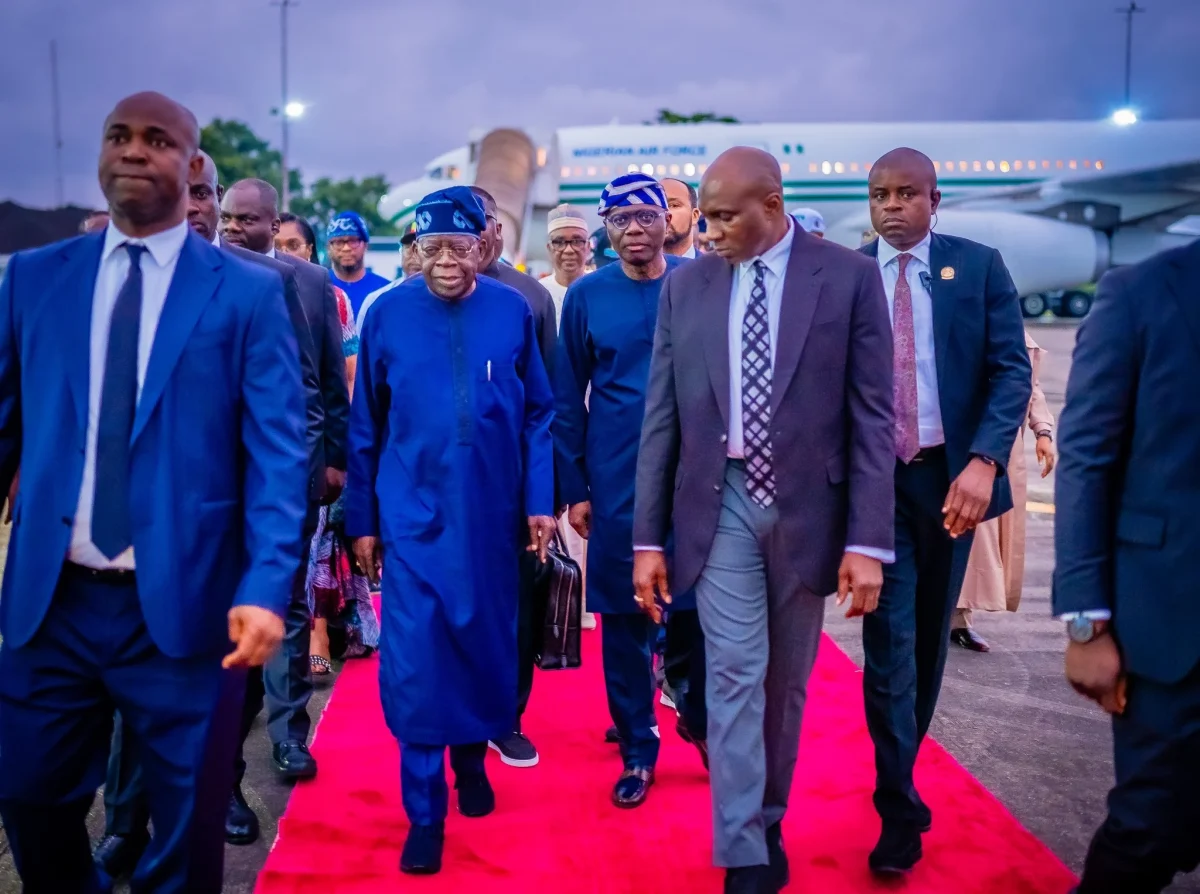
President Bola Tinubu has told members of the All Progressives Congress (APC) Presidential Campaign Council not to expect him to accompany them to every campaign event ahead of the 2027 general election, saying he must remain focused on governance and the country’s economic responsibilities.
Tinubu spoke on Wednesday during the inauguration of the APC Presidential Campaign Council in Abuja, where he urged members to take the party’s message to Nigerians across the states and local government areas while he continues to attend to matters of governance.
The president said he agreed with concerns that the demands of the campaign should not distract him from running the country, adding that Nigeria needs his attention at the moment.
“You’ve warned me not to allow the rigour of the campaign to distract me from governance, I hear you. I am in full agreement with your decision. Nigeria needs more attention now,” Tinubu said.
He told council members to excuse him from accompanying them to every campaign event, noting that his administration has bills to pay and international financial obligations to meet.
“So, you will excuse me from going everywhere with you, we have bills to pay. The American creditors cannot wait,” the President said.
Tinubu also said the government needs to attract investors who would commit to long-term investments in Nigeria and contribute to the future of the country’s children.
“We want those investors to come in, be here to stay, to invest for the future of our children,” he said.
The president, however, assured Nigerians that he would continue to engage them directly even as the campaign council took charge of mobilisation across the country.
“However, I will still make time to speak directly with Nigerians, even as you lead the campaign in the states and local government areas,” he said.
Tinubu described the inauguration of the council as more than a campaign activity, saying it represents a renewed commitment to Nigerians and the responsibilities of the ruling party.
“We have not gathered merely to inaugurate a council. We have gathered to renew a covenant. A covenant with Nigerian people and the historic responsibility they have entrusted to us as Nigeria’s governing party,” he said.
He added that the council is expected to communicate the administration’s vision, achievements and agenda to voters nationwide.
“This council will carry our vision, our records and our agenda to every Nigerian, and it will carry them to victory every ward of this country,” Tinubu said.
The president also commended APC members for completing the party’s congresses, recalling that some had predicted internal crises during the process.
He said the party has overcome the challenges and emerged united, crediting members for participating in the process from the ward level to the national leadership.
“They said there will be implosion. We passed through it. We did not fail. You didn’t let us down. We got here together,” he said.
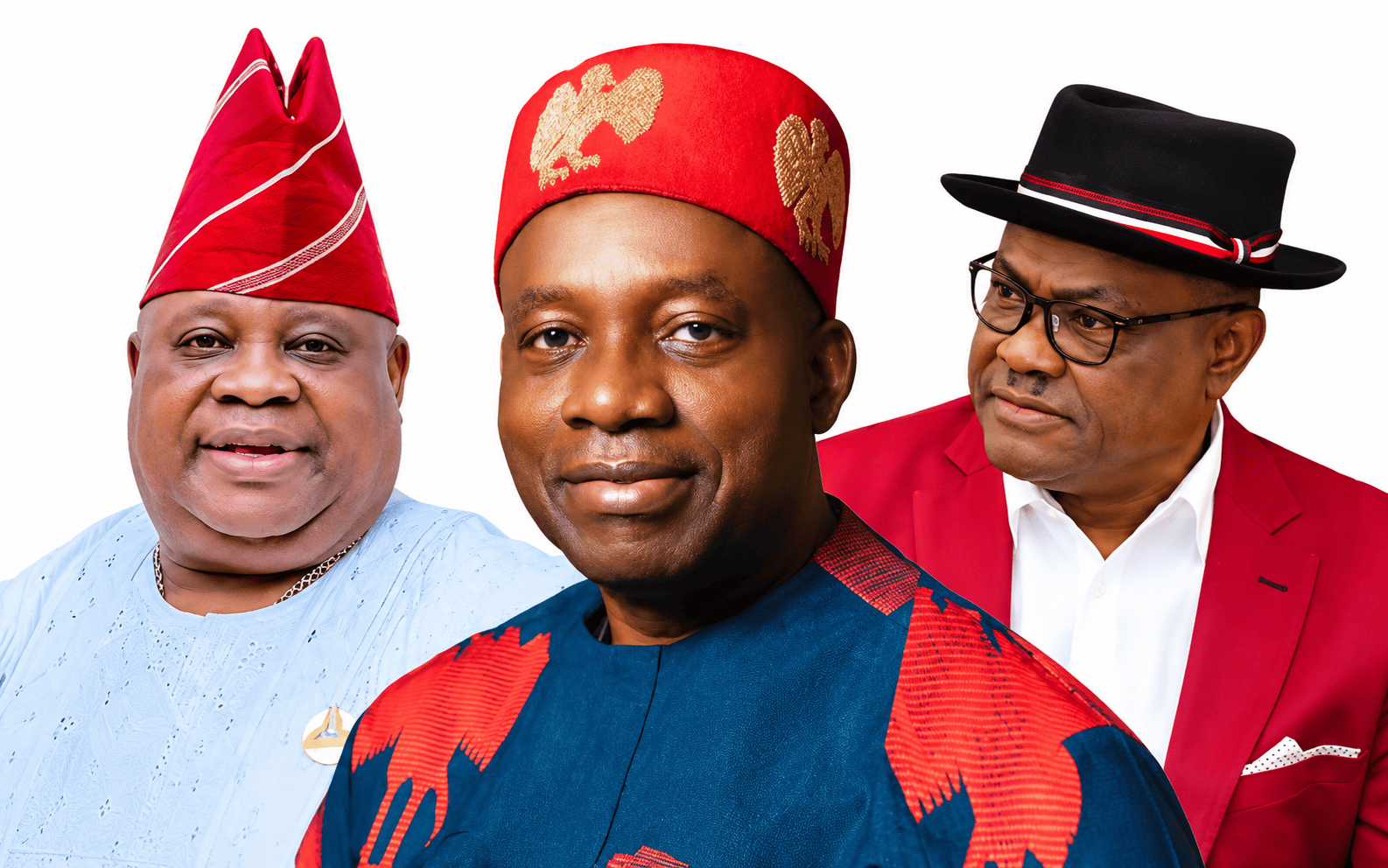
The All Progressives Congress (APC) has named Nyesom Wike, Minister of the Federal Capital Territory (FCT); Ademola Adeleke, Osun State governor; and Chukwuma Soludo, Anambra State governor, as campaign coordinators in its expanded presidential campaign council for the 2027 general election, despite their affiliations with other political parties.
Wike belongs to the Peoples’ Democratic Party (PDP), Soludo is a member of the All Progressives Grand Alliance (APGA), while Adeleke won re-election as Osun governor in 2026 under the Accord Party.
Under the new arrangement, Wike will coordinate the APC campaign in Rivers State and the FCT, Soludo will oversee Anambra, while Adeleke will coordinate the campaign in Osun.
The expanded list is scheduled for inauguration by President Bola Tinubu at the Presidential Villa in Abuja on Wednesday.
The APC initially released its campaign council list on August 22, naming Abdulaziz Yari, former Zamfara governor, as director-general. Senate President Godswill Akpabio, House of Representatives Speaker Tajudeen Abbas and Yobe Governor Mai Mala Buni were appointed deputy director-generals.
In the revised list, Akpabio, Abbas and Kwara Governor AbdulRahman AbdulRazaq are deputy vice-chairmen I, II and III, respectively, while Buni becomes deputy director-general I for the North.
The council also includes former governors and party chieftains as advisers, which include former APC national chairmen Adebisi Akande and Abdullahi Adamu; former Ogun State Governor Ibikunle Amosun; former Osun State Governor Iyiola Omisore; Senator Ibrahim Dankwambo; Senator George Akume; former Ogun State Governor Segun Osoba; and Wale Edun. Obafemi George is listed as an adviser on media.
The Directorate of Election Planning, Coordination, Monitoring and Mobilisation, established ahead of the 2027 general election, has Faleke as Deputy Director-General, with Stella Okotete and Engr. Abdullahi Garba Ramat serving as Secretary I and Secretary II, respectively. Audu Maikori is also listed as a secretary.
Other members of the directorate include Soares Omotola, Bashir Dabo, Sheriff Mohammed Usman, Jibrin Bancir, Ayoola Peter Olajolo, Abubakar Sadiq Sada and Princess Folasade Ogunbiyi.
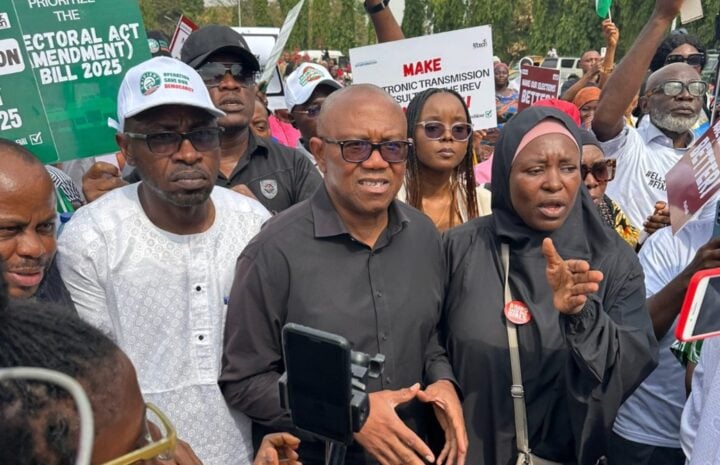
The Nigeria Democratic Congress (NDC) presidential candidate, Peter Obi, has questioned how the Federal government’s 30-day petrol price discount would reduce poverty, unemployment, insecurity and inequality in the country.
Obi raised the questions in a statement posted on his X platform on Sunday, describing the initiative as a reactive policy that substitutes political optics for sound economic planning.
He argued that the discount, which he said amounts to less than five per cent of petrol costs, is unlikely to address the wider economic challenges facing Nigerians.
“The announcement by the APC-led Federal government offering a 30-day discount on price of petrol to relieve the acute hardship and hunger caused Nigerians by its unplanned removal of subsidy can only be described as another very reactive and confused approach to governance that is now the culture of the Tinubu government,” he said.
Obi said he had delayed commenting on the policy to allow time to assess its outcome, but maintains that the measure has not demonstrated a sustainable approach to addressing the country’s economic difficulties.
He recalled that President Bola Tinubu removed the petrol subsidy on May 29, 2023, arguing that the decision was taken without adequate consultation or a proper assessment of its likely effects on the economy and the livelihoods of ordinary Nigerians.
According to Obi, the subsidy removal was followed by other policies, including the floating of the Naira and tax reforms, which he argued are being implemented without proper sequencing and coordination.
He also criticised the government’s handling of multiple budgets, arguing that the combined effect of the policies has contributed to inflation and rising costs of goods and services.
Obi attributed what he described as increasing multidimensional poverty, business closures, unemployment, insecurity, widening inequality and youth migration to the economic pressures arising from the policies.
He also said the policies had weakened the general well-being of Nigerians, insisting that the government should assess their impact before introducing temporary relief measures.
The former Anambra State governor called for a detailed and publicly available regulatory impact assessment of government policies, arguing that such an exercise would help identify their effects and guide necessary adjustments.
He said a government committed to sustainable economic growth should engage stakeholders and ordinary citizens in consultations to develop inclusive policies that improve living conditions and expand economic opportunities.
Questioning the objectives of the petrol discount, Obi asked whether it would increase productivity and exports or whether it was intended to determine if the subsidy should be restored.
“Will it reduce poverty, unemployment, insecurity, and inequality? Will it increase productivity and exports? Is it a test to ascertain if subsidy should be restored? Is it another political gambit in the face of threats of electoral loss in the 2027 election?” he asked.
“Too many questions, no answer!” the former Governor of Anambra State added.


