
Metro
NDLEA Nabs Man, 76, Fake Agent for Importing Drugged Chocolates, Others


- /home/rhoncare/pointblank.ng/wp-content/plugins/mvp-social-buttons/mvp-social-buttons.php on line 27
https://pointblank.ng/wp-content/uploads/2021/09/116569156_bubamarwamuhammadbubamarwanationaldruglawenformentagencychairman.jpg&description=NDLEA Nabs Man, 76, Fake Agent for Importing Drugged Chocolates, Others', 'pinterestShare', 'width=750,height=350'); return false;" title="Pin This Post">
- Share
- Tweet /home/rhoncare/pointblank.ng/wp-content/plugins/mvp-social-buttons/mvp-social-buttons.php on line 69
https://pointblank.ng/wp-content/uploads/2021/09/116569156_bubamarwamuhammadbubamarwanationaldruglawenformentagencychairman.jpg&description=NDLEA Nabs Man, 76, Fake Agent for Importing Drugged Chocolates, Others', 'pinterestShare', 'width=750,height=350'); return false;" title="Pin This Post">
A 76-year-old grandfather, Osagie Robert has been arrested by operatives of the National Drug Law Enforcement Agency, NDLEA in Edo state where a suspected fake security agent, Godwin Ilevbare, a.k.a Edwin Agbon was also arrested for importing drug chocolates and cookies from Canada into Nigeria to sell.
The septuagenarian popularly called old soldier was arrested on Friday 7th January, 2022 in Egor, Oredo area of the state for dealing in Cannabis while Godwin was nabbed during a controlled delivery of a consignment shipped into Nigeria through a courier company. Soon after the suspect signed for the consignment, undercover operatives embedded in the courier firm arrested him at his apartment in Benin city on Tuesday 4th Jan.
The consignment, which emanated from Canada, contains Colorado brand of Cannabis concealed inside chocolates and cookies weighing 6.491kilograms, while the drug cookies and chocolates weighed 5.566kg and 0.383kg respectively.
In a related development, a 48-year-old Iloduba Augustine, a passenger of Ethiopian airline that arrived Akanu Ibiam International Airport, Enugu, from Sao Paulo, Brazil via Addis Ababa, Ethiopia was on new year eve arrested and placed on observation during which he confessed to have swallowed 58 pellets of cocaine out of which he excreted 48 pellets which were delivered to a Kenyan while on transit in Addis Ababa for a fee of N1million.
He said he continued his journey to Nigeria with the remaining 10 pellets in his stomach, which according to him, he intended to sell in Lagos. The wraps of cocaine were later excreted at 10:40am on New Year day, 1st Jan.
In Niger state, 23-year-old Simon Richard, a 500 level student of the Dept. of Agric Economics and Extension, Federal University of Technology, Minna was arrested at Gidan Kwano Talba road, Minna with different quantities of Loud and Tramadol on Thursday 6th Jan, while in Benue state, a 21-year-old lady, Shidoo Ben was arrested with 14 pinches of crack cocaine at Jada Hotel, Otukpo on Friday 7th Jan. She traveled from Abuja to sell the drug in Benue. This is even as a raid in Jigbele Lota camp, Owo area of Ondo state led to the recovery of 598kg cannabis and the arrest of Chukwuemeka Azi on Thursday 6th Jan.
In Ogun state, two suspects: Mrs. Ajoke Samuel, 60, and Ogundairo Taye, 37, were arrested in Itaka and Odo Eran areas of Abeokuta North with different quantities of cannabis sativa, just as Ibrahim Adamu and Yahaya Mohammed were nabbed with 81kg cannabis along Ilorin-Jebba expressway on Tuesday 4th Jan.
In Plateau state, three siblings: Emmanuel Ngyang Jajoang; Timothy Ngyang Jajoang and Markus Ngyang Jajoang were arrested on Thursday 6th Jan. at Kwakwi village, Riyom LGA with different quantities of cannabis and a locally made pistol.
At least, two suspects: Sunny Daniel and Joseph Chukwube were arrested in different parts of Rivers state with quantities of Methamphetamine; Heroin; Cannabis Sativa and Cocaine as well as N364, 500 cash on Thursday 6th Jan.
In Delta state, NDLEA operatives supported by soldiers on Wednesday 5th Jan. raided a warehouse in Abbi town, Ndokwa West LGA, where two variants of cannabis; Loud and skunk weighing 56.5kg believed to be imported from a neighbouring country as well as two suspects: Miss Lillian Echicheli and Collins Uzokwe were seized.
Chairman/Chief Executive of NDLEA, Brig. Gen. Mohamed Buba Marwa (Retd) commended the officers and men of Edo, Enugu Airport, Niger, Ogun, Kwara, Plateau, Rivers, Ondo, Benue and Delta Commands as well as those of the Directorate of Operation and General Investigations, DOGI, for starting the new year with a strong message to drug cartels that the Agency will not relent in its determination and efforts against drug abuse and illicit drug trafficking in Nigeria.



By Tolulope A. Adegoke
“The cradle of humankind is also its destiny, and Africa, I dare say, is the future of the world.” — William Ruto, President of Kenya
The proposition that Africa’s destiny will be determined by Africans who understand that destiny is not a slogan of convenience. It is a demographic, ecological, and strategic reality that the twenty-first century is already forcing into view. With a population projected to rise from roughly 1.4 billion today to as many as 2.5 billion by mid-century, Africa will hold an unprecedented concentration of young talent: an estimated 830 million people aged 15 to 35 . By 2050, Africans will constitute approximately one-third of the global labor force. These figures are frequently recited, but their implications are rarely confronted with the seriousness they demand. A world that is aging in Europe, East Asia, and North America cannot indefinitely rely on a shrinking base of workers to sustain production, innovation, and care. The future of the global economy, the future of food, and the future of medicine are being shaped, whether the world acknowledges it or not, by what happens on the African continent. But the direction of that shaping is not predetermined. The destiny of the world may lie in Africa; whether it is a destiny of shared prosperity or of deepening fragility will be decided in Africa by Africans.
The Agricultural Imperative: Potential Unrealized, Provision Deferred
Africa’s agricultural endowment is without parallel. The continent holds more than 60 percent of the world’s uncultivated arable land, a reserve of productive capacity that no other region can match. Yet this abundance coexists with a paradox that should unsettle any serious observer: Africa imports nearly $115 billion worth of food products annually. The continent irrigates only about 6 percent of its arable land, leaving the vast majority of its productive potential dependent on rainfall that climate change is making increasingly erratic. This is not a story of natural scarcity. It is a story of underinvestment, inadequate infrastructure, and policy frameworks that have too often treated agriculture as a residual sector rather than as the foundation of sovereignty.
The transformation required is both technical and institutional, and the continent’s own institutions have begun to articulate it with clarity. The Kampala CAADP Declaration, adopted by the African Union in January 2025, commits member states to increasing agri-food output by 45 percent by 2035, reducing post-harvest losses by 50 percent, tripling intra-African trade in agri-food products, and raising the share of locally processed food to 35 percent of agri-food GDP. The declaration also sets a financing target of $100 billion in public and private investment in African agri-food systems by 2035. These are not modest ambitions. They require the strengthening of seed systems, soil health management, water infrastructure, and agricultural research and extension services—the unglamorous foundations upon which productivity rests. They require the integration of emerging technologies, including biotechnology, artificial intelligence, digital platforms, and precision agriculture, into farming systems that have too often been left behind by the global technological frontier. And they require a deliberate effort to integrate smallholder farmers, women, and youth into value chains and regional markets, not as passive beneficiaries but as participants with equitable claims on the returns.
The stakes extend beyond Africa’s borders. Global food demand is projected to rise substantially as the world’s population approaches 9.8 billion by 2050, and the consequences of failing to meet that demand will not be confined to any single region. Africa’s capacity to transform its potential into production is therefore a matter of global stability, not merely continental development. Yet the transformation will not occur through the passive operation of market forces. It will occur only if African governments, entrepreneurs, and communities make deliberate choices to invest in the continent’s own productive capacity rather than relying on imports that drain foreign exchange and leave populations vulnerable to price shocks they did not create.
Medicine and the Wealth of Indigenous Knowledge
Africa’s contribution to global medicine has been systematically undervalued, in part because the continent’s pharmacopoeia has been treated as folklore rather than as a scientific resource. The botanical wealth of sub-Saharan Africa is extraordinary: over 50,000 distinct plant species are known to occur in the region, and more than a quarter of these have been used for centuries in traditional medicine. This is not a curiosity of ethnographic interest. It is a repository of therapeutic knowledge that modern pharmacology has barely begun to investigate with the rigor it deserves.
The evidence of commercial and clinical significance is already substantial. Prunus africana, harvested from the bark of a tree native to African highlands, is used in the treatment of prostate gland hypertrophy and has been exported in quantities valued at millions of dollars annually, with the pharmaceutical industry capturing the overwhelming share of the final product’s value. Voacanga africana, whose seeds are rich in the alkaloid tabersonine, has been used as a central nervous system depressant in geriatric patients. Rauvolfia vomitoria yields reserpine and yohimbine, compounds with established applications in the management of hypertension and related conditions. These are not isolated examples. They are indicative of a broader pattern in which African biological resources are extracted, processed elsewhere, and returned to the continent—if they return at all—as expensive finished products.
The challenge is not merely scientific but political and ethical. Transforming traditional knowledge into validated therapeutics without exploiting the communities that preserved that knowledge requires robust intellectual property protections, equitable benefit-sharing mechanisms, and genuine collaboration among traditional healers, ethno-botanists, pharmacologists, and regulators. Africa must move from being a supplier of raw materials for global pharmaceutical research to an innovator in its own right, with the infrastructure, funding, and political will to conduct research, develop products, and retain a fair share of the value created. The continent’s biodiversity is not a resource to be exported in its raw state. It is a foundation upon which to build scientific capacity that serves African patients first.
Beyond Agriculture and Medicine: The Strategic Resources of the Future
The destiny of the world is increasingly tied to the minerals that power clean energy, digital infrastructure, and advanced manufacturing. Africa holds approximately 30 percent of global critical mineral reserves, including cobalt, lithium, manganese, and copper. The Democratic Republic of Congo alone supplies 72 percent of globally mined cobalt. These minerals are indispensable to the technologies that will define the coming decades: electric vehicles, energy storage systems, defense technologies, medical devices, and the hardware upon which artificial intelligence depends.
Yet Africa’s share of global revenues from these minerals stands at just 10 percent. The continent captures a fraction of the value that its resources create, while the processing and refining that generate the highest returns occur elsewhere. China controls 87 percent of global refined rare earth production, and the infrastructure gaps in African power, logistics, and refining make the cost of mining on the continent approximately 250 percent higher than the global average. Revenue leakage through tax avoidance costs African nations between $470 million and $730 million annually. These are not inevitable features of the resource economy. They are the consequences of negotiating positions, contractual arrangements, and industrial policies that have favored extraction over transformation.
The African Union’s Agenda 2063 recognizes this imbalance through its African Commodities Strategy, which aims to enable African countries to add value, extract higher rents, integrate into global value chains, and promote diversification anchored in local content development. The strategy’s stated purpose is to transform Africa from a raw materials supplier for the rest of the world into a continent that actively uses its own resources for the economic development of Africans. This is the correct ambition, but its realization depends on collective action. The formation of an association of critical mineral-producing countries, referenced in the African Union’s own progress assessments, represents a potential mechanism for coordinating bargaining positions and capturing a fairer share of resource rents. The alternative—continued fragmentation, bilateral deals negotiated from positions of weakness, and the export of unprocessed materials—will perpetuate a pattern that has benefited others for more than a century.
The Destiny Decided by Africans
The recurring theme across agriculture, medicine, and mineral resources is agency. Africa’s future will not be determined by the goodwill of external partners, however constructive their intentions. It will be determined by the choices that Africans make about how to use the assets they possess. The continent’s young population is not merely a demographic fact; it is a responsibility. Sub-Saharan Africa needs to integrate approximately 20 million new labor market entrants annually, yet only about 25 percent of these entrants secure formal employment. The remainder find work in low-paid, insecure informal jobs that offer little prospect of advancement. A demographic dividend is not automatic. It is earned through investment in health, education, skills, and the creation of economies dynamic enough to absorb the energies of a generation.
The African Continental Free Trade Area, with its vision of a single market of 1.3 billion people and a combined GDP of approximately $3.4 trillion, represents one of the most significant institutional expressions of this agency. Its full implementation could boost intra-African trade by more than 50 percent and fundamentally reshape industrialization and regional value chains. But the AfCFTA is a framework, not an outcome. Its benefits will materialize only if governments remove non-tariff barriers, invest in the infrastructure that connects producers to markets, and resist the temptation to treat regional integration as a rhetorical commitment rather than a practical one.
The destiny of the world may indeed lie in Africa. The continent’s land, its biodiversity, its minerals, and above all its people are indispensable to a sustainable and stable global future. But the world’s hope in Africa is not a sentiment of charity. It is a recognition of interdependence. A continent that feeds itself, heals its people through both modern and indigenous knowledge, and manages its resources for the benefit of its citizens is a continent that stabilizes the world. That outcome will not arrive through the passage of time or the operation of impersonal forces. It will be decided in Africa, by Africans who understand that their destiny is not something to be received but something to be built—and who act accordingly, with urgency and with the confidence that comes from knowing that the future belongs to those who prepare for it.
Dr. Tolulope A. Adegoke, AMBP-UN, is a globally recognized scholar-practitioner and thought leader at the nexus of security, governance, and strategic leadership. His mission is dedicated to advancing ethical governance, strategic human capital development, resilient nation-building, and global peace. He bridges the worlds of academic rigor and practical application, contributing to leadership discourse at the highest levels of policy and practice. He can be reached via: tolulopeadegoke01@gmail.com, globalstageimpacts@gmail.com
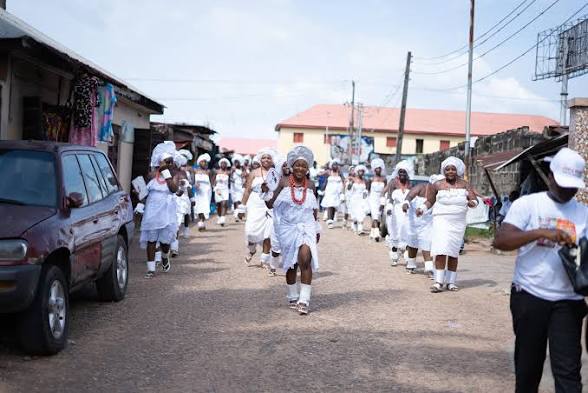
The 2026 Globacom-sponsored Ofala Festival in Onitsha, Anambra State, commenced in spectacular fashion on Wednesday with a vibrant Youth Carnival organised by the Onitsha Ado Youth Council (OYC), heralding the commencement of a celebration in which cultural heritage, youthful exuberance and royal tradition converge in magnificent harmony.
The carnival featured an array of cultural groups, including the Otu Odu Onitsha, Egwu Odu and Agbalanze, whose members, resplendent in elaborate traditional regalia, danced through the streets of Inland Town, Onitsha, in honour of the Obi of Onitsha, Igwe Alfred Nnaemeka Achebe. Beyond its festive allure, the procession provided a compelling showcase of the rich cultural heritage, enduring customs and collective identity of the Onitsha people.
One of the most captivating highlights of the carnival was the imaginative manner in which young participants recreated the grandeur of Nigeria’s traditional institutions. Adorned in meticulously crafted costumes representing eminent traditional rulers, including the Obi of Onitsha, the Oba of Benin and the Ooni of Ife, the youths transformed the streets into a living tableau of royal splendour, underscoring the capacity of cultural expression to bridge generations and keep ancestral traditions alive.
Following the street procession, the participants converged on the old Ime Obi, along St Stephen Anglican Church Road, where fashion parades and a variety of competitions among the participating groups added further colour, excitement and creative expression to the festivities.
The Ofala celebrations will continue with the Iru Ofala on Friday, October 16, and the Azu Ofala on Saturday, October 17. A Royal Banquet, organised by Globacom in honour of Igwe Achebe, is scheduled for Wednesday, October 21, at the Ime Obi, Onitsha. The festivities will culminate in an Ofala Thanksgiving Service on Sunday, October 25, at St Stephen’s Anglican Church.
In a statement, Globacom said its enduring association with the Ofala Festival reflected a corporate philosophy that recognises culture, alongside connectivity, as a vital instrument of national development.
“Ofala is far more than an annual cultural celebration; it is a living testament to identity, continuity and collective aspiration. It embodies the enduring spirit of a people, preserving the wisdom of their past while illuminating the possibilities of their future.
“Our sustained partnership with this magnificent institution reflects our conviction that preserving our heritage and advancing society are not competing imperatives, but mutually reinforcing pillars of a progressive nation. Culture provides the roots from which collective identity draws its strength, even as innovation creates new pathways to shared prosperity.
“This is the essence of Globacom’s clarion call, ‘Never Settle for Less’: to honour what is worthy, preserve what is precious and continually aspire to something greater,” the company added.
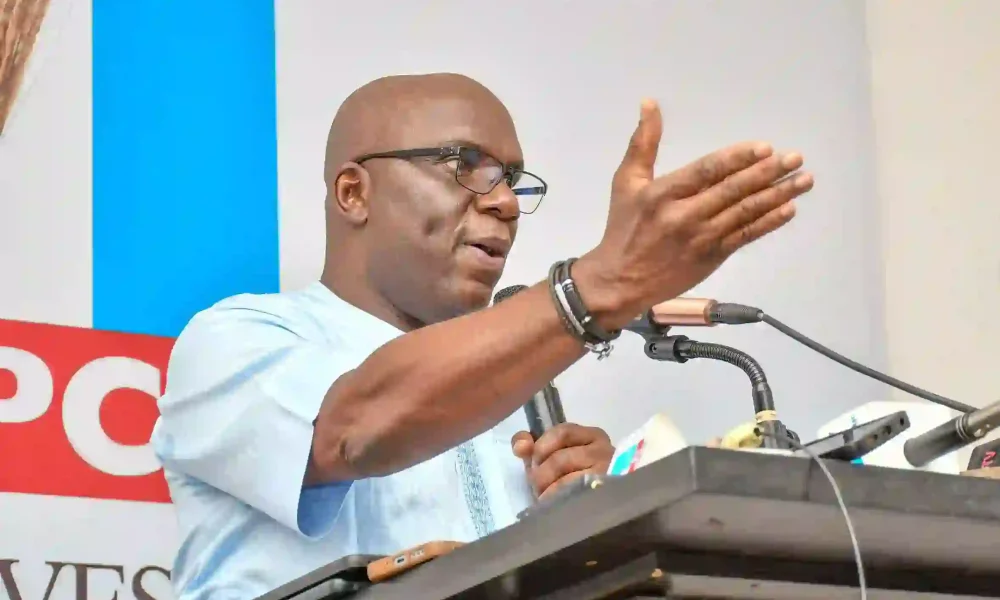
The National Publicity Secretary of All Progressives Congress (APC), Felix Muoka, has insisted that Nigeria and Nigerians are better off than ever before, saying the party will win the 2027 presidential election based on its positive records.
Muoka said the APC is working hard to secure voters’ support, adding that the party would not take Nigerians’ votes for granted.
Speaking on Politics Today, a Channels Television programme, Thursday, Muoka said the party’s preparations and campaign efforts are aimed at securing as many votes as possible in the next general elections.
He said: “Qualitatively speaking, our country is better. Nigerians are better today than they have ever been. Is there a country that has transited from this depressed economy, like we have had for decades, to that level of prosperity that didn’t go through these stages?
“Nigerians also understand that. So what the president has done is to give this country a fighting chance, not just at recovery, but at building the prospects for sustainable prosperity.”
On the inauguration of the APC Presidential Campaign Council, he said: “What you saw today and what we’ve been up to is really taking ourselves seriously. If we thought this was all said and done, we wouldn’t put in this level of energy and work in an effort to really get to the last vote within the electorate. We are not taking this for granted. We’re taking it very seriously. I’m sure that if our party was docile and we were doing nothing to campaign or put out our information, you would also bring me here to say that we had been very docile. We’re a political party.
“We are a party for a reason. We are in this to compete with other political parties and to win the support of Nigerians. Since 2023, there’s a reason that our party has been very successful. Since the last general elections, we’ve won fantastically all elections in which we have contested. There’s a reason for that. It’s because we prepare. We do our homework.
“Nigerians bought in and voted for our party massively in 2023. We won that election, even though there are elements who want to claim that they won without evidence. But we won that election without question. As I said a few minutes ago, in every other election that has been called since then, Nigerians voted, not Indians. Nigerians voted in all the other elections since 2023. We won by upwards of 90 per cent.
“Let me remind you that the APC is the governing party in this country, put in office by Nigerians. Already, the answer to your question has been codified in an election in which the APC is governing, not just at the centre, but in so many states in our country.”
On the APC’s chances in 2027, he said: “We will win the election. We are working hard to win the election. I think that Nigerians are going to stand tall, shoulder to shoulder with the APC to win the next election.”


