
Opinion
Opinion: And the Death of Meteors By Femi Kehinde

- /home/rhoncare/pointblank.ng/wp-content/plugins/mvp-social-buttons/mvp-social-buttons.php on line 27
https://pointblank.ng/wp-content/uploads/2019/06/Pius-1.jpg&description=Opinion: And the Death of Meteors By Femi Kehinde', 'pinterestShare', 'width=750,height=350'); return false;" title="Pin This Post">
- Share
- Tweet /home/rhoncare/pointblank.ng/wp-content/plugins/mvp-social-buttons/mvp-social-buttons.php on line 69
https://pointblank.ng/wp-content/uploads/2019/06/Pius-1.jpg&description=Opinion: And the Death of Meteors By Femi Kehinde', 'pinterestShare', 'width=750,height=350'); return false;" title="Pin This Post">
William Shakespeare, perhaps the greatest English poet and playwright, in his epic play- Macbeth, looking melancholic and distraught, as a result of the death of lady Macbeth, had soliloquized-
“Tomorrow and Tomorrow and Tomorrow, creeps in this petty pace from day to day, to the last syllable of recorded time, and all our yesterdays have lighted fools. The way to dusty death. Out, out brief candle.
Life’s but a walking shadow, a poor player that struts and frets his hour upon the stage and is heard no more. It is a tale told by an idiot, full of sound and fury, signifying nothing.”
The world is replete with history of men who came in a jiffy and left so soon. They are usually referred to as meteors.
A meteor is like a shooting star. It sparkles, it dazzles, it brightens up, but it is also a falling star. They are also like joy, that has a slender body, that breaks so soon- “Ayo abara bin tin,” as was depicted in Ola Rotimi’s epic play- “The gods are not to blame.” A meteor rises fast and disappears at the apogee (height) of its glory. Meteors are always messengers, usually in a hurry to deliver their messages and disappear.
Meteors are like-
Raphael Ernest Grill Armattoe -12th of August, 1913 – 22nd of December, 1953
Duro Ladipo-1931-1978, Walter Rodney-23rd March, 1942 to the 15th June, 1980 A Ghanaian doctor, author, poet and politician.
Dr. Walter Rodney, prominent scholar, historian, political activist- 23rd march 1942 to 13 June 1980.
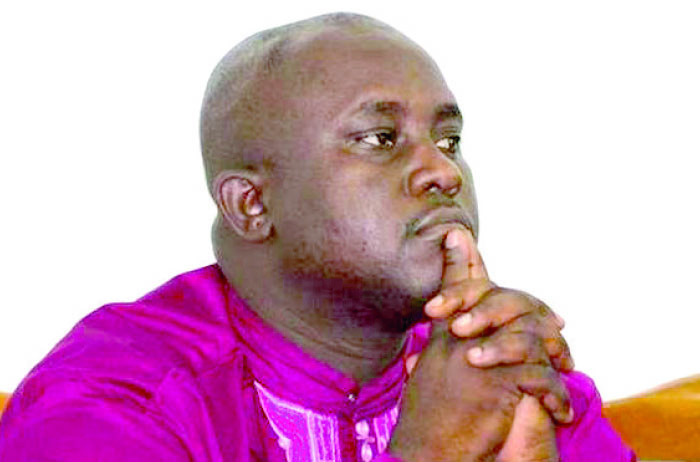
Pius Adebola Adesanmi 1972 to 10 March 2019.
Joseph Sanusi Gbadamosi Adegoke Adelabu- Penkelemesi a dazzling politician, meteor and iconoclast- 1915-1958
Olusegun Awolowo, January 20 1939 to July 10 1963.
Tunji Ogunkanmi founder and promoter- Cornerstone Insurance Plc, October 5 1960 to November 5, 2000.
Raphael Ernest Grill Armattoe – 1st August, 1913 to 1953
He lived for 40 years. He was a Ghanaian doctor, author, poet and politician. He was nominated for the 1949 Nobel peace prize and was a strong campaigner for the unification of British and French Togo land.
REG was born at keta in the Gold Coast, in what is now known as the Volta Region of Ghana. After his basic education in the Gold Coast, he left for Germany in 1930, at the age of 17, for further studies.
He studied in Germany, France and the Ireland. He eventually qualified as a medical doctor in Edinburgh and established his own private practice.
His research for the use of the “Abochi drug” against human parasites, led to his nomination for the Nobel prize in physiology or medicine in 1948.
Armattoe later devoted more time to writing. He returned to the Gold Coastin 1947 and set up a medical clinic at Kumasi, at the Ashanti region.
He turned his attention to politics, writing and poetry. His first collection of poems- “between the forest and sea,” was published in 1950.
Armattoe and Kwame Nkurmah were of different political divides. He joined the Ghana Congress Party( GCP) rather than Nkurmah Convention People’s party (CPP)
Armattoe died young and he had predicted his death in a popular poem – “the way I would like to die.”
He had said in the poem, he would like to die while the dew is wet on the ground. The dew is wet on the ground in the morning – a metaphorical phrase to express the morning of life i.e. when one is young.
“This is the way I would like to go
If you must know
I would like to go while still young
While the dew is wet on the grass
To perish in a great air crash
With a silver plane burning bright
Like a flashing star in the night
While the huge wreckage all ablaze, shines brightly for my last embrace..
I’d like to see the flames consume
Each nerve and bone and hair and nail
Till of dust naught but ash remains
Or as stone, swiftly sink unseen
But if I should hear someone wail
Because dust has gone back to dust
Mad with fury, I shall return
To smite the poor wretch on the head
So let me go when I am young
And the dew is still on the fern
With a silver plane burning bright
Like a flashing star in the night…”
In 1953, Armattoe travelled to New York City, leading a delegation to address the United Nations about the “Eweland question”, seeking international support for a union between British and French Togo. On his way back to the Gold Coast, he visited his daughter Irusia, at the time a student in Dublin, Republic of Ireland, and then Germany. He fell ill and died in a hospital in Hamburg. His wife reported that he said he had been poisoned by some unknown persons. He had apparently been attacked previously by supporters of Kwame Nkrumah.
Armattoe was married to Swiss-born Leonie Schwartz, who was also known as “Marina”. They had two daughters, the elder, Irusia, being born in Derry. Armattoe and his family lived at Kumasi in Ghana until his death. His father, Robert Glikpo Armattoe, was a merchant who traded mainly with the Germans and also studied local indigenous languages.
R.E.G Armattoe, Rest in perfect peace.
Duro Ladipo-1931 to 1978
He was one of the best known Yoruba theatre icons, playwrights and stage theatre iconoclast. Like his name sounded, he was born, several times, before he finally stayed, hence the name – Duroorike
His stage plays captivated Yoruba myths, pantheons, folklores and history. His most famous play- Oba Koso (the king did not hang )was a dramatisation of the Yoruba story of how Alaafin Sango became the orisha of thunder. This play received international acclaim at the first common-wealth art festival, Berlin in 1965 and on a European tour packaged by his mentor- Professor Ulli Beier.
Duroorike, was raised in a Christian family. His father was an Anglican church priest in Osogbo. However, Duro’s interest in stage plays, drama and history, may have been influenced by his grandfather, who migrated to Osogbo after the Jalumi war.
His grandfather was a Sango priest, and was well versed in the Yoruba mythology, especially those emanating from old Oyo.
At a young age, Duro Ladipo sneaked out of the vicarage to watch Yoruba festivals. As a choir master in the church, he scandalised the church, by including Bata drums in the Easter Cantata, that he had composed for the church and he was thereafter excused from the church choir group.
He thereafter started his home theatre group in 1961, but he became fully established, with the founding of the Mbari Mbayo club in Oshogbo.
With a soaring popularity and fame of a theatre icon, he produced Oba Moro in 1962, Oba Koso and Oba wa ja, in 1964.
He was part of the Mbari Mbayo club in Ibadan in 1961 and he later transformed the club into a cultural centre, art gallery and a meeting point for young artists seeking to develop their talents in Oshogbo and its environs.
Duro Ladipo wrote quite a number of plays such as – Suru Baba Iwa and Tani mo owo iku.
He also produced stage plays for television stations. He produced- “Bode wa sinmi” for the Nigerian Television Authority, Ibadan.
He dispensed with the traditional dances and the opening and closing Glee’s, usually employed for bracketing performances.
Ladipo expressed his passion for Yoruba culture and tradition through drama, music , dance and stage performance.
On the 11th of March, 1978, at the age of 47, Duro Ladipo breathed his last, after a brief illness in Oshogbo. Within this short space, Ladipo had dominated the theatre world like a colossus. May the soul of this thespian, theatre icon, dramatist and playwright, rest in perfect peace.
Walter Rodney – 23rd march 1942 to 15th June, 1980 was born into a working class family in George town, Guyana.
He was an exceptionally bright student, a champion debater that earned him a scholarship at the university college in the West Indies, Jamica. He graduated in 1963 at the age of 21 with a first class degree in History. In 1966, at the age of 24, Rodney earned a PhD in African History, at the school of African and oriental studies, England.
Rodney wrote his book- “A history of the upper guinea” in 1970 and was widely acclaimed for his originality. He travelled widely and became very well known internationally as a scholar, activist and a formidable orator. He taught at the university of Dar es Sallam in Tanzania, between 1966 to 1967 and 1969 and 1974 and briefly at his Alma matter- University of the West Indies in Mona in 1969.
On the 15th of October, 1968, the government of Jamaica, because of Rodney’s socialist inclinations, declared him a persona- non Grata and was banned from ever entering Jamaica and was also subsequently dismissed by the University of the West Indies.
This harsh political stand and vendetta on Rodney, by the Jamaican Prime minster, Huge Shearer, led to a mass uprising against the government by students and the poor of West Quinton, which escalated into a riot, known as the “Rodney riot.”
This riot, which resulted in several deaths, hazards and violence, caused the Jamaican government, millions of dollars in damages.
The riot triggered an increase In political awareness across the Carribbean, especially among the Rastafarian section of Jamaica and was well documented in Rodney’s book, – “the groundings with my brother” published in 1969.
In 1969, at the age of 27, Rodney became a professor of history at the University of Dar-es Sallam.
There, he served as a professor until 1974. In 1972, he wrote his epic and most influential book- “How Europe Under-developed Africa.”
The book became enormously influencial and it was perhaps among the first set of books, that would bring a fresh perspective on under development in Africa.
When in Dar-es-sallam, he was influential in developing a new center of African learning and discussion. In 1974, Rodney returned home to take up an appointment as a Professor at the university of Guyana, but the Guyanese government prevented his appointment.
Despite this denial, he became increasingly active in politics, he founded the Working People’s Alliance- a party that provided an effective and credible opposition to the Guyanese Government.
On the 30th of June 1980, Rodney was killed in Georgetown at the age of 38, by a bomb planted in his car- a month after returning from celebrations, that had seen Robert Mugabe’s emergence as the first President of Zimbabwe.
His brother- Donald Rodney, who was also injured in the explosion, said that a Sergeant in Guyana defence force, named Gurgle Smith, had planted in Rodney’s car, the bomb that killed him.
After the killing, Smith fled to French Guiana. There was a wide suspicion, though not proven, that the assassination was set up by Guiana’s then President- Linden Forbes Burnham. Rodney’s mission and struggle was to lift the cause of the masses (proletariats) from the hands of the bourgeoisies- (the elites class in the society.)
Rodney, one of the most outstanding and profound scholars on the African continent, certainly lived his 38 years, for the poor of Africa.
A fellow Professor- Winston Mark Bower at the Walter Rodney- commemorative symposium held at York college, in June 2010 remarked that Walter Rodney- was a pioneering scholar, who provided new answers to old questions and post old questions, in relation to the study of Africa.
Professor Wole Soyinka, a Nobel laurette, at a symposium, on Friday, the 27th June, 1980 at the Oduduwa Hall, University of Ife, Nigeria, remarked that- Walter Rodney – “was clearly one of the most solidly idealogically situated intellectuals ever to look colonialism and it’s contemporary heir- black opportunism and exploitation in the eye”
Rodney, perhaps must have lived ahead of his time.
May his soul rest in peace .
Professor Pius Adebola Adesanmi (27 February 1972 – 10th March 2019)
He was a Nigerian-born Canadian professor, writer, literary critic, satirist, and columnist. He was the author of “Naija No Dey Carry Last,” a 2015 collection of satirical essays. Adesanmi died on the 10th March 2019, when Ethiopian Airlines Flight 302 crashed shortly after take-off, from Addis-Ababa.
Adesanmi was born in Isanlu, in Yagba East Local Government area of Kogi State, Nigeria. He earned a Bachelor of Arts Degree in French language from the University of Ilorin in 1992, a Master’s degree in French from the University of Ibadan in 1998, and a PhD in French Studies from the University of British Columbia, Canada, in 2002.
Pius attended Titcombe College Egbe, Kogi state and earned his first degree at the age of 20, his master’s degree at the age of 26 and his PhD at the age of 30. Between 2002 to 2005 Pius was an assistant Professor of comparative literature at the Pennsylvania state university, USA.
In 2006, he joined Carlton university at Ottawa Canada as a full time Professor of literature and African studies and thereafter became the Director of the University’s institute of African Studies until, his death on the 10th of march, 2019, when Ethiopian airlines flight 302 to Nairobi crashed immediately after take off with all the 149 passengers and 8 crew on board. He was on his way to an African Union Conference.
At an early age in Titcombe college, he was an instant star, having represented the school in many competitions, with outstanding prices.
A friend of Pius- Professor E.C Osundu, of Providence College, Rhodes Island, USA, captured the very essence of Pius’ rather short but extremely remarkable and meteoric life, in an ellegy –
“Pius was a rare being, ebullient, a razor sharp mind, he was what the Yoruba called “Omoluabi”- a person of honour and good character. Yet when it came to polemics, he could easily move to a jaguda (ruffian) Nigeria has lost one of those who loves her most.”
In July 2018, perhaps as a foretaste of the impending doom, Pius was involved in a car accident along Oyo/Ogbomosho road, when the vehicle he was traveling in (a Nissan) had a head on collision with a car from Ibadan (a Toyota Privia.)
Pius was heading to Lagos as usual, on another international assignment, to catch a flight to Dakar, Senegal.
On this accident Pius wrote –
“Two hours after the accident, no help came. The evacuation culture was zero…”
He further said that people just gathered at the scene of the accident and were screaming and shouting. No one attempted to help.
A short while ago, Pius Adesanmi’s mother-Mama Louis Olufunke-Adesanmi, had been denied a visa, on three different occasions, to visit her son in Canada. The mother vowed that she would never apply for visa again to Canada and like a soothsayer; she said they would bring the visa to her in Ilorin.
The Department of Foreign Affairs, invited Pius as a Guest Speaker for an event. Pius did not waste the opportunity. After the lecture, he thanked the head of the consulars, during a tete a tete, and told him, that he could not understand, why his mother was denied entry visa to Canada to come and visit him. As was reported by Pius’ friend and Confidant – Pharmacist Sunday Akoji – “three days after the event in Toronto, a dark heavily tinted SUV, with a diplomatic plate number, pulled up in front of mama Adesanmi’s home in Ilorin.”
The Canadian High Commissioner sent his aides, who drove all the way from Lagos to Ilorin, to go and stamp Mama Adesanmi’s passport with a visa to Canada, in her living room, with a letter of apology, personally signed by the High Commissioner. Only a Pius could have attained this spectacular feat.
“Pius in his life time wrote regularly for Premium Times and Shahara Reporters. Adesanmi’s writings were usually content deep and in-depth. He was pungent and satiric, with emphasis on the Nigeria’s social and political system and culture, that needs a reawakening. His writings and his targets were usually among several others- politicians, Pastors and relevant public figures.
In September 2015, his remark on the decision of the Emir of Kano to marry an under aged wife could not but escape a personal response of the Emir who responded to Adesanmi by name.
In the same year, 2015, he gave a public Lecture titled – “Africa is the forward that the world needs to face.”
He wrote his first book – “The Way Fairer and Other Poems” in 2010 and in 2011, he also wrote, “You are not a Country, Africa.”
This collection of essays won the inaugural penguin price for the non fiction category.
Pius was also in 2017, a recipient of Canada bureau of leadership education award.
This seminal academic and public intellectual per excellence, lived the life of a meteor. A quick pace and double steps. Adesanmi’s death elicited a candle light memorial at Unity Fountain Abuja and in cities around the world.
“Pius Adesanmi’s must have lived two or more life times before” according to a poet- Chedu Eziana.
He left behind his wife – Olumuyiwa and her doting daughters – Damilare and Oluwatise.
Pius, Rest in perfect peace.
Joseph Sanusi Gbadamosi Adegoke Adelabu
He was born on the 3rd of September, 1915 and died on the 25th of March, 1958, certainly lived like a meteor and his rise was meteoric.
He was Ibadan’s most prominent politician of his time. He was born in Oke-Oluokun, Ibadan, to Sanusi Ashiyanbi Adeyege Adelabu and his mother was Awujola Ajoke, who died in 1920, when Adegoke was still an infant.
Although born a Muslim, he was sent to a secular school – The Saint Davids CMS Elementary School, Kudeti Ibadan, between 1925 and 1929 and the CMS Central School, Mapo Ibadan in 1930. He had double promotions in the elementary and primary schools, he proceeded to the Government College Ibadan, where he also had double promotion. He left Government College in Form 4, and proceeded on a U.A.C scholarship to Yaba Higher College, Yaba Lagos, in 1936, which was then Nigeria’s only higher college.
Adelabu Adegoke had said of his educational exploits-
“I had a brilliant scholastic career, earning accelerated promotions on three occasions in the elementary, primary and secondary schools respectively. Despite this, I never took a second position throughout my school days. Instead, I was always several laps ahead of my runner up and not infrequently, saved tutors from tight holes.”
He was perhaps the most brilliant scholar that had passed out of the Government College, Ibadan. As was attested to by his contemporary and colleague in Government College- Professor Sabori Biobaku, who attested of his educational brilliance as thus-
“Adelabu was not much good at sports, although he subsequently distinguished himself at the long distance events, especially the half mile and mile races. It was in his studies that he excelled. At the end of his second year, he received a double promotion from class two to class four and was top of that class from the first term till the end of his time at the college. He was perhaps the brightest boy that Government College Ibadan has ever produced.”
His head master at the Central School Mapo- Chief James Ladejo Ogunshola was bereaved and Adegoke, despite being a pupil, quickly came to the rescue by taking up the classes in the absence of the bereaved headmaster. The headmaster, a diarist, wrote in his diary of Wednesday, the 15th of February 1935;
“Master Adegoke Sanusi, an old boy of central School and a pupil of Ibadan Government College who had been helping me since Monday in the school also rendered help today; he took my class in all the subjects for today”
He was instantly employed by the U.A.C, as its first African Manager in the produce section and later the singlet factory section of the Haberdashery department. He was in the U.A.C for four years and later joined the civil service for 7 years in the cooperative department and eventually, for another 5 years, was doing his own business as a private entrepreneur. He later took sojourn in partisan politics, from where he rose from comparative obscurity, into so strong a lime light, that he had completely dazzled and baffled his opponents and admirers.
At the first meeting with Adelabu, one would be easily amazed about his strength, resourcefulness and also how he managed to get his magnetic force with which he captured his followers to the point of fanaticism. His admirers usually called him “portable Ade” and you would also easily wonder, according to him – “how my enemies would enjoy carrying a small keg of explosives?”
He had a steady and turbulent rise in politics. He was a councillor, chairman of the Ibadan Divisional Council, member of the Western House of Assembly and Federal House of Representatives, on the platform of the NCNC, Western Secretary of the NCNC and later rose steadily from the rank and file of the everyday politician to hold the post of Minister of Natural Resources and social services after the Federal Election of 1954.
The story goes that during campaigns for election, while others are talking themselves hoarse, Adelabu won over his supporters with inspiring songs to which all and sundry dance along the streets of his constituency.
Adelabu revels in the pomp of the worshiped and does not intend to conceal his love for their worship. As a restless and busy politician, he told a journalist during a press interview- “I can only spare you a few minutes”; and when he really got down to business, he refused to sit down, and he said- “I talk better when walking about.”
Every morning, the drummers and praise singers he took to Lagos from Ibadan, would wake up the elitist neighborhood of Ikoyi, with drumming and singing, eulogizing the exploits of the Ibadan great man and grass root politician. The Europeans or “Oyinbos” in the neighborhood, protested vehemently against this early morning nuisance and they also addressed a press conference. Adelabu in his usual style, made a minced meat of this protest, asking them to go back to their country, if they do not like his style and that was the end of the protest.
As minister in the Federal Government, Adelabu was given an official car. He took the car to his constituency in Ibadan and summoned a meeting. After the meeting at his Oke-Oluokun residence, he asked his constituents at the meeting, to be riding in the car in a group of four, from his Oke-Oluokun residence in Ibadan, to Beere round about, to savour the joy of ministerial ride. This audacious act hit the newspaper headlines the following day- “Talakawas ride in ministerial car”.
In 1956, Adelabu Adegoke left the Federal Parliament, soon after; he faced a series of criminal charges, ranging from bribery and corruption to disturbing the peace. From all these, Adelabu emerged unblemished to continue his fight for the down trodden.
During this trial, his admirers went on the street of Ibadan to sing and eulogize him with the popular song- “Adelabu ma ko owo wa na!
Igunnu loni Tapa, tapa loni igunnu!”
i.e. “Adelabu steal our money the more!
Igunni owns Tapa, Tapa owns Igunni! ”
Then on March 25, 1958, came another sensational story about the man whose whole life had been like a meteoric flame. The story was that Alhaji Adegoke Adelabu was dead!
How did he die? Some said he had been shot. Some said he was killed with juju. Many others said he was run over, by political enemies.
But the fantastic story of his death had gone around Ibadan. Alhaji Adelabu dead? Impossible! But if he’s dead, others will surely die with him! Down with his killers! Down with all those who have hands in his death! Kill and burn them. Spare no one. Let no one live after Ade! Over his grave let us March!
That was the shout of the Ibadan masses and it was no idle cry, Ibadan became a besieged and enraged city. To avenge his death, twenty people, possibly including those who do not know him in person, were done to death by the irate crowd. Many houses were set on fire. Much property was lost.
When the law recovered from the shock, it recovered by arresting 564 persons. Of these, 102 stood trial for murder, 25 were acquitted and discharged by the lower court, and seventy seven were sent to face the Assizes.
Adegoke Adelabu was certainly the architect of grass root politics in Ibadan and with him went a certain glamour from Ibadan politics.
He was popularly known as “Penkelemensi”, i.e peculiar mess, which was his usual refrain when making contributions on the floor of the Western Region House of Assembly.
Adelabu’s sudden exit, ignited a volcanic eruption in Ibadan’s political firmament and a lot of distinguished personalities paid glowing tributes to this stormy petrel.
Chief H.O Davies, a front line Nigerian Nationalist painted this epithet-
“Adelabu’s life in my mind, appears to have been something like a meteor, which shines with conspicuous brilliance for a short period and disappears again into the unknown”
This was further corroborated by his friend and classmate in Government College- -Professor Saburi Biobaku who also commented in his condolence remarks-
“maybe he was one of those rare phenomena who dazzled the world by their brilliancy only to leave behind memories of what might have been”
His friend and colleague in the Federal Parliament and also Prime Minister of Nigeria- Abubakar Tafawa Balewa, in his tribute in the Daily Times of 27th March, 1958 said-
“Alhaji Adegoke Adelabu was an intellectual and his capacity was recognized by his opponents” and that … “if anybody died fighting for a cause, it was Adelabu. His death was not only a loss to NCNC, but to all politicians in the country. I am really sad about his death.”
His friend and leader, Dr. Nnamdi Azikiwe while expressing his regret on the painful exit of Penkelemensi, also said of him-
“A man of conviction and did not disguise his feelings on any particular issue” and that he was- “a man of amazing intelligence, ready wit and uncanning understanding of human nature.”
Chief Obafemi Awolowo, the then Premier of the Western Region, summed it up, when he said-
“Alhaji Adegoke Adelabu was, in his life time, and ever since he entered politics, a fighter first and last, with all the characteristics of a fighter. He was fearless, formidable, forthright, often caustic and uncompromising. In his death, the NCNC had lost a very able, indomitable and extremely resourceful leader and Nigeria, a most colourful, versatile and undoubted nationalist.”
The story of the passage of Adegoke Adelabu was equally strange and interesting. Unusually, he woke up his household at about 4:30am, had his morning prayers, had his shave, bath and toiletries, had his usual breakfast of Akamu (pap) and summoned his young children for a meeting.
As recalled by his first daughter- Adedoyin Jagun, who was about 8 years old then, her father, Adegoke Adelabu admonished them early in the morning-
“Elo mu ara yin se giri
Ori lomo ibi ti ese nre”
– “you should all work hard and be up and doing, it is only the head that knows where it is to go with the feet.”
At about 7:00 am, he entered a Peugeot 205 car that belonged to his white friend – a Syrian British national, who had come from Lagos to pick him on a business trip.
He called his aides- Adeleke and Ganiyu and he bid them goodbye. Adegoke Adelabu left no single penny in his bank account. The two houses he had at Oke Ado, he had sold and kept the money in the bank until later, when he withdrew the money gradually, to cater for the poor of Ibadan. He left his Oke-Oluokun residence as his only property. Adelabu also took loans from the bank to buy the Auxmobile car with Registration Number- IB-121, which he used as a private car.
Oba Lamidi Olayiwola Adeyemi III, being so enamoured with the life and times of Adegoke Adelabu, would easily, always, regale his audience, at any given opportunity, with memorized verses of Adegoke Adelabu’s memorable quotable quotes.
The glory of Adegoke Adelabu Penkelemensi, will continue to gather legendary coatings, as the years go by and as the story of his greatness passes from one generation to another.
Akande Iji Oloye Igbetti, may your soul continue to rest in peace.
Olusegun Awolowo-
He was the son of Chief Jeremiah Oyeniyi Obafemi Awolowo, the first Premier of the Western Region – 1954-1959. He was born on the 20th of January, 1939 and died on the 10th of July, 1963.
Segun attended Agbeni Methodist Primary school, Agbeni, Ibadan between 1943 and 1951
In 1952, he was admitted to the Igobi college, Lagos, where he came out in the Grade one division at the WASCE in 1957.
At the age of 18, Segun proceeded to the United Kingdom, where he studied Law at the Cambridge University, and like his father Obafemi, was called to the bar at the Inner Temple bar, in August 1962.
His classmates at the law school were- Ernest Shonekan, Rasheed Shitta-Bey, later, former member of the house of representatives, in the second Republic and owner of the Jabita hotel, Ikeja Lagos.
Ernest Shonekan, later became Nigeria’s Interim President (26th of August 1993 to 17th of November, 1993) Aderoju Aderemi, later judge of the high court of Oyo State and later Osun state, KunleOlasope and a host of others.
At the Agbeni Primary school, his classmates, friends and colleagues were his Bossom friend; Kunle Olasope, Adekunle Aromolaran, now Oba Adekunle Aromolaran- the Owa Obokun of Ijesha land.
After his call to the bar, and on his way to Lagos, he visited his friend, Abayomi Akintola, the son of Chief Ladoke Akintola, who was then also, studying in Dublin.
His life was full of promise – he walked into the Western Region crisis. He was intelligent, cool headed and a brilliant advocate.
Segun went into full blown law practice in Ibadan, and displayed the intellectual depth of his father – Obafemi Awolowo, who in the Memudu Lagunju case, was described by the presiding judge, as – “a terrible cross examiner” in 1946. He was Counsel for Adetoyese Laoye (who later became the Timi of Ede.) The Western Regional Crisis of 1962 had brought in Dr. Moses Majekodumi as the Sole Administrator of the Western Region. The Administrator set up the Coker Commission of Enquiry to look into the affairs of some statutory corporations in the Western Region. The commission was headed by Justice George Baptist Ayodele Coker. The commission was then known as the Coker Commission of Enquiry.
Awolowo was at this period, facing a treasonable felony charge and was detained at the Broad Street Prison in Lagos.
Obafemi Awolowo was one of the main targets of this commission of Enquiry.
Segun was one of his father’s counsels at the treasonable felony trial, as well as the Coker Commission for Enquiry. At his leisure, Segun enjoyed life to the brim and he usually enjoyed his evenings in the company of some of his friends – Tunji Fadairo, Kunle Olasope and others.
In this early age, even though not married, Segun already had two children- Funke, born in London, by Deola Fasanya and Segun that was born by Abba Koku, shortly after his death.
On the 9th of July 1963, Segun prepared for a trip, the following day to Lagos, to appear as one of his father’s counsels at the Coker Commission of Enquiry and was later to proceed to the Broad Street Prison after court session, to see his father.
The evening of July 9, saw him at the Osun marina restaurant, in the company of his friends, to enjoy their usual drinks, social dalliance and camaraderie. The Osun Marina restaurant, was then at the annex of Obisesan hall and was owned by Saliba-a Lebanese, with Eddie Okonta – as a resident artist/musician. Paradise Club, now Femi Johnson’s Broking House, was also one of their usual rendezvous. Roy Chicago was the resident musician.
Segun, usually called “quicky” and “lucky lucky” by his friends, did not give any premonition of their last supper.
On Wednesday, the 10th of July, 1963, which later turned out to be a harsh Wednesday, and coincidentally the 53rd birthday anniversary of Chief SLA Akintola, the then Premier of the Western Region, he left their Oke-Bola residence, for a fateful trip to Lagos and was driven by his younger sister’s driver – Ogunjinmi Odunlami, popularly known as “No paddy”.
He had bought his daily newspapers at the Foko junction in Oke-Ado, and looked forward to a safe trip to Lagos.
Unfortunately, some few kilometres outside Ibadan, precisely around Aba-Nla, there was a ghastly motor accident, that took his life. He was rushed to the Adeoyo hospital, but was brought in dead. He had a gash on his forehead.
The Adeoyo hospital founded in 1926 from where the University College Hospital, (UCH) took off in 1956 was one of Ibadan, perhaps, Nigeria’s best medical centers. Segun died at the age of about 25 years.
Awolowo heard this tragic news from his transistor radio at the Broad Street prison.
Abraham Adesanya went later to the Broad Street prison, to break the news of this irreparable loss.
Segun was buried in Ikenne the same day, and a memorial service was held for him at the Saint Saviour’s Anglican Church, Ikenne.
Every home in Nigeria, was deeply shocked at the untimely and tragic death of Olusegun, more particularly, considering the incarceration of chief Obafemi Awolowo in prison at this point in time. Dr. M.A Majekodumi, Federal Minister and former sole administrator of the Western region, in his sympathy message to Awolowo said –
“You have bore many trials in the past with Christian fortitude and I know that in this current trial, your faith will sustain you.”
Dr. Taslim Olawale Elias, then the Attorney General of the Federation and Minister for Justice, while consoling Chief Awolowo wrote –
“His untimely death is a serious blow to the Nigerian bar.” Segun would have been 80 years in January this year. May his soul continually find peaceful repose with the Lord.
Tunji Ogunkanmi -October 5 1960 to November 5 2000
He was the promoter and founder of Cornerstone Insurance Plc. He was born in the agrarian community of Ile-Ogbo, of Osun state and the supersonic speed of his accomplishments in the insurance industry, is a great study in resilience, hardwork and abundant God’s grace.
Tunji had his primary education at Ile-Ogbo and his secondary education at Iwo, where he came out with distinction (Grade one) in his West African School Certificate Examination in 1978 and also, in flying colours at the higher school certificate level, giving him an express admission into the university of Lagos, where he graduated with second class upper division in Insurance in 1984.
Within 3 years of his graduate studies, he obtained the Associateship of the Chartered Institute of Insurance, London and he was admitted a Fellow of the Chartered Insurance Institute in 1990, at the age of 30.
Shortly thereafter, in 1991, he founded Cornerstone Insurance at the age of 30 and became the company’s first CEO and the youngest CEO of any Insurance Company as at that time. Without a silver spoon, he dreamt big and the dreams came through.
He fought for the actualisation of his dreams and proved that a boy born and raised in Ile-Ogbo, Osun state and whose first and real experience of Lagos, was when he gained admission to the university of Lagos, to study Insurance, could actually make it big. At the time, some of his friends were looking for paid employment, he was already sitting atop an insurance company as CEO
Within a short span of sitting atop the leadership of the cornerstone Insurance company, he was described as-” a team builder and motivator per excellence, highly innovative, pragmatic and an embodiment of knowledge; no half measures.
Within this short span too, Cornerstone had moved to his own premises, a high rise building in Obalende, Lagos.
To his staff he had said –
“Everywhere I go, people bombard me with commendations about how cornerstone has changed the narrative of the insurance industry, forgetting that not I but all of you (staff) are responsible. You are the one doing the work, I only come around, play golf and make you laugh. I thank you guys for making all these happen.”
Within these periods, he was a member of the governing Council of the Nigerian Insurance Association (NIA), where he also made his indelible mark.
On the night of Saturday, the 5th of November 2000, Tunji went out to attend a friend’s birthday party and he was caught in an armed robbery attack on Falomo bridge, Lagos, that took away his life along with his friend – Deepak Mehta, the Indian Canadian Managing Director of the now defunct Equitorial Trust Bank.
His life was cut short barely a month to his 40th birthday.
Until his death, Tunji worked hard, dreamt big, was a friend to everyone around him, and was passionate about his home town- Ile-Ogbo. He took the name everywhere. Tunji led the company with his heart and also sat on the board of other great Nigerian businesses.
Tunji, may your soul rest in perfect peace.
In Yoruba pantheon, meteors are usually referred to as “Emere” and “Ogbanje” in Igboland. To these meteors, life is certainly not measured by its duration, but by its donations.
HON. (BARR.) FEMI KEHINDE
ATTORNEY AT LAW
AND FORMER MEMBER
OF THE HOUSE OF REPRESENTATIVES,
REPRESENTING AYEDIRE/IWO/OLA-OLUWA
FEDERAL CONSTITUENCY (1999-2003)
OF OSUN STATE.


By Tolulope A. Adegoke
“For too long, the world drew Africa small—and called the drawing truth. But no cartographer can shrink a continent’s destiny, and no century can belong to those who refuse to see. Africa is not arriving on the map; the map is finally arriving at Africa.” – Tolulope A. Adegoke, PhD
Introduction: The Cartographic and Conceptual Reckoning
For centuries, the world’s understanding of Africa has been mediated through a distorted lens—one that diminished the continent’s physical scale, obscured its historical agency, and relegated its people to the margins of global narrative. That lens is now being shattered. In a move that carries profound symbolic and practical weight, the United Nations General Assembly has endorsed an African-led initiative encouraging the global adoption of the Equal Earth cartographic projection, replacing the centuries-old Mercator projection that inflated Europe and North America while shrinking Africa to a fraction of its true size. The African Union Commission Chairperson Mahmoud Ali Youssouf captured the significance of this shift with remarkable clarity: “A map may change how the world sees Africa, but Africa’s destiny will ultimately be shaped by how Africans see themselves. The time has come to see Africa in its true size, its true strength and its true potential”.
This cartographic correction is more than a technical adjustment. It is a metaphor for a larger transformation underway—the reclamation of Africa’s narrative, its place, and its power in a world order that is itself being remade. Africa is not merely a subject of global history; it is increasingly an architect of it. The old frameworks, designed in the mid-twentieth century for a world that no longer exists, are proving inadequate for the twenty-first century. As UN Secretary-General António Guterres observed at the Africa Forward Summit in Nairobi, “This is not a continent waiting for solutions. This is a continent producing them”.
The Physical and Demographic Realities: Africa in Its True Scale
To understand Africa’s new image, one must first contend with its sheer physical magnitude. Africa is the world’s second-largest continent, spanning approximately 30.3 million square kilometers—roughly 20 percent of the Earth’s total land area and six percent of its total surface. The continent’s demographic weight is equally staggering. As of 2026, Africa’s population stands at approximately 1.58 billion people, representing 19.1 percent of the global total. By 2050, this figure is projected to reach 2.5 billion, meaning that one in four human beings on the planet will be African. By the end of the century, population projections suggest Africa could be home to 3.8 billion people—a demographic transformation of unprecedented historical proportions.
These are not abstract statistics. They represent the future of the global workforce, the world’s largest consumer market in formation, and an immense reservoir of human potential. Africa has the youngest population of any continent, with a median age of approximately 19.7 years, compared to a global median of over 30. More than sixty percent of Africa’s population is under the age of 25. This youth bulge, often framed as a challenge, is increasingly understood as the continent’s most strategic asset—a demographic dividend that, if properly harnessed, will drive global economic growth for decades to come.
Beyond population, Africa’s natural endowments are extraordinary by any measure. The continent holds approximately 60 to 65 percent of the world’s remaining arable land, giving it a decisive voice in global food security and agricultural sustainability. It possesses roughly 30 percent of global mineral reserves, including critical minerals such as cobalt, copper, lithium, and rare earth elements that are indispensable to the global energy transition. Africa also holds 60 percent of the world’s best solar potential—yet receives only two percent of global clean energy investment. This paradox—abundance without realization—is the central grievance that African leadership is now determined to address.
From Norm-Taker to Norm-Shaper: Africa’s Institutional Awakening
The most consequential shift in Africa’s global position is not material but institutional. For decades, Africa was characterized as a “norm-taker”—a passive recipient of rules and frameworks designed elsewhere. That characterization is now outdated. Africa is increasingly acting as a “norm-shaper,” leveraging its collective voice and institutional weight to press for reforms that address the structural inequities embedded in the global system.
The African Union’s permanent membership in the G20, secured in 2023, marked a watershed moment in this transition. For the first time, the continent as a whole—not just individual states—has a seat at the table where the world’s major economies coordinate policy. African leaders have used this platform, alongside expanded BRICS+ engagement, to advocate for debt restructuring, fair financing conditions, and a reevaluation of the credit rating systems that systematically penalize African borrowers.
The numbers underlying this advocacy are stark. African countries face borrowing costs on average twice as high as OECD countries—a premium that drains resources that could otherwise fund infrastructure, health, and education. Some African nations pay up to three times the benchmark rate for borrowing. As UN Secretary-General Guterres noted, “That is not a market verdict on Africa. It is a verdict on the injustices of the system”. The global financial architecture, designed in 1945 for a world that no longer exists, treats Africa not according to its economic fundamentals but according to risk perceptions shaped by historical prejudice and institutional inertia.
African leadership is responding not with complaint but with construction. The African Development Bank is advancing a bold vision to reform the continent’s financial architecture from within, mobilizing African resources for African priorities. The Borrowers’ Platform, an African-led initiative, enables debtor countries to speak as one and negotiate from strength. These are not requests for inclusion; they are exercises in agency.
The Multipolar Opportunity: Africa in a Reconfigured Global Order
The global order is undergoing a profound transformation—from a unipolar system dominated by the West to a multipolar configuration in which multiple centers of power coexist and compete. This shift, while destabilizing in some respects, creates unprecedented opportunities for Africa. As Kevin Chika Urama, Chief Economist of the African Development Bank, observed, “More countries are at the table, and we are going to have more inclusive and greater options for countries to decide on partnerships, on trade relations, and on other things”.
The evidence of this diversification is visible across the continent. China remains a vital partner, with its zero-tariff policy for African products and large-scale infrastructure financing reinforcing its position as a major player. Gulf states—notably the UAE, Saudi Arabia, and Qatar—have expanded investments in logistics, agriculture, and renewable energy. India, Turkey, and Russia are deepening engagement through defense, technology transfer, and trade. The European Union is repositioning itself through its Global Gateway strategy and critical minerals partnerships.
This multipolar environment offers African states a degree of strategic autonomy that was unavailable during the Cold War or the unipolar moment that followed. As James Shikwati, director of the Inter Region Economic Network, argued, Africa has the assets to “play a critical role in international supply chains, position itself as a nonaligned member in geopolitical competitions, and anchor the continent for global security and trade frameworks”. The era in which Africa was compelled to choose sides is giving way to an era in which Africa can define its own terms.
Yet multipolarity is not without risks. The erosion of US trade predictability, the Trump administration’s tariffs, and the shutdown of USAID have accelerated African efforts to diversify trade and development partnerships. The collapse of Official Development Assistance—aid budgets cut, partnerships unwound, commitments walked back—represents what Guterres called “a crisis of solidarity”. But it has also accelerated African self-reliance. The continent’s economic resilience is notable: despite global headwinds, Africa’s average GDP growth reached 4.5 percent in 2025, outpacing the global average. Intra-African trade grew by 5.5 percent, reaching $213.8 billion, with manufactured and processed goods increasingly constituting the composition of that trade.
The Diaspora as Bridge: Brain Gain and Brain Circulation
No account of Africa’s new image would be complete without addressing the role of the African diaspora—a community estimated at over 140 million people scattered across the globe, whose contributions to the continent’s development are increasingly recognized as transformational. The old narrative of “brain drain,” which framed migration as a loss of talent and potential, is being replaced by a more nuanced understanding of “brain gain” and “brain circulation”.
Hon. Abike Dabiri-Erewa, Chairman of the Nigerians in Diaspora Commission, articulated this shift with clarity at the 2026 Black Engineering Week in Silicon Valley: “You left the continent. But you never really left. You live in two worlds and refuse to choose. You connect them. That is engineering at its highest level”. The diaspora functions as a living bridge between Africa and global opportunity, channeling talent, capital, and credibility back to the continent.
The numbers tell part of the story. Diaspora remittances to Africa constitute a vast, largely untapped pool of capital that, if channeled toward investment, could power industrialization, entrepreneurship, climate technology, and venture capital. But the diaspora’s contribution extends far beyond remittances. African engineers, founders, and executives in global technology companies serve as visible evidence of African excellence, lifting the continent’s image and inspiring the next generation of innovators. Their achievements challenge the deficit narratives that have long defined Africa in Western imagination.
For this potential to be fully realized, African governments must dismantle bureaucratic barriers and create enabling environments that make diaspora investment and participation genuinely attractive. The relationship must be reciprocal: the diaspora offers expertise and capital; African states must offer transparency, predictability, and genuine partnership.
Critical Minerals and the Green Transition: Africa’s Leverage
The global energy transition has elevated Africa’s critical minerals to strategic significance. The continent’s reserves of cobalt, copper, lithium, and rare earth elements are indispensable to the manufacture of batteries, solar panels, wind turbines, and the technologies that will define the twenty-first century economy. As Gordon K’Achola, CEO of One Stop Development Agency, observed, “The global green transition is pegged on Africa’s minerals. There is no way the Global North can exclude Africa from the discussion table”.
Yet the history of resource extraction in Africa has been characterized by a pattern that Guterres described with blunt precision: “Africa’s resources have been extracted, the value captured elsewhere, the environmental damage left behind”. Breaking this pattern requires not merely more favorable terms but a fundamental restructuring of value chains. The United Nations Panel on Critical Energy Transition Minerals has pointed the way: fair value chains, in-country processing and manufacturing, transparency, environmental and human rights standards, and meaningful benefits for affected communities. “No more exploitation. No more plundering,” Guterres declared. “The people of Africa must benefit, first and most, from the resources of Africa”.
This is not a plea for charity. It is a demand for economic logic. As K’Achola noted, Africa’s position in the green transition gives it leverage that it has not always possessed: “BRICS is coming in with open arms, ready to trade, ready to co-create solutions with Africa rather than impose them”. The question is whether Africa can coordinate its position effectively enough to translate that leverage into concrete outcomes.
The Unfinished Business: Representation, Security, and Internal Reform
Africa’s rising global influence is constrained by persistent structural deficits. The most glaring is the absence of permanent African representation on the United Nations Security Council. As Guterres acknowledged, “Africa’s continued exclusion from permanent representation is indeed a historical injustice—and we cannot accept it”. The Security Council’s composition reflects the geopolitical realities of 1945, not 2026. Its reform is not a matter of symbolism but of legitimacy and effectiveness. A Council that excludes the continent with the largest population, the most numerous member states, and the most pressing security challenges cannot credibly claim to represent the international community.
The challenge of coordinating African positions within international forums is equally pressing. Despite expanded representation in BRICS—with South Africa, Egypt, and Ethiopia as full members and Nigeria and Uganda as partners—there is no mechanism for African states to coordinate their positions within the grouping. As the International Peace Institute has observed, “despite this growing representation, there is no mechanism for African states to coordinate their positions within the grouping, raising questions about whether a larger footprint has translated into greater collective influence”. The absence of coordination risks reducing Africa’s collective bargaining power to a series of bilateral transactions.
Similar challenges exist within the African Union itself. The continent’s governance structures were designed for a unipolar world order and must be reimagined for the multipolar era. As James Shikwati argued, “These structures need to reevaluate their systems and be agile enough to carry Africa’s agenda in the unfolding multipolar world order”. The AU must become not merely a representative body but a strategic coordinating mechanism capable of articulating and advancing collective African interests.
Domestically, the picture is mixed. Africa’s projected GDP growth of 4.3 percent in 2026 is respectable by global standards, but high debt burdens, inflationary pressures, and declining development assistance constrain the continent’s ability to invest in its future. Youth-led movements in Kenya, Madagascar, Morocco, Tanzania, and Togo are challenging governance failures and entrenched authoritarian models, even as repression continues and international disengagement amplifies risks. The tension between Africa’s rising global voice and its uneven domestic governance remains unresolved.
Conclusion: The Future Is Not Written
Africa’s new image is not a matter of perception management or public relations. It is the product of material transformations: demographic weight, resource endowments, institutional assertiveness, and a multipolar global order that has created space for strategic autonomy. The continent’s place on the world map is no longer defined by its position at the periphery but by its centrality to the defining challenges of the century—climate change, energy transition, food security, and the future of work.
Yet rising influence is not the same as realized power. As the WION editorial observed, “Recognition without influence is merely applause”. Africa’s challenge is to translate its numerical strength, resource wealth, and institutional presence into genuine leverage. This requires coordination, not just representation; strategy, not just seats at the table. It requires African states to negotiate collectively, to add value to their resources domestically, and to build the industrial and technological capacities that will make their economies resilient and their voices authoritative.
The cartographic correction—the simple act of showing Africa at its true size—is a beginning, not an end. The deeper work lies in ensuring that the world’s mental maps, institutional architectures, and economic relationships reflect Africa’s actual significance. Africa is not seeking a larger place in the world; it is reclaiming its rightful place. The future of the global order will be shaped in significant measure by how that reclamation unfolds. As Guterres reminded the world in Nairobi, “It is not Africa that loses. It is the world that loses by the fact that the voice of Africa is not taken into account”. The world is beginning to listen. The question is whether it will act.
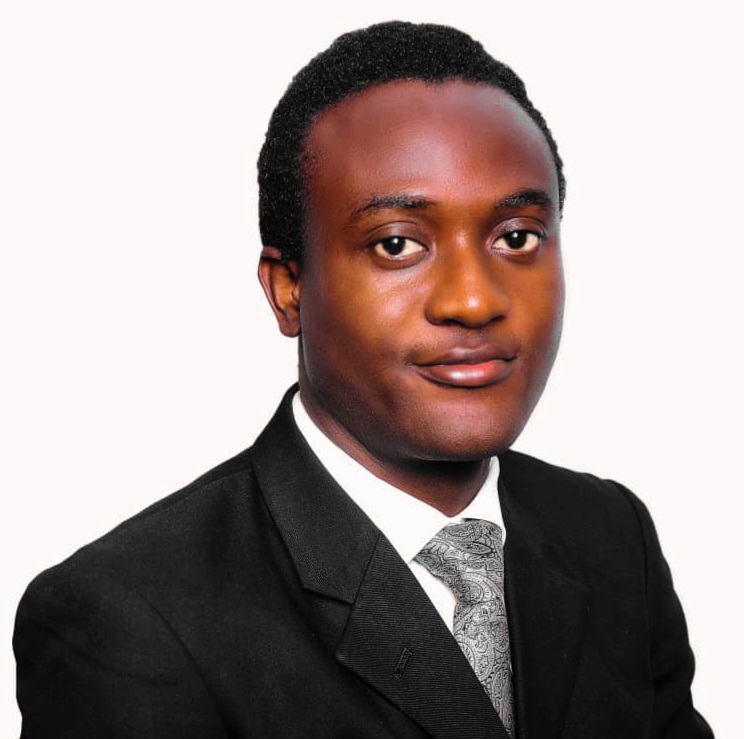
Dr. Tolulope A. Adegoke, AMBP-UN, is a globally recognized scholar-practitioner and thought leader at the nexus of security, governance, and strategic leadership. His mission is dedicated to advancing ethical governance, strategic human capital development, resilient nation-building, and global peace. He bridges the worlds of academic rigor and practical application, contributing to leadership discourse at the highest levels of policy and practice. He can be reached via: tolulopeadegoke01@gmail.com, globalstageimpacts@gmail.com
By Henry Ukazu
Dear Destiny Friends,
We cannot underestimate money’s importance. Money is good. Money is a blessing. Money is a leverage. Money is a therapy. It’s worthy of note that most people, who claim sick aren’t really sick; they are just in need of money. When a certain amount of money hits their account, they bounce back to life.
To show you how powerful money is, somebody once jokingly said, “Money can bring a dead man back to life”. There’s no doubt, money is good. Whoever tells you money is not good is from the pit of hell. Even the Book of Life says in Jeremiah 29:11, “My plan for you is to prosper in be in good health”. God, in his infinite wisdom, knowledge, and understanding, wants us to prosper because when we prosper, it helps to spread the gospel of the kingdom of God.
Think about it for a minute: if one does not have money, how can one do good? Even the good Samaritan had to provide money for the traveler who was attacked by robbers and left stranded on the roadside. It’s instructive to note that at that point in time, what the traveler needed was support and not words. Assuming the good Samaritan didn’t have money, he wouldn’t have been able to assist.
So, we all can agree that money is good and not evil, like some naysayers do to justify whatever narrative they have in mind. Even the scripture says in 1 Timothy 6:10, “Money itself is not evil; rather, the love of money is identified as ‘a root of all kinds of evil ‘” The word we need to focus on is the love of money. This is where lots of people get it wrong: loving money is not a crime; rather, the process of acquiring the money. Some people have literally sold their conscience to the devil, and as such, they are careless about the process of getting the money. These people don’t care if they engage in fraudulent and inhuman activities just to acquire money, instead of diligently working hard and smart.
The Book of Life further states in Proverbs 22:7, “The rich rule over the poor, and the borrower is slave to the lender”. Do you see why we all must make money legitimately to avoid being slaves to unbelievers?
For the sake of clarity, this is not a gospel article; I had to use the Bible scriptures to pass on a message about the importance of money.
The focus of this article is to show you how we can make money. It should be noted that money is everywhere, and as such, we don’t have to struggle to make money. Just like sand and air are everywhere, money is also everywhere. The only difference is that money must be earned before we can get it.
To understand the theory behind money being everywhere, just look at every industry; you’ll see that some people are making money, while some people are not making money. Some people might be wondering why some people are making money, while others are struggling. Well, there are many reasons for it. Some may have developed themselves; some may be called to work in that industry as opposed to doing it for money, or it could be a case of someone who has understood the skill of doing the business.
Every profession has the capacity to attract wealth, whether you are a lawyer, doctor, engineer, mechanic, accountant, pastor, teacher, politician, entertainer, artisan, or even one who works for a non-profit.
It’s sad to see some people jumping ships because they feel it’s greener on the other side instead of maintaining their life and focusing on their craft. After all, just like our fingerprints differ, our destiny differs.
Let me share a practical example. When I arrived in the United States of America, the economy was in shambles. There were no jobs. My late dad counseled me to read taxation law because, according to his friends, that’s the major that can secure me a job at the end of the day because human beings and corporations will always file taxes. My personal research also confirmed this to some extent.
It’s instructive to note that my late dad didn’t just love taxation because of the job security it may provide; his interest was primarily the monetary benefit he saw in one of my uncles, who is a tax practitioner. For the record, it was my uncle who convinced my dad to encourage me to study tax law, and that upon graduation I would make more money because I have a legal background as opposed to him, who has a finance background.
At the end of the day, I graduated, and the major began to irritate me because I wasn’t wired for numbers. It was only when I ventured into the social service and human capacity development space that I began to see great results in my work.
The moral of this analysis is to point out the importance of maintaining one’s lane because I have seen rich and struggling doctors, lawyers, engineers, entertainers, and artisans.
Furthermore, one can be in any state in Nigeria, Canada, the United Kingdom, the USA, and still make good money. While some people think they need to seek greener pastures in a foreign land, it’s important to note that while Canada, the United States of America, the United Kingdom, and Sweden, etc., have good economies, what works for one country might not work in another country.
Another point we should note is whether it is wise to travel abroad, because traveling is not for everyone. Some people might be better at staying in their home countries to develop or serve in different capacities, which they might be offered if they travel to developed countries. Moral: It’s better to be a king in your country than to be a servant in a different country.
Don’t get me wrong, Third World countries can’t be compared to developed countries; however, it should be stated that whatever has advantages also has its own disadvantages. When some people travel out, they might break even; some might regret why they traveled out because of the lifestyle, racism, and the associated rat race, while others may remain indifferent.
For me, the United States has been a blessing to me because it has afforded me the opportunity to publish three amazing trailblazers’ books, appear on television several times, meet globally respected people, and start a thriving human capacity development business.
So, it doesn’t matter where you are; what matters is for you to discover your path and the associated problems people are facing, then see how you can solve their problems. By doing this, money will locate you.
Furthermore, to make money, one doesn’t have to go to school. There are many professors who are struggling. Mr. Cosmas Maduka, a Nigerian businessman, philanthropist, and evangelist, who is the founder and chairman of the Coscharis Group, didn’t have a formal education. Today, he has employed professors and scholars to manage his wealth.
Also, there’s this group of people who pray their lives out in church, some trying to connect with a revered man of God for deliverance and prayer, instead of working on themselves and believing God for opportunities because, just like God is everywhere, money is everywhere. So, stay where you are and develop your craft and yourself.
In conclusion, as we all prepare to make wealth, it’s important to note we cannot make money on our own. I know we all love to make money; it’s instructive to note that despite all our efforts, knowledge, wisdom, connection, skills, capacity, competency, and capabilities, it’s imperatively important for us to look up to God and focus on him as the author and finisher of our life. We need divine intervention and support because it’s only God and him alone who has the power and capacity to grant us wealth, because he has the capacity, as stated in Sirach 11:29 (God can make a poor man to be suddenly and instantly rich). So, therefore, I will leave you with Deuteronomy 8:18, which says, “Remember then the LORD, your God, for he is the one who gives you the power to get wealth, by fulfilling, as he has now done, the covenant he swore to your ancestors”.
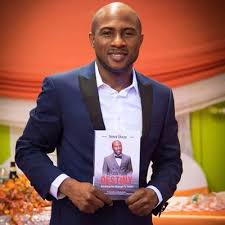
Henry Ukazu writes from New York. He works with the New York City Department of Correction as the Legal Coordinator. He’s the founder of Gloemi. He’s a Transformative Human Capacity and Mindset coach. He is also a public speaker, youth advocate, creative writer, and author of Design Your Destiny- Actualizing Your Birthright to Success, Unleash Your Destiny, and The Six Pillars of Success. He can be reached via info@gloemi.com
By Henry Ukazu
Dear Destiny Friends,
In the last two editions, we discussed passion and profit, and identified the relativity of the two. Today, however, the sensitive issue of love will be our target.
As powerful as love is, it can also be controversial. This is because there are many angles to it. Some people believe in love in contrast to the views of some others, however. While some think love is blind, others are of the opinion that love might not be blind afterall. The latter school of thought believes that one must love with common sense as opposed to being foolishly in love.
But while love is often described as a verb because it’s action-oriented functions, one cannot say they love someone or something without investing time and resources in them. As a matter of fact, a school of thought says that if you want to know a person, look at how the person spends their time.
Regardless of the aisle one belongs to, I strongly believe that true love exists. The only challenge most people have is that they love the wrong people, and they haven’t found people who truly love them for who they are. Today, I pray that what we love, loves us back.
I also believe that no one is too busy to do the needful. If anyone wants to check on you or be with you, they will make an intentional effort to reach out. I say this because no one is too busy to pick your call or even reply your message. If you reach out to anyone, and they are not available to pick up your call, they will surely make out time to revert to you, if for any reason, you are relevant to them.
To understand this message, imagine US President Donald Trump, Elon Musk, or even an idol whom you rever calling you; would you give them an excuse for not picking or returning their call? If my thinking is right, one will make a conscious effort to return the call at the earliest possible time.
One may wonder why I took time to explain love in this context; well, the answer is not far-fetched: love is the centerpiece of everything we do in life. If you love your job, your business, your academics, your relationship, your God, and your life, you’ll be intentional in harnessing it. You won’t want to lose it. According to Myles Munroe, whatsoever you mismanage, you’ll lose it. So, love is not an exception.
As mentioned earlier, when you love something, you’ll invest time and resources into it. To understand the concept of let love lead, we shall be discussing love as it relates to career, business, academics, relationships, God, and personal life.
Love and Career:
To understand one’s interests, look at what they spend their time on. It’s sad to see people who work in roles they are not passionate about just because they want to pay their bills. When you love your career, trust me, you won’t feel like you are working. As a matter of fact, one will not feel the stress of waking up every day to go to work. One can tell who loves their job by the way they do their work.
Love and Business
This is another interesting area of life. Most people engage in business that pays the bills; however, I believe if one has discovered who they are, they can make a living by focusing on their God-given talent to develop a business. For instance, I’m passionate about counselling, youth development, mentoring, and public speaking. Instead of working in roles in big industries that can pay me big money, I started my company, Global Empowerment and Mentoring Initiative, which is focused on Human Capacity Development to enable me to fulfil my heart desire and passion. I believe anyone passionate about something can creatively find a way to turn it into a business, and people will be paid for it.
Love and Academic
Another interesting area where we can allow love to lead is our academics. Just like love starts in the family, fulfillment in a career starts from the major one studies in college. This is simply because when we choose a major we love, it will lead us to an industry that’s befitting for our major. One of the reasons why a lot of people feel stressed, frustrated, depressed, and have suicidal thoughts is simply because they don’t like their major and where they work.
Trust me, if one loves their major and their work, they won’t think of taking their life. We have seen cases where they have money but are not happy with their job.
Love and Relationship
This is one of the most interesting areas of life to know if one truly loves. In our contemporary society, it’s almost impossible to find genuine love. However, it’s still possible for one to find true love, but it will be very rare. Most people will love you for what they will gain from you. Love ought to be symbiotic as opposed to being parasitic. When there’s love between two people, many of the fights that exist in relationships won’t exist.
For instance, one of the most debatable and controversial issues in marriage is the 50- 50 contributions. Some men support the idea of 50-50 because they also contribute to cooking, taking care of children, and other household chores which traditionally belong to women. Women, on the other hand, differ.
According to them, it’s the duty of the man to provide for the family. According to them, it makes no sense for them to contribute and also give men the respect they deserve. This set of women goes as far as saying that bathing a child and doing household chores are all part of being a responsible man. The narrative seems to be changing.
Here is my position. Where there’s love and understanding in a relationship or marriage, who provides and who manages won’t really bother. A man who loves his family (wife and children) won’t see cooking, bathing his children, and still gives his wife money as work. And a woman who truly loves her husband won’t see paying the bills as work when the man is incapacitated; neither will it make her disrespect her husband because he’s not financially stable to support the family, because they are committed to the relationship.
I can go on and on about love, but the fact and truth remains: when true love is at the center of the marriage or relationship, partners won’t even discuss if it is his money or her money, because both parties are one.
Love and God
This is another interesting area to know the mindset of someone. As Christians, we are advised to love God as we love ourselves. We can’t claim to love God and do things that are contrary to what God loves. In the same way, we can’t claim to love someone and hurt them. When we love, people can see it without us speaking. A typical example is the parable of the good Samaritan.
Love and Life:
Life is love and love is life. The summary of our life can be seen in how we live our life. Whether we are talking about education, career, business, health, personal development, family, relationship/marriage, entertainment, vocation, skill, finance, spiritual, etc. Love can be understood through how we live and love because everything rises and falls in life.
In summary, I know there are many twists to life; I suggest that, in whatever we do, let’s allow love to lead.
Henry Ukazu writes from New York. He works with the New York City Department of Correction as the Legal Coordinator. He’s the founder of Gloemi. He’s a Transformative Human Capacity and Mindset coach. He is also a public speaker, youth advocate, creative writer, and author of Design Your Destiny: Actualizing Your Birthright to Success, Unleash Your Destiny, and The Six Pillars of Success. He can be reached via info@gloemi.com


