
Opinion
Sermon: Admonitions 3


- Share
- Tweet /home/rhoncare/pointblank.ng/wp-content/plugins/mvp-social-buttons/mvp-social-buttons.php on line 69
https://pointblank.ng/wp-content/uploads/2019/05/Admonitions-1000x600.jpg&description=Sermon: Admonitions 3', 'pinterestShare', 'width=750,height=350'); return false;" title="Pin This Post">
By Babatunde Jose
In the name of Allah, the Beneficent, the Merciful: “There is none worthy of worship except Allah, the Ever-Forbearing, the Most Great, the Lord of the Tremendous Throne; the Lord of the Heavens, the Lord of the Earth, and the Lord of the Noble Throne. Ever-Living and One Who sustains and protects all that exists; by Your mercy do we seek Your aid. “
“0′ Allah, Your mercy do we hope for; so do not leave us, not even for the blinking of an eye. And make well for us all of our affairs. . . . . .”We seek forgiveness from Allah; He is the Ever-Living and the One who sustains and protects all that exists, and we turn to You in repentance.”
“O’ Allah, verily we are Your slaves; our forelock is in Your hand, Your order concerning us will be executed and just is Your judgment upon us. We ask You by all of Your names that you have named Yourself with, have revealed in Your book, have taught to one of Your creation, or is in Your knowledge only (from the matters of the unseen) — make the Quran the spring of our heart, the light of our chest, the remover of our sadness, and the purger of our anxiety. “
“O Allah, we seek refuge in you from anxiety and grief, from inability and laziness, from avarice and cowardice, from being engrossed by debt, and from being overpowered by men. . . .Allah (Alone) is Sufficient for us, and He is the Best Disposer of affairs (for us).”
Having prayed thus, there is no more cause for us to harbor doubt about the faithfulness of Allah. We must at all times be of good cheer; bearing a gloomy mien and frowning countenances are marks of a lowly character, a troubled nature, and hot-headedness. The Prophet said: “Do not disparage and underestimate any good deed (no matter how small it is), even if that deed was to meet your brother with a friendly countenance.”
Ahmed Ameen said in his book Fayd al-Khatir: “People who are always smiling not only make their own lives more joyful, but what is more, they are more productive people in their work and have a greater ability to live up to their responsibilities. They are more prepared to face difficulties and to find expedient solutions for them. They are prolific workers who benefit themselves and others.”
Given a choice between having status in society and plentiful money, and between having a happy, radiant, smiling self, I would choose the latter. For what is great wealth if it begets misery? And what is high position if what comes with it is constant gloominess? What good is the most beautiful wife if she transforms her house into a living hell? Much better than her — a thousand times at least — is a wife who has not reached such a pinnacle of beauty, but nonetheless has made her house a kind of paradise.
There are those souls that are able to turn everything into misery, whilst there are those that are able to derive happiness from the most difficult of circumstances. There is the woman whose eyes fall upon nothing but mistakes. Today is black because a pot is broken or because the cook put too much salt in the food: Then she flares up and curses, and no one in the house escapes from her execrations. Then there is the man who brings misery upon his own self and, through his disposition, heaps the same upon others. He is affected gravely by the most insignificant of things that occur to him, or that have occurred to him through his actions. He is drawn into misery by profits lost, by profits expected that went unrealized, and so on. The whole world from his perspective is black, and so he blackens it for those around him. Such people have much ability to over-exaggerate the trifles that occur to them. Thus they make mountains out of molehills. Their ability to do well is negligent, and they are never happy or content with that which they have: Discontented souls, they are never satisfied with little or plenty.
Most people do not open their eyes to the beauty of life, but open them only to gold or silver. They pass by a lush and luxuriant garden, a beautiful bed of roses, a flowing river, or a group of singing birds, yet they are unmoved by such scenes. All that moves them is crinkling of coins in their pocket. Money is but a means to a happy life. They have reversed this fact, have sold their happy existence, and have made money to be an end in itself.
Nothing causes the soul or the face to frown more often and with more intensity than despondency: If you want to be a smiling person, wage war against despondency and hopelessness.
The smiling soul sees difficulties, and loves to surmount them. When it sees problems, it smiles, reveling in the opportunity to solve and overcome them. The frowning soul magnifies it while spending all its time justifying. It loves success in life, but is not willing to pay its price. Don’t be a human lobster; the lobster waits on the beach waiting for the tide to rise and wash it into the sea, yet it could have crawled and reached the water.
Our Lord! Grant us what Thou didst promise unto us through Thine apostles, and save us from shame on the Day of Judgment: For Thou never breakest Thy promise (Quran 3:194)
Barka Juma’at and a happy weekend



By Tolulope A. Adegoke
“For too long, the world drew Africa small—and called the drawing truth. But no cartographer can shrink a continent’s destiny, and no century can belong to those who refuse to see. Africa is not arriving on the map; the map is finally arriving at Africa.” – Tolulope A. Adegoke, PhD
Introduction: The Cartographic and Conceptual Reckoning
For centuries, the world’s understanding of Africa has been mediated through a distorted lens—one that diminished the continent’s physical scale, obscured its historical agency, and relegated its people to the margins of global narrative. That lens is now being shattered. In a move that carries profound symbolic and practical weight, the United Nations General Assembly has endorsed an African-led initiative encouraging the global adoption of the Equal Earth cartographic projection, replacing the centuries-old Mercator projection that inflated Europe and North America while shrinking Africa to a fraction of its true size. The African Union Commission Chairperson Mahmoud Ali Youssouf captured the significance of this shift with remarkable clarity: “A map may change how the world sees Africa, but Africa’s destiny will ultimately be shaped by how Africans see themselves. The time has come to see Africa in its true size, its true strength and its true potential”.
This cartographic correction is more than a technical adjustment. It is a metaphor for a larger transformation underway—the reclamation of Africa’s narrative, its place, and its power in a world order that is itself being remade. Africa is not merely a subject of global history; it is increasingly an architect of it. The old frameworks, designed in the mid-twentieth century for a world that no longer exists, are proving inadequate for the twenty-first century. As UN Secretary-General António Guterres observed at the Africa Forward Summit in Nairobi, “This is not a continent waiting for solutions. This is a continent producing them”.
The Physical and Demographic Realities: Africa in Its True Scale
To understand Africa’s new image, one must first contend with its sheer physical magnitude. Africa is the world’s second-largest continent, spanning approximately 30.3 million square kilometers—roughly 20 percent of the Earth’s total land area and six percent of its total surface. The continent’s demographic weight is equally staggering. As of 2026, Africa’s population stands at approximately 1.58 billion people, representing 19.1 percent of the global total. By 2050, this figure is projected to reach 2.5 billion, meaning that one in four human beings on the planet will be African. By the end of the century, population projections suggest Africa could be home to 3.8 billion people—a demographic transformation of unprecedented historical proportions.
These are not abstract statistics. They represent the future of the global workforce, the world’s largest consumer market in formation, and an immense reservoir of human potential. Africa has the youngest population of any continent, with a median age of approximately 19.7 years, compared to a global median of over 30. More than sixty percent of Africa’s population is under the age of 25. This youth bulge, often framed as a challenge, is increasingly understood as the continent’s most strategic asset—a demographic dividend that, if properly harnessed, will drive global economic growth for decades to come.
Beyond population, Africa’s natural endowments are extraordinary by any measure. The continent holds approximately 60 to 65 percent of the world’s remaining arable land, giving it a decisive voice in global food security and agricultural sustainability. It possesses roughly 30 percent of global mineral reserves, including critical minerals such as cobalt, copper, lithium, and rare earth elements that are indispensable to the global energy transition. Africa also holds 60 percent of the world’s best solar potential—yet receives only two percent of global clean energy investment. This paradox—abundance without realization—is the central grievance that African leadership is now determined to address.
From Norm-Taker to Norm-Shaper: Africa’s Institutional Awakening
The most consequential shift in Africa’s global position is not material but institutional. For decades, Africa was characterized as a “norm-taker”—a passive recipient of rules and frameworks designed elsewhere. That characterization is now outdated. Africa is increasingly acting as a “norm-shaper,” leveraging its collective voice and institutional weight to press for reforms that address the structural inequities embedded in the global system.
The African Union’s permanent membership in the G20, secured in 2023, marked a watershed moment in this transition. For the first time, the continent as a whole—not just individual states—has a seat at the table where the world’s major economies coordinate policy. African leaders have used this platform, alongside expanded BRICS+ engagement, to advocate for debt restructuring, fair financing conditions, and a reevaluation of the credit rating systems that systematically penalize African borrowers.
The numbers underlying this advocacy are stark. African countries face borrowing costs on average twice as high as OECD countries—a premium that drains resources that could otherwise fund infrastructure, health, and education. Some African nations pay up to three times the benchmark rate for borrowing. As UN Secretary-General Guterres noted, “That is not a market verdict on Africa. It is a verdict on the injustices of the system”. The global financial architecture, designed in 1945 for a world that no longer exists, treats Africa not according to its economic fundamentals but according to risk perceptions shaped by historical prejudice and institutional inertia.
African leadership is responding not with complaint but with construction. The African Development Bank is advancing a bold vision to reform the continent’s financial architecture from within, mobilizing African resources for African priorities. The Borrowers’ Platform, an African-led initiative, enables debtor countries to speak as one and negotiate from strength. These are not requests for inclusion; they are exercises in agency.
The Multipolar Opportunity: Africa in a Reconfigured Global Order
The global order is undergoing a profound transformation—from a unipolar system dominated by the West to a multipolar configuration in which multiple centers of power coexist and compete. This shift, while destabilizing in some respects, creates unprecedented opportunities for Africa. As Kevin Chika Urama, Chief Economist of the African Development Bank, observed, “More countries are at the table, and we are going to have more inclusive and greater options for countries to decide on partnerships, on trade relations, and on other things”.
The evidence of this diversification is visible across the continent. China remains a vital partner, with its zero-tariff policy for African products and large-scale infrastructure financing reinforcing its position as a major player. Gulf states—notably the UAE, Saudi Arabia, and Qatar—have expanded investments in logistics, agriculture, and renewable energy. India, Turkey, and Russia are deepening engagement through defense, technology transfer, and trade. The European Union is repositioning itself through its Global Gateway strategy and critical minerals partnerships.
This multipolar environment offers African states a degree of strategic autonomy that was unavailable during the Cold War or the unipolar moment that followed. As James Shikwati, director of the Inter Region Economic Network, argued, Africa has the assets to “play a critical role in international supply chains, position itself as a nonaligned member in geopolitical competitions, and anchor the continent for global security and trade frameworks”. The era in which Africa was compelled to choose sides is giving way to an era in which Africa can define its own terms.
Yet multipolarity is not without risks. The erosion of US trade predictability, the Trump administration’s tariffs, and the shutdown of USAID have accelerated African efforts to diversify trade and development partnerships. The collapse of Official Development Assistance—aid budgets cut, partnerships unwound, commitments walked back—represents what Guterres called “a crisis of solidarity”. But it has also accelerated African self-reliance. The continent’s economic resilience is notable: despite global headwinds, Africa’s average GDP growth reached 4.5 percent in 2025, outpacing the global average. Intra-African trade grew by 5.5 percent, reaching $213.8 billion, with manufactured and processed goods increasingly constituting the composition of that trade.
The Diaspora as Bridge: Brain Gain and Brain Circulation
No account of Africa’s new image would be complete without addressing the role of the African diaspora—a community estimated at over 140 million people scattered across the globe, whose contributions to the continent’s development are increasingly recognized as transformational. The old narrative of “brain drain,” which framed migration as a loss of talent and potential, is being replaced by a more nuanced understanding of “brain gain” and “brain circulation”.
Hon. Abike Dabiri-Erewa, Chairman of the Nigerians in Diaspora Commission, articulated this shift with clarity at the 2026 Black Engineering Week in Silicon Valley: “You left the continent. But you never really left. You live in two worlds and refuse to choose. You connect them. That is engineering at its highest level”. The diaspora functions as a living bridge between Africa and global opportunity, channeling talent, capital, and credibility back to the continent.
The numbers tell part of the story. Diaspora remittances to Africa constitute a vast, largely untapped pool of capital that, if channeled toward investment, could power industrialization, entrepreneurship, climate technology, and venture capital. But the diaspora’s contribution extends far beyond remittances. African engineers, founders, and executives in global technology companies serve as visible evidence of African excellence, lifting the continent’s image and inspiring the next generation of innovators. Their achievements challenge the deficit narratives that have long defined Africa in Western imagination.
For this potential to be fully realized, African governments must dismantle bureaucratic barriers and create enabling environments that make diaspora investment and participation genuinely attractive. The relationship must be reciprocal: the diaspora offers expertise and capital; African states must offer transparency, predictability, and genuine partnership.
Critical Minerals and the Green Transition: Africa’s Leverage
The global energy transition has elevated Africa’s critical minerals to strategic significance. The continent’s reserves of cobalt, copper, lithium, and rare earth elements are indispensable to the manufacture of batteries, solar panels, wind turbines, and the technologies that will define the twenty-first century economy. As Gordon K’Achola, CEO of One Stop Development Agency, observed, “The global green transition is pegged on Africa’s minerals. There is no way the Global North can exclude Africa from the discussion table”.
Yet the history of resource extraction in Africa has been characterized by a pattern that Guterres described with blunt precision: “Africa’s resources have been extracted, the value captured elsewhere, the environmental damage left behind”. Breaking this pattern requires not merely more favorable terms but a fundamental restructuring of value chains. The United Nations Panel on Critical Energy Transition Minerals has pointed the way: fair value chains, in-country processing and manufacturing, transparency, environmental and human rights standards, and meaningful benefits for affected communities. “No more exploitation. No more plundering,” Guterres declared. “The people of Africa must benefit, first and most, from the resources of Africa”.
This is not a plea for charity. It is a demand for economic logic. As K’Achola noted, Africa’s position in the green transition gives it leverage that it has not always possessed: “BRICS is coming in with open arms, ready to trade, ready to co-create solutions with Africa rather than impose them”. The question is whether Africa can coordinate its position effectively enough to translate that leverage into concrete outcomes.
The Unfinished Business: Representation, Security, and Internal Reform
Africa’s rising global influence is constrained by persistent structural deficits. The most glaring is the absence of permanent African representation on the United Nations Security Council. As Guterres acknowledged, “Africa’s continued exclusion from permanent representation is indeed a historical injustice—and we cannot accept it”. The Security Council’s composition reflects the geopolitical realities of 1945, not 2026. Its reform is not a matter of symbolism but of legitimacy and effectiveness. A Council that excludes the continent with the largest population, the most numerous member states, and the most pressing security challenges cannot credibly claim to represent the international community.
The challenge of coordinating African positions within international forums is equally pressing. Despite expanded representation in BRICS—with South Africa, Egypt, and Ethiopia as full members and Nigeria and Uganda as partners—there is no mechanism for African states to coordinate their positions within the grouping. As the International Peace Institute has observed, “despite this growing representation, there is no mechanism for African states to coordinate their positions within the grouping, raising questions about whether a larger footprint has translated into greater collective influence”. The absence of coordination risks reducing Africa’s collective bargaining power to a series of bilateral transactions.
Similar challenges exist within the African Union itself. The continent’s governance structures were designed for a unipolar world order and must be reimagined for the multipolar era. As James Shikwati argued, “These structures need to reevaluate their systems and be agile enough to carry Africa’s agenda in the unfolding multipolar world order”. The AU must become not merely a representative body but a strategic coordinating mechanism capable of articulating and advancing collective African interests.
Domestically, the picture is mixed. Africa’s projected GDP growth of 4.3 percent in 2026 is respectable by global standards, but high debt burdens, inflationary pressures, and declining development assistance constrain the continent’s ability to invest in its future. Youth-led movements in Kenya, Madagascar, Morocco, Tanzania, and Togo are challenging governance failures and entrenched authoritarian models, even as repression continues and international disengagement amplifies risks. The tension between Africa’s rising global voice and its uneven domestic governance remains unresolved.
Conclusion: The Future Is Not Written
Africa’s new image is not a matter of perception management or public relations. It is the product of material transformations: demographic weight, resource endowments, institutional assertiveness, and a multipolar global order that has created space for strategic autonomy. The continent’s place on the world map is no longer defined by its position at the periphery but by its centrality to the defining challenges of the century—climate change, energy transition, food security, and the future of work.
Yet rising influence is not the same as realized power. As the WION editorial observed, “Recognition without influence is merely applause”. Africa’s challenge is to translate its numerical strength, resource wealth, and institutional presence into genuine leverage. This requires coordination, not just representation; strategy, not just seats at the table. It requires African states to negotiate collectively, to add value to their resources domestically, and to build the industrial and technological capacities that will make their economies resilient and their voices authoritative.
The cartographic correction—the simple act of showing Africa at its true size—is a beginning, not an end. The deeper work lies in ensuring that the world’s mental maps, institutional architectures, and economic relationships reflect Africa’s actual significance. Africa is not seeking a larger place in the world; it is reclaiming its rightful place. The future of the global order will be shaped in significant measure by how that reclamation unfolds. As Guterres reminded the world in Nairobi, “It is not Africa that loses. It is the world that loses by the fact that the voice of Africa is not taken into account”. The world is beginning to listen. The question is whether it will act.
Dr. Tolulope A. Adegoke, AMBP-UN, is a globally recognized scholar-practitioner and thought leader at the nexus of security, governance, and strategic leadership. His mission is dedicated to advancing ethical governance, strategic human capital development, resilient nation-building, and global peace. He bridges the worlds of academic rigor and practical application, contributing to leadership discourse at the highest levels of policy and practice. He can be reached via: tolulopeadegoke01@gmail.com, globalstageimpacts@gmail.com
By Henry Ukazu
Dear Destiny Friends,
We cannot underestimate money’s importance. Money is good. Money is a blessing. Money is a leverage. Money is a therapy. It’s worthy of note that most people, who claim sick aren’t really sick; they are just in need of money. When a certain amount of money hits their account, they bounce back to life.
To show you how powerful money is, somebody once jokingly said, “Money can bring a dead man back to life”. There’s no doubt, money is good. Whoever tells you money is not good is from the pit of hell. Even the Book of Life says in Jeremiah 29:11, “My plan for you is to prosper in be in good health”. God, in his infinite wisdom, knowledge, and understanding, wants us to prosper because when we prosper, it helps to spread the gospel of the kingdom of God.
Think about it for a minute: if one does not have money, how can one do good? Even the good Samaritan had to provide money for the traveler who was attacked by robbers and left stranded on the roadside. It’s instructive to note that at that point in time, what the traveler needed was support and not words. Assuming the good Samaritan didn’t have money, he wouldn’t have been able to assist.
So, we all can agree that money is good and not evil, like some naysayers do to justify whatever narrative they have in mind. Even the scripture says in 1 Timothy 6:10, “Money itself is not evil; rather, the love of money is identified as ‘a root of all kinds of evil ‘” The word we need to focus on is the love of money. This is where lots of people get it wrong: loving money is not a crime; rather, the process of acquiring the money. Some people have literally sold their conscience to the devil, and as such, they are careless about the process of getting the money. These people don’t care if they engage in fraudulent and inhuman activities just to acquire money, instead of diligently working hard and smart.
The Book of Life further states in Proverbs 22:7, “The rich rule over the poor, and the borrower is slave to the lender”. Do you see why we all must make money legitimately to avoid being slaves to unbelievers?
For the sake of clarity, this is not a gospel article; I had to use the Bible scriptures to pass on a message about the importance of money.
The focus of this article is to show you how we can make money. It should be noted that money is everywhere, and as such, we don’t have to struggle to make money. Just like sand and air are everywhere, money is also everywhere. The only difference is that money must be earned before we can get it.
To understand the theory behind money being everywhere, just look at every industry; you’ll see that some people are making money, while some people are not making money. Some people might be wondering why some people are making money, while others are struggling. Well, there are many reasons for it. Some may have developed themselves; some may be called to work in that industry as opposed to doing it for money, or it could be a case of someone who has understood the skill of doing the business.
Every profession has the capacity to attract wealth, whether you are a lawyer, doctor, engineer, mechanic, accountant, pastor, teacher, politician, entertainer, artisan, or even one who works for a non-profit.
It’s sad to see some people jumping ships because they feel it’s greener on the other side instead of maintaining their life and focusing on their craft. After all, just like our fingerprints differ, our destiny differs.
Let me share a practical example. When I arrived in the United States of America, the economy was in shambles. There were no jobs. My late dad counseled me to read taxation law because, according to his friends, that’s the major that can secure me a job at the end of the day because human beings and corporations will always file taxes. My personal research also confirmed this to some extent.
It’s instructive to note that my late dad didn’t just love taxation because of the job security it may provide; his interest was primarily the monetary benefit he saw in one of my uncles, who is a tax practitioner. For the record, it was my uncle who convinced my dad to encourage me to study tax law, and that upon graduation I would make more money because I have a legal background as opposed to him, who has a finance background.
At the end of the day, I graduated, and the major began to irritate me because I wasn’t wired for numbers. It was only when I ventured into the social service and human capacity development space that I began to see great results in my work.
The moral of this analysis is to point out the importance of maintaining one’s lane because I have seen rich and struggling doctors, lawyers, engineers, entertainers, and artisans.
Furthermore, one can be in any state in Nigeria, Canada, the United Kingdom, the USA, and still make good money. While some people think they need to seek greener pastures in a foreign land, it’s important to note that while Canada, the United States of America, the United Kingdom, and Sweden, etc., have good economies, what works for one country might not work in another country.
Another point we should note is whether it is wise to travel abroad, because traveling is not for everyone. Some people might be better at staying in their home countries to develop or serve in different capacities, which they might be offered if they travel to developed countries. Moral: It’s better to be a king in your country than to be a servant in a different country.
Don’t get me wrong, Third World countries can’t be compared to developed countries; however, it should be stated that whatever has advantages also has its own disadvantages. When some people travel out, they might break even; some might regret why they traveled out because of the lifestyle, racism, and the associated rat race, while others may remain indifferent.
For me, the United States has been a blessing to me because it has afforded me the opportunity to publish three amazing trailblazers’ books, appear on television several times, meet globally respected people, and start a thriving human capacity development business.
So, it doesn’t matter where you are; what matters is for you to discover your path and the associated problems people are facing, then see how you can solve their problems. By doing this, money will locate you.
Furthermore, to make money, one doesn’t have to go to school. There are many professors who are struggling. Mr. Cosmas Maduka, a Nigerian businessman, philanthropist, and evangelist, who is the founder and chairman of the Coscharis Group, didn’t have a formal education. Today, he has employed professors and scholars to manage his wealth.
Also, there’s this group of people who pray their lives out in church, some trying to connect with a revered man of God for deliverance and prayer, instead of working on themselves and believing God for opportunities because, just like God is everywhere, money is everywhere. So, stay where you are and develop your craft and yourself.
In conclusion, as we all prepare to make wealth, it’s important to note we cannot make money on our own. I know we all love to make money; it’s instructive to note that despite all our efforts, knowledge, wisdom, connection, skills, capacity, competency, and capabilities, it’s imperatively important for us to look up to God and focus on him as the author and finisher of our life. We need divine intervention and support because it’s only God and him alone who has the power and capacity to grant us wealth, because he has the capacity, as stated in Sirach 11:29 (God can make a poor man to be suddenly and instantly rich). So, therefore, I will leave you with Deuteronomy 8:18, which says, “Remember then the LORD, your God, for he is the one who gives you the power to get wealth, by fulfilling, as he has now done, the covenant he swore to your ancestors”.
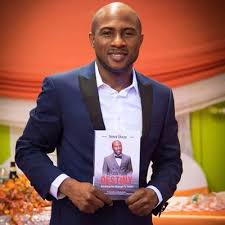
Henry Ukazu writes from New York. He works with the New York City Department of Correction as the Legal Coordinator. He’s the founder of Gloemi. He’s a Transformative Human Capacity and Mindset coach. He is also a public speaker, youth advocate, creative writer, and author of Design Your Destiny- Actualizing Your Birthright to Success, Unleash Your Destiny, and The Six Pillars of Success. He can be reached via info@gloemi.com
By Henry Ukazu
Dear Destiny Friends,
In the last two editions, we discussed passion and profit, and identified the relativity of the two. Today, however, the sensitive issue of love will be our target.
As powerful as love is, it can also be controversial. This is because there are many angles to it. Some people believe in love in contrast to the views of some others, however. While some think love is blind, others are of the opinion that love might not be blind afterall. The latter school of thought believes that one must love with common sense as opposed to being foolishly in love.
But while love is often described as a verb because it’s action-oriented functions, one cannot say they love someone or something without investing time and resources in them. As a matter of fact, a school of thought says that if you want to know a person, look at how the person spends their time.
Regardless of the aisle one belongs to, I strongly believe that true love exists. The only challenge most people have is that they love the wrong people, and they haven’t found people who truly love them for who they are. Today, I pray that what we love, loves us back.
I also believe that no one is too busy to do the needful. If anyone wants to check on you or be with you, they will make an intentional effort to reach out. I say this because no one is too busy to pick your call or even reply your message. If you reach out to anyone, and they are not available to pick up your call, they will surely make out time to revert to you, if for any reason, you are relevant to them.
To understand this message, imagine US President Donald Trump, Elon Musk, or even an idol whom you rever calling you; would you give them an excuse for not picking or returning their call? If my thinking is right, one will make a conscious effort to return the call at the earliest possible time.
One may wonder why I took time to explain love in this context; well, the answer is not far-fetched: love is the centerpiece of everything we do in life. If you love your job, your business, your academics, your relationship, your God, and your life, you’ll be intentional in harnessing it. You won’t want to lose it. According to Myles Munroe, whatsoever you mismanage, you’ll lose it. So, love is not an exception.
As mentioned earlier, when you love something, you’ll invest time and resources into it. To understand the concept of let love lead, we shall be discussing love as it relates to career, business, academics, relationships, God, and personal life.
Love and Career:
To understand one’s interests, look at what they spend their time on. It’s sad to see people who work in roles they are not passionate about just because they want to pay their bills. When you love your career, trust me, you won’t feel like you are working. As a matter of fact, one will not feel the stress of waking up every day to go to work. One can tell who loves their job by the way they do their work.
Love and Business
This is another interesting area of life. Most people engage in business that pays the bills; however, I believe if one has discovered who they are, they can make a living by focusing on their God-given talent to develop a business. For instance, I’m passionate about counselling, youth development, mentoring, and public speaking. Instead of working in roles in big industries that can pay me big money, I started my company, Global Empowerment and Mentoring Initiative, which is focused on Human Capacity Development to enable me to fulfil my heart desire and passion. I believe anyone passionate about something can creatively find a way to turn it into a business, and people will be paid for it.
Love and Academic
Another interesting area where we can allow love to lead is our academics. Just like love starts in the family, fulfillment in a career starts from the major one studies in college. This is simply because when we choose a major we love, it will lead us to an industry that’s befitting for our major. One of the reasons why a lot of people feel stressed, frustrated, depressed, and have suicidal thoughts is simply because they don’t like their major and where they work.
Trust me, if one loves their major and their work, they won’t think of taking their life. We have seen cases where they have money but are not happy with their job.
Love and Relationship
This is one of the most interesting areas of life to know if one truly loves. In our contemporary society, it’s almost impossible to find genuine love. However, it’s still possible for one to find true love, but it will be very rare. Most people will love you for what they will gain from you. Love ought to be symbiotic as opposed to being parasitic. When there’s love between two people, many of the fights that exist in relationships won’t exist.
For instance, one of the most debatable and controversial issues in marriage is the 50- 50 contributions. Some men support the idea of 50-50 because they also contribute to cooking, taking care of children, and other household chores which traditionally belong to women. Women, on the other hand, differ.
According to them, it’s the duty of the man to provide for the family. According to them, it makes no sense for them to contribute and also give men the respect they deserve. This set of women goes as far as saying that bathing a child and doing household chores are all part of being a responsible man. The narrative seems to be changing.
Here is my position. Where there’s love and understanding in a relationship or marriage, who provides and who manages won’t really bother. A man who loves his family (wife and children) won’t see cooking, bathing his children, and still gives his wife money as work. And a woman who truly loves her husband won’t see paying the bills as work when the man is incapacitated; neither will it make her disrespect her husband because he’s not financially stable to support the family, because they are committed to the relationship.
I can go on and on about love, but the fact and truth remains: when true love is at the center of the marriage or relationship, partners won’t even discuss if it is his money or her money, because both parties are one.
Love and God
This is another interesting area to know the mindset of someone. As Christians, we are advised to love God as we love ourselves. We can’t claim to love God and do things that are contrary to what God loves. In the same way, we can’t claim to love someone and hurt them. When we love, people can see it without us speaking. A typical example is the parable of the good Samaritan.
Love and Life:
Life is love and love is life. The summary of our life can be seen in how we live our life. Whether we are talking about education, career, business, health, personal development, family, relationship/marriage, entertainment, vocation, skill, finance, spiritual, etc. Love can be understood through how we live and love because everything rises and falls in life.
In summary, I know there are many twists to life; I suggest that, in whatever we do, let’s allow love to lead.
Henry Ukazu writes from New York. He works with the New York City Department of Correction as the Legal Coordinator. He’s the founder of Gloemi. He’s a Transformative Human Capacity and Mindset coach. He is also a public speaker, youth advocate, creative writer, and author of Design Your Destiny: Actualizing Your Birthright to Success, Unleash Your Destiny, and The Six Pillars of Success. He can be reached via info@gloemi.com


