
Metro
Opinion: Ndi-Anambra: Now is the time to Unleash Uche Onyeigbo

- /home/rhoncare/pointblank.ng/wp-content/plugins/mvp-social-buttons/mvp-social-buttons.php on line 27
https://pointblank.ng/wp-content/uploads/2021/10/a1.jpg&description=Opinion: Ndi-Anambra: Now is the time to Unleash Uche Onyeigbo', 'pinterestShare', 'width=750,height=350'); return false;" title="Pin This Post">
- Share
- Tweet /home/rhoncare/pointblank.ng/wp-content/plugins/mvp-social-buttons/mvp-social-buttons.php on line 69
https://pointblank.ng/wp-content/uploads/2021/10/a1.jpg&description=Opinion: Ndi-Anambra: Now is the time to Unleash Uche Onyeigbo', 'pinterestShare', 'width=750,height=350'); return false;" title="Pin This Post">
By Chuks Nwune
Uche Onyeigbo is that rare and special intelligence with which every Igbo predicts, discerns and decides. Uche Onyeigbo is the natural capacity of every Igbo to get it right and it has served them so well in business, relationship, academics, innovation and so on. This November, Uche Onyeigbo must serve Ndi Anambra in politics; it is time to put on Awụrụ Onyeigbo (our thinking cap).
In the upcoming election, we have four candidates to watch – Emmanuel Andy Ubah (APC), Patrick Ifeanyi Ubah (YPP), Charles Chukwuma Soludo (APGA) and Valentine Ozigbo (PDP). Given all we have been through as Nigerians in general and Ndịigbo in particular, this is no time for business as usual. We need to get down to this matter as business, knowing our stuff and investing correctly. It is only when we understand Anambra as business that we may get it right. In this business, we have five crucial considerations to make our investment worth the while, Age, Competence, Compassion, Capacity, Religion and Party. We also need only one disposition in making the consideration SINCERITY.
Age: Our candidates’ ages are as follows: Emmanuel Andy Ubah – 62, Patrick IfeanyiUbah – 49, Charles Chukwuma Soludo – 60 and Valentine Chineto Ozigbo – 50. It is not rocket science to know that productive age for humans is between 40 and 60 years, that’s why people retire at 60 (Nigeria’s 65, 70, 75 is the same lie and corruption for which things are not working). This means that two candidates (Emmanuel Andy Ubah and Charles Chukwuma Soludo) are, by their age, plunging into productive decline already, while two (Patrick Ifeanyi Ubah and Valentine Ozigbo) will still be in the productive age bracket in the next ten years. Therefore, Emmanuel Andy Ubah and Charles Chukwuma Soludo in sincerity should retire. Anambra needs a PRODUCTIVE governor. The incumbent is a case in point. In his early 60’s the task of governing the state already weighs him down and overwhelms his aging mind.
Competence: This can be measured with career path and achievements considering that we are choosing a GOVERNOR, in other words the Chief Executive Officer (CEO) of the state. In this criterion you can rate our candidates in this sequence: 1st – Valentine Ozigbo, 2nd – Patrick Ifeanyi Ubah, 3rd – Charles Chukwuma Soludo and 4th – Emmanuel Andy Ubah. Why? Valentine Ozigbo has been in the private sector and corporate sector all his life; a world class business man who knows the buttons to push and open the flood gates of thriving businesses for Ndi-Anambra. He rose in the ranks in his line of business, having only his records to speak for him; a smart and digital business mogul who easily connects with the younger generation rating his presence and followership on social media. He had no family member speaking for him or recommending him. His achievements and records endeared him to those who employed him for his resourcefulness. He has done this all his life with evidential success; he never scored less than excellent.
Patrick Ifeanyi Ubah has been in the private sector and corporate business; recently he became a senator of the Federal Republic. He has done well for himself and boasts of investment worth billions of Naira. He is an oil magnate and has connected to that very factor which has kept Nigeria impoverished – oil. He belongs to the Buhari school of thought that overrates oil and will find it difficult to understand and connect to emerging economic drivers.
Charles Chukwuma Soludo is a first class academic and a world class researcher. He has made an enviable mark in the academia which earned him several appointments especially becoming the Chief Economic Adviser to the Federal Government and the Governor of CBN. We all know how appointments happen. Check out his family connections and you will find the finest Anambra daughter Prof. Dora Akunyili, she was already a federal bigwig by the time of that appointment. Our erudite Professor will be his best as adviser and appointee.
Emmanuel Andy Ubah is the typical Abuja boy whose youthful days were spent in Aso Villa serving at the corridors of power; whose political influence has been overrated. He lost his senatorial seat to Patrick Ifeanyi Ubah who challenged him from an unpopular political party. That alone tells his popularity among his own people. There is no evidence of him doing any business or administrative work before venturing into politics. In this criterion, he is overtly and covertly wanting.
Compassion: This is ones capacity and ability to genuinely and sincerely connect to the situations and conditions of others with the internal and compelling will to make it better. Again you can rate our candidates in this sequence: 1st – Valentine Ozigbo, 2nd – Patrick Ifeanyi Ubah, 3rd – Charles Chukwuma Soludo and 4th – Emmanuel Andy Ubah. Why? In this criterion, it is important to differentiate compassion from philanthropy.
The philanthropy of all our candidates is not in question, though it can also be graded. Valentine Ozigbo is the typical Nwa Onyenkuzi for whom excellence is a starting point. Yet he grew up trained to connect to others; his followers are connected to him personally and he follows up on them like friends. At 50 he still plays with his childhood friends and connects with them like years have not passed and achievements are not on the table. He has commensurate emotional intelligence for which he has been a consummate leader and captain in the business world. His humility is palpable even in pictorial appearances. The person you see is the person he really, sincerely and genuinely is, has always been and will continue to be.
Patrick Ifeanyi Ubah is classic philanthropist who has invested resources in improving the lives of the poor and needy. He is the typical boss for whom abundance is the reason for reaching out to others. He is the proverbial Nwoke afọ ukwu who yields sustenance for his followers; they always await his ‘Doings’. He is trained in the Igbo competitive ethos and he understands the world as a challenge to be subdued, human beings that constitute that world are means not ends.
Charles Chukwuma Soludo is a good man whose very close contacts may not easily describe as compassionate. He is intelligent nevertheless not with the emotional reach required of a leader. Many among his followers are not connected to him as a person; most are party loyalists who are ready to gamble the next eight years to maintain party domination. These days he dances, smiles and dresses funny; a typical political gambit. The real man we had known is the same we will likely see in Agu-Awka, this man on the campaign trail is acting a script.
Emmanuel Andy Ubah is a typical cold manipulator who believes in the success of antics. His antecedents in politics show his disconnection with the people which he does not deem necessary. His followers look up to the APC federal magic and at worst the replication of the Imo state horrible polimathics that is ruining the state. Ndi-Anambra are smarter than that level of manipulation.
Capacity: Capacity has to do with qualification, energy and vision. Again you can rate our candidates in this sequence: 1st – Valentine Ozigbo, 2nd – Patrick Ifeanyi Ubah, 3rd – Charles Chukwuma Soludo and 4th – Emmanuel Andy Ubah.
Valentine Ozigbo has an overwhelming qualification both in paper and field work, he has proven energy and potential to remain so by age considerations. He has a super vision for the state; realistic and achievable goals. Patrick Ifeanyi Ubah has the basic qualification, proven energy and potential to remain so by age considerations. He has his vision for Anambra State but lacks the ‘how’ of achieving them.
Charles Chukwuma Soludo has an overwhelming qualification both in paper and field work, he lacks energy and potential to recoup energy going by age considerations. He has super vision for the state typical of a theorist which is better on paper. Emmanuel Andy Ubah has basic qualification both on paper and field work, he lacks energy and potential to recoup energy going by age considerations. He both lacks capacity for vision and does not present one for the state.
Religion: Here we are considering the capacity to cross the obvious denominational lines in the state and build healthy allies with others. Denominational politics for the right reasons is undeniable in the state. Therefore, it is an issue also to consider. Again you can rate our candidates in this sequence: 1st – Valentine Ozigbo, 2nd – Patrick Ifeanyi Ubah, 3rd – Charles Chukwuma Soludo and 4th – Emmanuel Andy Ubah.
Valentine Ozigbo is a Catholic who in practical ways lives out a robust Christianity that fosters fraternity of all Christians. His childhood friends have become pastors and even bishops in the Anglican denomination and they remain very close friends. In organizing Unusual Praise – the largest African Christian Worship event – he demonstrates capacity to bring together all Christians in one worship space; he can also do same in a work space. People from other denominations are going to vote for him massively. The hierarchy of the Catholic Church has eye on him but are not expressing it enough.
Patrick Ifeanyi Ubah is a Catholic and has numerous friends from other denominations. He has also extended his philanthropy to other denominations. It is important to note that these friendships are not faith-based; they are benefit-based. Given the Catholic domination of the state in the last sixteen years those friends are not likely to wade the storm with him.
Charles Chukwuma Soludo is a Catholic and his party gives him more advantage in the Catholic circle. Yet the Willy Obiano denominational politics places him in a disadvantage. The hierarchy of the Catholic Church may be canvassing for a sympathy vote for him, but Ndi-Anambra know more than investing wrongly this time around. He is incapacitated to build the bridge needed in the state at this time.
Emmanuel Andy Ubah is an Anglican and a faithful one at that. He is totally unpopular among Catholics and has earned himself some dint of suspicion among Anglicans because of his party and meddling with the Buhari administration. As would be expected, he has an ill-disposition towards Catholics and is poised to bring further divisions in the state. Some ruthless Anglicans are fronting him to deal with Catholics “in a language they will understand.”
Party: Here we are considering how the political party appeal to Nd-Anambra. In this Criterion, 1st – Charles Chukwuma Soludo, 2nd – Valentine Ozigbo, 3rd – Patrick Ifeanyi Ubah and 4th – Emmanuel Andy Ubah. It is important to note that there are no political parties in Nigeria, we only have political platforms. Candidates do not represent ideologies of a party; they foster personally crafted political solutions and look for a political platform through which they may likely express it.
Charles Chukwuma Soludo belongs to All Progressives Grand Alliance (APGA). It is the ruling party in Anambra State and has dominated the state for sixteen years. It is a party which has offered Ndi-Anambra a unique voice in the Nigerian political sphere and which had the promise of fulfilling the aspiration of Ndịigbo. It was Dim Chukwuemeka Odumegwu Ojukwu who animated APGA and found in Peter Obi the embodiment of the aspirations of Ndịigbo which he hoped one day to make a national reality. When Peter Obi left APGA, the party breathed its last. Today it suffers the decomposition of the proverbial fish from its head. Governor Willy Obiano saw to it that the requiem of APGA was well orchestrated and Charles Chukwuma Soludo saw no problem with that. In 2017, Charles Chukwuma Soludo, fostered the political jingle in reply to PDP’s Oseloka Obaze’s “It’s broken; let’s fix it”, Soludo contended “It’s not broken, why fix it”. If Charles Chukwuma Soludo says it’s broken now, then he either had lacked the vision to see that it really was broken by 2017 or he deliberately lied and deceived Ndi-Anambra by that mantra. If he says it’s not broken, then he is outrighly blind but more dangerously he is not coming with a fix. No Anambra person would vote for a continuation of the status quo.
Valentine Ozigbo belongs to the Peoples’ Democratic Party (PDP) which is the major opposition party in Nigeria. Therefore, it suffers the jab of the federal might. At the same time one could say that Ndi-Anambra prefers PDP to any other party and in the event that APGA has reneged on the confidence they had transferred to them from their former PDP affiliation, they are likely to revert to PDP. The party had produced two former governors (Chinwoke Mbadinuju and Chris Ngige), Peter Obi (a former governor and the best of all governors Anambra has ever had) is one of the foremost figures in PDP and has risen to be a Vice Presidential candidate of the party. The party has two seating senators from the state and three House of Rep members. Invariably, Anambra is a PDP state which had experimented the possible shift to APGA. The current administration has finally laid that experiment to rest.
Most importantly, Valentine Ozigbo is the fruit of Ojukwu’s political ideology and Most Rev. Albert Kanenechukwu Obiefuna’s political son. He embodies the worthy dreams of these two fallen heroes in very succinct ways. When he chose the jingle “Aka Chukwu di ya”, he may not know that his battle has been fought and won in the spirit land because of his connection to the aspirations of these great heroes. The spirit of Ndi-Anambra will always identify where their Akara aka lies.
Patrick Ifeanyi Ubah belongs to the Young Progressive Party (YPP). He gave the party its initial and ever entry into Anambra political lexicon. As a member of the party, he is a seating senator representing Anambra South Senatorial Zone. By these antecedents, YPP is a force in the Anambra politics. It is rated third by that right. Most importantly, neither the party nor its candidate is worth the political investment of Ndi-Anambra.
Emmanuel Andy Ubah belongs to All Progressives Congress. He had reneged from PDP some years ago and flags the wand of federal might; APC is the ruling political party at the centre. APC is horror for the Igbo sensibility and is regarded as the political face of terrorist Boko Haram among the locals. In as much as the Federal Government treats the political relegation of Ndi-Igbo with levity and gerrymander, APC cannot win any election in the Southeast except at the Supreme Court.
The choice before Ndi-Amabra is clear. No right-thinking business-inclined Anambra person would want to invest in waste or what we refer to as “Ahịa kụrụ akụ”. In the criteria we discussed above, the candidates will be preferred in this order 1st – Valentine Chineto Ozigbo, 2nd – Patrick Ifeanyi Ubah, 3rd – Charles Chukwuma Soludo and 4th – Emmanuel Andy Ubah. If our disposition is SINCERITY, then let our polls reflect Uche Onyeigbo by which we naturally invest rightly and profitably. Now is the time for serious business, let us keep sentiments aside and do the needful for the future of Ndi-Anambra in particular and Ndịigbo in general.
Chuks Nwune, a legal practitioner and social media influencer is based in Onitsha.


Metro
International Day of the Girl-Child: Pad Me A Girl Foundation Holds Menstrual Health Outreach in Ogun
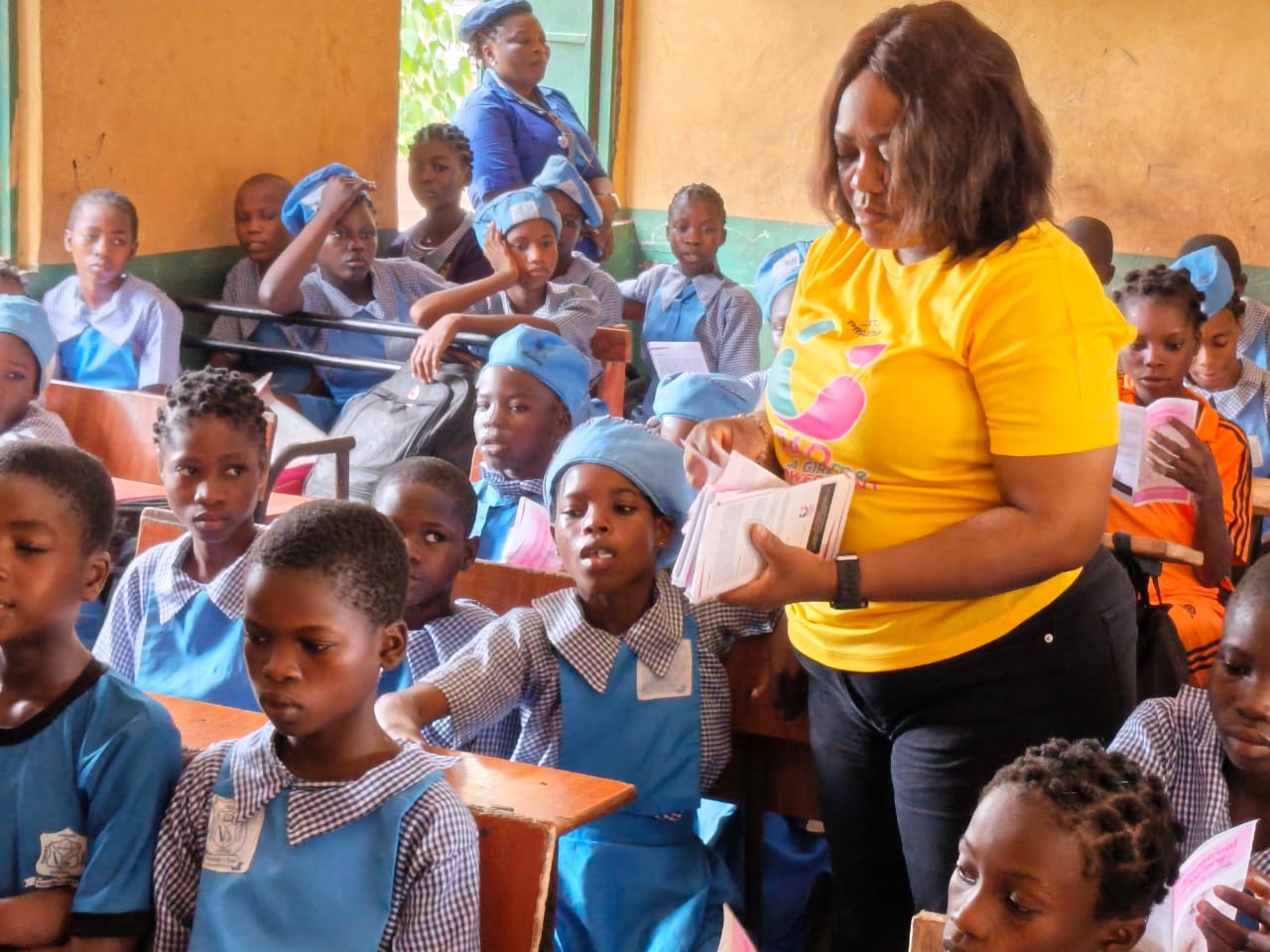
The Pad Me A Girl Empowerment Foundation has taken its menstrual health campaign to Igbesa High School (Junior), in Ado-Odo/Ota Local Government Area of Ogun State, providing free sanitary pads, menstrual hygiene pamphlets, exercise books and pens to over 100 schoolgirls to promote menstrual health, dignity and education.
The outreach, held on Wednesday, October 21, commemorated the 2026 International Day of the Girl Child, whose global theme is “End Child Marriage and Invest in Girls’ Rights!”
The programme brought together girls from Junior Secondary School (JSS) 1 to 3 who participate in the school’s reading clubs for mentorship, reading activities and menstrual health education.
It was convened by Oyelami Yetunde Anuoluwapo and Blessing Kappo, teachers and Teach For Nigeria Fellows at the school, following an appeal for sanitary products, learning materials and health education support. The Foundation’s founder, Theresa Moses, responded by providing the requested items and facilitating an interactive session on menstrual hygiene management.
Speaking at the event, Moses said she was inspired by the girls’ determination and aspirations, stressing the need for sustained investment in their health, education and future.
“Invest in girls and Nigeria will rise. Every girl deserves dignity, education and the right to dream beyond child marriage. That is why we are here; to ensure no girl misses school because of her period,” she said.
She emphasised that access to menstrual hygiene products and accurate information helps girls manage their periods confidently and participate fully in school activities.
In a letter of appreciation, Oyelami and Kappo described the outreach as impactful and inspiring, noting that it enhanced the girls’ understanding of menstrual health, hygiene and self-confidence. They also said the support would help promote the students’ hygiene, school attendance and dignity.
“You did not just give pads; you gave our girls confidence and hope,” the teachers wrote on behalf of the school community, expressing gratitude to the Foundation and hope for future collaboration.
Mrs Amarachi Eze, Assistant Divisional Commissioner of the Nigerian Girl Guides Association, Ado-Odo/Ota, Ogun State Branch, also commended the Foundation for supporting the girls’ hygiene needs and development.
“We sincerely appreciate the Management of Pad Me A Girl Foundation for joining hands with the Association in supporting our girls on hygiene management. May God Almighty continue to uplift your foundation. Thanks for joining hands in the development of girls in our schools. Bravo,” she said.
The Foundation’s Media Coordinator, Mr Oluwatosin Simon Faleye, called on corporate organisations, non-governmental organisations and well-meaning Nigerians to support initiatives that address period poverty and help girls remain in school.
“For over a year, we have been committed to ending period poverty and keeping girls in school. We call on corporate organisations and well-meaning Nigerians to support this cause for the betterment of Nigeria,” Faleye said.
The celebration also featured a student drama presentation highlighting the effects of child marriage, alongside reading and mentorship activities designed to encourage the girls to understand their rights, value their education and pursue their aspirations.
The Foundation also acknowledged the continued support of its sponsors and partners, including Access Bank, Pro Star Sports International, BL Consulting, Vita Baites Foods, Checkers, Senator Ireti Kingibe, representing the Federal Capital Territory (FCT) in the 10th Nigerian National Assembly, the Senate Committee on Women Affairs (SCOWAS), as well as individuals and media organisations whose contributions have supported its broader mission of ending period poverty, promoting menstrual health education and empowering girls and women.
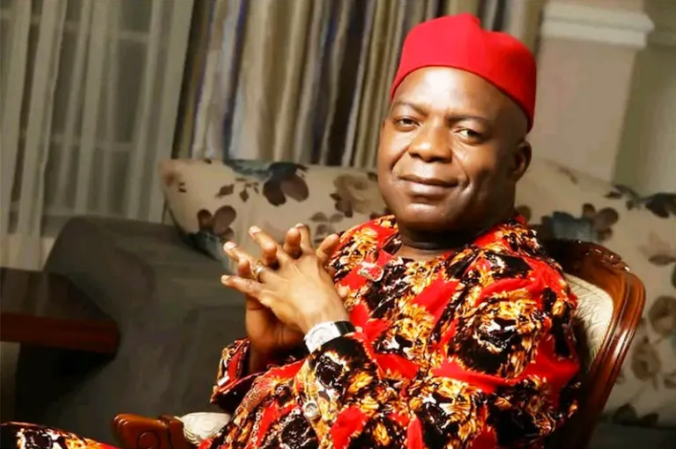
Abia State governor, Alex Otti, is set to flag off the reconstruction of Uratta Road and Old Express Road in Aba, two major routes which poor condition has disrupted transportation, commercial activities and access to residential communities for years.
The governor’s media aide, Ferdinand Ekeoma, in a statement on Wednesday, said that work on the roads has begun ahead of the scheduled official flag-off.
The two roads are considered important to Aba’s commercial and industrial activities, with Uratta Road connecting several adjoining streets to Port Harcourt Road and Old Express Road. At the same time, Old Express Road serves as a key route within the city’s industrial layout.
Ekeoma said the roads had suffered neglect for more than 24 years, leaving some sections impassable and forcing residents and businesses to contend with difficult transportation conditions.
According to the statement, Uratta Road provides access to more than 100 adjoining streets. Its poor condition has affected residents, traders and small-scale manufacturers who depend on the road to transport goods and access their businesses.
The statement said the road had become waterlogged and overgrown with weeds, discouraging commercial motorcycle and tricycle operators from using it.
Similarly, the deterioration of Old Express Road forced heavy-duty truck operators, fabric merchants, spare-parts dealers and small businesses to use longer routes, increasing transportation costs and affecting productivity.
The government said the road reconstruction is part of its broader effort to restore Aba’s infrastructure and strengthen the city’s commercial base.
Aba, one of southeastern Nigeria’s major commercial centres, hosts manufacturing clusters, markets, and small and medium-sized enterprises that depend heavily on functional roads to move raw materials and finished products.
The government said the reconstruction would improve market access, reduce transportation costs, facilitate the movement of goods, and support businesses operating along the affected corridors.
Ekeoma cited the reconstruction of Port Harcourt Road as an example of the administration’s infrastructure programme, noting that improved road access encouraged shops to reopen, attracted manufacturing activities and increased property rents along the corridor.
The government also said the new projects would complement other road interventions in Aba, including works on Ohanku and Obohia roads, as part of efforts to improve connectivity within the commercial city.
Beyond road construction, the administration said its projects include drainage systems, solar-powered streetlights, and pedestrian walkways, which it described as necessary to improve safety, accessibility, and flood resilience.
Ekeoma said Governor Otti views infrastructure development as an economic strategy rather than merely a construction programme, arguing that better roads would help businesses operate more efficiently and create employment opportunities.
He also quoted the governor as saying at an earlier church event that his administration is shifting attention from basic infrastructure improvements to healthcare, education, technology and industrialisation.
The governor, a former bank chief executive, was elected in 2023 on the Labour Party platform, defeating candidates from the major established parties in a state historically dominated by the Peoples’ Democratic Party.
Otti has remained in the Labour Party despite the defection of its 2023 presidential candidate, Peter Obi.
His administration has made rehabilitating Aba roads and public infrastructure central to its governance agenda, presenting the city’s recovery as essential to reviving economic activity across Abia State.

MILO Nigeria, in partnership with former Nigerian national team captain and MILO Brand Ambassador Ahmed Musa, has concluded the inaugural MILO × Ahmed Musa Sports Clinic and Tournament in Kano, providing 2,500 young footballers with professional coaching, mentorship and competitive football experience.
Over two weeks, participants took part in 10 coaching sessions and competed in matches under the guidance of Ahmed Musa and experienced coaches. The programme combined practical football training with lessons in teamwork, discipline, resilience and confidence, equipping participants with skills and values that extend beyond the pitch.
The initiative culminated in a tournament at the Ahmed Musa Sports Complex in Kano, where Khamis Football Academy emerged as champions of the inaugural edition. Participants also received cash prizes, certificates and football equipment.
Speaking on the initiative, Gilbert Tweneboah-Koduah, Category Lead, MILO, said: “At MILO, we believe sport is a powerful platform for young people to discover their abilities, build confidence and develop values that extend beyond the field of play. Our partnership with Ahmed Musa brings together MILO’s longstanding commitment to sports development and the experience of an athlete whose journey from grassroots football to the highest level of the game can inspire the next generation. By combining his experience with structured coaching and competition, this programme has given young footballers in Kano an opportunity to develop their skills, learn from experienced professionals and better understand the commitment required to pursue their aspirations.”
For the participants, the clinic offered an opportunity to learn from an athlete whose football journey began in northern Nigeria and progressed to the highest levels of the sport, making his experience a source of inspiration for aspiring players.
Commenting on the partnership, Ahmed Musa said: “Nigeria has incredible football talent, but talent alone is not enough. Young players need good coaching, regular competition and people who will guide them. I am proud to partner with MILO and share some of what football has taught me. My message to these players is simple: keep training, listen to your coaches and work hard every day to improve.”
Musa also called for greater investment in grassroots football, emphasizing the importance of giving young players access to quality coaching, structured development and regular competitive opportunities.
The MILO × Ahmed Musa Sports Clinic and Tournament builds on MILO’s longstanding commitment to youth development through sports in Nigeria. Through its school-based and grassroots sporting initiatives, MILO continues to create opportunities for young people to participate in sports, develop their abilities and embrace values that can support them both on and off the pitch.


