
Opinion
Opinion: Whose Body Did Dumo Deposit at the Mortuary?

- /home/rhoncare/pointblank.ng/wp-content/plugins/mvp-social-buttons/mvp-social-buttons.php on line 27
https://pointblank.ng/wp-content/uploads/2020/01/IMG-20200105-WA0007-768x600.jpg&description=Opinion: Whose Body Did Dumo Deposit at the Mortuary?', 'pinterestShare', 'width=750,height=350'); return false;" title="Pin This Post">
- Share
- Tweet /home/rhoncare/pointblank.ng/wp-content/plugins/mvp-social-buttons/mvp-social-buttons.php on line 69
https://pointblank.ng/wp-content/uploads/2020/01/IMG-20200105-WA0007-768x600.jpg&description=Opinion: Whose Body Did Dumo Deposit at the Mortuary?', 'pinterestShare', 'width=750,height=350'); return false;" title="Pin This Post">
The latest statement by Dumo Lulu-Briggs that his stepmother has buried his father in March 2019 smacks of the grandest bout of self-induced confusion if not blatant and misleading mischief. High Chief Dr. O. B. Lulu-Briggs, one of the greatest philanthropist Nigeria has seen, who was so kind that he refused to reveal the inadequacies and sheer wickedness of his three eldest sons, truly does not deserve the treatment he is receiving from them.
If one is to take Dumo for his words today, then on whose body did he approach the Magistrate court in Ghana on the 12th of July 2019 to authorise an autopsy? That should be 4 months after he said his stepmother buried his father. Can Dumo please tell the world whose body he identified on 19th July 2019 at both the mortuary and at the 37 Military Hospital in Ghana before the autopsy he instigated and participated in was done? Is he saying his father was exhumed for that purpose? What could be responsible for this present confusion if not his deliberate unwillingness to bury his father? Dumo Lulu-Briggs now wants the world to believe that his stepmother buried his father in March 2019? Why? Who is he trying to fool?
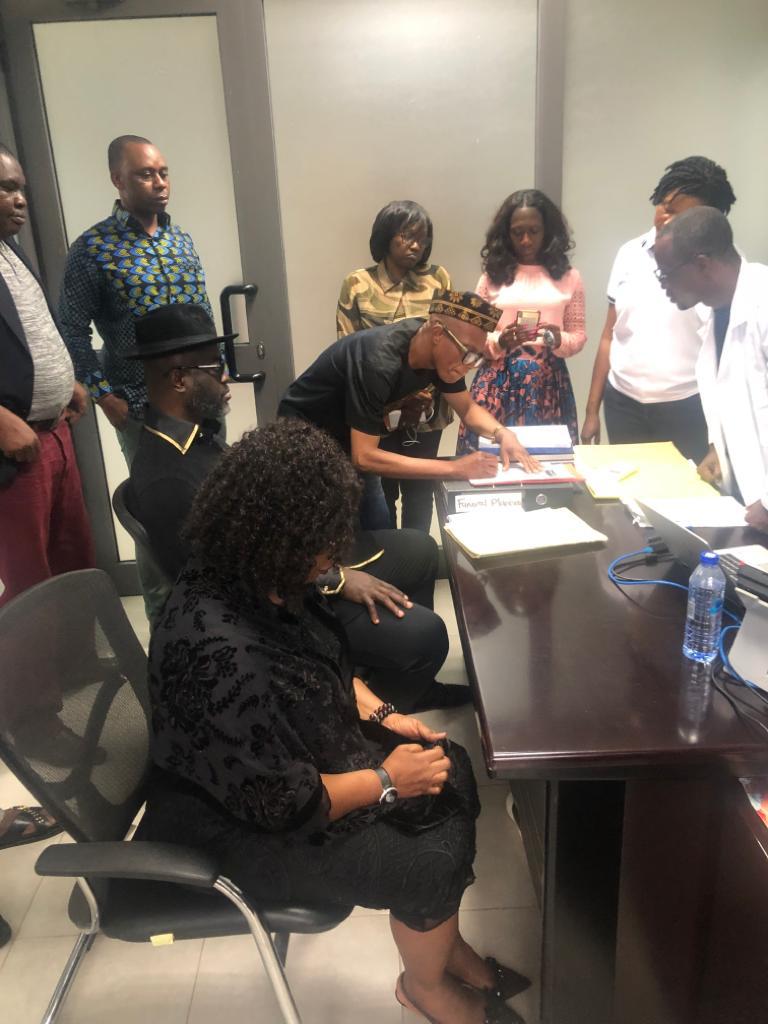
Dumo was physically present on the 19th of July, 2019 when the autopsy he instigated and called for was done. He identified his father’s body at the 37 Military Hospital before the autopsy was done. He identified the same body at the mortuary after the autopsy was done. The whole family and their representative pathologists agreed on the autopsy. His representative pathologists were there. The autopsy was completed and the report filed in court. Whose body did he identify and sign back into the mortuary after the autopsy? Oh he refuses to tell the public that he signed back the body for keeps at the mortuary! Anyway he can’t deny that even though he has not reported this in the media. If his father has been buried whose body is he seeking to bury?
Since he now says his father was buried in March 2019 whose body is he fighting so desperately to gain custody of in Ghana? Whose body did he seek to obtain from the mortuary on the 27th of December 2019? Whose body did he say during his press conference that he would bring back to Nigeria on the 27th of December 2019 from the mortuary in Accra? Whose body is he falsely claiming in the media that his stepmother is refusing to release for burial? Whose body did the court order the Police and mortuary to release to the High Chief’s family and him Dumo, for which he threw a party in Accra?
If he has a problem with the Autopsy, the proper thing to do is for the family to call leading world experts to review the report. On December 27, 2019 he blocked the release of the report of the autopsy carried out on his father. He didn’t report this and is denying it. His court papers are attached here. Why has Dumo gone to court to block the release of the report? Does he fear that the autopsy report will prove everything he said were lies! On September 6, 2019 Dumo Lulu-Briggs secured an order from the magistrates court in Accra, Ghana to carry out an inquest and a second autopsy on his father’s body. He has reported this development in the media. On whose body does he intend to have the second autopsy done since his father has been buried in March 2019? Oh Dumo oh!
Since according to him his father was buried in March, why is he seeking another autopsy on a body he now claims is not his father’s and blocking the release of the first autopsy report, which he instigated, called for, participated in and agreed to? Oh Dumo! Dumo should stop his shenanigans and bury his father on January 25, 2020. He should stop making cheap digs at the family and maligning his father’s legacy.
The Chief was such a great man, who loved his community and Nigeria. It is disrespectful that after all of this time he has not been laid to rest. He was an honourable, loving philanthropist and would never have behaved like this. Dumo should rather have chosen to walk in the legacy of his father, close ranks with his own family members and bury his father. He should stop the excuses and bury his father. He should lay his father to rest.



By Tolulope A. Adegoke
“A refuge is not a destiny. It is a threshold. The land that once sheltered others must now learn to shelter itself—not from famine or flood, but from the quieter, more corrosive hunger of dependence. For the true measure of Goshen was never what it gave, but what it became.”
– Tolulope A. Adegoke, PhD.
This is the second part of a two-part series examining Africa’s role in global sustainable development. Part I, “Goshen Reimagined: Africa as the Crucible of Global Sustainability and the Silent Architect of a Post-Fossil World,” established the continent’s material endowments and diagnosed the structural paradox at the heart of its global position. Part II turns inward—to the institutions, capabilities, and governance systems that will determine whether Africa’s promise becomes prosperity.
The Question That Endowments Cannot Answer
Africa holds approximately 65 percent of the world’s uncultivated arable land (B20 South Africa, 2025). It possesses nearly one-third of the critical minerals required for the global energy transition. Its population is the youngest of any continent, with a median age of nineteen (African Development Bank, 2025).
These facts are frequently recited as evidence of Africa’s inevitability. They are not. They are stocks, not flows. They become prosperity only when combined with the institutions, capabilities, and governance systems that transform raw potential into productive activity.
That transformation is the subject of this write-up. The question is not whether Africa can become the crucible of global sustainability. The question is whether the continent’s institutional architecture is being rebuilt at the speed and scale the moment demands.
The answer will determine not only Africa’s destiny but the future of the entire world.
Part One: The Demographic Promise and Its Conditions
A Youthful Continent—and a Narrow Window
Africa’s population reached approximately 1.54 billion at the end of 2025, making it the fastest-growing region and home to nearly 19 percent of the world’s population (Ghana Parliament, 2025). The continent’s median age is nineteen, compared with forty-five in Europe (African Development Bank, 2025).
The African Development Bank describes this youthfulness as “the continent’s and the world’s greatest asset,” positioning Africa as “the next destination for affordable labor supply” (African Development Bank, 2025).
But the transition from youthful population to productive workforce is neither automatic nor assured. Each year, between 12 and 15 million young Africans enter the labor market, yet only around 3 million formal jobs are created annually (United Nations Economic Commission for Africa, 2026). The arithmetic is stark: millions of young people enter adulthood each year with no prospect of formal employment.
Rene Tapsoba, the International Monetary Fund’s resident representative in Congo, has captured the stakes with unusual clarity: “Having a young and dynamic population can be an asset. But if this population is not well trained and well educated, it can become a handicap for social cohesion and public policies, and make the process of economic development even more challenging” (Bloomberg, 2025).
The demographic dividend, in other words, is a learning dividend before it is anything else.
The Learning Crisis
The data on learning outcomes in Africa reveal a gap between enrollment and achievement that constitutes both a scandal and an opportunity. UNESCO Institute for Statistics data indicate that in sub-Saharan Africa, 88 percent of children and adolescents of school age do not reach minimum proficiency levels in reading, and 87 percent do not reach minimum proficiency in mathematics (UNESCO Institute for Statistics, 2017).
This is not a measure of failure by any particular student. It is a structural indicator that systems expanding access must now focus on ensuring learning.
The distinction between Mean Years of Schooling (MYS) —the standard measure of educational attainment—and the Skills-in-Literacy Adjusted Mean Years of Schooling (SLAMYS) is critical. SLAMYS adjusts years of schooling by a skill factor derived from direct assessments of adult literacy. The findings indicate that in 2023, sub-Saharan Africa’s SLAMYS level was roughly comparable to that of Latin America in 1970—a benchmark that highlights both the progress achieved and the distance remaining.
The lesson is that how education is delivered matters as much as how much education is delivered. Curriculum relevance, teacher quality, language of instruction, and pedagogical methods are the mechanisms through which schooling becomes capability.
Gender, Education, and the Fertility Transition
The relationship between female education and fertility decline is among the most robust findings in development demography. As girls remain in school longer, they tend to marry later, gain greater autonomy in reproductive decision-making, and have improved access to information and services related to sexual and reproductive health.
Sub-Saharan Africa’s fertility rate has declined from an average of 6.2 children per woman in the period between the 1950s and 1990 to 4.2 children per woman today (Bloomberg, 2025). Yet in more than 20 nations the fertility rate exceeds that number, with Congo among the highest, averaging 5.9 children (Bloomberg, 2025). The rate needed to maintain a stable population is 2.1 children.
The institutional implication is unambiguous. Fertility decline is not a public health intervention alone; it is an education intervention. The most effective population policy is a girl who completes secondary school with measurable literacy and numeracy skills.
Part Two: The Employment Architecture
The Informal Economy as Structural Reality
The single most defining feature of Africa’s labor market is not unemployment as conventionally measured. It is informality. The majority of employment in most African countries occurs outside the formal sector—in enterprises that are unregistered, unregulated, and unprotected (United Nations Economic Commission for Africa, 2026).
This is not a residual category or a temporary condition. It is the structural reality of how most Africans earn their livelihoods.
The consequences are profound. Informal workers often lack access to social protection, credit, legal recourse, and the productivity-enhancing benefits of formalization. Enterprises remain small, undercapitalized, and unable to invest in the technologies or skills that would raise productivity. The tax base remains narrow, limiting the state’s capacity to provide public goods. And the statistical invisibility of informal work renders much economic activity invisible to policymakers.
The gap between labor market entrants and formal job creation is stark: between 12 and 15 million young Africans enter the labor market each year, yet only around 3 million formal jobs are created annually (United Nations Economic Commission for Africa, 2026).
Integrating the informal sector into the formal economy is therefore not a matter of tidying up the margins. It is the central structural challenge of African economic policy.
The pathways are known: reducing the costs of formalization, extending social protection to informal workers, improving access to finance for micro and small enterprises, and building digital infrastructure that lowers the transaction costs of formal participation. What is frequently absent is the political will to implement these reforms at scale—because formalization disrupts existing patron-client networks and threatens the rents that flow from informality.
The Skills Mismatch
Even among those who secure formal employment, a persistent mismatch between educational outcomes and labor market demands limits productivity and earning potential. Employers across the continent report difficulty finding workers with the technical skills their operations require, even as educated young people remain unemployed or underemployed.
This is not solely a matter of education systems. It reflects a deeper structural disconnect between the worlds of learning and work. Curricula are designed without systematic input from employers. Training institutions operate without labor market information systems that would allow them to adjust programs in response to demand. Apprenticeship systems, where they exist, are often disconnected from formal certification and upward mobility.
The response must be systemic. Dual education systems that combine classroom instruction with structured workplace learning—adapted to African contexts—offer one pathway. Sectoral training partnerships that bring employers, training providers, and government together to design and deliver programs responsive to actual demand offer another. Digital credentialing systems that make skills visible and portable, independent of where they were acquired, offer a third.
The “Power Skills” Deficit
As technology reshapes industrial landscapes, the demand for what are sometimes called “power skills” —critical thinking, creativity, adaptability, ethical judgment, and collaboration—is growing relative to the demand for narrow technical competencies.
These are the skills that enable workers to learn new tasks, navigate ambiguity, and contribute to innovation. They are also the skills that education systems focused on examination performance and knowledge transmission are least equipped to develop.
The implication is that Africa’s human capital agenda cannot be reduced to expanding enrollment or even to improving literacy and numeracy. It must include a fundamental reorientation of pedagogy toward capability cultivation—the development of the ability to apply knowledge, to solve novel problems, and to work productively with others. This is a more ambitious agenda than improving test scores, and it requires deeper investment in teacher training, curriculum development, and assessment methods that measure what matters.
Part Three: Governance as the Missing Keystone
The Fragmentation Problem
Africa comprises fifty-four countries, each with its own legal system, regulatory framework, and business environment. This fragmentation imposes significant costs: duplicated regulatory compliance, incompatible standards, barriers to cross-border investment, and the inability to achieve economies of scale in infrastructure or industrial policy.
The African Continental Free Trade Area (AfCFTA) was designed to address this fragmentation. As of September 2026, 50 of the 54 signatories have deposited their instruments of ratification, marking significant progress toward continental integration (tralac Trade Law Centre, 2026).
Yet the gap between agreement and implementation remains vast. The World Bank has estimated that deeper liberalization of transport, telecommunications, financial, and professional services could raise services trade within the AfCFTA area by about 60 to 64 percent by 2035 (World Bank, 2026).
Realizing that potential requires not only the removal of formal barriers but the harmonization of regulatory regimes, the development of cross-border payment systems, and the construction of the physical infrastructure—transport corridors, power grids, digital networks—that connect producers to markets.
The Rule-of-Law Foundation
Underlying the fragmentation challenge is a more fundamental governance deficit: the uneven strength of the rule of law across African jurisdictions. Property rights are insecure in some contexts. Contract enforcement can be slow and unpredictable. Regulatory discretion creates opportunities for corruption and rent-seeking. These conditions raise the risk premium on investment and depress the long-term planning that productive enterprise requires.
This is a matter of institutional design and political incentives. The countries that have achieved sustained growth—Botswana, Mauritius, Rwanda in recent decades—are those that have built credible commitments to property rights, contract enforcement, and predictable regulation. The challenge is to scale these successes and to prevent the backsliding that has occurred in countries where institutional gains have been reversed by political capture or conflict.
Conflict as an Institutional Destroyer
No governance analysis of Africa can avoid the fact that conflict remains the single most destructive force undermining institutional development.
An estimated 167 million Africans faced acute food insecurity in 2025—the sixth consecutive annual increase—and 130 million (approximately 78 percent) of those facing acute food insecurity live in countries experiencing conflict (Africa Center for Strategic Studies, 2025).
The five countries with the largest numbers of acutely food-insecure people—Nigeria, the Democratic Republic of the Congo, Sudan, Ethiopia, and South Sudan—are all in conflict, collectively accounting for almost two-thirds of Africa’s acute food insecurity (Africa Center for Strategic Studies, 2025).
The institutional consequences of conflict extend far beyond the immediate humanitarian crisis. Conflict destroys physical infrastructure, erodes social trust, displaces populations, disrupts education, and diverts public resources from productive investment to military expenditure. It also creates the conditions for famine, which the Africa Center for Strategic Studies correctly describes as a “man-made disaster” (Africa Center for Strategic Studies, 2025).
The implication is unavoidable. No amount of resource endowment, demographic dividend, or policy reform can overcome the institutional destruction wrought by armed conflict. Peace is not a precondition for development in some abstract sense; it is the most basic institutional foundation upon which everything else rests.
Part Four: Food Security and the Architecture of Resilience
The Paradox of Hunger Amid Plenty
Africa holds approximately 65 percent of the world’s uncultivated arable land while remaining the region with the highest burden of hunger (B20 South Africa, 2025).
In 2025, approximately 309 million Africans were undernourished—the highest absolute number of any region (Africa Center for Strategic Studies, 2025). More than half of Africa’s population experienced moderate or severe food insecurity, and nearly two-thirds could not afford a healthy diet (Africa Center for Strategic Studies, 2025).
These are not the statistics of a continent that lacks the capacity to feed itself. They are the statistics of agricultural and food systems that are failing to connect production potential to nutritional outcomes.
The Conflict-Food Nexus
The primary driver of acute food insecurity in Africa is not drought, although climate shocks play a significant role. It is conflict (Africa Center for Strategic Studies, 2025).
The concentration of acute food insecurity in conflict zones reveals how thoroughly violence disrupts food systems: farmers are displaced from their land, markets are destroyed, transport routes are cut, and humanitarian access is blocked.
This nexus between conflict and food insecurity has profound implications for policy. Food security cannot be addressed solely through agricultural interventions. It requires peacebuilding, governance reform, and protection of civilian infrastructure—the very institutional foundations discussed in the preceding section.
From Subsistence to Surplus
For the majority of African farmers, agriculture remains a subsistence activity—producing enough to feed the household with little surplus for market. This reflects the enabling environment—access to improved inputs, credit, extension services, storage infrastructure, and reliable markets—which remains underdeveloped in many contexts.
The transformation required is not merely technical. It is institutional and infrastructural. Farmers need access to affordable credit and insurance. They need extension systems that deliver relevant, timely advice. They need storage facilities that reduce post-harvest losses. They need roads and transport systems that connect them to markets. They need price information and market intelligence. And they need legal frameworks that protect their land rights and enable them to invest with confidence.
The B20 Sustainable Food Systems and Agriculture Task Force has estimated that unlocking intra-African agricultural trade could generate approximately US$180 billion in revenue (B20 South Africa, 2025). The task force has further estimated that fixing supply chain bottlenecks could recover 1 to 2 percent of GDP annually (B20 South Africa, 2025).
These figures capture only a portion of the potential. The deeper transformation—from subsistence to commercial agriculture, from low-yield to high-yield production, from isolated farmers to integrated value chains—is a multi-decade endeavor that requires sustained investment and institutional development.
Nutrition as the End Goal
Food security is not merely about calories. It is about nutrition—the quality and diversity of diets that enable human development.
The statistic that only one in five African children aged 6 to 23 months achieves a minimally diverse diet is a measure of systemic opportunity (Africa Center for Strategic Studies, 2025). It predicts not only immediate health outcomes but future cognitive development, educational attainment, and economic productivity.
Addressing this requires a food systems approach that integrates agricultural production, food processing, market development, consumer education, and social protection. It requires attention to the specific nutritional needs of women, infants, and young children. And it requires recognizing that the cheapest calories are often the least nutritious—that food systems optimized for quantity rather than quality are failing the populations they are meant to serve.
Part Five: The Interior Frontier
Beyond the Resource Narrative
The Goshen metaphor, in its first iteration, emphasized Africa’s material endowments: minerals, land, and demographic weight. These are real and consequential. But they are stocks, not flows. They become prosperity only when combined with the capabilities, institutions, and governance systems that transform them into productive activity.
This is the interior frontier: the domain of human capability, institutional quality, and governance effectiveness. It is less dramatic than the discovery of a major mineral deposit or the announcement of a new free trade agreement. It is slower, more difficult, and less visible. But it is the domain in which the difference between a resource-rich country and a developed one is determined.
The Capability Approach
Amartya Sen’s capability approach provides a useful framework for thinking about this interior frontier. Development, in Sen’s formulation, is not primarily about increasing GDP or resource extraction. It is about expanding the substantive freedoms that people have to live lives they have reason to value. These freedoms include the ability to be healthy, to be educated, to participate in political life, and to pursue economic opportunities.
Applying this framework to Africa’s transformation yields a different set of priorities than those suggested by the resource narrative alone. The question becomes not “how do we extract more minerals?” but “how do we build the capabilities that enable Africans to convert mineral wealth into improved lives?” The answer involves education quality, health systems, political participation, and the rule of law—the essential foundations of human development.
The Time Horizon
One of the most significant obstacles to Africa’s transformation is the mismatch between political time horizons and development time horizons. Elected officials operate on cycles of four or five years. Institution-building operates on cycles of decades.
The incentives for short-term resource extraction or political patronage are strong; the incentives for long-term investment in education, infrastructure, and governance are weaker.
Addressing this mismatch requires institutional mechanisms that insulate long-term development priorities from short-term political pressures. Sovereign wealth funds, independent development agencies, and constitutional provisions that protect certain categories of investment from political interference all offer partial solutions. None is a panacea, but together they represent the kind of institutional innovation that successful developers have employed.
The Agency Question
Ultimately, the interior frontier is about agency—the capacity of Africans, individually and collectively, to shape their own development.
The Goshen metaphor, in its original biblical context, involved a people who were initially dependent on the goodwill of a foreign ruler. Their eventual enslavement came about because they lacked the political and institutional power to protect their own interests.
The contemporary lesson is direct. Africa’s transformation will be shaped primarily by the collective agency of African peoples—their capacity to build institutions, to demand accountability, to invest in their own capabilities, and to negotiate the terms of their integration into the global economy.
This is not a counsel of isolation. External investment, technology transfer, and trade can play constructive roles. But the terms of that engagement—the distribution of benefits, the protection of sovereignty, the alignment of external involvement with domestic development priorities—depend on the strength of African institutions and the clarity of African agency.
Conclusion: The Architecture and the Archive
Part I of this inquiry described the Goshen that Africa might become: a refuge and a resource for a world in transition. Part II has described the architecture that must be built if that vision is to be realized: human capital systems that convert demography into productivity; employment structures that integrate the informal economy; governance frameworks that make fragmentation a source of synergy rather than weakness; food systems that deliver nutrition rather than merely calories; and, above all, institutions that embody the agency of African peoples.
The Goshen metaphor carries a final lesson. In the biblical narrative, the generation that entered Goshen was not the generation that left it. The Israelites who departed for the Promised Land were the descendants of those who had arrived, shaped by centuries of sojourn. Their identity was forged not in the abundance of arrival but in the adversity of enslavement—and in the resilience that adversity demanded.
Africa’s transformation will similarly be a multi-generational endeavor. The institutions built today will shape outcomes for decades to come. The capabilities cultivated in this generation of African youth will determine the productivity of the workforce in 2050 and beyond. The governance frameworks established now—or the failure to establish them—will determine whether Africa’s material promise becomes prosperity or remains a resource frontier for others.
The question is not whether Africa will shape the future of global sustainable development. It will, by the sheer weight of its demography, resources, and geography. The question is whether Africans will shape that future on their own terms—or whether the pattern of Goshen’s original inhabitants will repeat itself, with abundance becoming dependence and dependence becoming servitude.
The answer lies in the architecture described here: the unglamorous, slow, difficult work of building capabilities, institutions, and governance systems that enable agency. It is not a work of prophecy. It is a work of construction. And it is the most consequential work that this generation of Africans, and those who support them, can undertake.
Dr. Tolulope A. Adegoke, AMBP-UN, is a globally recognized scholar-practitioner and thought leader at the nexus of security, governance, and strategic leadership. His mission is dedicated to advancing ethical governance, strategic human capital development, resilient nation-building, and global peace. He bridges the worlds of academic rigor and practical application, contributing to leadership discourse at the highest levels of policy and practice. He can be reached via: tolulopeadegoke01@gmail.com, globalstageimpacts@gmail.com
By Henry Ukazu
Dear Destiny Friends,
Passion and purpose are among the most debated topics in the human development space. It’s a grey area that has attracted a lot of attention. While some schools of thought believe it’s better to focus on passion, other schools of thought believe that it’s profitable for one to focus on a job that pays the bills.
According to the latter school of thought, passion doesn’t pay the bills. Well, depending on the schools of thought one subscribes to, I personally believe it pays more for one to pursue passion than profit, and I will explain in a minute.
I strongly believe passion is stronger than power because when one loves what one is doing, there’s an inherent strength that comes with it, but if one doesn’t like what they are doing, they’ll lack the moral strength to forge on.
Let me share a practical example with you. My late dad encouraged me to study Taxation Law at New York Law School, a major I didn’t like. He had the mindset that money rules the world, which I tend to believe because when money talks, the world “generally” seems to move around. That mindset and principle is relatable; however, it’s not applicable in other cases because there are some people or situations where money doesn’t move around.
My late dad believed it makes no sense for me to read a major and remain unemployable or poor. So, when I arrived in the United States, the economy was experiencing a recession, and there were no jobs at the time. So, while I was passionate about studying International Relations, Energy Law, or Communications Law, my late dad sat me down and said, based on the information he was receiving from his friends, these are great courses, but when I graduate, it will be hard to find a job because most people in those firms are laying off employees.
According to my late dad, his friends suggested that since I have a legal background, tax law is the only major I can study and be guaranteed a job because people and corporations will always file their tax returns. I initially objected to this advice because my brain is not wired for numbers. I really struggled to accept this advice because I hated numbers with passion.
My late dad would later tell me, you know we are from a humble background, and so we need money. My late dad would always say, “You wouldn’t want to study international law or communication, and the only thing you can do very well is speak English while remaining poor. One fact about my late dad was that he liked money to a stupor. According to him, after God, the most important thing in the world is money.
After much hesitation, I decided to study the major to make my late dad happy because I saw how happy he would be when I studied tax law. If truth be told, I wasn’t happy studying the major. I really struggled with the major. I managed to get a scholarship and graduated with a decent grade, but getting a job was challenging because employers could see that I didn’t like the major each time I went for an interview.
At the end of the day, I managed to get a job as a Case Manager for a private organization and later as the Legal Coordinator for the New York City Department of Correction. An important point to note here is that, after I left the tax firm, I was intentional about applying for jobs I was passionate about. Money to me was a secondary concern because I strongly believe that when you love what you do and you are good at it, money will surely find you.
I had to share this practical experience to give an insight into the importance of focusing on passion. Don’t get me wrong, money is good, but I personally feel there are more valuable things than money, and a perfect example is marrying a kind man as opposed to marrying a man with money, or marrying a lady with good character as opposed to marrying a lady with a good physique.
It’s instructive to note that when I began to focus on what I love to do, I had to spend time on honing my skills, developing myself by attending relevant training sessions and taking courses that would distinguish me from my contemporaries. It didn’t take long for me to receive recognition for my work. I was celebrated for being a trailblazing author of three books on television; I was interviewed by The New York Times in addition to meeting resourceful global leaders. In all sincerity, I doubt if I would have received accolades assuming I focused on taxation or doing what would give me money.
The moral of this analysis is that while profit is good, passion is much better because it will give one the necessary satisfaction and fulfilment they deserve. To understand how this works, one might make good money in a job but won’t be happy, but someone else might make little money and be happy in what they are doing. If research is done on what makes one happy, most people will likely say it is their passion or what they love to do that makes them happy as opposed to the job they do. It’s only a fragment of people who will attribute their happiness to the job they do, and that’s simply because they have truly figured out who they are or are probably happy and passionate about the work they do.
Let me explain a little: your profession is what you are trained to do as a doctor, lawyer, accountant, or engineer. Your vocation is what you are trained to do as a skilled worker or one with a 9-to-5 job, but your ministry is your calling, and that’s why you find your talent or gift and passion. So, one’s passion can be found in what they love to do.
When one’s profession is aligned with one’s vocation and ministry, then success is bound to be present because passion is at play.
It’s instructive to note that most of the great people I know in the world have become famous because they were doing what they love to do. I recently attended an award ceremony where my alma mater, Baruch College, celebrated alumni who have distinguished themselves. One of the award recipients, Ms. Doris Gonzalez, stated in her speech, “Of all the jobs I have had in my life, this is my best job. I really love my job”. I strongly believe there is a form of spiritual blessing and success that comes when one is happy doing what one is passionate about.
In conclusion, if one is desirous of succeeding in life, please endeavor to focus on your passion; if you can’t find it, explore what makes you happy. When you find what makes you happy, develop and monetize it, and in no distant time, opportunities and recognition will begin to triple in.
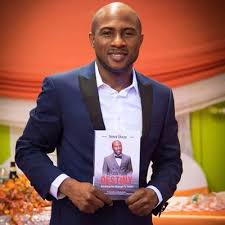
Henry Ukazu writes from New York. He works with the New York City Department of Correction as the Legal Coordinator. He’s the founder of Gloemi. He’s a Transformative Human Capacity and Mindset coach. He is also a public speaker, youth advocate, creative writer, and author of Design Your Destiny- Actualizing Your Birthright to Success, Unleash Your Destiny and The Six Pillars of Success. He can be reached via info@gloemi.com
By Henry Ukazu
Dear Destiny Friends,
Greatness is something we all should aspire to attain as we explore what life has in store for us. To attain greatness is no joke. It takes a lot of sacrifice, patience, knowledge, wisdom, understanding, perseverance, and dedication. Isn’t it true that nothing good comes easy? According to my late dad, Chief Lazarus Anthony Ukazu, “If you want to bear a bear name, one must work hard to earn it”
That means success is not attained on a platter of gold. One must strategically work hard to attain any height or title one desires to have. If one desires to be a President, one must be intentional in the way they live their life. If a student desires to have a perfect Grade Point Average (GPA), the student must begin from their first year of college to have good grades; if an employee desires to rise up to a managerial position, the employee must put in the work by ensuring that they are punctual and their work ethic is top-notch. I can go on, but as the sage will say, a word is enough for the wise.
Aspiring for greatness can be difficult, no doubt, but it’s doable. One of the easiest ways of attaining greatness is by knowing yourself. Knowing who you are is a critical and fundamental tool necessary for success because it helps to speed up the process. One may be wondering why I said knowing oneself is the easiest and fastest way to succeed in life. Well, the answer is not far-fetched. According to Oscar Wilde, “Be yourself because others are taken”. This simply means one must focus on what they are naturally good at. It makes no sense to struggle to be what you are not. Like, I always say, you can copy my style, but you can’t imitate my creativity.
That said, it’s important for one to ask oneself: what’s that one thing they are good at; what’s that one thing one doesn’t struggle to do; what’s that one thing most people compliment about them; what’s that one thing you can do and you won’t be stressed; what’s that thing you can do for free and you’ll care less whether you are paid or not; what’s that one thing you can do with relative ease if you are woken from the sleep and you’ll do it well? If you were able to answer any of these questions, then you are fifty percent nearer to greatness. The other fifty percent is for one to develop that inherent talent or gift in them.
The interesting thing about self-discovery is that it helps one to spend less time and energy on a project that won’t add value to their life. For instance, if you know you are good at a particular project or subject, or have expertise or creativity in a particular skill, you’ll stand a better chance of succeeding faster in life when you hone it than learning a new skill that you’ll have to develop. That’s why it’s good to know oneself.
During my formative years in the USA, I engaged in many activities trying to figure out my path. I began by studying taxation law at New York Law School, a major I didn’t like. I worked in a tax firm, hoping I would find joy in the money I made. That turned out to be an illusion. I worked in a small boutique law firm; I worked in a Not-for-profit organization; I worked in a private corporation as a Case Manager; I also worked as an entrepreneur at one point, and now I am currently in the public sector. I did all this just to figure out my path.
In all of these, I was still confused, trying many things. My clarity began when I got a job as a Case Manager; that job gave me clarity, focus, and purpose to know what I should be focusing on.
Again, my writing skills gave me a better understanding of who I am because it projected my image. Today, some people look at me and say I am great simply because I have three books to my name; I have written hundreds of articles in addition to meeting great people the world has celebrated. But the truth is that I discovered what I love, what I am doing and building, and the universe conspired to connect me to the right people, in addition to attracting opportunities to me.
I can say for a fact that, assuming I worked in a tax firm as advised just because of the associated money I might make, I would be feeling frustrated and depressed, even though I might have made money, which is not even guaranteed.
The same principle is applicable to anyone who studies a major or works in an establishment they don’t like. They might make money, but not in the major. I have seen nurses, doctors, engineers, lawyers, etc. who are making good money but are not happy, and I have seen people who didn’t study professional courses, some didn’t even have a college degree, yet are extremely successful and happy.
What does that tell you? They have either discovered what makes them unique, or they are happy with their major. Alternatively, it can be a combination of both.
The message here is to focus on what you are good at and develop it. The world will come to seek your services wherever you may be on planet Earth.
Furthermore, according to John Maxwell’s father, if you want to be great, you need three things: Value people, believe in people, and unconditionally love people for who they are. These are great ways to succeed in life, especially if one desires to make a fortune out of life.
For me, when I write, I think about valuing people, believing in people, and unconditionally loving people. Also, when I speak, I value people, I believe in people, and unconditionally love them. Why? Because people do well when people think well of them. It’s wonderful when a person believes in the leader, but it’s powerful and wonderful when the leader believes in the people.
Do you know that when you value people, it brings out the best in them? People love to be appreciated; people love to get approval, people love to get attention; people love to be accepted for who they are; and people love to be valued and respected. The simple truth about value is that when I value people, it brings out the best in me.
Today, I will ask you: are you aspiring for greatness in your family, school, workplace, community, etc. If yes, your task will be to focus on developing what you are naturally good at.
Henry Ukazu writes from New York. He works with the New York City Department of Correction as the Legal Coordinator. He’s the founder of Gloemi. He’s a Transformative Human Capacity and Mindset coach. He is also a public speaker, youth advocate, creative writer, and author of Design Your Destiny- Actualizing Your Birthright to Success, Unleash Your Destiny, and The Six Pillars of Success. He can be reached via info@gloemi.com


