
Metro
The Painted Canvases: ‘Zero’ As a Nation!


- /home/rhoncare/pointblank.ng/wp-content/plugins/mvp-social-buttons/mvp-social-buttons.php on line 27
https://pointblank.ng/wp-content/uploads/2019/09/Adegoke-1000x600.jpg&description=The Painted Canvases: ‘Zero’ As a Nation!', 'pinterestShare', 'width=750,height=350'); return false;" title="Pin This Post">
- Share
- Tweet /home/rhoncare/pointblank.ng/wp-content/plugins/mvp-social-buttons/mvp-social-buttons.php on line 69
https://pointblank.ng/wp-content/uploads/2019/09/Adegoke-1000x600.jpg&description=The Painted Canvases: ‘Zero’ As a Nation!', 'pinterestShare', 'width=750,height=350'); return false;" title="Pin This Post">
By Tolulope A. Adegoke
“It takes rising up to the call(s) of destiny for any group or individuals of any nation or community(s) to reach the destination of their quality state! You cannot change the world that you live in until you change yourself from within! You can get up, yes! You must get up! Be inspired! Be responsible!” Tolulope A. Adegoke
We’ll be painting Japan in 1945, after the Second World War, as an image of a Zero on a detailed canvas, but her narrative doesn’t finish there. The Second World War began in 1935 and concluded in 1945 as a consequence of the United States of America’s political and military engagement, which officially embraced the doctrine of isolationism. Her role before the war was purely economic, allowing her to accumulate financial muscle for herself in order to establish what was required for her worldwide reputation. During the war, Germany, Italy, and Japan sought to establish a “tripartite strategy” in order to gain hegemony over all countries on the planet. Germany, under Adolf Hitler, desired total control of Europe; Italy, under Benito Mussolini, desired total control of Africa; and Japan, under Emperor Hirohito, desired total control of Asia. However, Adolf Hitler of Germany and Benito Mussolini of Italy were eventually defeated, while Japan was ordered to step down in order to end the war, but she remained adamant (stiff-necked); the United States of America saw this as a threat to their global intentions because Britain and France had been weakened by the war. As a result, by unleashing the “Weapon of Mass Destruction” on Japan, America assumed the burden of joining in the Second World War both politically and militarily. Hiroshima and Nagasaki, Japan’s two main economic centers, were completely devastated, resulting in the loss of countless lives and assets. The impact of the United States of America’s bombings of Hiroshima and Nagasaki on the Japanese continues to this day to demonstrate the breadth of the devastation of once popular and lush territory into deserts (Zero).
At the anniversary of the Hiroshima and Nagasaki bombings in the early 2000s, Japan’s Prime Minister said, “If they gave Japan enough time to move her people, they could bomb Japan any way they wanted, and even if they put Japan in the desert, they would rebuild Japan to the world’s second-largest economy in a short time.”
Japan is an example of a country that does not have enough steel to create bonnets, enough silicon to produce side mirrors, or enough rubber to produce steering wheels, but is the world’s largest exporter of automobiles. Where am I going with this? Japan came from zero to be responsible, despite the difficulties and pains of ascending the ladder of becoming a worldwide hero among countries of the globe, against all chances of being smashed to zero. Every zero, if diligently worked on, has the ability to bounce back. The riches of every country, therefore, will be discovered in-between its people’s “ears,” i.e., the contents of their brain and character of their being (applicability capability)!
Life is the irrefutable, mysterious (powerful) gift given to man by God, containing a plethora of hidden secrets…
It is up to us (man) to maximize its use, but only man’s actions poison it! There is always a reason to do something and a reason not to do it. This is known as an “excuse.” It is God’s responsibility to deposit riches and treasures in the shape of skills, potentials, or gifts into our earthen vessels, but it is up to us as people to dig very deeply with real light for their revealing, utilization, and maximization for our own benefit for His (God Almighty) glory.
Nigeria as a country fits into the above-mentioned framework in order to re-orient her leadership and followership, particularly the youth, via this evident truth in the ultimate reality of being and living. It is important to emphasize unequivocally that Nigeria’s wealth is not in the Niger-Delta (South-South region), nor is it anyplace in the ground, nor is oil our riches, nor is it any of the natural resources that we have around us, but it is the people that you can see around you, exactly where you are… We are Nigeria’s riches because we have the elegance, splendour, and capability to harness and use those mineral resources, as well as one another, to satisfy the Creator’s certain requirements! The so-called natural resources that we so desperately seek beneath the earth are not the “actual resources,” but the untapped “divin-istic wealth” of those who died before their time with their riches in them…These people did not perish in vain! A functional resource (s) is the quality treasure (s) encoded in a living, physically sized being known as “man”, positioned in-between his two ears (his brain)! These assets that God bestowed upon him are limitless since he was formed for special objectives of addressing requirements and providing potential (beyond the norm) for people, corporations, and nations. The human brain is a perplexing (yet powerful) biological system that allows us to link our hearts to the supernatural. We must thus be resolute and prepared to die empty by depleting the resources that God Almighty has placed inside us for the glory of God Almighty and the development of people and the environment.
When a man prays to God for money, God showers him with thoughts that will change his destiny, then connects him with other individuals who were made to chart causes that are earthly or supernaturally connected to the fulfillment of the intended purposes of these ideas. These folks are known as “destiny’s assistants!”
The more we ask God for answers, the more God sends another man in the shape of new-borns who carry divine solutions through divine order or inspires, discloses, and illuminates another adult man with the appropriate and needed ability to fulfill the solution in an active and visible manifestation! The more a man fails as a result of earthly distractions or causes, the more He sends another man to replace him and carry out His ideal intentions. God is never taken aback by man’s flaws or gaps. He always has backup plans in place to complete the delivery mission(s).
We strive to maintain the mindset that “we are the wealth of our generation(s), situated in specific geographical locations for the divine purpose(s) of performing a divine mandate all to the glory of God and for the relief of humanity from grieves, agonies, and pains.” Your nation(s) depends on your endowments to thrive; without you, there will always be gaps in that specific area of your calling(s) due to your unwillingness to surrender to it! I now charge you to rise to your divine calling(s). Only then do you have a chance to become a LEGEND (hero)! You, can take charge (control) of your talents only if you can imagine them. Do not become a zero! ” It is a man’s talents that will pave the road for him… he will stand before monarchs (kings), not mere (ordinary) men! This is an undeniable fact: without your constructive contributions, your country would stay at zero! To achieve the goal of their quality state, any group or person from any country or community must answer the call(s) of destiny! You cannot change the environment in which you live unless you first change yourself.
You can get up, yes!
You need to rise up!
Be inspired!
Take responsibility!
Learn and Apply. Thank you!
Watch out for the Book titled: “The Power of an Empowered Zero” (From Zero to HERO) by Tolulope A. Adegoke. Foreword by Dr Yomi Garnett (CEO/Chancellor, Royal Biographical Institute, Philadelphia, Pennsylvania U.S.A., U.K., Abuja, Nigeria.) Edited by Ola Aboderin.


Metro
International Day of the Girl-Child: Pad Me A Girl Foundation Holds Menstrual Health Outreach in Ogun
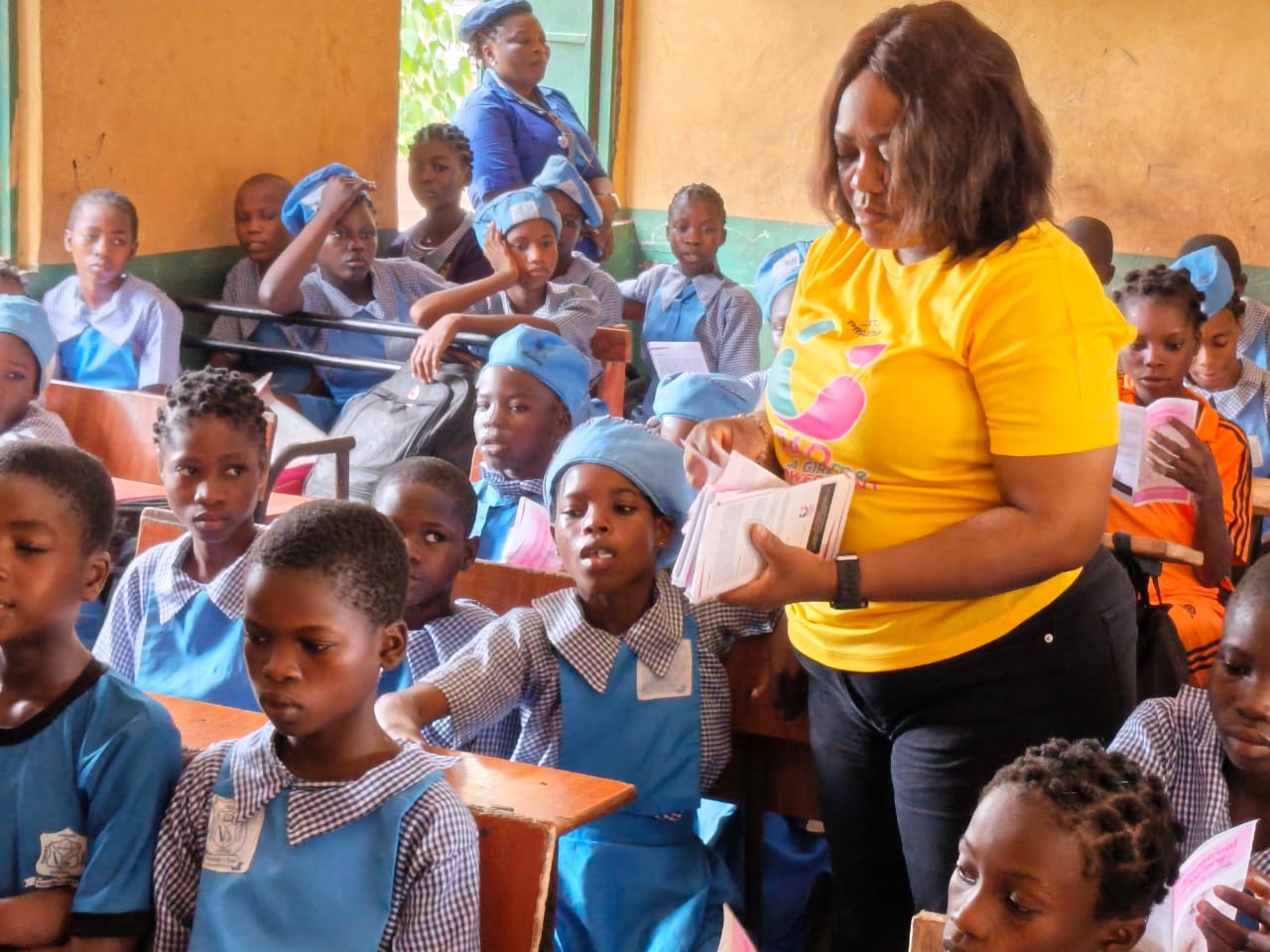
The Pad Me A Girl Empowerment Foundation has taken its menstrual health campaign to Igbesa High School (Junior), in Ado-Odo/Ota Local Government Area of Ogun State, providing free sanitary pads, menstrual hygiene pamphlets, exercise books and pens to over 100 schoolgirls to promote menstrual health, dignity and education.
The outreach, held on Wednesday, October 21, commemorated the 2026 International Day of the Girl Child, whose global theme is “End Child Marriage and Invest in Girls’ Rights!”
The programme brought together girls from Junior Secondary School (JSS) 1 to 3 who participate in the school’s reading clubs for mentorship, reading activities and menstrual health education.
It was convened by Oyelami Yetunde Anuoluwapo and Blessing Kappo, teachers and Teach For Nigeria Fellows at the school, following an appeal for sanitary products, learning materials and health education support. The Foundation’s founder, Theresa Moses, responded by providing the requested items and facilitating an interactive session on menstrual hygiene management.
Speaking at the event, Moses said she was inspired by the girls’ determination and aspirations, stressing the need for sustained investment in their health, education and future.
“Invest in girls and Nigeria will rise. Every girl deserves dignity, education and the right to dream beyond child marriage. That is why we are here; to ensure no girl misses school because of her period,” she said.
She emphasised that access to menstrual hygiene products and accurate information helps girls manage their periods confidently and participate fully in school activities.
In a letter of appreciation, Oyelami and Kappo described the outreach as impactful and inspiring, noting that it enhanced the girls’ understanding of menstrual health, hygiene and self-confidence. They also said the support would help promote the students’ hygiene, school attendance and dignity.
“You did not just give pads; you gave our girls confidence and hope,” the teachers wrote on behalf of the school community, expressing gratitude to the Foundation and hope for future collaboration.
Mrs Amarachi Eze, Assistant Divisional Commissioner of the Nigerian Girl Guides Association, Ado-Odo/Ota, Ogun State Branch, also commended the Foundation for supporting the girls’ hygiene needs and development.
“We sincerely appreciate the Management of Pad Me A Girl Foundation for joining hands with the Association in supporting our girls on hygiene management. May God Almighty continue to uplift your foundation. Thanks for joining hands in the development of girls in our schools. Bravo,” she said.
The Foundation’s Media Coordinator, Mr Oluwatosin Simon Faleye, called on corporate organisations, non-governmental organisations and well-meaning Nigerians to support initiatives that address period poverty and help girls remain in school.
“For over a year, we have been committed to ending period poverty and keeping girls in school. We call on corporate organisations and well-meaning Nigerians to support this cause for the betterment of Nigeria,” Faleye said.
The celebration also featured a student drama presentation highlighting the effects of child marriage, alongside reading and mentorship activities designed to encourage the girls to understand their rights, value their education and pursue their aspirations.
The Foundation also acknowledged the continued support of its sponsors and partners, including Access Bank, Pro Star Sports International, BL Consulting, Vita Baites Foods, Checkers, Senator Ireti Kingibe, representing the Federal Capital Territory (FCT) in the 10th Nigerian National Assembly, the Senate Committee on Women Affairs (SCOWAS), as well as individuals and media organisations whose contributions have supported its broader mission of ending period poverty, promoting menstrual health education and empowering girls and women.
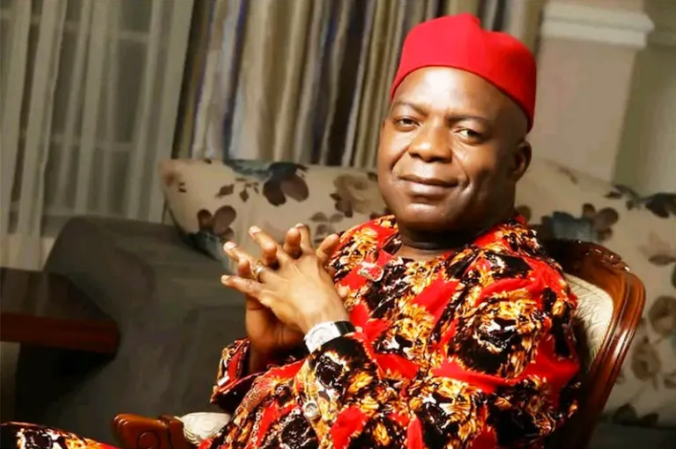
Abia State governor, Alex Otti, is set to flag off the reconstruction of Uratta Road and Old Express Road in Aba, two major routes which poor condition has disrupted transportation, commercial activities and access to residential communities for years.
The governor’s media aide, Ferdinand Ekeoma, in a statement on Wednesday, said that work on the roads has begun ahead of the scheduled official flag-off.
The two roads are considered important to Aba’s commercial and industrial activities, with Uratta Road connecting several adjoining streets to Port Harcourt Road and Old Express Road. At the same time, Old Express Road serves as a key route within the city’s industrial layout.
Ekeoma said the roads had suffered neglect for more than 24 years, leaving some sections impassable and forcing residents and businesses to contend with difficult transportation conditions.
According to the statement, Uratta Road provides access to more than 100 adjoining streets. Its poor condition has affected residents, traders and small-scale manufacturers who depend on the road to transport goods and access their businesses.
The statement said the road had become waterlogged and overgrown with weeds, discouraging commercial motorcycle and tricycle operators from using it.
Similarly, the deterioration of Old Express Road forced heavy-duty truck operators, fabric merchants, spare-parts dealers and small businesses to use longer routes, increasing transportation costs and affecting productivity.
The government said the road reconstruction is part of its broader effort to restore Aba’s infrastructure and strengthen the city’s commercial base.
Aba, one of southeastern Nigeria’s major commercial centres, hosts manufacturing clusters, markets, and small and medium-sized enterprises that depend heavily on functional roads to move raw materials and finished products.
The government said the reconstruction would improve market access, reduce transportation costs, facilitate the movement of goods, and support businesses operating along the affected corridors.
Ekeoma cited the reconstruction of Port Harcourt Road as an example of the administration’s infrastructure programme, noting that improved road access encouraged shops to reopen, attracted manufacturing activities and increased property rents along the corridor.
The government also said the new projects would complement other road interventions in Aba, including works on Ohanku and Obohia roads, as part of efforts to improve connectivity within the commercial city.
Beyond road construction, the administration said its projects include drainage systems, solar-powered streetlights, and pedestrian walkways, which it described as necessary to improve safety, accessibility, and flood resilience.
Ekeoma said Governor Otti views infrastructure development as an economic strategy rather than merely a construction programme, arguing that better roads would help businesses operate more efficiently and create employment opportunities.
He also quoted the governor as saying at an earlier church event that his administration is shifting attention from basic infrastructure improvements to healthcare, education, technology and industrialisation.
The governor, a former bank chief executive, was elected in 2023 on the Labour Party platform, defeating candidates from the major established parties in a state historically dominated by the Peoples’ Democratic Party.
Otti has remained in the Labour Party despite the defection of its 2023 presidential candidate, Peter Obi.
His administration has made rehabilitating Aba roads and public infrastructure central to its governance agenda, presenting the city’s recovery as essential to reviving economic activity across Abia State.
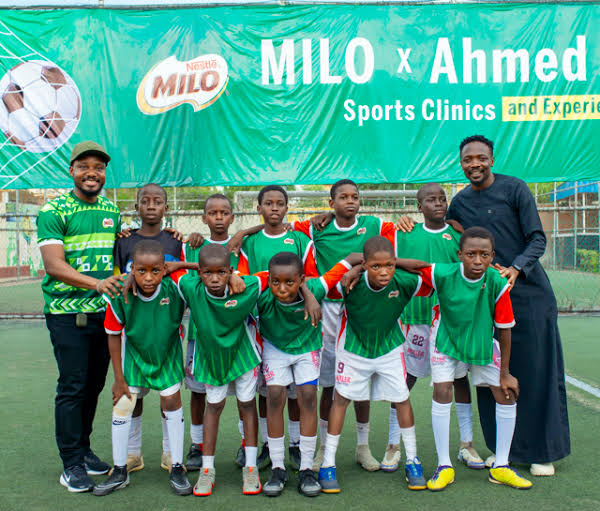
MILO Nigeria, in partnership with former Nigerian national team captain and MILO Brand Ambassador Ahmed Musa, has concluded the inaugural MILO × Ahmed Musa Sports Clinic and Tournament in Kano, providing 2,500 young footballers with professional coaching, mentorship and competitive football experience.
Over two weeks, participants took part in 10 coaching sessions and competed in matches under the guidance of Ahmed Musa and experienced coaches. The programme combined practical football training with lessons in teamwork, discipline, resilience and confidence, equipping participants with skills and values that extend beyond the pitch.
The initiative culminated in a tournament at the Ahmed Musa Sports Complex in Kano, where Khamis Football Academy emerged as champions of the inaugural edition. Participants also received cash prizes, certificates and football equipment.
Speaking on the initiative, Gilbert Tweneboah-Koduah, Category Lead, MILO, said: “At MILO, we believe sport is a powerful platform for young people to discover their abilities, build confidence and develop values that extend beyond the field of play. Our partnership with Ahmed Musa brings together MILO’s longstanding commitment to sports development and the experience of an athlete whose journey from grassroots football to the highest level of the game can inspire the next generation. By combining his experience with structured coaching and competition, this programme has given young footballers in Kano an opportunity to develop their skills, learn from experienced professionals and better understand the commitment required to pursue their aspirations.”
For the participants, the clinic offered an opportunity to learn from an athlete whose football journey began in northern Nigeria and progressed to the highest levels of the sport, making his experience a source of inspiration for aspiring players.
Commenting on the partnership, Ahmed Musa said: “Nigeria has incredible football talent, but talent alone is not enough. Young players need good coaching, regular competition and people who will guide them. I am proud to partner with MILO and share some of what football has taught me. My message to these players is simple: keep training, listen to your coaches and work hard every day to improve.”
Musa also called for greater investment in grassroots football, emphasizing the importance of giving young players access to quality coaching, structured development and regular competitive opportunities.
The MILO × Ahmed Musa Sports Clinic and Tournament builds on MILO’s longstanding commitment to youth development through sports in Nigeria. Through its school-based and grassroots sporting initiatives, MILO continues to create opportunities for young people to participate in sports, develop their abilities and embrace values that can support them both on and off the pitch.


