
Headlines
Tinubu Holds Closed-door Meeting with Rivers Ex-administrator Ibas, EFCC Chair, Fin Minister

- /home/rhoncare/pointblank.ng/wp-content/plugins/mvp-social-buttons/mvp-social-buttons.php on line 27
https://pointblank.ng/wp-content/uploads/2025/02/Tinubuue-e1729697176430-1000x600.jpg&description=Tinubu Holds Closed-door Meeting with Rivers Ex-administrator Ibas, EFCC Chair, Fin Minister', 'pinterestShare', 'width=750,height=350'); return false;" title="Pin This Post">
- Share
- Tweet /home/rhoncare/pointblank.ng/wp-content/plugins/mvp-social-buttons/mvp-social-buttons.php on line 69
https://pointblank.ng/wp-content/uploads/2025/02/Tinubuue-e1729697176430-1000x600.jpg&description=Tinubu Holds Closed-door Meeting with Rivers Ex-administrator Ibas, EFCC Chair, Fin Minister', 'pinterestShare', 'width=750,height=350'); return false;" title="Pin This Post">
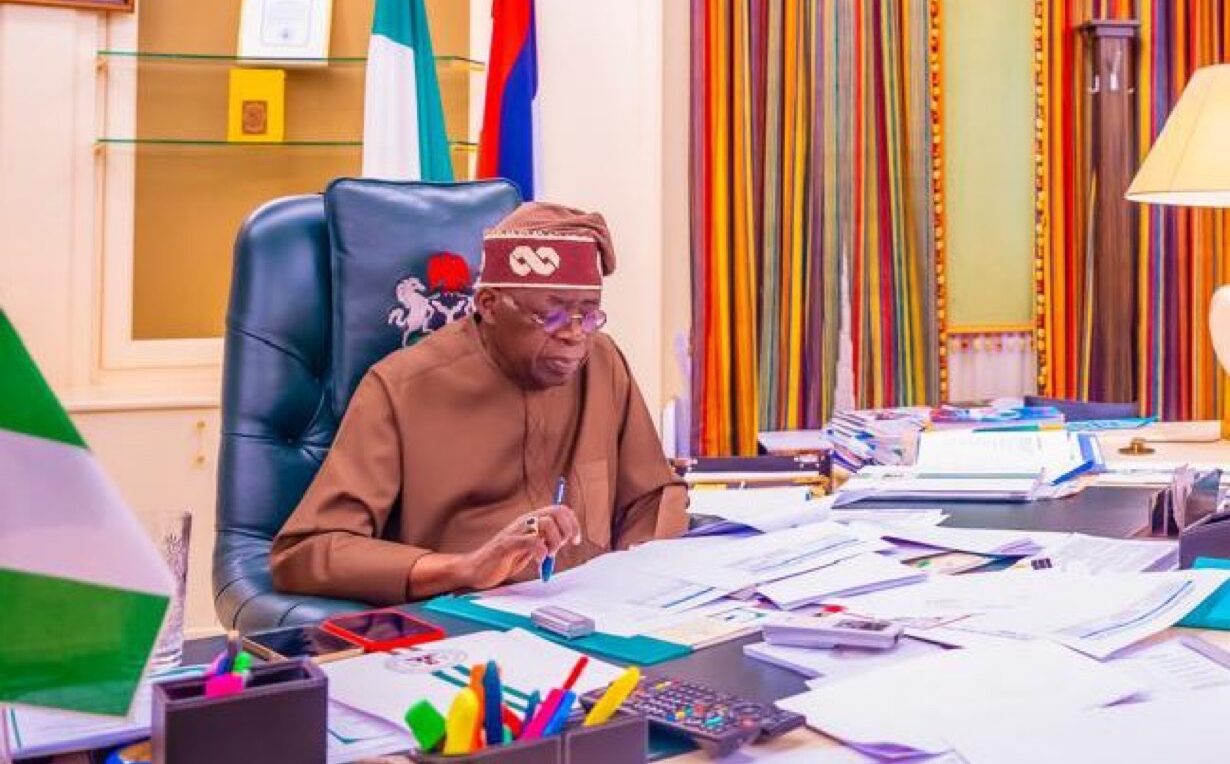
President Bola Tinubu, on Wednesday evening, summoned the immediate past Sole Administrator of Rivers State, Vice Admiral Ibok-Ete Ibas (rtd.), to the Presidential Villa, Abuja.
Ibas, who arrived at the State House at about 5:50 pm dressed in brown native attire, was accompanied to the meeting by the Minister of Finance and Coordinating Minister of the Economy, Wale Edun, and Chairman of the Economic and Financial Crimes Commission (EFCC), Ola Olukoyede.
Earlier, Edun had been sighted entering the villa briefly before leaving, only to return later carrying a file, underscoring the gravity of the engagement with the President.
Vice Admiral Ibas ceased to function as administrator of the oil-rich State on September 17, following the termination of the six-month emergency rule imposed in March.
President Tinubu had directed the reinstatement of the suspended governor, Siminalayi Fubara, his deputy, and members of the Rivers State House of Assembly from the previous Thursday.
During its first sitting after the end of emergency rule, the Rivers State House of Assembly, presided over by Speaker Martin Amaewhule, resolved to investigate the management of State funds under Ibas’ tenure.
Lawmakers specifically resolved “to explore the process of knowing what transpired during the emergency rule about spending from the consolidated revenue fund for the award of contracts and other expenditures.”
Ibas, however, has publicly rejected the decision to probe the State’s expenditure during his six months in office.
Official records show that Rivers State received at least N254.37 billion from the Federation Account Allocation Committee (FAAC) between March and August 2025, covering the period Ibas served as sole administrator.
Details of the closed-door meeting were yet to be made public as of press time.


The Confederation of African Football (CAF) has confirmed that the 2026 edition of its annual awards ceremony will take place in Lagos, Nigeria, on December 7.
The decision was reached at a virtual meeting of the CAF Executive Committee (EXCO), chaired by the organisation’s president, Patrice Motsepe, on Friday, 2 October.
The meeting also approved the CAF Competitions Calendar for 2026–2030, alongside amendments to the regulations governing the continent’s interclub competitions.
Nigeria will host another major CAF event, the organisation’s Ordinary General Assembly, on 21 November.
The 2026 CAF Awards will bring together leading footballers, coaches, clubs and administrators to celebrate outstanding performances in African football.
The ceremony recognises achievements across men’s and women’s football, including the Player of the Year, Coach of the Year, Goalkeeper of the Year, Young Player of the Year and Club of the Year categories.
Nigeria has enjoyed considerable success at the awards, particularly in the men’s and women’s Player of the Year categories.
Ademola Lookman won the men’s award in 2024, following Victor Osimhen’s triumph in 2023, making them the first Nigerian pair to secure consecutive victories in the category since Nwankwo Kanu and Victor Ikpeba achieved the feat in 1996 and 1997, respectively.
The 2024 ceremony, held in Marrakech, Morocco, also saw Nigeria’s Super Falcons named Women’s National Team of the Year, while goalkeeper Chiamaka Nnadozie received the Women’s Goalkeeper of the Year award.
At the 2025 edition held in Rabat, Morocco dominated the ceremony during a historic night in Rabat, with Achraf Hakimi (Morocco/Paris Saint-Germain) and Ghizlane Chebbak (Morocco/Al Hilal) winning the Men’s and Women’s Player of the Year awards, respectively.
Yassine Bounou (Morocco/Al Hilal) and Nigeria’s Chiamaka Nnadozie (Brighton & Hove Albion) claimed the Men’s and Women’s Goalkeeper of the Year honours, and Othmane Maamma (Morocco/Watford) and Doha El Madani (Morocco/AS FAR) were named Men’s and Women’s Young Players of the Year, respectively.
Beyond the awards announcement, the EXCO approved significant changes to the regulations governing the CAF Champions League and CAF Confederation Cup.
Under the revised rules, players will be permitted to represent more than one club during a single CAF interclub season, a change that could provide clubs with greater flexibility in managing their squads.
The committee also approved an increase in the number of players clubs can register, setting the maximum at 40 players at any point during the season.
Clubs will additionally be allowed to replace four players during the final registration window, provided those players have not featured in any CAF interclub match during the season.
Another significant amendment concerns disciplinary proceedings. All disciplinary matters will now be referred to the CAF Disciplinary Board, removing that responsibility from the Interclub Committee.
The changes are expected to influence how clubs approach player recruitment, registration and squad management in continental competitions.
The EXCO also approved the dates for the 2026 CAF Women’s Champions League, with the final tournament scheduled to run from 1 to 15 November.
The competition, which brings together the leading women’s club sides from across Africa, has become a major platform for the development and visibility of women’s football on the continent.
Nigeria’s Edo Queen’s participation in this year’s competition is presently being challenged following the annulment of their victory at the WAFU B tournament after a protest by Ampem Dakoa.
In another decision, CAF confirmed that Senegal will host the 2026 Beach Soccer Africa Cup of Nations from 28 November to 6 December.
The West African country, which won the previous edition, will host the tournament as it seeks to defend its continental title.

The African Democratic Congress Presidential Campaign Council (ADC PCC) has faulted the claim by Vice President Kashim Shettima that President Bola Tinubu saved Nigeria from economic collapse.
The council said the current administration cannot disown the record of the All Progressives Congress (APC) government under former President Muhammadu Buhari.
Reacting through the Director of Media and Publicity of ADC PCC, Kola Ologbondiyan, it said if Nigeria was heading towards economic collapse before Tinubu assumed office, as claimed by the Vice President, then APC must accept responsibility, having controlled Federal government for eight years under Buhari.
He recalled that Tinubu had said his government would build on Buhari’s legacy.
“Nigerians know APC. It is the APC, on whose platform President Tinubu is seeking second term,” he said.
Ologbondiyan said administration had not delivered on expectations in areas such as roads, electricity, cost of living and public institutions.
He said the immediate concern of Nigerians is access to affordable food and basic necessities.
“President Tinubu has not saved Nigeria from collapse; he has pushed country deeper into economic challenges marked by hunger, inflation and high cost of living,” he said.
He said Nigerians were already experiencing economic hardship, not merely heading towards it.
He also questioned Shettima’s promise to deploy 10,600 electric tricycles, 300 buses and electric taxis under e-logistics programme in coming weeks, and reminded Vice President of his earlier promise that transportation costs would come down by October 1, 2026.
ADC PCC urged APC to acknowledge challenges confronting country and focus on solutions.
Council assured Nigerians that ADC remains committed to providing credible political alternative.
It called on Nigerians to support quest for government that would make life more affordable.
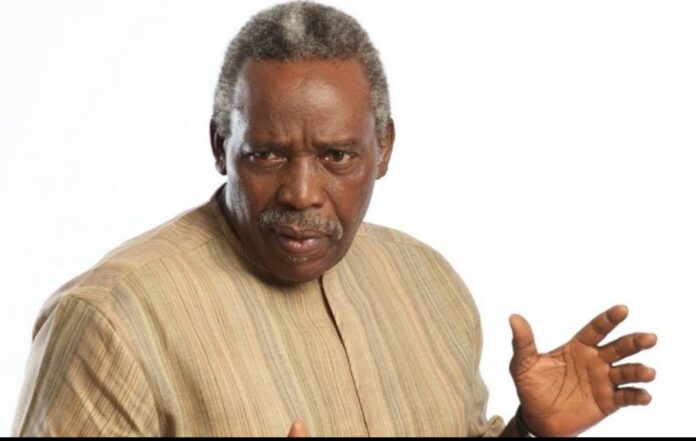
Nollywood practitioners, colleagues, family members and associates of late veteran actor, Olu Jacobs, on Wednesday night, celebrated his life and contributions to the entertainment industry.
The event, which held at Glover Memorial Hall, Lagos Island, attracted prominent actors, filmmakers and other stakeholders in the creative industry who gathered to honour the late thespian whose career spanned more than five decades.
Celebrities at the event reflected on his professionalism, humility, mentorship and immense influence on generations of actors.
Richard Mofe-Damijo described Jacobs as a father figure whose influence helped shape the careers of many actors, including himself.
He said Jacobs’ decision to return to Nigeria and invest his talent in the local industry helped create opportunities for younger performers.
“Uncle Olu was more than a colleague; he was a father figure to many of us.”
“His professionalism, discipline and commitment to excellence set a standard we continue to aspire to.”
“His legacy is not just in the films he made, but in the people he inspired and the industry he helped build.”
Sola Sobowale described Jacobs as a remarkable actor whose talent, kindness and humility made him a treasured figure in the industry.
She said his ability to command attention on screen was matched by his warmth and generosity off screen.
“Uncle Olu was a rare gift to Nigerian cinema, and we are blessed to have witnessed his greatness.”
“He carried himself with dignity, humility and a level of professionalism that every actor should learn from.”
“His legacy will continue to live through the stories he told and the generations he inspired.”
Segun Arinze described Jacobs as one of the defining figures of Nigerian acting, noting that his career provided a benchmark for aspiring performers.
He said the late actor’s contributions extended beyond his memorable performances to the standards he established for the profession.
“He was one of the people who showed us what it truly means to be an actor.”
“His dedication to his craft and his ability to bring every character to life were exceptional.”
“Olu Jacobs may have taken his final bow, but his influence on Nigerian entertainment will never fade.”
Fred Amata described Jacobs as an exceptional actor whose professionalism and dedication to the craft inspired generations.
“Uncle Olu was a master of his craft and he brought dignity and excellence to acting.
“His legacy will continue to inspire us.”
Jide Kosoko described Jacobs as a respected colleague whose contributions to Nollywood would remain unforgettable.
“He was a brother and a great professional and his impact on this industry cannot be overstated.
“We will forever cherish the memories and lessons he left behind.” he said.
Veteran actor, Adebayo Salami, popularly known as Oga Bello, described Jacobs as one of the pillars of Nigerian acting.
“Olu Jacobs was a great ambassador of our profession and he represented excellence, discipline and humility.
“His contributions to the industry will never be forgotten.” he said.
The late Oludotun Baiyewu Jacobs was born on July 11, 1942, in Abeokuta, Ogun State.
He trained at the Royal Academy of Dramatic Art (RADA), London, before building an international career in theatre, television and film.
He later returned to Nigeria, where he became one of the most respected figures in the country’s entertainment industry.
His distinguished career earned him several recognitions, including the national honour of Member of the Order of the Federal Republic (MFR), the Africa Movie Academy Award for Best Actor in a Leading Role and the Industry Merit Award at the Africa Magic Viewers’ Choice Awards.
Beyond his remarkable performances, Jacobs was celebrated for his contribution to the professionalisation of acting, mentorship of younger talents and promotion of Nigerian stories.
The Night of Tributes provided an opportunity for the industry to celebrate a man whose artistry, integrity and commitment to excellence helped shape Nigerian entertainment.
As colleagues and admirers remembered him, the gathering reaffirmed Jacobs’ enduring place in the history of Nigerian theatre and cinema.
The funeral service is scheduled for Friday, October 2, at This Present House, Lekki Phase 1, Lagos.
NAN


