
Metro
Zero to Global Impact: The Power of Purpose


- /home/rhoncare/pointblank.ng/wp-content/plugins/mvp-social-buttons/mvp-social-buttons.php on line 27
https://pointblank.ng/wp-content/uploads/2025/08/DR.TOLULOPE-A.-ADEGOKE-AMBP-UN__-1-744x600.jpg&description=Zero to Global Impact: The Power of Purpose', 'pinterestShare', 'width=750,height=350'); return false;" title="Pin This Post">
- Share
- Tweet /home/rhoncare/pointblank.ng/wp-content/plugins/mvp-social-buttons/mvp-social-buttons.php on line 69
https://pointblank.ng/wp-content/uploads/2025/08/DR.TOLULOPE-A.-ADEGOKE-AMBP-UN__-1-744x600.jpg&description=Zero to Global Impact: The Power of Purpose', 'pinterestShare', 'width=750,height=350'); return false;" title="Pin This Post">
By Tolulope A. Adegoke, PhD
“At the centre of your being you have the answer; you know who you are and you know what you want” – Lao Tzu
Each of us is born with unique potential, yet only a few fully harness it. The difference between an ordinary life and one of extraordinary global impact often lies in a single discipline: the courage to embark on a journey of self-exploration and the resilience to remain committed to the purpose you discover.
This process of productive introspection is the foundation of greatness. Consider the biblical parable of the prodigal son. His restoration began not when he returned home, nor when he decided to change, but the moment he “came to himself”—when he paused to reflect, look inward, and reconnect with his true identity.
The lesson is timeless: the scale of your external impact is directly proportional to the depth of your internal conquest. As Proverbs 16:32 affirms, “He who is slow to anger is better than the mighty, and he who rules his spirit than he who takes a city.” The most critical journey, therefore, is not geographic but internal. One can traverse the globe and still remain ignorant without ever having journeyed within.
Self-Exploration: The Gateway to Purpose
Self-exploration is more than casual reflection; it is the intentional process of questioning, observing, and discovering your authentic values, strengths, and mission. True empowerment comes not from accumulating passport stamps, but from cultivating inner wisdom.
This principle reveals a deeper truth in the calls for diaspora citizens to return home. While noble, national transformation is not primarily driven by those who have traveled abroad, but by those who have traveled inward. A mind that has explored itself can produce innovations, policies, and enterprises that reshape a nation—whether that person resides in Lagos, London, or Los Angeles.
The prodigal son’s story teaches us that foreign exposure without self-awareness is futile. Meaningful external change only follows internal discovery.
From Dependence to Responsibility
Self-exploration fosters self-reliance. Individuals, communities, and nations that dare to look within break free from dependence on external aid or validation. They learn that real progress begins not when others take responsibility for them, but when they accept responsibility for themselves.
Those who know themselves are not passive dreamers. They do not wait for miracles or external saviors. Instead, they identify, cultivate, and maximize the innate resources within them to create value for society. They are equipped for exploits—trained to meet needs, innovate solutions, and inspire collective action.
The Power of Strategic Solitude
Life’s most profound breakthroughs often occur in seclusion. Valuables are secured in a strong room; corporate strategy is forged in the boardroom; complex surgeries are performed in the operating theater. Similarly, breakthroughs of the human spirit are born in the silent chambers of solitude.
Silence is not merely the absence of noise. It is the practiced art of disengaging from the distractions, desires, and associations that stifle potential. As Isaiah 30:15 teaches, “…in quietness and in confidence shall be your strength.”
Albert Einstein described himself as a “lone traveller,” consciously cultivating distance from distractions to preserve his creative solitude. Basketball legend Michael Jordan saw the court as a sanctuary for meditation—a place where the world’s chaos faded and his inner genius emerged. Thomas Edison reframed his hearing impairment as an advantage, allowing him to focus deeply by shutting out unnecessary noise.
Greatness is rarely accidental. It is most often the product of disciplined silence, purposeful solitude, and sustained inner focus.
Balancing Purpose with Renewal
The pursuit of purpose must not come at the cost of burnout. Even the most gifted leaders, innovators, and prophets recognized the non-negotiable need for rest.
Jesus Christ frequently withdrew from the crowds to pray and recharge. Following creation, God Himself rested. Modern leaders like Dr. Robert Schuller understood this, crediting his wife with helping him schedule deliberate breaks to avoid exhaustion.
If divinity models rest, humanity must not neglect it. Energy, not just time, must be managed wisely. A purposeful life requires rhythmic cycles of exertion and renewal.
The Discipline of Decisive Action
Purpose is never fulfilled by intention alone. It is realized through decisions, discipline, and persistence. Ideas must be acted upon, not endlessly postponed. Many people fail not for a lack of opportunity, but because they procrastinate or abandon their vision at the first sign of resistance.
High achievers are distinguished by one critical habit: they make bold decisions early, commit to them resolutely, and adapt as needed. Success comes not from waiting until you feel ready, but from acting with conviction and adhering to your purpose until results materialize.
The Path to Global Impact
Your life is the sum of your past decisions and present choices. Moving from “zero to global impact” is not a matter of luck; it is the outcome of a conscious practice:
· Affirm your inherent worth and capacity. You are endowed with unique, God-given abilities that demand expression.
· Remain Alert to the opportunities around you. Miracles often wear the disguise of ordinary moments.
· Applaud your progress, no matter how small. Celebrating victories sustains momentum.
The author of this piece once struggled to write the simple letter ‘g.’ Through perseverance, faith, and encouragement, that same individual graduated as the top student in his department. This personal journey from struggle to success is a testament to the power of affirmation, faith, and persistent action.
As Dr. Robert Schuller said, “When you are inspired with a dream, God has hit the ball into your court. Now you have to hit it back with commitment.” Purpose without commitment is potential wasted. But when you combine self-discovery, strategic solitude, disciplined action, and unwavering focus, you activate the hero within—positioning yourself for genuine global impact.
Conclusion
You were created with immense potential, equipped with unique treasures the world needs. Do not squander them through distraction, procrastination, or self-doubt. Learn to explore yourself, define your purpose, embrace restorative solitude, guard your energy, and stay committed to your decisions.
In doing so, you will move from potential to action, from local relevance to global significance—becoming not just a success story, but a solution to the challenges of your generation.
Dr. Tolulope A. Adegoke, AMBP-UN is a Recipient of the Nigerian Role Models Award (2024), and a Distinguished Ambassador For World Peace (AMBP-UN).


Metro
International Day of the Girl-Child: Pad Me A Girl Foundation Holds Menstrual Health Outreach in Ogun
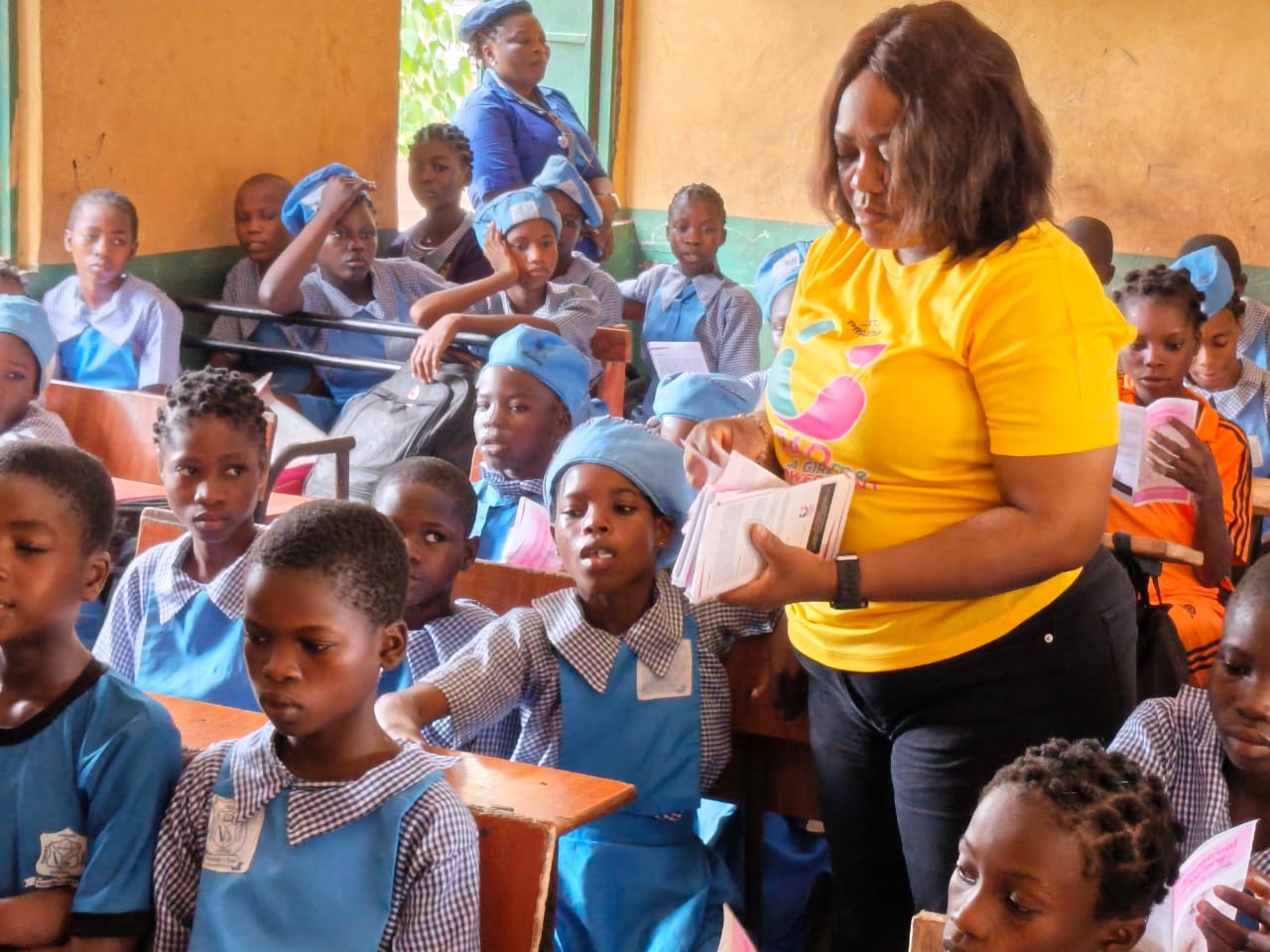
The Pad Me A Girl Empowerment Foundation has taken its menstrual health campaign to Igbesa High School (Junior), in Ado-Odo/Ota Local Government Area of Ogun State, providing free sanitary pads, menstrual hygiene pamphlets, exercise books and pens to over 100 schoolgirls to promote menstrual health, dignity and education.
The outreach, held on Wednesday, October 21, commemorated the 2026 International Day of the Girl Child, whose global theme is “End Child Marriage and Invest in Girls’ Rights!”
The programme brought together girls from Junior Secondary School (JSS) 1 to 3 who participate in the school’s reading clubs for mentorship, reading activities and menstrual health education.
It was convened by Oyelami Yetunde Anuoluwapo and Blessing Kappo, teachers and Teach For Nigeria Fellows at the school, following an appeal for sanitary products, learning materials and health education support. The Foundation’s founder, Theresa Moses, responded by providing the requested items and facilitating an interactive session on menstrual hygiene management.
Speaking at the event, Moses said she was inspired by the girls’ determination and aspirations, stressing the need for sustained investment in their health, education and future.
“Invest in girls and Nigeria will rise. Every girl deserves dignity, education and the right to dream beyond child marriage. That is why we are here; to ensure no girl misses school because of her period,” she said.
She emphasised that access to menstrual hygiene products and accurate information helps girls manage their periods confidently and participate fully in school activities.
In a letter of appreciation, Oyelami and Kappo described the outreach as impactful and inspiring, noting that it enhanced the girls’ understanding of menstrual health, hygiene and self-confidence. They also said the support would help promote the students’ hygiene, school attendance and dignity.
“You did not just give pads; you gave our girls confidence and hope,” the teachers wrote on behalf of the school community, expressing gratitude to the Foundation and hope for future collaboration.
Mrs Amarachi Eze, Assistant Divisional Commissioner of the Nigerian Girl Guides Association, Ado-Odo/Ota, Ogun State Branch, also commended the Foundation for supporting the girls’ hygiene needs and development.
“We sincerely appreciate the Management of Pad Me A Girl Foundation for joining hands with the Association in supporting our girls on hygiene management. May God Almighty continue to uplift your foundation. Thanks for joining hands in the development of girls in our schools. Bravo,” she said.
The Foundation’s Media Coordinator, Mr Oluwatosin Simon Faleye, called on corporate organisations, non-governmental organisations and well-meaning Nigerians to support initiatives that address period poverty and help girls remain in school.
“For over a year, we have been committed to ending period poverty and keeping girls in school. We call on corporate organisations and well-meaning Nigerians to support this cause for the betterment of Nigeria,” Faleye said.
The celebration also featured a student drama presentation highlighting the effects of child marriage, alongside reading and mentorship activities designed to encourage the girls to understand their rights, value their education and pursue their aspirations.
The Foundation also acknowledged the continued support of its sponsors and partners, including Access Bank, Pro Star Sports International, BL Consulting, Vita Baites Foods, Checkers, Senator Ireti Kingibe, representing the Federal Capital Territory (FCT) in the 10th Nigerian National Assembly, the Senate Committee on Women Affairs (SCOWAS), as well as individuals and media organisations whose contributions have supported its broader mission of ending period poverty, promoting menstrual health education and empowering girls and women.
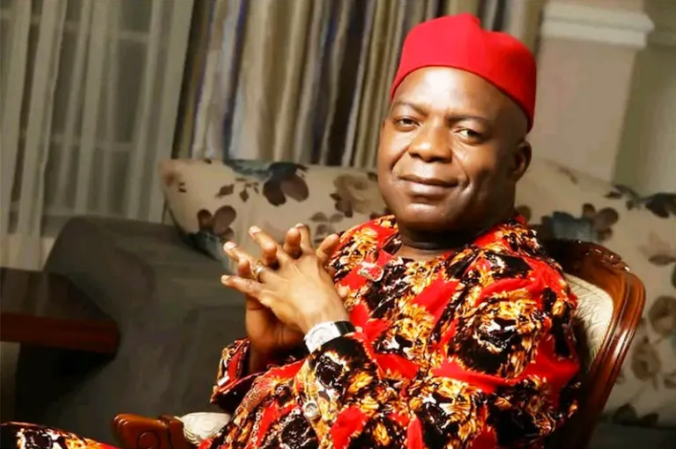
Abia State governor, Alex Otti, is set to flag off the reconstruction of Uratta Road and Old Express Road in Aba, two major routes which poor condition has disrupted transportation, commercial activities and access to residential communities for years.
The governor’s media aide, Ferdinand Ekeoma, in a statement on Wednesday, said that work on the roads has begun ahead of the scheduled official flag-off.
The two roads are considered important to Aba’s commercial and industrial activities, with Uratta Road connecting several adjoining streets to Port Harcourt Road and Old Express Road. At the same time, Old Express Road serves as a key route within the city’s industrial layout.
Ekeoma said the roads had suffered neglect for more than 24 years, leaving some sections impassable and forcing residents and businesses to contend with difficult transportation conditions.
According to the statement, Uratta Road provides access to more than 100 adjoining streets. Its poor condition has affected residents, traders and small-scale manufacturers who depend on the road to transport goods and access their businesses.
The statement said the road had become waterlogged and overgrown with weeds, discouraging commercial motorcycle and tricycle operators from using it.
Similarly, the deterioration of Old Express Road forced heavy-duty truck operators, fabric merchants, spare-parts dealers and small businesses to use longer routes, increasing transportation costs and affecting productivity.
The government said the road reconstruction is part of its broader effort to restore Aba’s infrastructure and strengthen the city’s commercial base.
Aba, one of southeastern Nigeria’s major commercial centres, hosts manufacturing clusters, markets, and small and medium-sized enterprises that depend heavily on functional roads to move raw materials and finished products.
The government said the reconstruction would improve market access, reduce transportation costs, facilitate the movement of goods, and support businesses operating along the affected corridors.
Ekeoma cited the reconstruction of Port Harcourt Road as an example of the administration’s infrastructure programme, noting that improved road access encouraged shops to reopen, attracted manufacturing activities and increased property rents along the corridor.
The government also said the new projects would complement other road interventions in Aba, including works on Ohanku and Obohia roads, as part of efforts to improve connectivity within the commercial city.
Beyond road construction, the administration said its projects include drainage systems, solar-powered streetlights, and pedestrian walkways, which it described as necessary to improve safety, accessibility, and flood resilience.
Ekeoma said Governor Otti views infrastructure development as an economic strategy rather than merely a construction programme, arguing that better roads would help businesses operate more efficiently and create employment opportunities.
He also quoted the governor as saying at an earlier church event that his administration is shifting attention from basic infrastructure improvements to healthcare, education, technology and industrialisation.
The governor, a former bank chief executive, was elected in 2023 on the Labour Party platform, defeating candidates from the major established parties in a state historically dominated by the Peoples’ Democratic Party.
Otti has remained in the Labour Party despite the defection of its 2023 presidential candidate, Peter Obi.
His administration has made rehabilitating Aba roads and public infrastructure central to its governance agenda, presenting the city’s recovery as essential to reviving economic activity across Abia State.

MILO Nigeria, in partnership with former Nigerian national team captain and MILO Brand Ambassador Ahmed Musa, has concluded the inaugural MILO × Ahmed Musa Sports Clinic and Tournament in Kano, providing 2,500 young footballers with professional coaching, mentorship and competitive football experience.
Over two weeks, participants took part in 10 coaching sessions and competed in matches under the guidance of Ahmed Musa and experienced coaches. The programme combined practical football training with lessons in teamwork, discipline, resilience and confidence, equipping participants with skills and values that extend beyond the pitch.
The initiative culminated in a tournament at the Ahmed Musa Sports Complex in Kano, where Khamis Football Academy emerged as champions of the inaugural edition. Participants also received cash prizes, certificates and football equipment.
Speaking on the initiative, Gilbert Tweneboah-Koduah, Category Lead, MILO, said: “At MILO, we believe sport is a powerful platform for young people to discover their abilities, build confidence and develop values that extend beyond the field of play. Our partnership with Ahmed Musa brings together MILO’s longstanding commitment to sports development and the experience of an athlete whose journey from grassroots football to the highest level of the game can inspire the next generation. By combining his experience with structured coaching and competition, this programme has given young footballers in Kano an opportunity to develop their skills, learn from experienced professionals and better understand the commitment required to pursue their aspirations.”
For the participants, the clinic offered an opportunity to learn from an athlete whose football journey began in northern Nigeria and progressed to the highest levels of the sport, making his experience a source of inspiration for aspiring players.
Commenting on the partnership, Ahmed Musa said: “Nigeria has incredible football talent, but talent alone is not enough. Young players need good coaching, regular competition and people who will guide them. I am proud to partner with MILO and share some of what football has taught me. My message to these players is simple: keep training, listen to your coaches and work hard every day to improve.”
Musa also called for greater investment in grassroots football, emphasizing the importance of giving young players access to quality coaching, structured development and regular competitive opportunities.
The MILO × Ahmed Musa Sports Clinic and Tournament builds on MILO’s longstanding commitment to youth development through sports in Nigeria. Through its school-based and grassroots sporting initiatives, MILO continues to create opportunities for young people to participate in sports, develop their abilities and embrace values that can support them both on and off the pitch.


