
Opinion
Food for Living: Distinguish Your Brand

- Share
- Tweet /home/rhoncare/pointblank.ng/wp-content/plugins/mvp-social-buttons/mvp-social-buttons.php on line 69
https://pointblank.ng/wp-content/uploads/2019/04/download.jpeg&description=Food for Living: Distinguish Your Brand', 'pinterestShare', 'width=750,height=350'); return false;" title="Pin This Post">
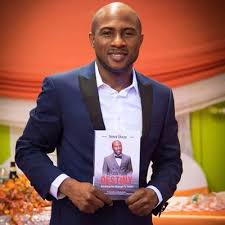
By Henry Ukazu
Greetings Destiny Friends,
Beauty lies in the eyes in the beholder is a popular saying, which has proved to be true because if you ask ten blind men to describe an elephant, they’ll describe the elephant based on the way they feel it. One of the beauty-aspects of life is its originality. In this contemporary age where digital communication has gone global, no one likes a fake product, a fake friend, a fake person, etc; everyone likes it when you’re the best version of yourself. Though some schools of thought might relish in the aphorism, “fake it until you make it”, If truth be told, there’s nothing sweeter than when success is organic, especially when people identify with you for what you truly represent. When you’re fake, it goes to prove you’re not worthy and confident of yourself. But when you’re the original version of yourself, it makes your life much more simple, easy and accessible. Let me share an insightful business tip with you; when you’re fake, you’ll only attract fake people around you thereby driving your potential helpers away from you, but when you’re the original version of yourself, you give fake people the opportunity to run away and the original people the opportunity to come closer.- Food for thought.
In one of the chapters of my first published book Design Your Destiny- Actualizing Your Birthright to Success, titled: Understanding Your Uniqueness, a striking statement therein is a quote from Oscar Wilde “Be yourself, everyone is taken”. This affirms the saying, you can lie to others but you can never lie to yourself. The question now becomes, how do you distinguish not only yourself but your brand? During the course of this article, we shall be focusing on how we can make not only yourself unique, but also our brands, business, and lifestyle in general. We shall conclude with advice on how to stay relevant in business.
A brand must uniquely solve a particular problem and it must recognize the target audience it hopes to serve. Brand differentiation can be a corporate brand, product brand, or even a personal brand.
In order to truly know yourself and what people think about you and your product, ask them what do think about you and your product? Depending on the response you receive, you can evaluate and reconcile it with who you truly are and what your brand represents. Let’s take the case of Coca- Cola, for instance, it has been in existence for one hundred and twenty years and therefore needs no introduction nor marketing. The interesting thing about Coca-Cola is that no one knows the composition/ ingredients. That goes to tell you they have distinguished themselves.
Let share practical examples of how you can distinguish yourself, your brand/product.
Position Yourself
Location is very important in business. Being at the right place and time is very critical for the success of your business. Your ability to know what is needed and lacking in any region can influence your brand recognition. Regardless of where you are in the world, figure out where your customers, services or skills will be relevant and find a way to get there. This helps to give your customers more opportunities to be involved in the decision-making process. It also provides customers the benefits of distinctiveness and variety, enabling them to choose the experience that is most meaningful to them.
Cultivate Stronger Relationships:
It is widely believed that you are addressed the way you dress and your network determines your net worth. If you have great clientele base and build a solid relationship, you stand a better chance of getting business opportunities due to the referral you’ll get.
Consistency
One of the most important keys to distinguishing yourself is consistency; over the course of months, will people begin to recognize and appreciate your brand for what it is. Craft your brand identity carefully, and stick to it once you’ve found a way to distinguish yourself.
Be informed
Information is power. Make it a duty to inform your customers about new developments in the industry. You can do this by way of newsletter, flyers, text messages or social media engagement. In that your customers will know you are not interested in their money, but you also care about them.
Tell A Story
People like stories that relate to them or why you do what you do. Your story may also be about the source of your product, service or inspiration and it can also relate to you.
Every successful brand has a compelling story behind it.
Great Customer Service
Customers love great customer. Exceeding expectations can differentiate your brand. For example, little words like thank you, gifts, can I help you find something? Constant checking on your customers and informing them of new products helps them to see you a reputable brand due to how you have positioned not only yourself, your employees but your business in general. Make people feel value: You can appeal to people’s emotions by delivering an emotional experience that’s associated with your product or service. Great customer service and pricing are very influential factors for customer service. When you deliver a world customer service, your customers stay happier and stick around longer.
The quality of a company’s customer support and service directly impacts the overall customer experience. Take care of your employees by treating them right and they will, in turn, treat your company/business well.
Give Back
Modern customers like a bonus, points, gift cards, and other incentives. Most people love to get behind a brand that gives back to the community. By emphasizing corporate social responsibility (CSR), you can differentiate your brand and get an edge over the competition
Provide Higher Quality
When you are recognized as a brand that specializes in giving quality products, a distinct class of people will be familiar with your business. E.g. Rolex watches are unique. Luxury brands are able to command premium pricing through an emphasis on higher-quality Toyota and Honda cars are regarded as durable cars while Bentley is regarded as a luxury car.
Finding a true strategy
Having a unique strategy is very important in succeeding in business. Coming up with a great strategy may be the single most difficult step in building a business. But it may also be the most important. Here are a few possible strategy variables to consider: High quality versus low price, narrow versus broad product line, high-tech versus low-tech product, trendy versus conservative products, brand name versus generic, customized versus standard, niche market versus mainstream market
Solve a real problem for customers
Once you identify those unsolved problems, you can take a few different approaches to solve them. However, once you come up with a plan of attack, validate it with your customers before implementing it.
Brand Ambassadors
Brand advocates are people who love your brand so much they promote it to friends, family, or colleagues. They are also commonly referred to as “brand ambassadors”. When they become convinced of the value you offer the market, they start promoting. They do this on their own, without any request from your company. This constitutes a great form of free advertising for your business. And it’s the best type of advertising.
Become an expert
If you paint yourself as an expert in your space, customers and prospects will look to you for advice. They will look for your content when they have a problem that needs to be solved. They will search your website for other resources that will help them.
Focus on social listening Skills
Consumers use social media to gather new information about a brand than ever before. They also use social media to blast negative comments across the airwaves when they have a poor experience. Consumers using social media have more power than ever to dictate the direction and future of a company. If you disappoint customers, many will quickly take to social media to share their negative experiences with the world. And it is done in a public forum, which can kill your brand reputation.
When someone posts a comment—whether positive or negative—you need to respond as quickly as possible -be engaging.
In conclusion, how does your brand differentiate from the competition? Is your packaging distinctive or stand-out in some way? How could you change that? What does your brand do to differentiate your customer service? Are there new audiences you can reach through differentiation?
What would it take to reposition as a luxury brand and differentiate through added value?
Henry Ukazu writes from New York. He works with the New York City Department of Correction as the Legal Coordinator. He’s the author of the acclaimed book Design Your Destiny – Actualizing Your Birthright To Success. He can be reached via henrous@gmail.com


By Henry Ukazu
Dear Destiny Friends,
In the last two editions, we discussed passion and profit, and identified the relativity of the two. Today, however, the sensitive issue of love will be our target.
As powerful as love is, it can also be controversial. This is because there are many angles to it. Some people believe in love in contrast to the views of some others, however. While some think love is blind, others are of the opinion that love might not be blind afterall. The latter school of thought believes that one must love with common sense as opposed to being foolishly in love.
But while love is often described as a verb because it’s action-oriented functions, one cannot say they love someone or something without investing time and resources in them. As a matter of fact, a school of thought says that if you want to know a person, look at how the person spends their time.
Regardless of the aisle one belongs to, I strongly believe that true love exists. The only challenge most people have is that they love the wrong people, and they haven’t found people who truly love them for who they are. Today, I pray that what we love, loves us back.
I also believe that no one is too busy to do the needful. If anyone wants to check on you or be with you, they will make an intentional effort to reach out. I say this because no one is too busy to pick your call or even reply your message. If you reach out to anyone, and they are not available to pick up your call, they will surely make out time to revert to you, if for any reason, you are relevant to them.
To understand this message, imagine US President Donald Trump, Elon Musk, or even an idol whom you rever calling you; would you give them an excuse for not picking or returning their call? If my thinking is right, one will make a conscious effort to return the call at the earliest possible time.
One may wonder why I took time to explain love in this context; well, the answer is not far-fetched: love is the centerpiece of everything we do in life. If you love your job, your business, your academics, your relationship, your God, and your life, you’ll be intentional in harnessing it. You won’t want to lose it. According to Myles Munroe, whatsoever you mismanage, you’ll lose it. So, love is not an exception.
As mentioned earlier, when you love something, you’ll invest time and resources into it. To understand the concept of let love lead, we shall be discussing love as it relates to career, business, academics, relationships, God, and personal life.
Love and Career:
To understand one’s interests, look at what they spend their time on. It’s sad to see people who work in roles they are not passionate about just because they want to pay their bills. When you love your career, trust me, you won’t feel like you are working. As a matter of fact, one will not feel the stress of waking up every day to go to work. One can tell who loves their job by the way they do their work.
Love and Business
This is another interesting area of life. Most people engage in business that pays the bills; however, I believe if one has discovered who they are, they can make a living by focusing on their God-given talent to develop a business. For instance, I’m passionate about counselling, youth development, mentoring, and public speaking. Instead of working in roles in big industries that can pay me big money, I started my company, Global Empowerment and Mentoring Initiative, which is focused on Human Capacity Development to enable me to fulfil my heart desire and passion. I believe anyone passionate about something can creatively find a way to turn it into a business, and people will be paid for it.
Love and Academic
Another interesting area where we can allow love to lead is our academics. Just like love starts in the family, fulfillment in a career starts from the major one studies in college. This is simply because when we choose a major we love, it will lead us to an industry that’s befitting for our major. One of the reasons why a lot of people feel stressed, frustrated, depressed, and have suicidal thoughts is simply because they don’t like their major and where they work.
Trust me, if one loves their major and their work, they won’t think of taking their life. We have seen cases where they have money but are not happy with their job.
Love and Relationship
This is one of the most interesting areas of life to know if one truly loves. In our contemporary society, it’s almost impossible to find genuine love. However, it’s still possible for one to find true love, but it will be very rare. Most people will love you for what they will gain from you. Love ought to be symbiotic as opposed to being parasitic. When there’s love between two people, many of the fights that exist in relationships won’t exist.
For instance, one of the most debatable and controversial issues in marriage is the 50- 50 contributions. Some men support the idea of 50-50 because they also contribute to cooking, taking care of children, and other household chores which traditionally belong to women. Women, on the other hand, differ.
According to them, it’s the duty of the man to provide for the family. According to them, it makes no sense for them to contribute and also give men the respect they deserve. This set of women goes as far as saying that bathing a child and doing household chores are all part of being a responsible man. The narrative seems to be changing.
Here is my position. Where there’s love and understanding in a relationship or marriage, who provides and who manages won’t really bother. A man who loves his family (wife and children) won’t see cooking, bathing his children, and still gives his wife money as work. And a woman who truly loves her husband won’t see paying the bills as work when the man is incapacitated; neither will it make her disrespect her husband because he’s not financially stable to support the family, because they are committed to the relationship.
I can go on and on about love, but the fact and truth remains: when true love is at the center of the marriage or relationship, partners won’t even discuss if it is his money or her money, because both parties are one.
Love and God
This is another interesting area to know the mindset of someone. As Christians, we are advised to love God as we love ourselves. We can’t claim to love God and do things that are contrary to what God loves. In the same way, we can’t claim to love someone and hurt them. When we love, people can see it without us speaking. A typical example is the parable of the good Samaritan.
Love and Life:
Life is love and love is life. The summary of our life can be seen in how we live our life. Whether we are talking about education, career, business, health, personal development, family, relationship/marriage, entertainment, vocation, skill, finance, spiritual, etc. Love can be understood through how we live and love because everything rises and falls in life.
In summary, I know there are many twists to life; I suggest that, in whatever we do, let’s allow love to lead.
Henry Ukazu writes from New York. He works with the New York City Department of Correction as the Legal Coordinator. He’s the founder of Gloemi. He’s a Transformative Human Capacity and Mindset coach. He is also a public speaker, youth advocate, creative writer, and author of Design Your Destiny: Actualizing Your Birthright to Success, Unleash Your Destiny, and The Six Pillars of Success. He can be reached via info@gloemi.com

By Tolulope A. Adegoke
“Sixty-six lanterns lit, and not one flame asked permission of the wind. That is the arithmetic of this land—where the storm arrives first and the light arrives anyway. We were not handed a smooth road; we were handed feet, and feet have always been enough. What others call odds, we call the weight that gives our stride its meaning. So let the doubter keep his ledger of our failures; we keep a different record—one written in the stubborn grammar of a people who wake up, try again, and refuse to hand their tomorrow to anyone else. This soil does not owe a blessing to the mouth that curses it. Speak well of her, then, not because she is finished, but because she is still becoming—and becoming is the holiest thing a nation can do. We rise. We shine. Not after the storm—inside it.” – Tolulope A. Adegoke, PhD
Introduction: The Audacity of a Nation’s Hope
There is a peculiar kind of strength that is born not in the absence of hardship, but in the furnace of it. It is the strength that refuses to be extinguished by the storms of adversity, the strength that looks at towering mountains and dares to imagine a path over them. This is the strength that defines Nigeria. As we mark sixty-six years of nationhood, we do not gather merely to recount the ease of our journey, for the road has been anything but smooth. Rather, we gather to celebrate a profound and unyielding resolve: the decision to rise, and in rising, to shine.
The story of Nigeria is not a fairy tale of uninterrupted triumph. It is a complex, textured narrative of a people learning to govern themselves, of a federation of over two hundred and fifty ethnic nationalities striving to forge a common destiny. It is a story punctuated by growing pains, by moments of national introspection, and by challenges that have tested the very fabric of our unity. Yet, it is precisely within this crucible that the Nigerian spirit has been refined. We rise, not because we are oblivious to our challenges, but because we have made a conscious, collective decision to be resilient—to confront our difficulties head-on and to overcome them.
The Anatomy of Nigerian Resilience
Resilience is a word often used lightly, but in the Nigerian context, it is a lived reality. It is the trader in Onitsha who, despite economic fluctuations, opens her stall at dawn with a smile and a prayer. It is the tech entrepreneur in Yaba who, against the backdrop of infrastructural deficits, codes the next solution for a global market. It is the teacher in a rural community who, with limited resources, inspires a generation to dream beyond their immediate horizons. It is the farmer in the Middle Belt who, season after season, plants seeds of hope in a land that has known both bounty and bloodshed.
This resilience is not a passive endurance; it is an active, creative force. It is the ingenuity that birthed the mobile money revolution, the Afrobeats genre that has taken the world by storm, and the Nollywood industry that tells our stories to a global audience. It is the intellectual prowess of our scholars, the indomitable spirit of our athletes, and the creative genius of our artists. When we say “We Rise,” we are acknowledging this irrepressible energy. We are affirming that no challenge—be it economic recession, security concerns, or social unrest—can permanently dim the light of a people determined to succeed.
The Certainty of Our Arrival
We are a nation in a hurry, yet we must also be a nation with the patience of a farmer. The journey to national greatness is not a sprint; it is a marathon. We may stumble. We may take a wrong turn. We may even, at times, feel like we are moving in circles. But the crucial thing is that we are moving. We are learning. We are evolving. The mistakes of yesterday become the lessons that inform the policies of today and the vision of tomorrow.
It may take a while, but it is certain that we will get it right. This certainty is not borne of arrogance, but of an unshakeable faith in the Nigerian project. It is rooted in the knowledge that a nation of such immense human and natural potential cannot be permanently held back. Our youth, our greatest asset, are increasingly innovative, globally connected, and fiercely patriotic. They are not waiting for a perfect Nigeria; they are actively building it, one startup, one social movement, one creative work at a time. The trajectory may be zigzag, but the destination—a prosperous, united, and equitable Nigeria—is non-negotiable.
Nigeria Shines Against All Odds
To shine against all odds is the quintessential Nigerian story. It is to excel on the global stage when the home front is fraught with difficulties. It is the Nigerian doctor performing groundbreaking surgeries abroad, the Nigerian professor leading research at top universities, the Nigerian artist headlining international festivals. These individual and collective successes are not anomalies; they are reflections of a national character that is intrinsically brilliant.
The Nigerian diaspora is a testament to this. From Houston to London, from Toronto to Dubai, Nigerians are making their mark, contributing to economies, cultures, and knowledge systems. They are not just surviving; they are thriving. And in their success, they carry a piece of home with them—a resilience, a vibrancy, a hustler’s spirit that is uniquely Nigerian. This is the light that shines, a beacon of what is possible when the Nigerian spirit is given room to flourish.
A Word on Cursing the Land
There is an ancient wisdom that is deeply relevant to our national conversation: the land that you curse may not be empowered or capable enough to bless you in return. To constantly disparage one’s country, to speak of it only in terms of its failures and to ignore its immense potential, is to poison the well from which one must drink. Patriotism is not blind allegiance; it is loyal, constructive criticism married to a deep and abiding love. It is the difference between a prophet of doom and a partner in progress.
We must be careful with our words. Our words shape our reality. If we speak of Nigeria only as a cursed land, we sow the seeds of despair in our own hearts and in the hearts of the next generation. Instead, we must speak of a land of promise, a land of resilient people, a land that is worthy of our best efforts and our most profound hopes. The same land that some dismiss is the land that has produced some of the world’s most remarkable minds and most vibrant cultures. To bless Nigeria is to bless ourselves, for our fate is inextricably linked to that of the nation.
Sixty-Six Years: A Commemoration of Hope
Sixty-six years is a significant milestone. It is a period that allows for reflection on how far we have come from the hopeful dawn of independence in 1960. We have weathered civil war, military dictatorships, and the turbulent transition to democracy. We have seen our economy rise and fall with the vagaries of oil prices. We have faced the scourge of terrorism and the challenges of internal security. Through it all, the Nigerian state has remained, and the Nigerian spirit has endured.
As we celebrate, we are not celebrating a finished product. We are celebrating a work in progress. We are celebrating the audacity of a people who, despite their differences, have chosen to remain together. We are celebrating the promise of a future that we can build together. We are celebrating the fact that, in the words of our national anthem, “the labours of our heroes past shall never be in vain.”
Conclusion: A Blessing for the Journey Ahead
God bless Nigeria. This is not just a phrase; it is a prayer. It is a petition for divine guidance, wisdom, and protection over our land and our leaders. It is a prayer for the healing of our divisions and the strengthening of our unity. It is a prayer that we may be wise stewards of the resources and talents with which we have been so abundantly endowed.
As we step into the next chapter of our national story, let us recommit ourselves to the principles of resilience, hope, and hard work. Let us be a generation that builds bridges rather than walls, that plants trees under whose shade we may never sit, and that speaks life into our nation rather than death.
We rise because we must. We shine because our light is too bright to be hidden. We overcome because our collective will is stronger than any challenge. It may take a while, but the destination is sure.
God bless the Federal Republic of Nigeria.
Happy 66th Independence Anniversary!
Dr. Tolulope A. Adegoke, AMBP-UN, is a globally recognized scholar-practitioner and thought leader at the nexus of security, governance, and strategic leadership. His mission is dedicated to advancing ethical governance, strategic human capital development, resilient nation-building, and global peace. He bridges the worlds of academic rigor and practical application, contributing to leadership discourse at the highest levels of policy and practice. He can be reached via: tolulopeadegoke01@gmail.com, globalstageimpacts@gmail.com

By Tolulope A. Adegoke
“A truce can be signed in an afternoon; peace must be lived for a lifetime. Between the silence of guns and the awakening of memory lies the only ground on which nations may learn to stand together—not because they have forgotten, but because they have finally chosen to remember honestly.” – Tolulope A. Adegoke, PhD
Introduction: The Gap Between Two Kinds of “Ending”
On the stage of contemporary international politics, one recurring phenomenon deserves deep reflection: conflicting parties frequently announce “ceasefires,” “truces,” or “peace agreements,” yet lasting peace often remains elusive. This gap between “ending” and “peace” constitutes one of the most profound political paradoxes of our time. A truce is the silence of guns, while truth is the awakening of memory. The former can be achieved by a single declaration within hours; the latter requires years, even generations, of honest reckoning. The choices contemporary leaders make in navigating this paradox not only determine whether a conflict truly ends, but also shape whether future generations move toward reconciliation or slide back into a new cycle of violence.
This essay seeks to examine, from an unbiased perspective, the tension between “truce” and “truth” in contemporary world political leadership, to analyze its structural dilemmas, and to explore a way forward that does not inflict further harm.
I. The Nature of Truce: From “Pause” to “Transaction”
To understand the limitations of contemporary truces, one must first clarify their legal and political character. In international diplomatic practice, there is an essential distinction between a “joint statement” and a “peace agreement.” A joint statement typically expresses a common position or intention; its content is broad and flexible, without enforcement mechanisms or punitive provisions. A peace agreement, by contrast, is a formally binding document that stipulates clear rights and obligations and includes verification and implementation mechanisms. The border ceasefire document signed by Thailand and Cambodia in Malaysia in 2025 was a “joint statement” rather than a “peace agreement”—it was a “first step,” not the end of the conflict.
This distinction is crucial because it reveals a core feature of contemporary truces: a truce is often a “transaction,” not a “resolution.” Take the 2025 ceasefire in Gaza as an example. The core of the agreement was “hostages for prisoners” and the withdrawal of Israeli forces to a line that had not yet been clearly delineated. The ceasefire took effect on paper, but the postwar governance structure of Gaza, the armed status of Hamas, and the prospect of Palestinian statehood—these fundamental questions “remained to be decided.” As analysts have pointed out, this was more like “yet another temporary pause in a war that began in 1948.”
The Trump administration’s diplomatic maneuvers in the Middle East and on Ukraine pushed this “transactional truce” to its extreme. Its pattern can be summarized as follows: escalate threats to an “apocalyptic” level, force the other side to negotiate under pressure, and then accept a narrow exchange at the last moment—safe passage through the Strait of Hormuz for a two-week ceasefire, mutual non-attack on energy infrastructure for verbal assurances. The efficiency of this approach is real, but its costs are equally real: when every crisis is framed as a moment of “civilizational survival,” credibility gradually erodes. The next threat no longer sounds like a warning, but rather like a rerun.
II. The Absence of Truth: Why Truces Fail to Endure
If a truce is merely a pause in violence, why is it so difficult to transform into lasting peace? The answer lies in an insight that has been repeatedly verified yet repeatedly ignored: peace does not reside in documents; it resides in people.
In statements before the Security Council, the United Nations Secretary-General has pointed out clearly that conflicting parties can agree to cease hostilities, can initiate reconstruction processes, and can even form joint governments. But “without including a broad and diverse range of voices in every step of this process—without bringing everyone along—any peace will be short-lived.” Long-accumulated grievances, inequalities, distrust, and social divisions do not automatically disappear when the fighting stops. They can easily reignite, and may worsen if the people and groups yearning for change do not see their needs and visions addressed.
This judgment is supported by empirical research. Studies of transitional justice processes in Uganda, Haiti, and other countries show that formal transitional justice mechanisms established without a foundation of “mutual recognition” often fail to bridge social fractures—partly because their agendas are hijacked by divisive politics, and partly because such “false starts” are in fact more harmful than doing nothing at all. In other words, a truce without preparation for truth may be worse than no truce at all.
The ceasefire experience along the Lebanon-Israel border offers another sobering case. When the ceasefire agreement took effect, the parties held vastly different understandings of its content: Trump claimed the agreement covered Israel and Hezbollah, while Netanyahu insisted that the Lebanon front was not within its scope. This “each side telling its own story” meant that the ceasefire was “flawed from the outset.” Even if the agreement holds, it merely freezes the conflict rather than resolving it.
III. The Tension Between Truth and Justice: A Difficult Balance
If truth is a necessary condition for lasting peace, then the relationship between truth and justice constitutes one of the most intractable problems in contemporary peace-building. Human rights advocates argue that perpetrators of war crimes and serious human rights violations must be held accountable and punished to prevent further violence. Conflict resolution practitioners, meanwhile, worry that condemning perpetrators of violence may reinforce social divisions and make the healing process more difficult.
This tension exists at every stage of conflict, not only after a peace agreement is signed. South Africa’s Truth and Reconciliation Commission provides a widely studied example. The Commission was mandated to investigate human rights violations committed under apartheid and—this was its most controversial aspect—to grant amnesty to perpetrators who fully disclosed their crimes. For many South Africans, this was a high price paid in the name of truth. Critics pointed out that the focus on individual acts of violence obscured the structural evils of the apartheid system, while the government’s lack of willingness to prosecute after amnesty further aggravated perceptions of impunity.
The South African experience reveals a deeper dilemma: truth itself is not neutral. Who defines truth? Whose suffering is recorded, and whose is forgotten? The narrative of reconciliation is often dominated by political elites, while the everyday experiences of ordinary victims may be marginalized. In Kenya, the Truth, Justice and Reconciliation Commission established after the 2007 election violence was itself led by figures accused of involvement in political violence, and its recommendations have largely been ignored by those in power. This failure gave rise to alternative civil society efforts: a widows’ dialogue group led by a Kenyan woman brought together women from different ethnic communities to share their experiences of losing partners in the violence. The husbands of these men had once fought and even killed one another, yet these women, through sustained, safe, and context-sensitive dialogue spaces, slowly rebuilt trust between communities.
This grassroots experience points toward a different politics of truth: not grand-national narratives, but everyday, relational, and slow mutual recognition.
IV. Thin Sympathy: A Realist Way Forward
Faced with the tension between truth and justice, and between truce and lasting peace, what path is feasible? Joanna R. Quinn, in her book Thin Sympathy, proposes an approach that deserves serious consideration.
Quinn’s central argument is this: in divided multi-ethnic societies, most citizens know very little about the suffering of other groups, while politicians deliberately deepen the information and emotional divide to exploit social fractures. Under such conditions, demanding “thick sympathy”—that is, deep emotional resonance and active empathetic engagement—is unrealistic. But “thin sympathy” is possible: it means learning about and acknowledging the experiences of others, without requiring deep emotional investment.
Thin sympathy can be cultivated through various means: unstructured contact at the level of daily life; cross-community cultural diplomacy (including art, exhibitions, educational programs, literature, language teaching, broadcasting, and listening with respect); and the creative use of local and national media. The goal of these practices is not to achieve “reconciliation” or “forgiveness” immediately, but to gradually accumulate a foundation of mutual recognition, so that formal transitional justice mechanisms can operate on more solid social ground.
The core insight of this approach is that the success of formal mechanisms depends on informal, everyday-level preparation. Truth commissions, amnesties, and reparations programs can produce only limited results on their own; if there is no basic mutual understanding among members of society, these mechanisms may be politically manipulated or even prove counterproductive.
V. The Colombian Lesson: The Possibility of an Integrated Path
If South Africa represents one attempt to resolve the tension between truth and justice, Colombia offers a more integrated and long-term example.
Colombia’s conflict involved the government, paramilitary groups, guerrillas, organized crime, and drug trafficking cartels, and it lasted for decades. Its peace process did not begin with the signing of the 2016 Havana Agreement; it can be traced back to the 2005 Justice and Peace Law, which dismantled paramilitary groups through reparations, amnesties, and demobilization. Subsequently, the Santos government pushed forward negotiations with the Revolutionary Armed Forces of Colombia (FARC) and established an integrated system comprising a Special Jurisdiction for Peace, a truth commission, a unit for the search for missing persons, land restitution programs, and a victims’ affairs department.
A notable feature of this system is that it sought to balance local concerns with international legal standards (particularly regarding amnesties), while maintaining “genuine local ownership.” International input and expertise proved valuable, but ultimately the driving force of the process came from within Colombia. Through long-term cooperation—often amid serious disagreements—Colombians developed a shared conception of “transformative reconciliation,” including common positions on key justice issues such as amnesty and reparations.
The Colombian experience shows that an integrated path is possible, but it requires time, patience, and institutionalized commitment. It also shows that the balance between truth and justice is not decided once and for all, but is continuously adjusted through ongoing negotiation and adaptation.
VI. Conflict Sensitivity and “Do No Harm”: A Methodology
In discussions of peace-building, one methodological principle that is often overlooked but crucially important is “conflict sensitivity” and the “do no harm” principle. Conflict sensitivity means recognizing the two-way interaction between aid interventions and the conflict context: any action—however well-intentioned—may inadvertently exacerbate conflict dynamics. The goal is to minimize negative impacts and maximize positive contributions.
This principle applies to all contexts and all stages of conflict, regardless of the level of violence, and to all types of humanitarian, conflict resolution, peace-building, and recovery work. Conflict sensitivity requires three key steps: understanding the context (a nuanced grasp of peace and conflict dynamics), identifying interactions (recognizing how interventions may affect or be affected by the conflict context), and adjusting activities (making changes based on that understanding to avoid exacerbating conflict and to enhance peace opportunities).
The significance of this methodology lies in its transformation of “do no harm” from an abstract principle into actionable practice. In the field of peace-building, this means conducting rigorous conflict impact assessments for every intervention—whether diplomatic mediation, humanitarian assistance, or transitional justice mechanisms. A truth commission whose design ignores local social fractures may inadvertently reinforce divisions; a reparations program perceived as favoring one group may provoke new resentment.
VII. The Way Forward: A Long Journey from Truce to Living Together
What, then, should a path toward lasting peace that does not cause further harm look like?
First, face the nature of truce honestly. A truce is necessary, but it is not peace. Confusing a truce with peace is not merely a conceptual muddle; it is a political danger, because it can obscure fundamental problems and allow conflict to ferment in a deeper silence. The Gaza experience shows that a “ceasefire” can simultaneously be a “diplomatic breakthrough” and a state in which “fighting continues.” Acknowledging this complexity is the first step toward genuine resolution.
Second, place truth at the core of the truce, but understand truth in a realistic way. Truth is not a single, state-led narrative, but a multi-layered, relational process that requires time to cultivate. The lesson of South Africa’s Truth and Reconciliation Commission lies both in its success—bringing systemic violence into public view—and in its limitations—failing to adequately address structural injustice. The experiences of Kenya and Colombia point toward alternative paths: grassroots, community-led, slow mutual recognition.
Third, adopt “thin sympathy” as a feasible starting point. Do not expect people in divided societies to develop deep emotional resonance immediately. Instead, create opportunities for different groups to encounter one another in daily life, and accumulate a foundation of mutual recognition through culture, education, media, and dialogue. This “thin” starting point is precisely the preparation required for “thick” reconciliation.
Fourth, institutionalize conflict sensitivity. Any peace-building intervention—from diplomatic agreements to community projects—should undergo rigorous conflict impact assessment. This is not a demand for perfection, but a demand for honesty: acknowledging that even the most well-intentioned actions can produce unintended negative consequences, and establishing mechanisms to identify, monitor, and adjust for those consequences.
Fifth, embrace a long time horizon. Colombia’s integrated path was the product of decades of evolution, not the outcome of a single summit. South Africa’s truth and reconciliation process, though concentrated in 1996–1998, continues to shape and provoke debate to this day. Lasting peace is the work of a generation, not the achievement of a single administration.
Conclusion
The gap between “truce” and “truth” in contemporary world political leadership cannot be bridged by smarter diplomatic or greater coercive power. It is rooted in a deeper recognition: peace is not the silence of guns, but the willingness of people to decide to live together. That willingness cannot be imposed; it can only be cultivated.
For those who lead amid conflict—whether heads of state, international organization officials, or ordinary citizens in communities—the most important quality may not be negotiating skill or mobilizing capacity, but patience: the patience to listen to uncomfortable truths, the patience to wait for trust to grow slowly, and the patience to accept that peace is not a single arrival but a continuous practice.
The call issued by Pope Leo XIV during his 2026 visit to France may be the best summary of this quality: do not yield to the view that war is “inevitable,” but instead “unceasingly promote dialogue and diplomacy to preserve a peaceful society.” This “unarmed, disarmed peace” is precisely where truce and truth ultimately meet.
Dr. Tolulope A. Adegoke, AMBP-UN, is a globally recognized scholar-practitioner and thought leader at the nexus of security, governance, and strategic leadership. His mission is dedicated to advancing ethical governance, strategic human capital development, resilient nation-building, and global peace. He bridges the worlds of academic rigor and practical application, contributing to leadership discourse at the highest levels of policy and practice. He can be reached via: tolulopeadegoke01@gmail.com, globalstageimpacts@gmail.com



2 Comments