
News
Food for Living: Understanding Success

- Share
- Tweet /home/rhoncare/pointblank.ng/wp-content/plugins/mvp-social-buttons/mvp-social-buttons.php on line 69
https://pointblank.ng/wp-content/uploads/2019/04/download.jpeg&description=Food for Living: Understanding Success', 'pinterestShare', 'width=750,height=350'); return false;" title="Pin This Post">
By Henry Ukazu
Dear Destiny Friends,
It is no longer news that every living being desires success. This is because nothing gladdens the heart like success. This success is seen in form of solid financial background, sound health, harmonious family, impeccable academic achievement, constant personal development, and vocational triumps.
However, Success has become a word often used, but poorly defined. This is because it can mean one thing to someone, and mean a different thing to another. It is therefore, sad to note that many people don’t understand the true meaning of success. Uniformed minds think that success entails just money. They fail to understand that if the only thing one has is money, that person is poor.
Some schools of thought opine that there’s no magic for success; you can apply hard work, confidence, persistence, consistency, great organisational skill, emotional intelligence and resistance, growth mindset, courage, gratitude, risk, responsibility, smart work, and many more, and still not succeed. You can even apply the SMART goals (Specific, Measurable, Achievable, Measurable and Timely) and still not succeed. In fact, you might even have everything in place, yet someone with luck will outshine you.
There are many ways to achieve success. One of the simplest strategies is to align your success with your natural talents, abilities, and mental faculties. Everyone is wired differently and as such we are unique in our ways. It’s your responsibility to discover what makes you unique and special.
Here’s the strategy for smart work: First, you must know your strength and weaknesses, and what you are good at. Focus on using it and transforming it into success and prosperity. It can be an ability, talent, or skill, with which you can help others or prove your excellence and value.
It is instructive to note that once you attain a certain level of success, other people will begin to associate with you, brands will begin to identify with you. There are principles and strategies that are necessary for success. The truth is that success comes to you to the extent you want it, and to the extent you are willing to work for it. You get what you invest in it.
Sometimes, you need luck to succeed. This is without prejudice to your right connections, right information, right resources, opportunities and facilitating factors. However, for this luck to work, you must be prepared. The trick is you must organize and surround your life around goals for the things you need, want or enjoy.
To fully understand what success is, one must define what he/she wants. According to Dr. Yomi Garnett, “Success has a master plan” and this plan includes questions like: “What do I want? When do I want it? Why do I want it? Where am I starting from? What obstacles must I overcome? What information will I require? Who are the people whose help I will need”.
Let’s elaborate on this master plan. There’s no success without clarity. No successful man or woman who has attained genuine success achieved it without being clear and focused. They were all clear on what they wanted. They didn’t allow distraction to confuse them.
When you are sure of what you want, challenges will come, and will betrayals and disappointments. You might even doubt yourself if it’s not adding up, especially as it relates to finance, but if you are determined, you will overcome. All the setbacks and challenges are there to serve as a test and inspiration to the vision one has.
The next step is to map out a strategy. Apart from the God-factor and hard work, strategy is the most important ingredient to success. Even if you do the hard work, if you are not strategic, or have a plan, you will fail. Strategy involves knowing the right people who will buy your products or services; networking with the right people, sacrificing for the project and most importantly, knowing how to execute the project.
Another dynamic way of understanding success is understanding the concept of relationship. This ‘relationship’ might be your business partner, spouse, friend or manager. Once you are properly aligned, all the minds, energy and spirit must be at peace, otherwise it will be difficult. It’s widely stated that the best thing that can happen to anyone is to have the right partner whether in business or marriage.
Understanding success also works with finding the right job that aligns with your natural skills, talents and gifts. When you focus on the money as opposed to fulfillment, success might erode you because you might earn money, but lose joy.
In conclusion, to succeed, the first step is to know yourself. This entails practising self-discovery and meditation. Take time to know what’s unique about you, and ask yourself, what’s the one thing I can do with relatively ease, and which can ultimately give me the most result. Once you find it, swing into action, and groom it through self-development in theory and practice.
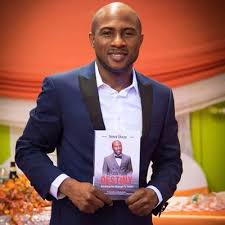
Henry Ukazu writes from New York. He works with the New York City Department of Correction as the Legal Coordinator. He’s a Transformative Human Capacity and Mindset coach. He is also a public speaker, youth advocate and creative writer Design Your Destiny and Unleash Your Destiny. He can be reached via info@gloemi.com


Arsenal Fans Club Nigeria is set to be officially unveiled in Abuja this weekend, as the organisation prepares to strengthen the club’s fan base and promote community development through football.
Amongst the high profile personalities lined up for the unveiling ceremony include, business leaders, celebrities and notable Arsenal supporters like former Gunner, Kanu Nwankwo, former Senate President Bukola Saraki, Emir Sanusi Lamido Sanusi, Senator Dino Melaye amongst others.
The unveiling will form part of a two-day programme beginning on Friday, October 16, with delegates from state and city chapters expected to converge on the nation’s capital for the club’s second Annual General Meeting (AGM).
According to a press release issued on Monday by the organisation, the celebrations will feature sporting activities, a community sanitation initiative and a formal launch event attended by prominent personalities and Arsenal supporters.
National President of Arsenal Fans Club Nigeria, Charles Ojugbana, said the organisation draws inspiration from the achievements of Nigerian-descent footballers, including former Super Eagles striker Kanu Nwankwo and current stars Bukayo Saka, Noni Madueke and Eberechi Eze.
The former General Secretary of the Nigeria Football Association (NFA) said the club aims to improve the football fan experience while expanding support for Arsenal across Nigeria.
Activities scheduled for Saturday include aerobic sessions and a novelty football match before members proceed to Wuse Market for a clean-up campaign.
As part of the outreach, the club plans to donate refuse bins and other sanitation materials to the market’s leadership, in line with its commitment to philanthropy and community development.
Arsenal Fans Club Nigeria operates through a governance structure comprising a Board of Trustees, a National Executive Committee and a General Assembly, which serves as the organisation’s highest decision-making body.
The club also disclosed plans to promote awareness of Down syndrome among children in March 2027, as part of activities to commemorate World Down Syndrome Day.
The programme expresses the organisation’s ambition to extend its activities beyond football fandom to charitable causes and support for vulnerable members of the society.

The Independent National Electoral Commission (INEC) has raised the alarm over a fraudulent publication circulating online concerning governorship candidates in six states ahead of the 2027 general elections.
The commission denied issuing the purported special announcement affecting Zamfara, Gombe, Delta, Plateau, Yobe and Kano states, warning Nigerians against being misled by the document.
In a public notice, INEC described the circulating publication as fake, stressing that it did not originate from the commission.
“The Commission wishes to categorically inform the general public that the publication is FAKE and did not originate from INEC,” the notice stated.
The electoral body urged Nigerians to disregard the publication and avoid sharing it, warning that the circulation of false electoral information could mislead the public.
INEC further clarified that it had not issued any special announcement concerning governorship candidates in the six affected states.
“The Commission further wishes to clarify that any information suggesting that INEC has issued a special announcement concerning governorship candidates in the aforementioned states is false,” it stated.
The commission advised political parties, candidates and members of the public to verify electoral information through its official website, news portal and verified social media accounts.
It also urged Nigerians to remain vigilant against fraudulent publications, particularly as preparations continue for the 2027 elections.
INEC reiterated its commitment to providing accurate electoral information and called on the public to rely exclusively on its official communication channels.

The Minister of Works, David Umahi, has defended the Federal Government’s decision to divert the Ondo section of the Lagos-Calabar Coastal Highway, saying the original route crossed terrain with pits more than 100 metres deep and would have significantly increased construction costs.
The minister said he was aware of petitions accusing him of diverting the route in Ondo State but maintained that the decision was justified.
“I am aware of petitions against me saying I diverted the Ondo section. I welcome that. That is how it is supposed to be because we are serving the public. You are subject to public scrutiny.
“But the important thing is whether you are doing the right thing or the wrong thing. We have no regret for decisions taken in Ondo,” he said.
According to Umahi, the original alignment passed through terrain with pits exceeding 100 metres in depth and lacked suitable sharp sand for up to 300 metres, making construction along the corridor considerably more expensive.
“You want me to pass through a terrain that you have over 100 metres of pits deep, and I have no defined sharp sand to 300 metres, and you expect the cost of one kilometre to be the same cost with a road passing through normal terrain?” he asked.
He said the ministry consequently undertook a detour and redesign to avoid the difficult terrain.
“We had to take a very serious engineering decision by making a detour, redesigning it to avoid such route. We are doing filling of over 10 metres, which is 30 feet plus, with sharp sand, and filling is almost concluded,” the minister said.
The diversion affects Sections 4A and 4B of the coastal highway, covering 67 kilometres, comprising 27 kilometres in Ogun State and about 40 kilometres in Ondo State. The section will terminate around the Ondo-Edo axis.
Providing an update on the wider project, Umahi said Section 1, a 47.47-kilometre stretch from Victoria Island, Lagos, had been completed and was ready for commissioning.
He added that the dual pavement on Section 2, which covers 55 kilometres and terminates at the Lagos-Ogun boundary, would be completed next month.
The minister said the flyovers, overpasses and underpasses on Section 2 had required extensive redesign, particularly around the Dangote Refinery and Lekki Deep Seaport.
He explained that an 86-metre-span bridge, with 43-metre counterforts, had been designed to accommodate refinery trucks and resolve a traffic conflict involving the deep-seaport train, the Dangote tax-credit road and the 25-kilometre Seventh Axial Road linking Epe to the Sagamu Expressway.
“We have redesigned a very beautiful flyover to resolve that conflict,” Umahi said.
At the Calabar end, he said Sections 3A and 3B, covering 65 kilometres, had achieved more than 30 per cent completion.
He added that work was ongoing on Section 5, an 82-kilometre dual carriageway in Akwa Ibom State, alongside an 88-kilometre link from Calabar to Ebidi Beach intended to connect with the Trans-Saharan route.
Umahi also disclosed that Tinubu had directed that the continuation of the coastal highway from Ondo into Edo State should follow the existing East-West Road rather than a new alignment.
Describing the directive as a major development, the minister said the existing road had been constructed without adequate consideration for climate change and rising flood risks.
He cited flooding at Ahoada about two weeks earlier, saying the permanent solution would involve raising sections of the road to protect it from current and projected flood levels.
“The permanent solution is the decision of Mr President to align the continuation through the East-West Road. We now have to raise the road in many locations by two metres to be above present and expected flood levels,” he said.
Source: Vanguard


